
Harmony Resort
North of Jeddah, the desert does not end gradually. It arrives with a specific quality of silence and a specific quality of light flat, open, and far enough from the city that the air carries nothing of it. Harouni Resort was designed for this condition: not to resist the desert but to settle into it, the building’s form following the ground’s own logic of accumulation and erosion.
The site extends across 120,000 square meters of desert land a scale that makes privacy not a feature to be engineered but a natural consequence of the ground plane itself. The brief called for a private desert resort of the highest residential standard: a place capable of receiving up to 160 guests in complete comfort across indoor and outdoor configurations, functioning equally well in winter and summer, and providing the full range of leisure infrastructure that a self-contained retreat demands. The design responded to this brief not by placing a building in the desert but by growing one from it.
Location          North Jeddah, Saudi Arabia
Client            Private
Type              Ultra-Luxury Desert Resort and Farm
Plot Area         120,000 m²
Capacity          160 guests
Status            First phase completed
Year              2023
Principal         Ibrahim Nawaf Joharji
Program           Resort, Tennis, Padel, Equestrian Track, Landscape, Farm
Scope             Architecture, Landscape, Interior Design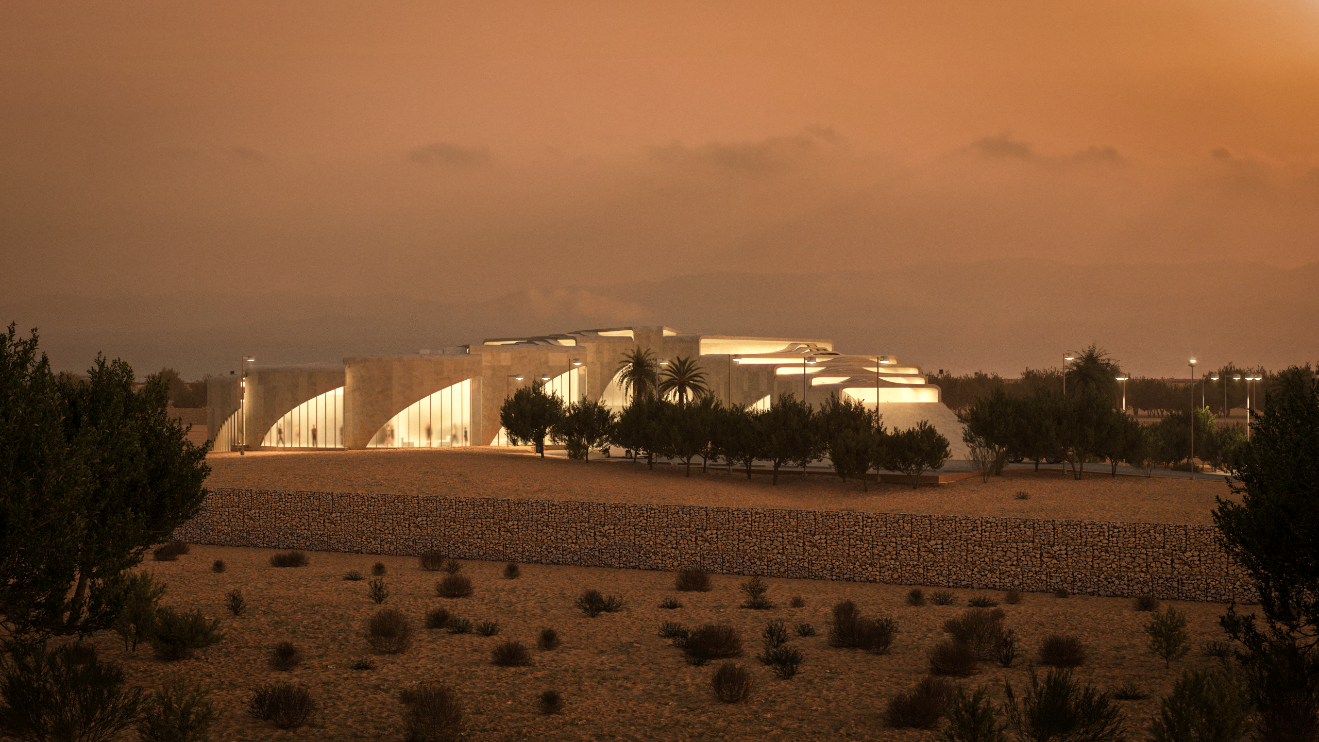
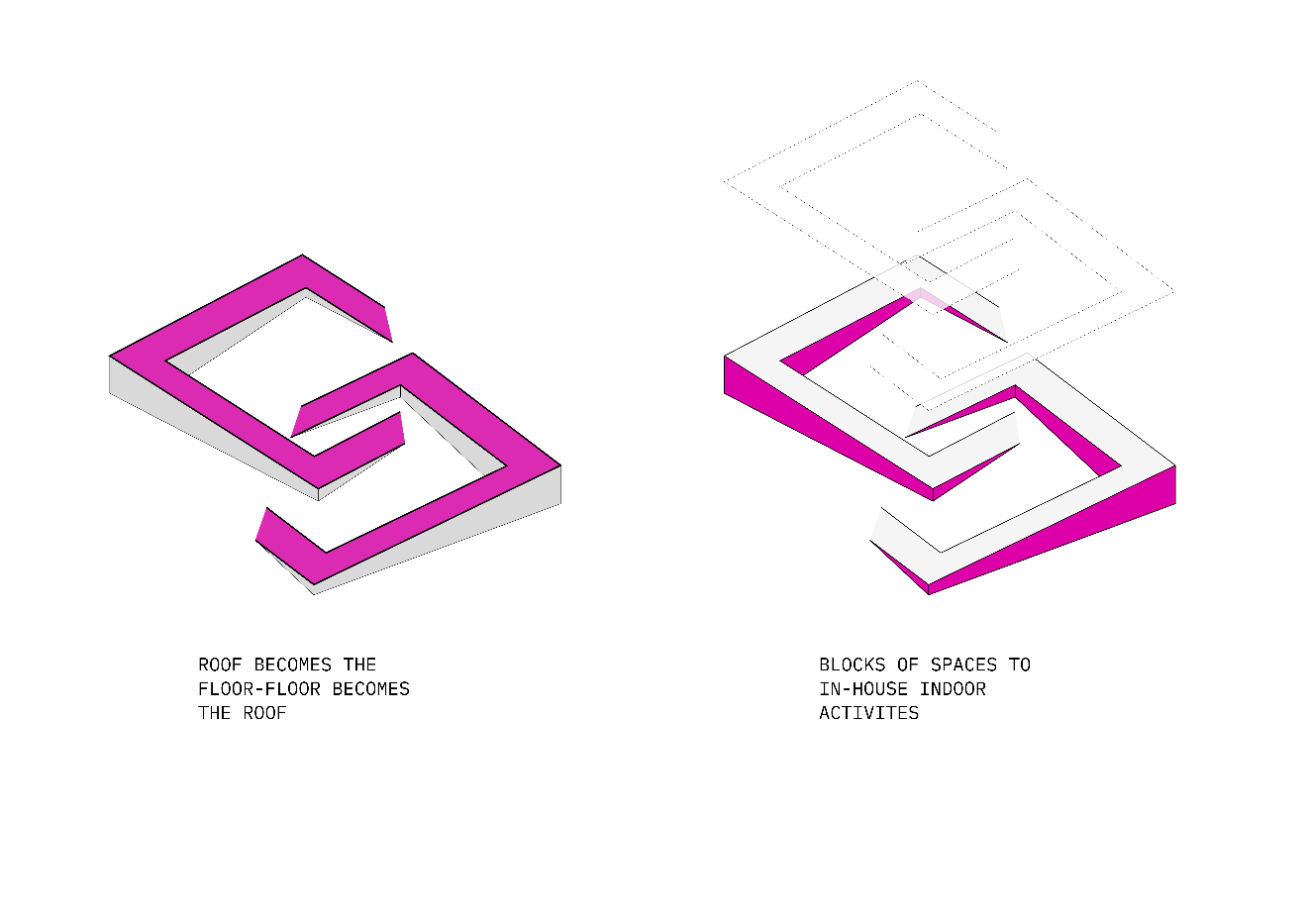
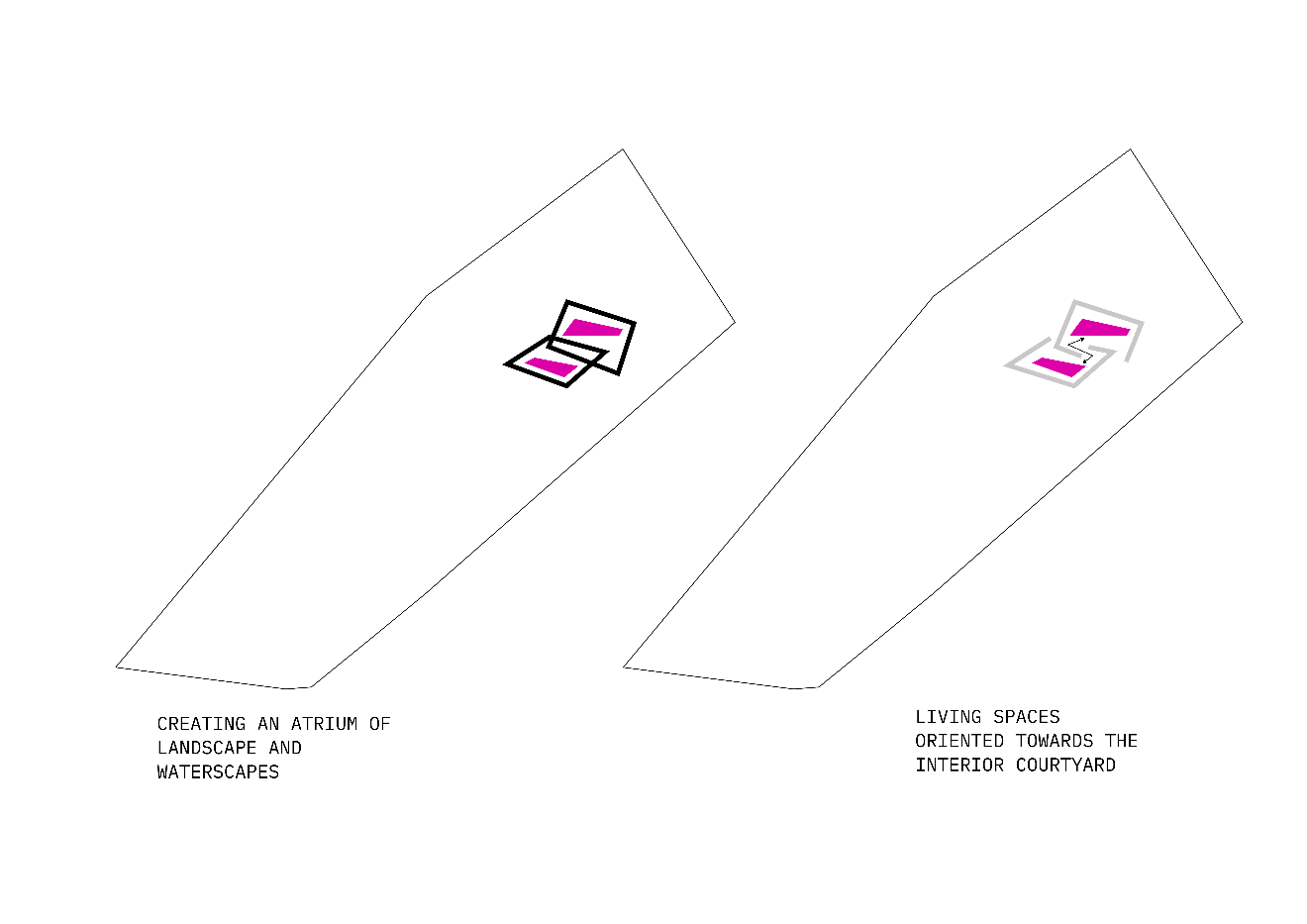
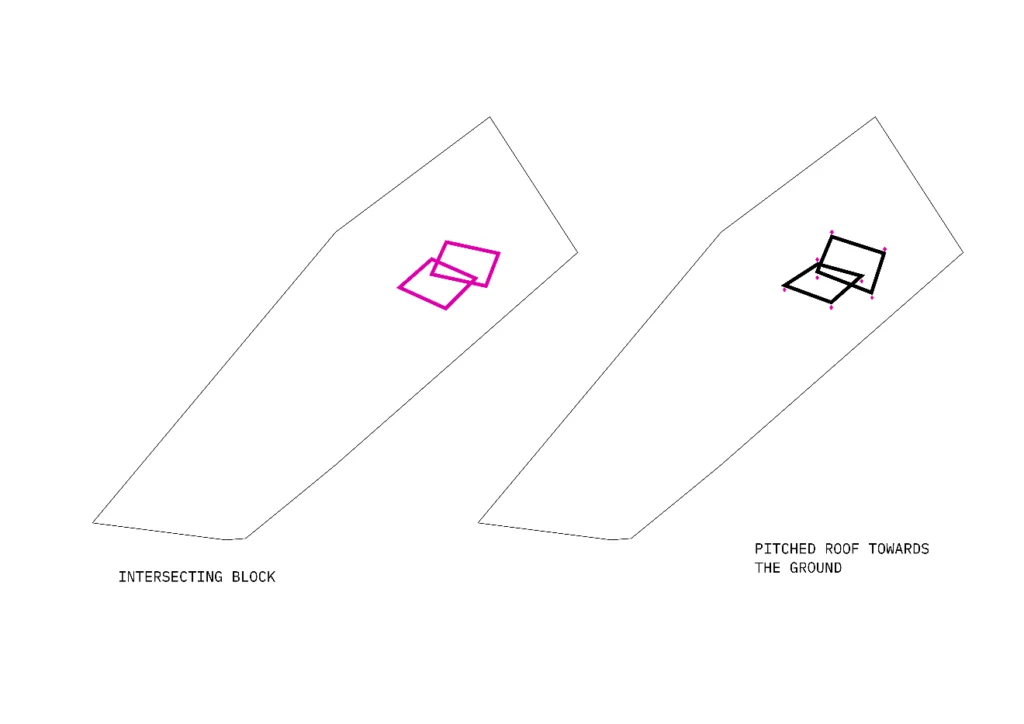
The plan takes the form of a crescent an arc that opens inward toward a protected inner garden and car reception court, its curved body wrapping that interior landscape the way a sand dune wraps the hollow it creates on its leeward face. This is not a metaphor applied after the form was decided. The desert north of Jeddah produces exactly this geometry through the action of wind on sand: a curved leading edge, a protected interior, and a gradual tapering at both ends. The building follows the same formal logic at architectural scale, its concrete mass settling into the desert ground with the confidence of something that belongs there. The crescent orientation also produces a panoramic condition across the full arc of the building’s inner face every occupied room on the concave side looks across the inner garden and beyond it toward the open desert, the view unobstructed at every point along the curve.
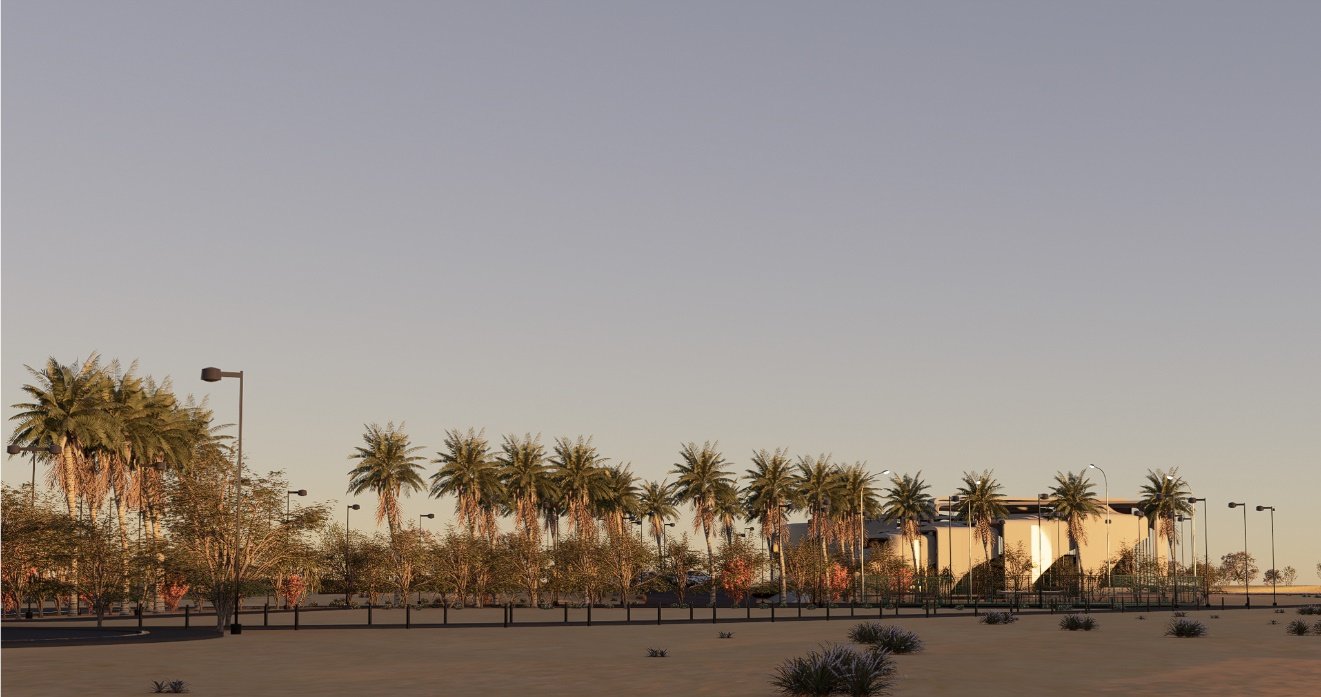
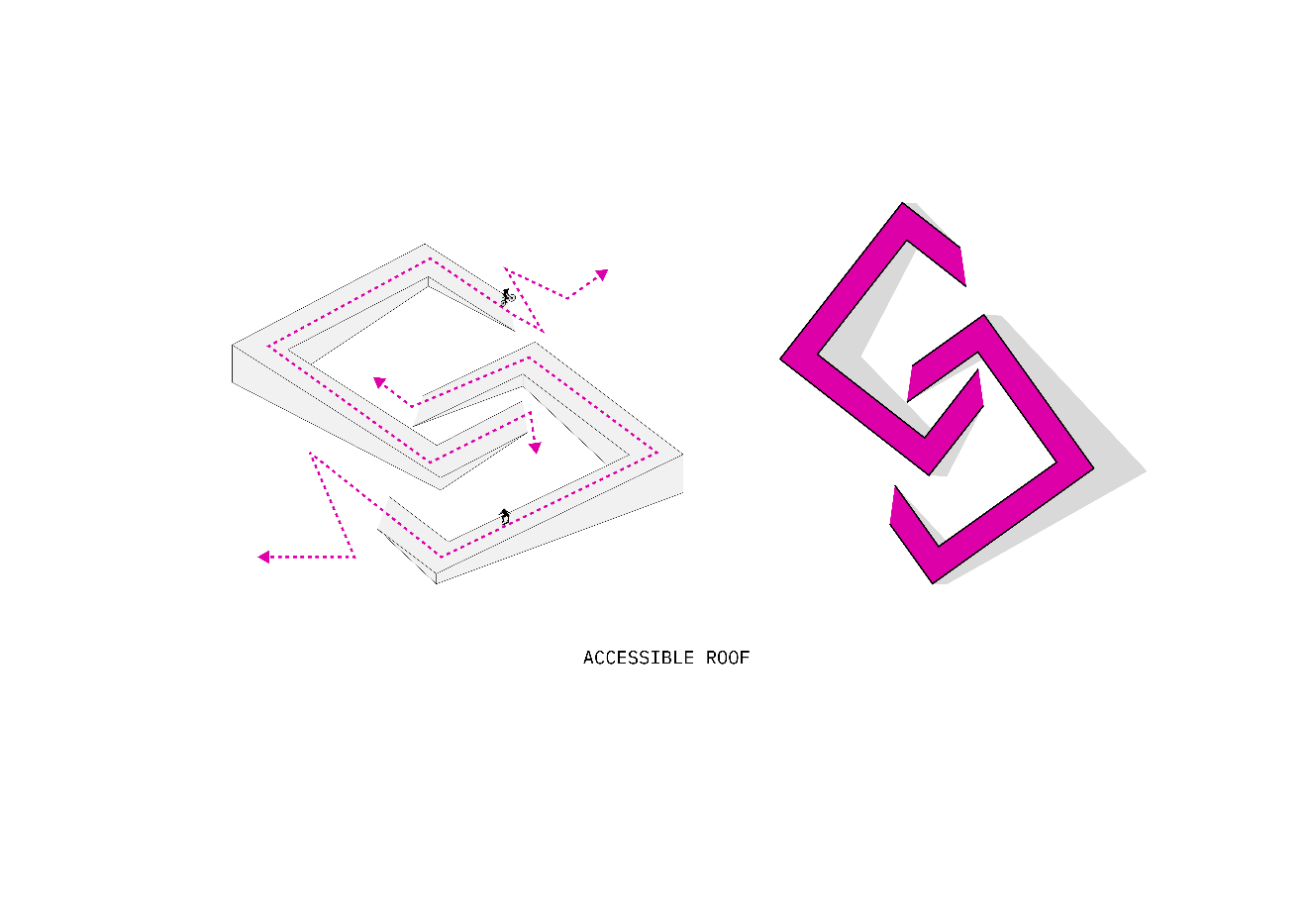
The stepped section that rises from the desert floor is the building’s second organizing principle. Each terrace level is set back from the one below it, the form accumulating upward in a series of organic concrete planes that produce both the resort’s profile against the sky and the shading system that keeps its outdoor spaces habitable across the full range of the Saudi climate. In winter, the terraces open to low sun and warm air. In summer, the stepped geometry casts deep shade on the levels below, the concrete mass absorbing heat slowly through the day and releasing it gradually after dark when the desert air cools. The building’s thermal performance is embedded in the shape of its section before any mechanical system is required to supplement it.
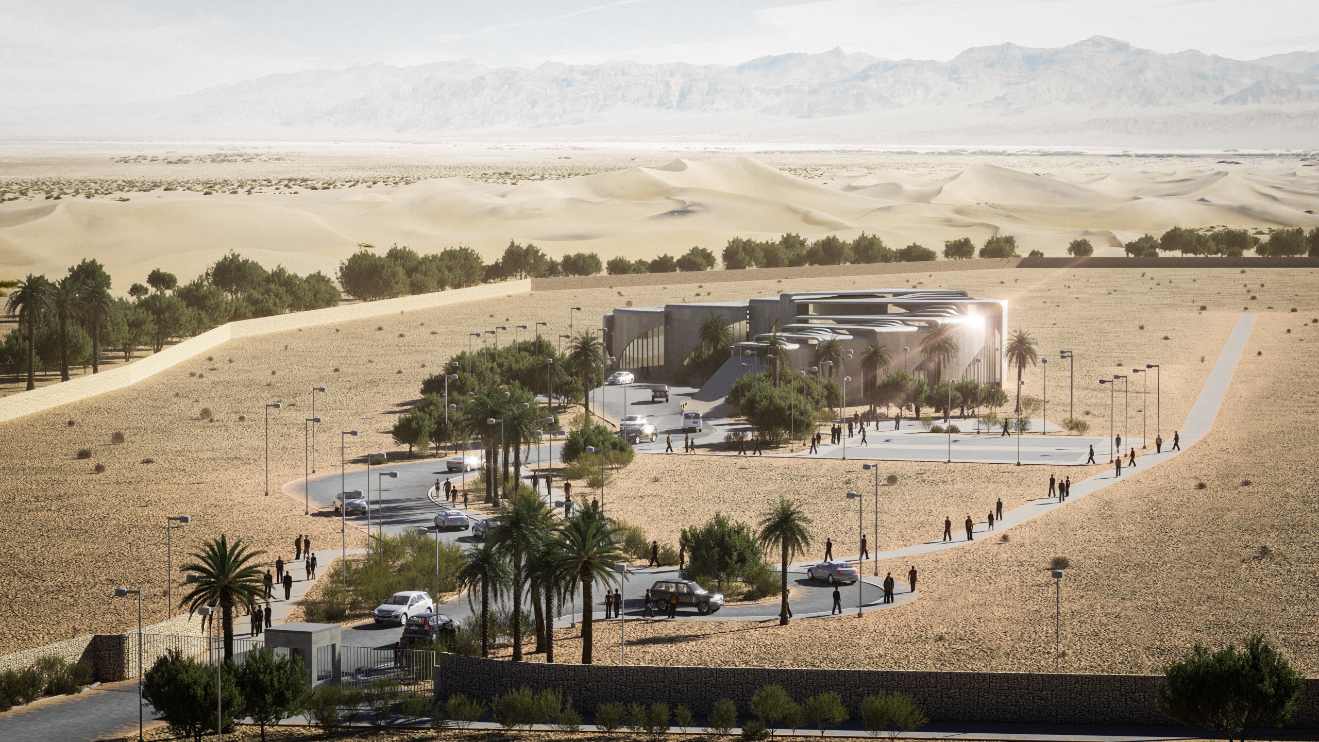
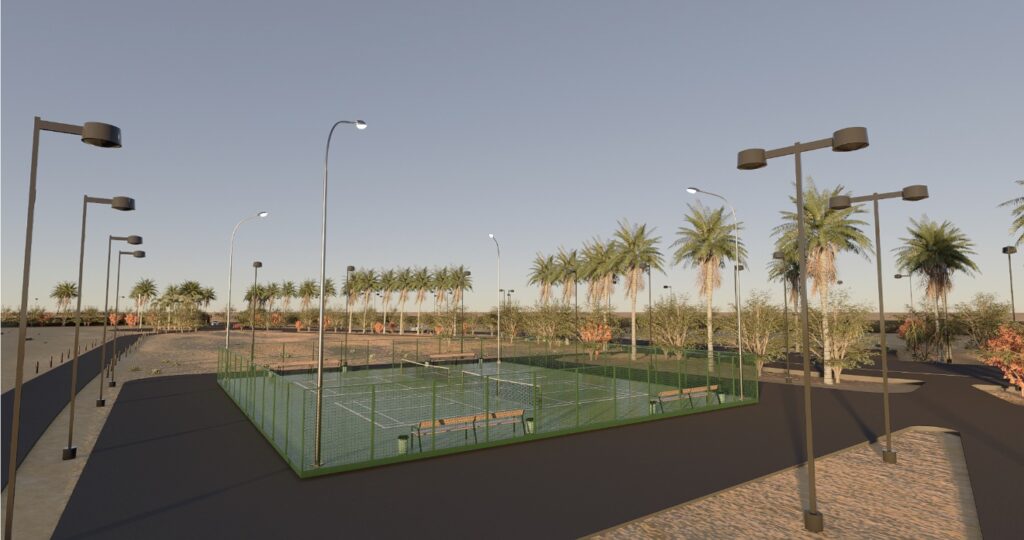
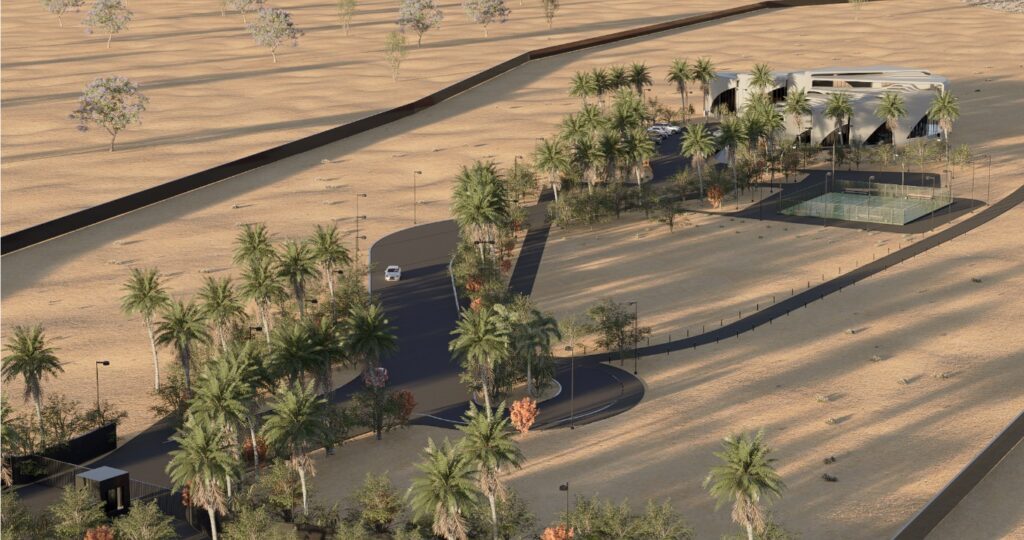
The leisure infrastructure distributed across the 120,000 square meter site was planned as a complete self-contained environment. Tennis courts and padel courts are positioned within the site’s outer zones, their orientation calculated against the prevailing desert wind to protect players from the directional gusts that the open ground plane intensifies. A dedicated equestrian corridor runs along the site’s perimeter — a private track that allows horses to move through the landscape without intersecting the resort’s pedestrian and vehicle circulation. This separation is both a safety provision and a spatial decision: the equestrian track defines the outer boundary of the inhabited zone, beyond which the desert resumes uninterrupted. Walking paths connect the resort’s multiple landscape zones, their routes designed to reveal the desert gradually — the inner garden first, then the planted intermediate zones, then the open ground at the site’s edge where the silence the resort was built to access becomes fully present.
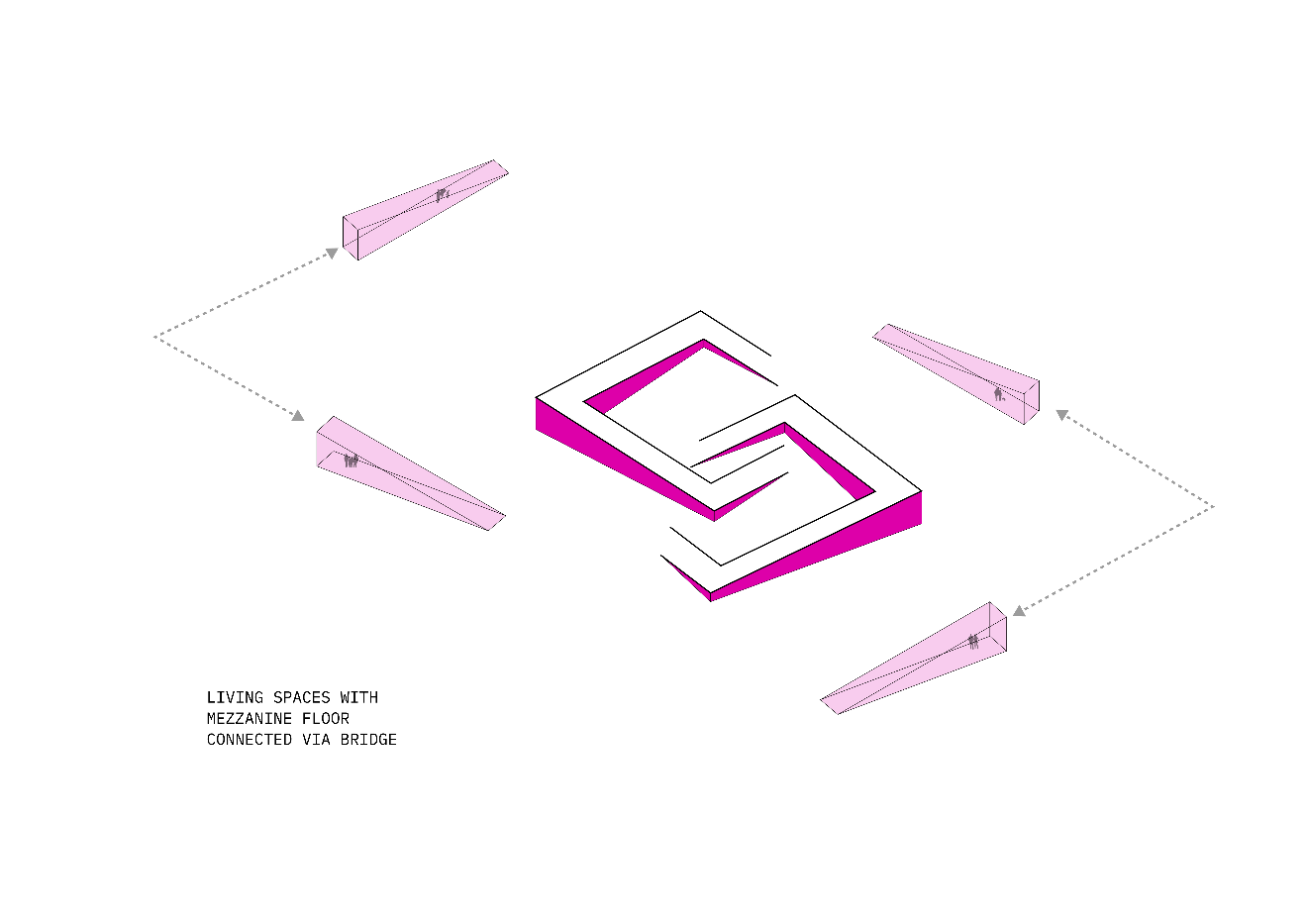
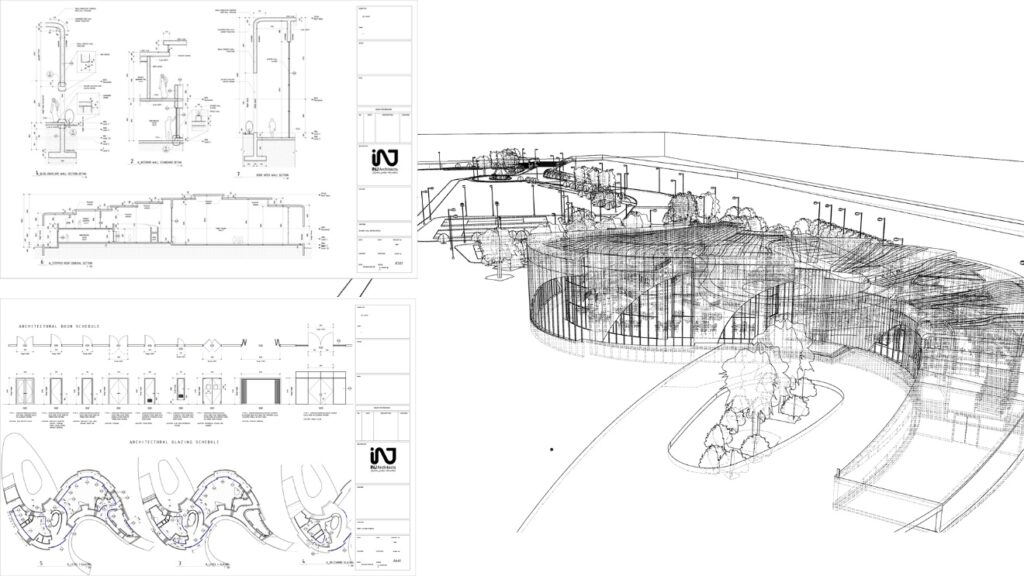
The interior program accommodates 160 guests across a spatial organization that separates the resort’s public and private registers clearly without making that separation feel institutional. The car reception and roundabout at the crescent’s central axis is the point of arrival — a covered, shaded forecourt that receives guests before the building opens inward to the inner garden and the inhabited zones beyond it. The restroom and service passages between these zones were designed as architectural experiences in their own right, their curved interior walls producing a sequence of compression and release that mirrors the section’s outdoor logic at the interior scale. Grand ceiling heights in the primary gathering spaces establish the resort’s spatial register — the desert outside is vast, and the interior responds to that vastness with volume rather than with decoration.
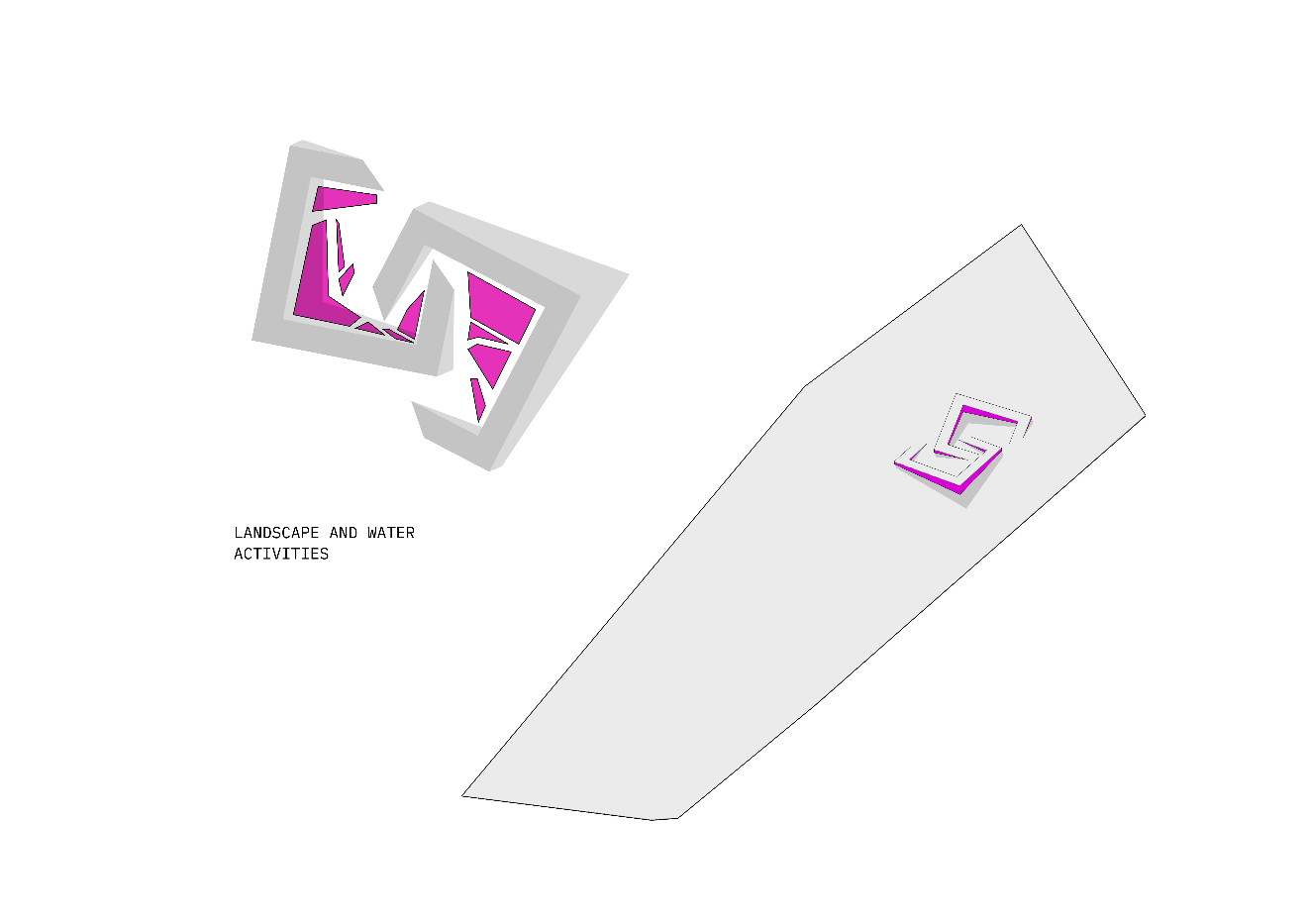
The concrete specification was chosen for its material honesty in a desert context and for its thermal performance across the temperature range that the site experiences between seasons. Exposed concrete does not require the maintenance cycles that finished surfaces demand in desert environments, where abrasive dust and UV degradation compromise applied finishes rapidly. The material acknowledges the site’s conditions directly rather than resisting them, its weathering over time producing a surface that becomes more integrated with the desert ground around it rather than less. The resort’s agricultural zones — the farm program that accompanies the leisure infrastructure — are positioned to use the building’s greywater management system, the landscape and the architecture operating as a single closed-loop environmental system across the full 120,000 square meters.
Harouni Resort belongs to a body of residential and hospitality work at INJ Architects in which the specific conditions of the Saudi landscape — its thermal demands, its scale, its material culture, and its standard of private luxury — are treated as the primary generative forces of the design rather than as constraints to be overcome. The methodology governing projects at this scale is detailed in how-we-work. The environmental systems embedded in the building’s section and its site management approach are part of the broader framework outlined under sustainability. For private clients considering desert resort or farm retreat commissions of comparable scale and ambition, the engagement framework is available through bespoke-architecture.