
Interior Design
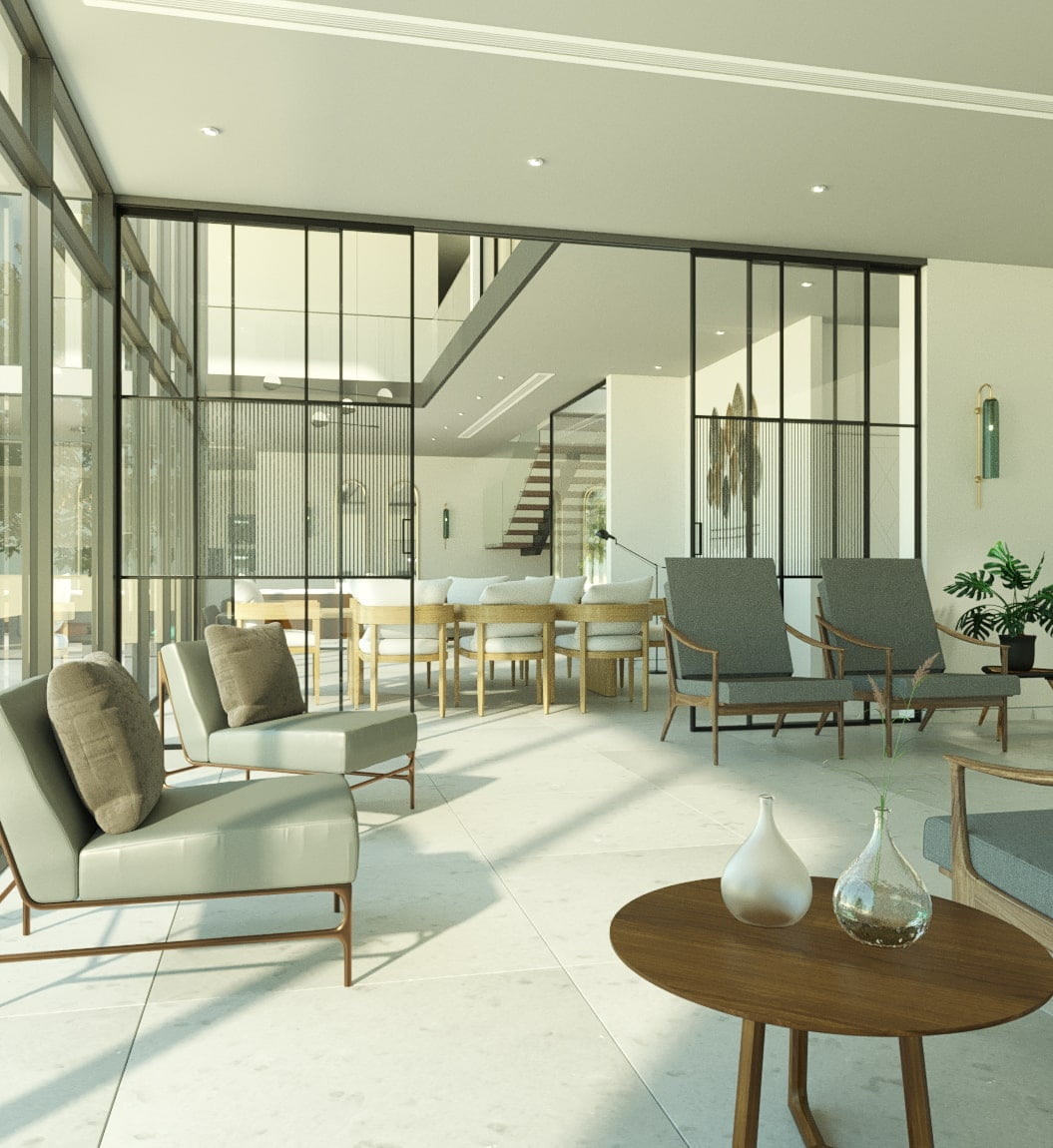
Interior design at INJ Architects is not a service that begins after the building is complete. It begins at the same moment as the architecture — at the first site reading, before a floor plan exists. The practice operates on the principle that the interior and the exterior of a building are a single spatial system, and that decisions about light, material, proportion, and circulation cannot be made for one without accounting for the other. The result of this approach is not a decorated building. It is a building in which the architecture and the interior are indistinguishable from each other.
Phase One — Client Reading and Spatial Concept
Every interior commission begins with a sustained conversation — not about style, but about how the client lives. How do they move through a house in the morning? Where do they receive guests, and how formally? What is the relationship between the public rooms and the private rooms, and how explicitly should that boundary be drawn? These questions are not preliminary to the design. They are the design. The answers determine the spatial organization, the threshold conditions, the scale of volumes, and the quality of light at each hour of the day before a single material is selected.
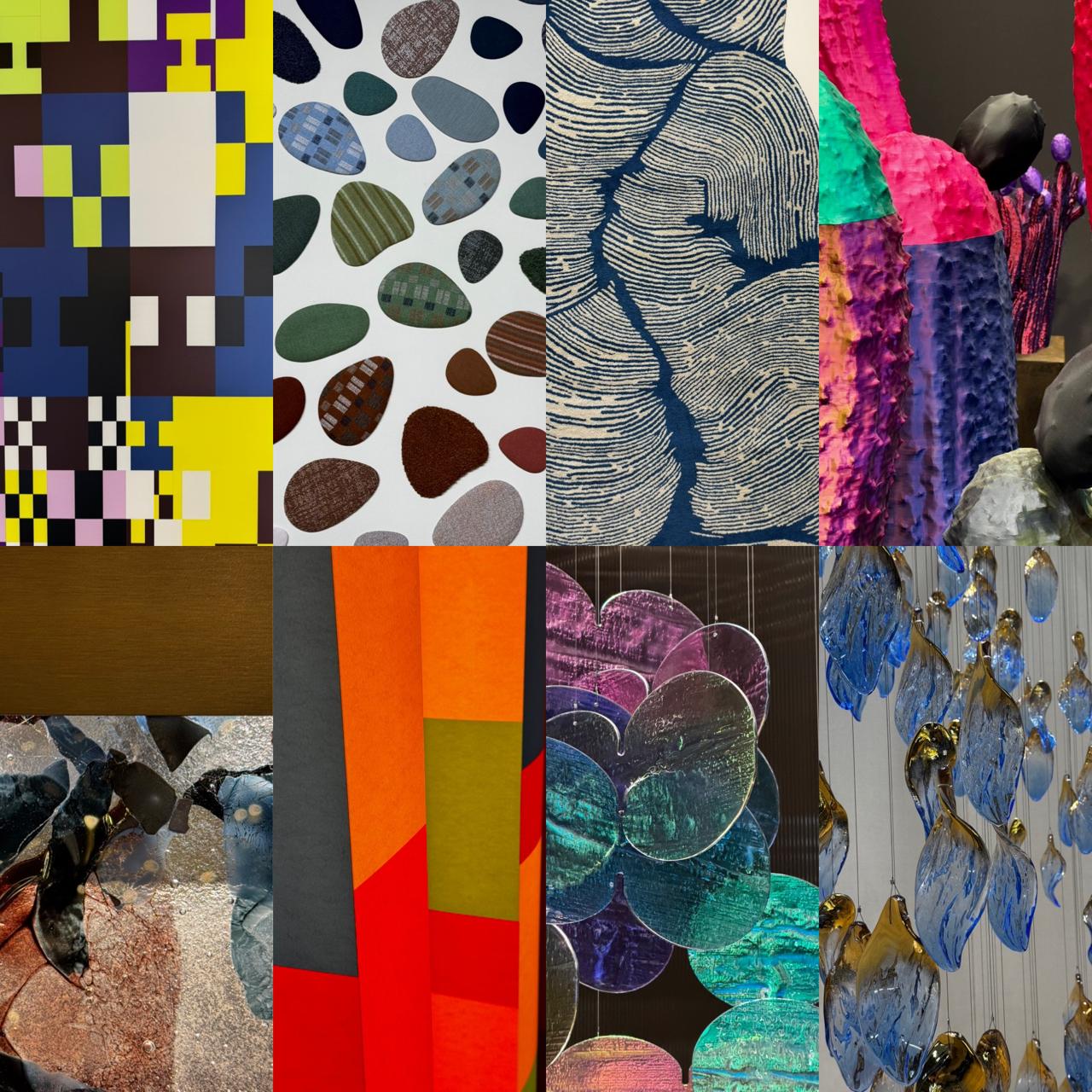
Once the spatial concept is established, it is translated into a set of visual and material references that define the direction of the interior without prescribing it in detail. This is the moment when the mood board becomes useful — not as a presentation tool, but as a working document that allows the design team and the client to test directions, eliminate what does not belong, and arrive at a precise shared understanding of where the interior is heading. The mood board governs every subsequent decision: what materials are shortlisted, which suppliers are approached, and which manufacturers are invited to present.


Phase Two — Material Selection and Global Procurement
Material selection at INJ Architects is conducted as a research process, not a catalogue exercise. The office maintains direct relationships with manufacturers and suppliers across Europe, Asia, and the Gulf — relationships built through years of attendance at international exhibitions and through direct visits to production facilities. When a material is specified for an ultra-luxury residence or a palace commission, it has typically been evaluated not from a sample card but from a factory visit: the production line inspected, the quality control process reviewed, the tolerance range confirmed against the project’s requirements. This level of engagement with the supply chain is what separates material specification from material procurement.
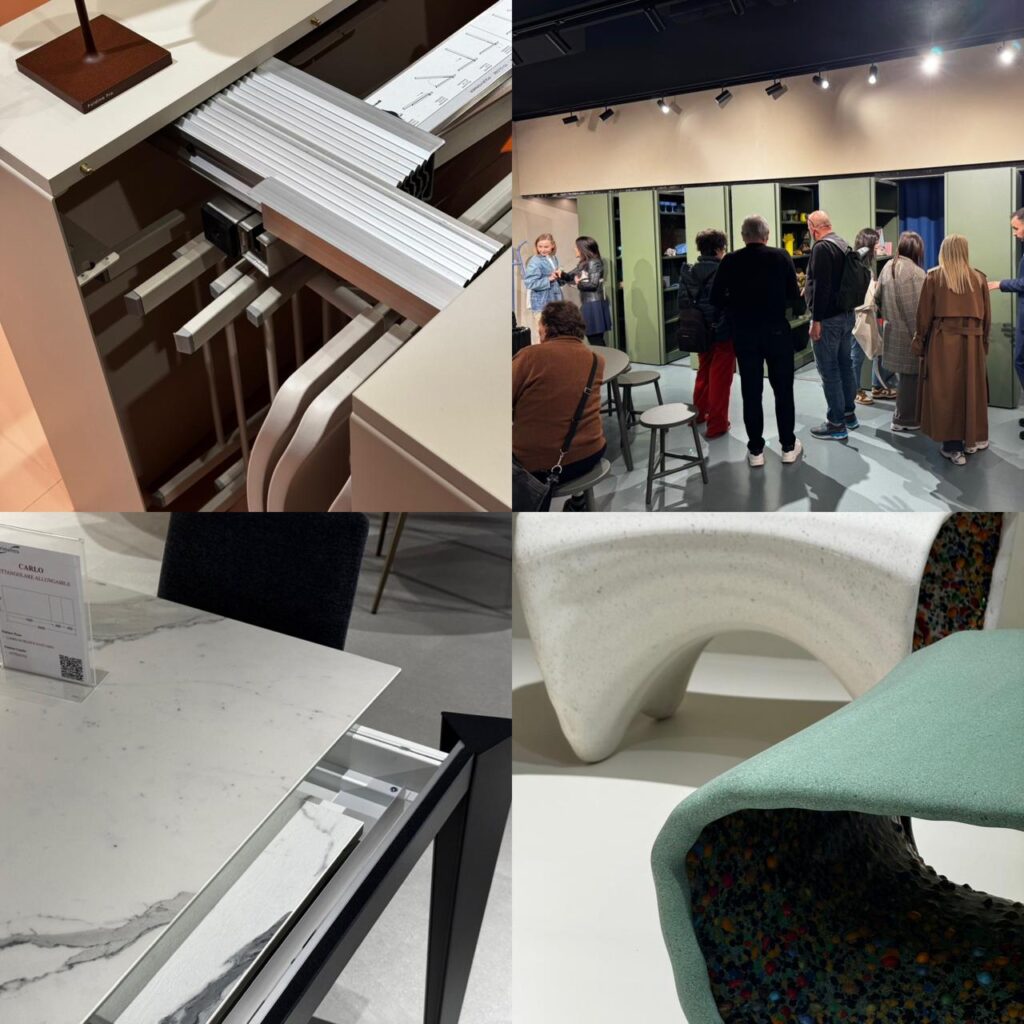
The office actively participates in major international trade exhibitions — in Milan, Paris, Dubai, and beyond — where direct contact with manufacturers allows for the identification of materials and systems that are not yet available through standard regional distributors. Manufacturers who wish to introduce their products to the office’s procurement network are invited to submit their technical documentation and material specifications to procurement@inj.sa. Submissions are reviewed against the project pipeline and the office’s current material requirements. Where a product meets the specification and quality standards maintained across the practice, it is evaluated for inclusion in the verified supplier register that governs procurement on all future commissions.
Stone selection — marble, onyx, travertine, and specialist natural stone — is conducted with particular rigour. The office works with quarry representatives and stone processors directly, reviewing slab availability, vein consistency, and structural suitability before any material is committed to a project. The same discipline applies to bespoke joinery, specialist lighting systems, and custom hardware: each is evaluated against the spatial and performance requirements of the specific project for which it is intended, not selected from a standard finish schedule.


Phase Three — Technical Development and Drawing Production
Once the material direction is confirmed, the interior design enters a phase of technical precision. Every surface, junction, threshold, and detail is drawn to a level of resolution that leaves no ambiguity for the contractor. Joinery details are developed in three dimensions within the BIM environment, allowing conflicts between cabinetry, structural elements, mechanical services, and lighting infrastructure to be identified and resolved before site work begins. Reflected ceiling plans are coordinated with the mechanical and electrical engineers to ensure that lighting positions, air diffusers, and speaker locations are integrated into the ceiling composition as design elements rather than added as afterthoughts.
The BIM model that governs the architectural shell is extended into the interior — wall finishes, floor patterns, ceiling features, and built-in furniture are modeled within the same environment, ensuring that the interior documentation is spatially accurate and dimensionally consistent with the construction drawings. This integration eliminates the gap between the architectural and interior phases that is a common source of error and revision cost on high-specification residential projects. The methodology behind this integrated approach is described in How We Work.


Phase Four — Site Supervision and Execution
The execution of an ultra-luxury interior is where the quality of the preceding phases becomes visible — or where the absence of that quality becomes equally apparent. INJ Architects maintains direct site supervision throughout the execution phase, with the Principal or a senior member of the design team present at critical stages: when stone is being laid, when joinery is being installed, when lighting is being commissioned. This presence is not ceremonial. It is the mechanism by which the detail drawings are verified against the physical reality of the space and by which deviations — whether from contractor interpretation or from unforeseen site conditions — are identified and resolved before they are concealed by subsequent finishes.
Contractors working on INJ Architects interior projects are selected for their capability with the specific materials and techniques the project requires. Where a finish demands specialist skill — in stone inlay, in bespoke metalwork, in upholstered wall panels — the contractor is evaluated against previous work of equivalent specification before appointment. The office does not adjust the design specification to suit the contractor’s capability. It selects the contractor whose capability meets the specification.


Interior design commissions at INJ Architects are accepted on projects where the brief, the budget, and the client’s expectations are consistent with the standards maintained across the practice’s completed work. The office does not separate the interior design service from the architectural commission — both are managed under the same methodological framework, with the same level of principal involvement, from concept through handover. Manufacturers and specialist suppliers who wish to engage with the office’s procurement process are invited to submit their product documentation to procurement@inj.sa. For project inquiries, the first step is outlined in Start a Project. The broader design methodology within which interior design operates is described in How We Work.