AL Soud Plaza Mall
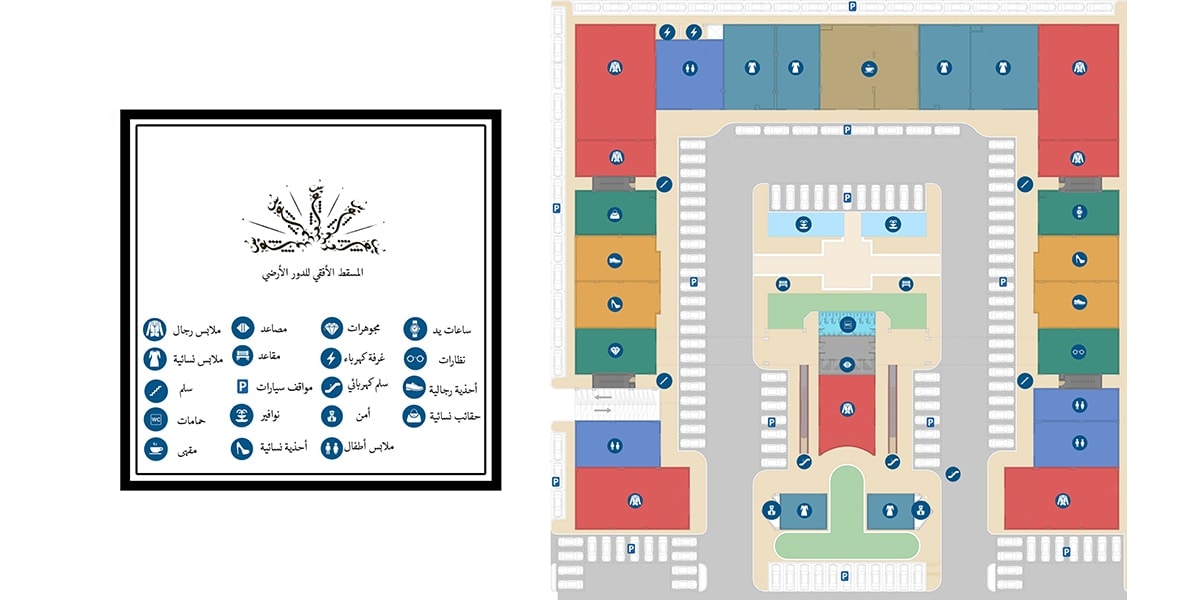
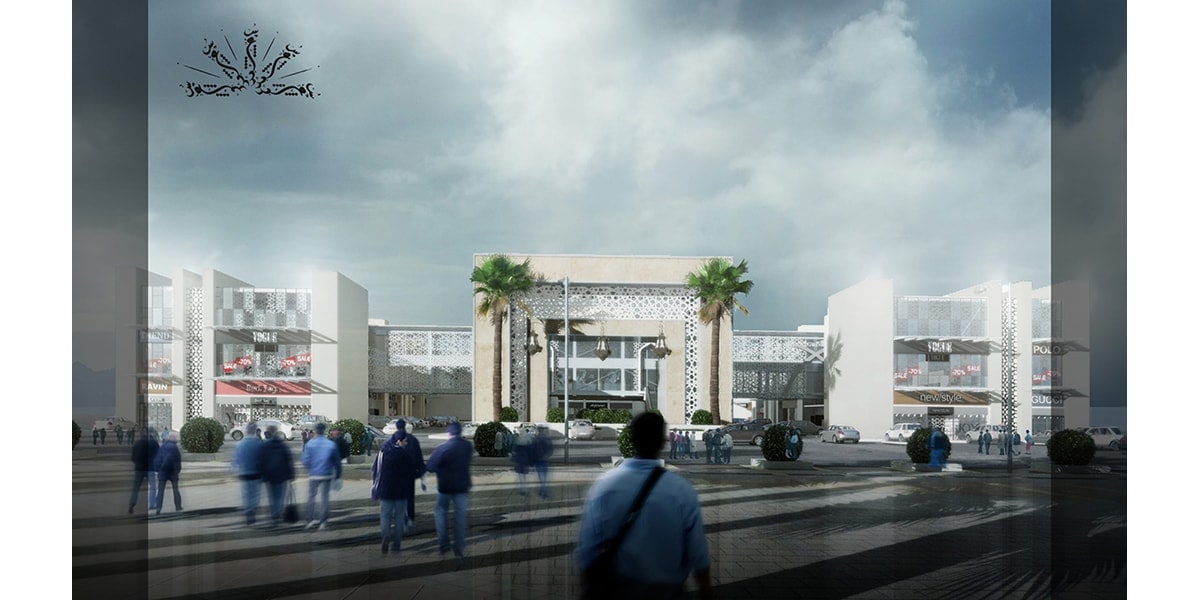
Commercial pressure within Makkah’s expanding retail market required a compact urban mall capable of organizing multiple tenants within a controlled internal environment. AL Soud Plaza Mall was developed to consolidate approximately 36 ground-floor retail units into a coherent commercial platform. This approach strengthens local market competitiveness while responding to the city’s climate and circulation patterns.
Location: Makkah, Saudi Arabia
Year: 2017
Area: Not specified
Status: Completed
Category: Commercial
Design Style: Contemporary Commercial
Client: IMK
Scope: Architectural Design
Services: Local Consultant
Located in Makkah, a city defined by seasonal population peaks and continuous commercial demand, the site required efficient land use and clear retail visibility. The surrounding urban fabric consists of mixed-use commercial blocks with fragmented pedestrian continuity. In these conditions, retail performance depends on accessibility, shaded movement, and clear frontage. The climate imposed additional constraints, as high temperatures for most of the year required an inward-focused retail strategy. This strategy reduces solar exposure while maintaining commercial visibility.
The project is structured around commercial clarity. The concept emerged from the need to organize multiple small retail units into a unified system that enhances collective visibility rather than fragmenting it. Instead of treating each shop as an isolated entity, the building operates as a commercial container that supports shared circulation, shared services, and continuous frontage. This approach transforms retail competition into spatial continuity. As a result, the mall can function as a calibrated framework that strengthens tenant presence through proximity and rhythm.
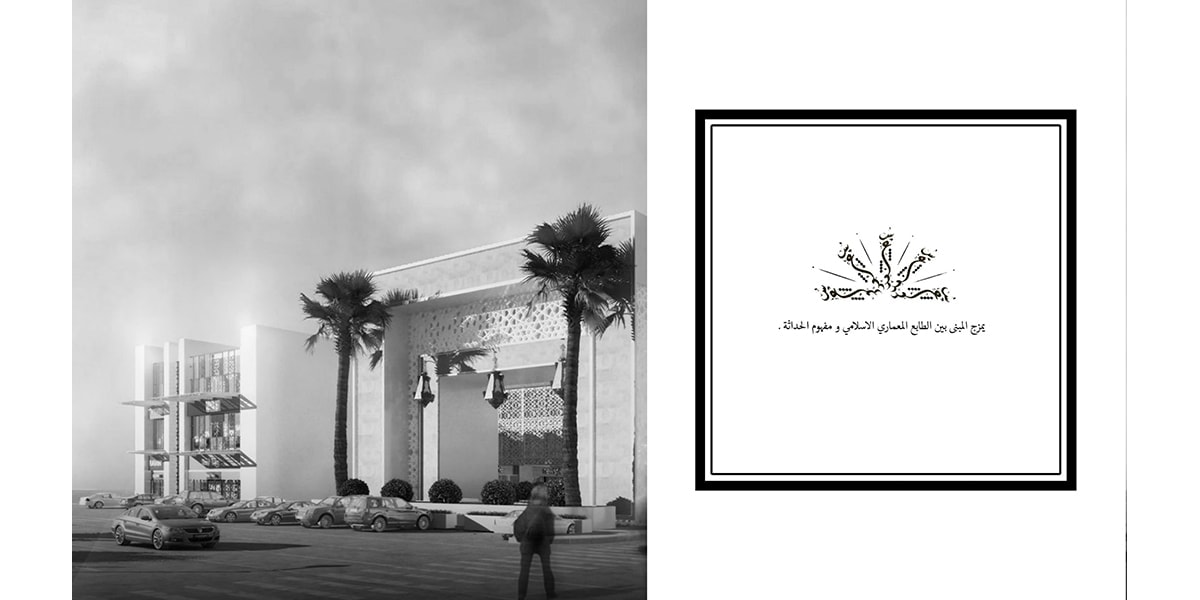
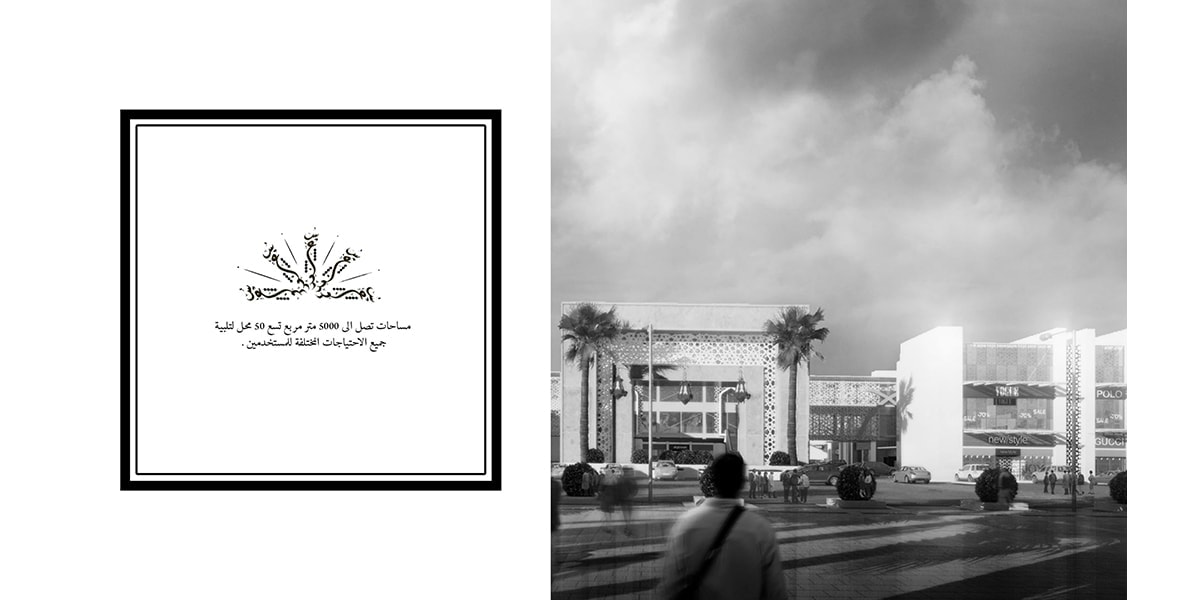
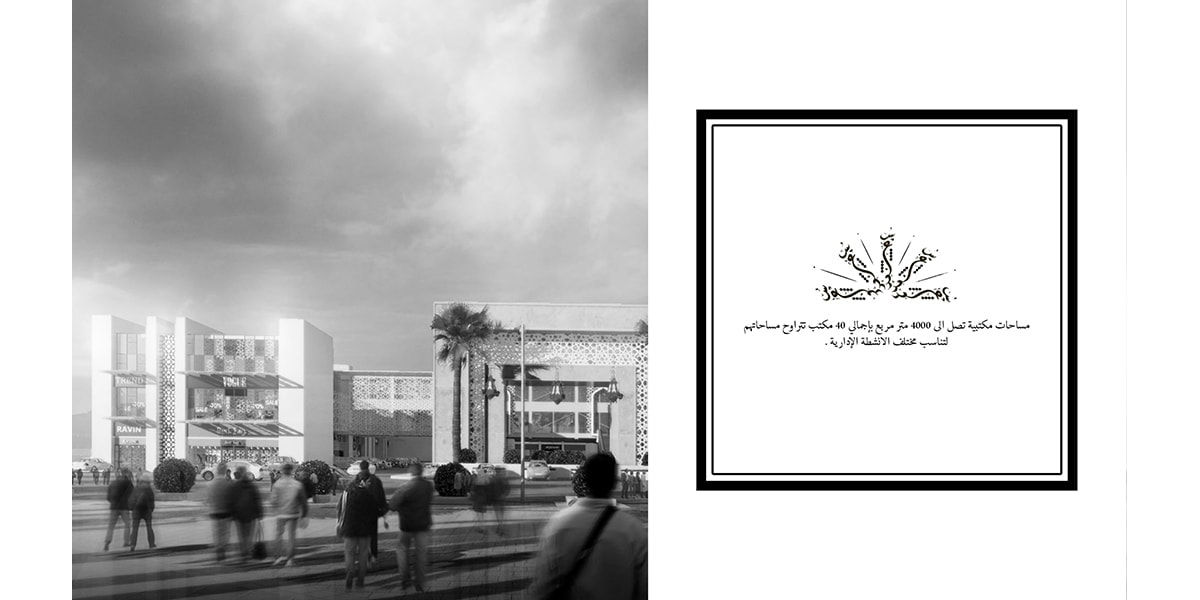
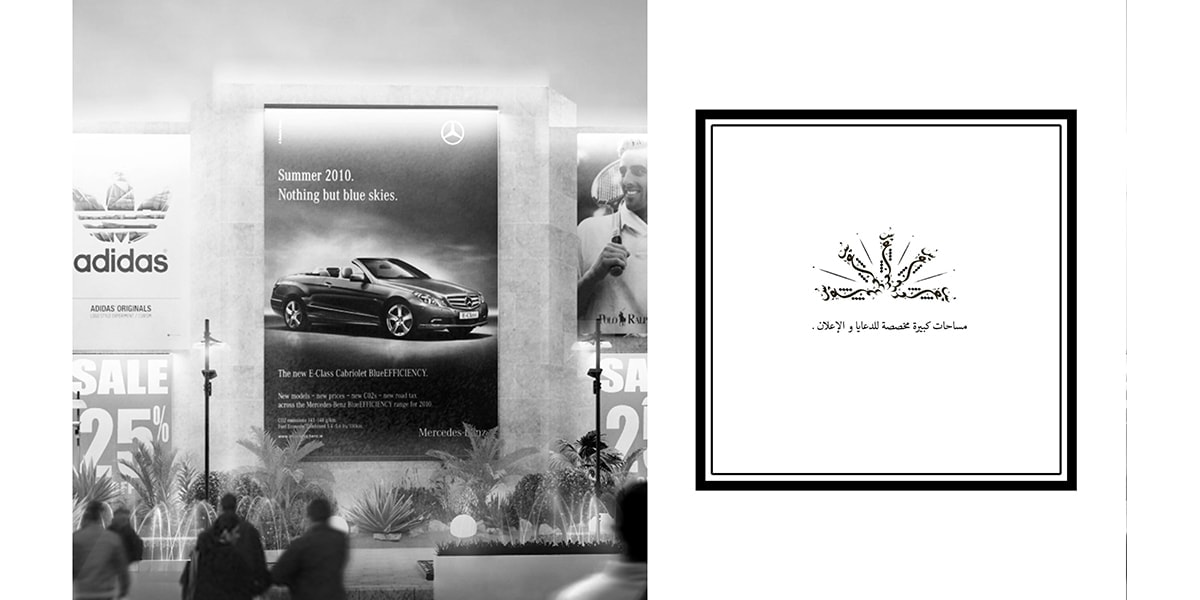
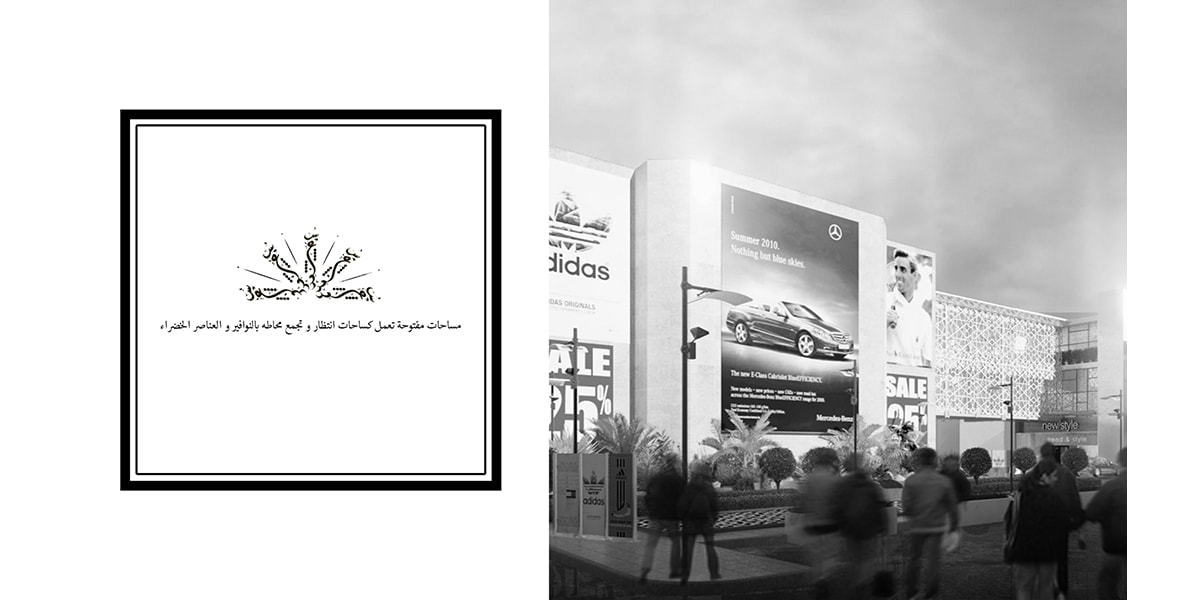
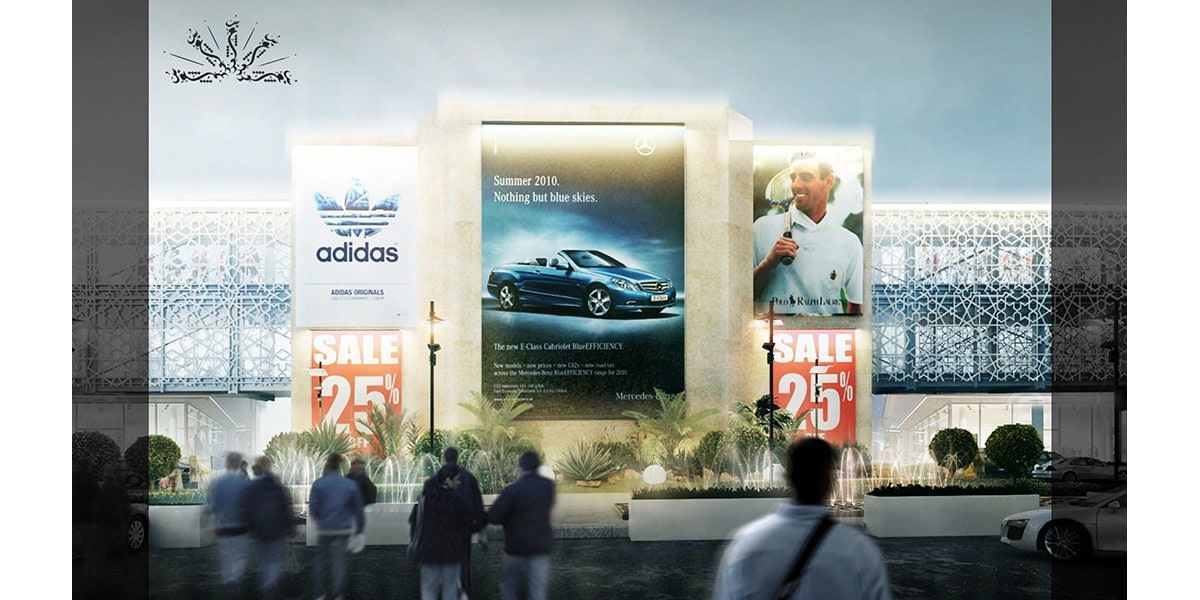
The massing consolidates retail functions at ground level to maintain direct engagement with pedestrian movement. Shops are arranged in a linear and perimeter-based sequence to maximize frontage and ensure that each unit benefits from circulation flow. Entrances are positioned to align with primary access points from surrounding streets. This strategy reinforces orientation and reduces confusion at the threshold between exterior movement and interior retail sequence.
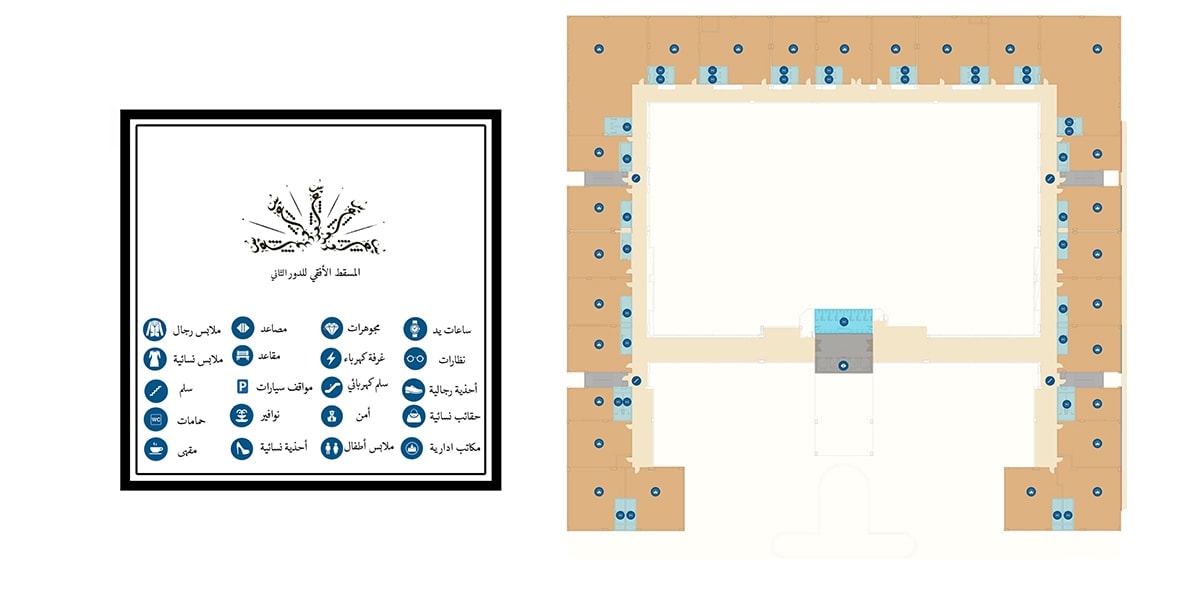
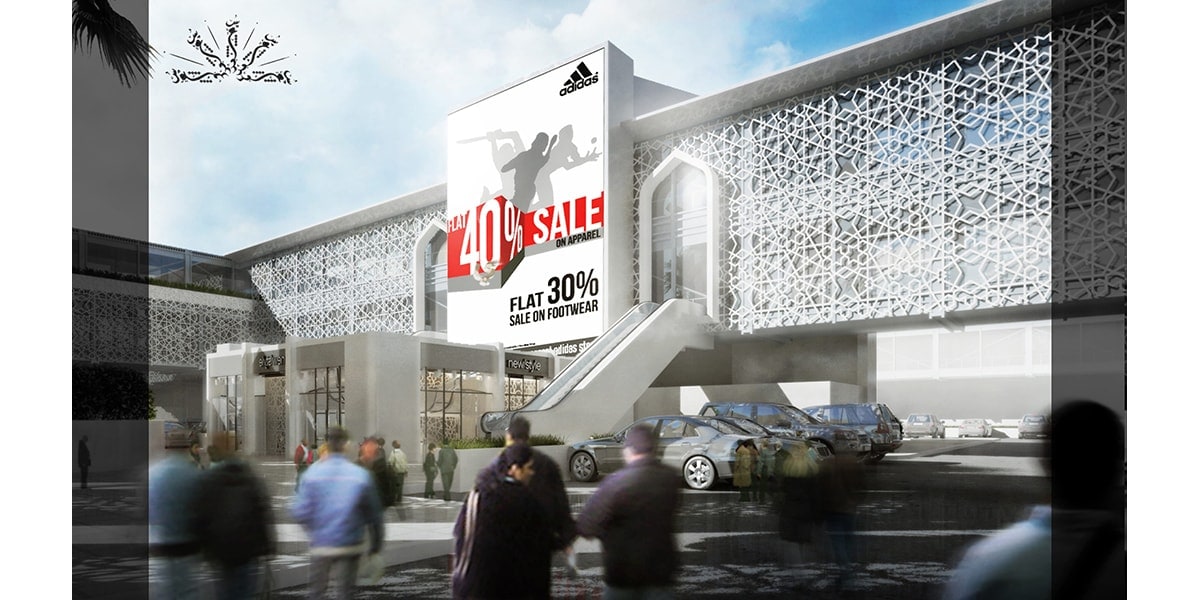
The internal circulation spine acts as the primary organizing element, establishing continuity across the commercial program and encouraging collective movement rather than isolated stops. Facade treatment prioritizes shading and proportional clarity. Openings are positioned to control glare while allowing filtered daylight into circulation areas. Furthermore, the balance between solid and void was calibrated to reduce heat gain without compromising storefront visibility.
Material selection emphasizes durability, maintenance efficiency, and long-term performance in a high-traffic commercial setting. Finishes were selected to withstand continuous use while maintaining coherence across multiple tenancies. This approach allows the overall atmosphere to remain consistent even as individual retail identities change over time.
Environmental response was a primary driver of the project’s spatial logic. The building envelope reduces direct solar exposure through controlled glazing areas and shaded entry points. Additionally, mechanical systems were integrated to support stable indoor temperatures during peak commercial hours and seasonal surges. Circulation widths were studied to accommodate increased foot traffic, ensuring continuity of movement and safe occupancy under intensified use conditions. Service access was separated from public entrances to preserve operational clarity and avoid conflict between customer movement and back-of-house activity.
As local consultant, the role required coordination between design intent, regulatory requirements, and construction realities within Makkah. Commercial compliance, tenant servicing infrastructure, and integration of mechanical systems demanded close multi-discipline collaboration. The project therefore depended not only on formal restraint, but also on careful calibration between spatial logic, operational demands, and the practical sequence of delivery.


AL Soud Plaza Mall establishes a clear commercial framework within Makkah’s competitive retail context. Its value lies in the integration of climate response, tenant organization, and collective movement into a single spatial system that supports urban commerce with clarity, continuity, and civic presence.