
Al-Balad: The Electromechanical Intrusion
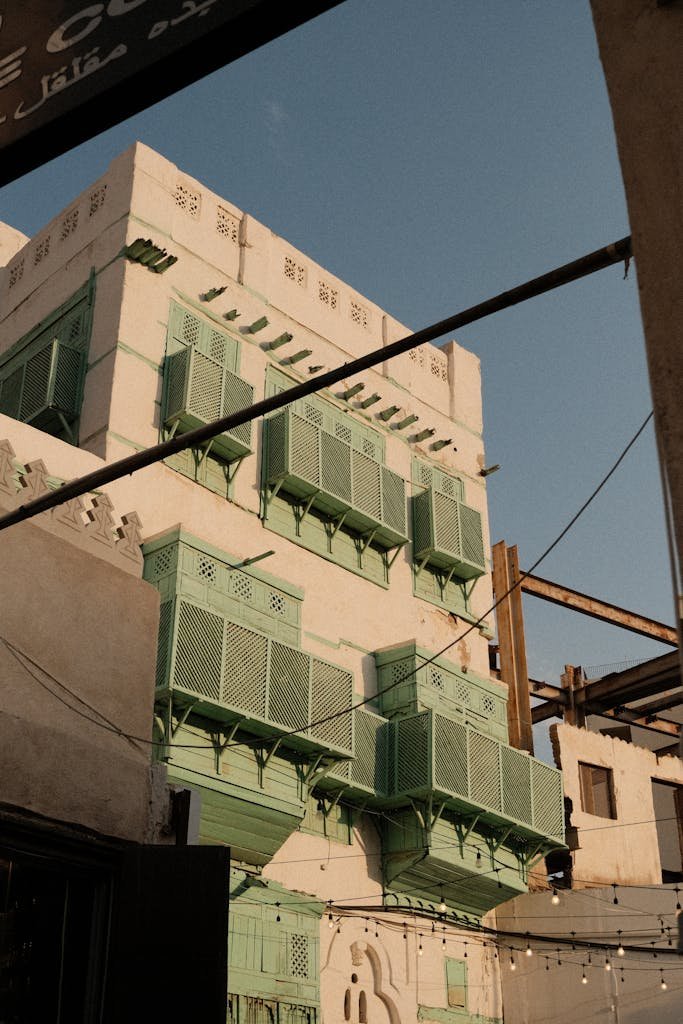
The introduction of modern infrastructure into Historic Jeddah was not a planned evolution. It was a violent architectural collision. Ancient coral stone and intricate wooden carving were suddenly asked to carry exposed wiring, surface-mounted plumbing, and heavy mechanical systems. The urban fabric of Al-Balad was built from Red Sea limestone, shaped through the mashrabiyyah screen, and engineered primarily for natural ventilation and pedestrian density. As the city modernized, the district absorbed a chaotic layering of service networks that weakened both its visual coherence and its structural resilience.
This study confronts the spatial and material consequences of that technological imposition. It treats unmanaged service networks not merely as functional requirements but as architectural parasites that actively contribute to the deterioration of the historic environment. By systematically documenting the visual disorder and physical obstruction at eye level, the research maps the tension between modern livability and heritage preservation. The resulting framework shifts the discourse of conservation from passive restoration to the active integration of infrastructure.
Location          Historic Jeddah (Al-Balad), Saudi Arabia
Type              Architectural Research — Urban Analysis
Status            Published
Year              2024
Principal         Ibrahim Nawaf Joharji
Advisory Team     Dr. Azhar Al-Maghribi
Focus             Electromechanical Integration, Heritage Preservation, Spatial Accessibility
The proposed interventions operate according to a logic of concealment and alignment. The methodology requires burying complex electrical networks underground, unifying service containers, and addressing pavement fragmentation throughout the district. Accessibility is achieved through connected routes and tactile guidance systems designed to navigate the historic district’s uneven topography without erasing its authentic character. These infrastructure-linked corrections aim to support the district’s contemporary density while returning visual dominance to its original materiality.
The electromechanical entanglement in Al-Balad exposes a fundamental failure in conventional heritage preservation practice, which frequently prioritizes facade conservation while neglecting the intrusive mechanical systems required to keep those buildings habitable. This study argues that concealing infrastructure is a primary architectural obligation no less important than restoring original materials. Treating services as an afterthought inevitably produces the visual and material deterioration of the very assets that preservationists seek to protect. The findings demonstrate that a historic district’s modern service needs must be integrated invisibly within its fabric rather than fastened to its surface.
A comprehensive examination of these methodologies, spatial strategies, and comparative global frameworks is available in the full research paper below. The visual documentation accompanying this text records the existing infrastructure burden and presents models of the anticipated architectural corrections, providing an integrated spatial reading of the proposed interventions. The documentation and spatial analysis methodology applied in this study aligns directly with the architectural processes detailed in how-we-work and within the architectural philosophy that guides the practice.
This research is part of INJ Architects’ ongoing commitment to heritage-led design and urban research. We welcome observations and discussion on the findings. For further details or collaboration on future projects, contact us at i@inj.sa.