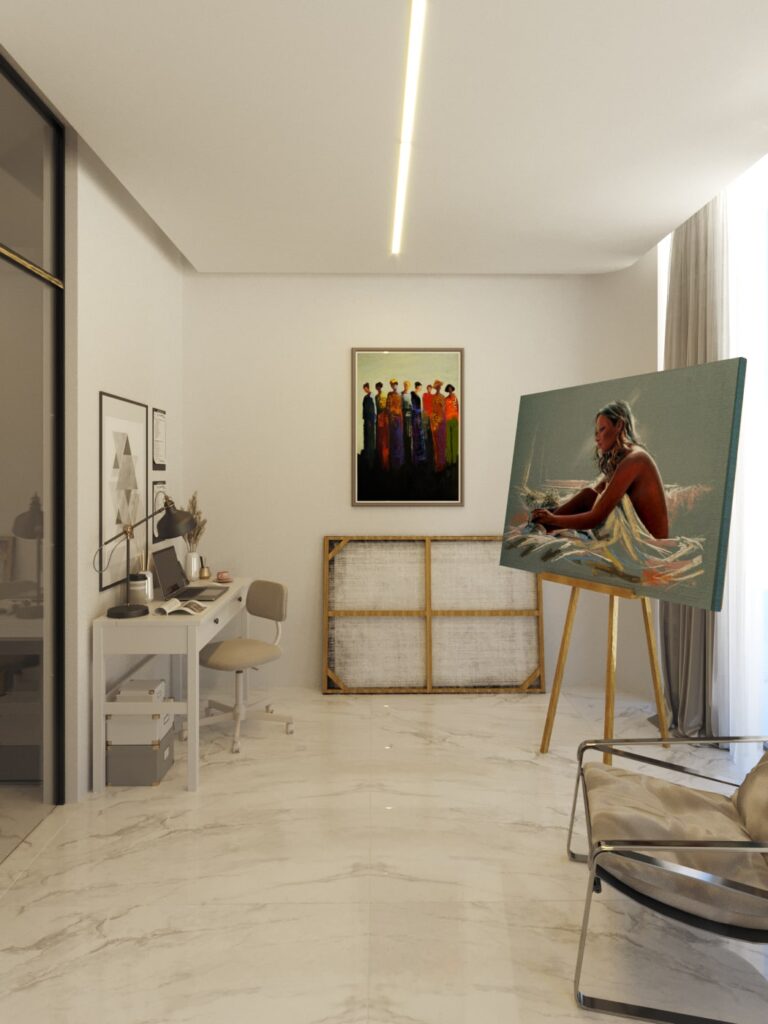
AMA Infinity Villa
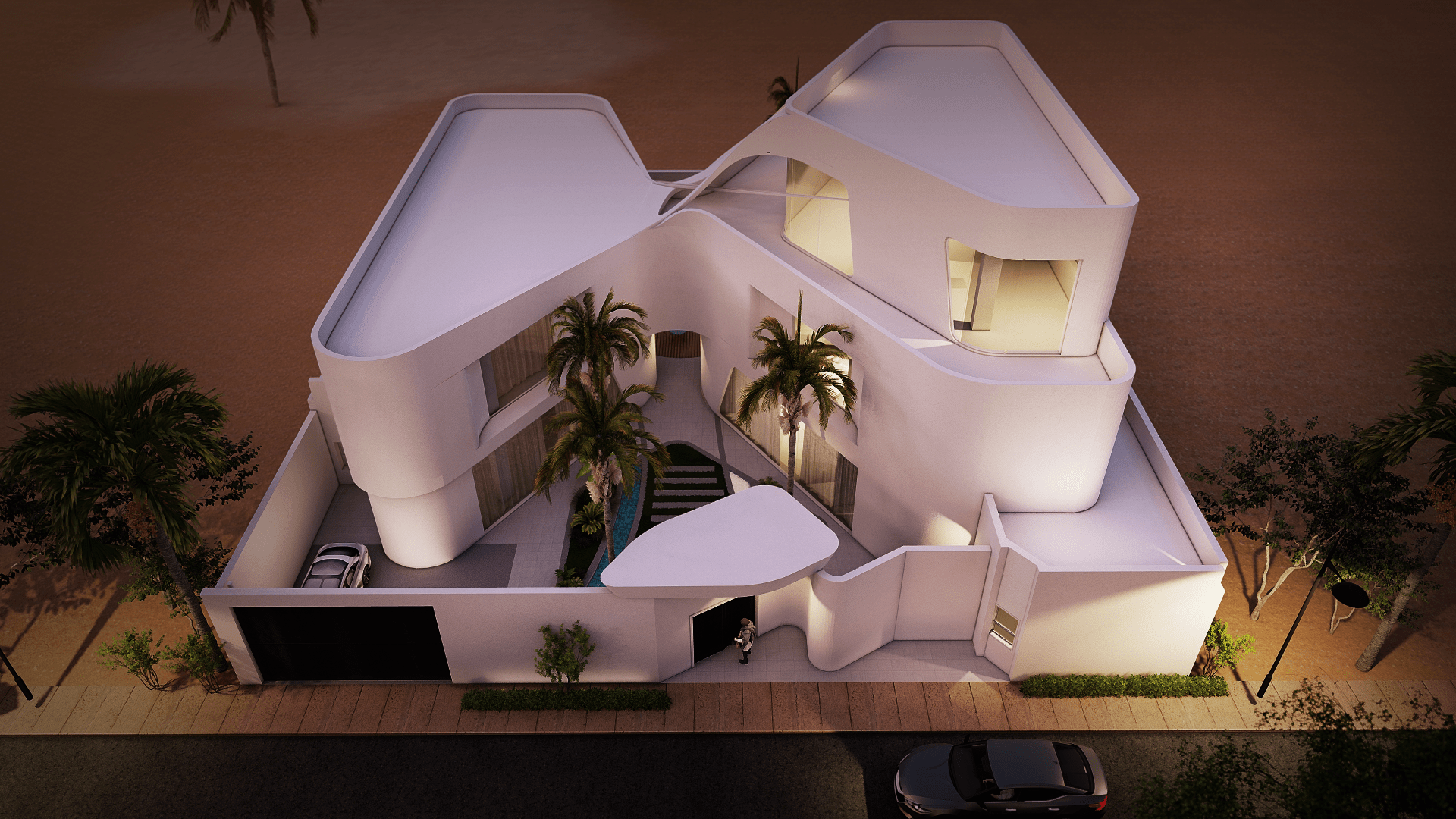
A 800 square meter private villa in Jeddah, Saudi Arabia, developed for a Saudi family seeking a spatial departure from standardized residential models. The project investigates how form, orientation, and spatial continuity can generate comfort without dependence on high-cost materials. Moreover, it positions domestic architecture as an environmental and behavioral response rather than a decorative exercise.

Location: Jeddah, Saudi Arabia
Year: 2021
Area: 2089 sqm
Status: Completed
Category: Residential
Design Style: Modern, Minimalism, Organic
Client: Private
Scope: Design & Built
Services: Design, Housing Consultancy, Project Management
Located within a residential fabric in Jeddah, the site is defined by strong solar exposure, high humidity, and the social requirement of privacy within Saudi domestic life. The northern frontage presented both an opportunity and a constraint. It receives controlled daylight while requiring calibrated openings to maintain interior discretion. Furthermore, the surrounding context follows repetitive villa typologies, often driven by facade display rather than spatial logic. The primary pressure was to create distinction without breaking the continuity of the neighborhood fabric.
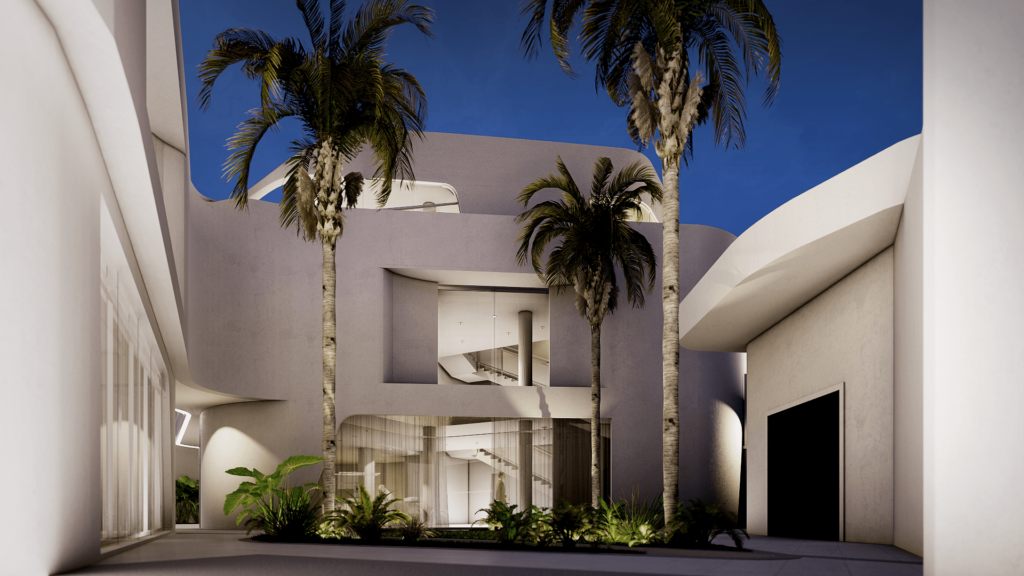
The concept emerged from a direct request by the client for a house that moves beyond the cubic domestic model common in the region. Instead of responding with formal complexity, the project reexamined how curvature could reorganize space. The idea was not to produce sculptural surfaces. Rather, it aimed to soften movement, redistribute light, and allow panoramic internal perception across the plot. In addition, curves were introduced as spatial regulators that dissolve abrupt thresholds and enable continuity between interior and garden.
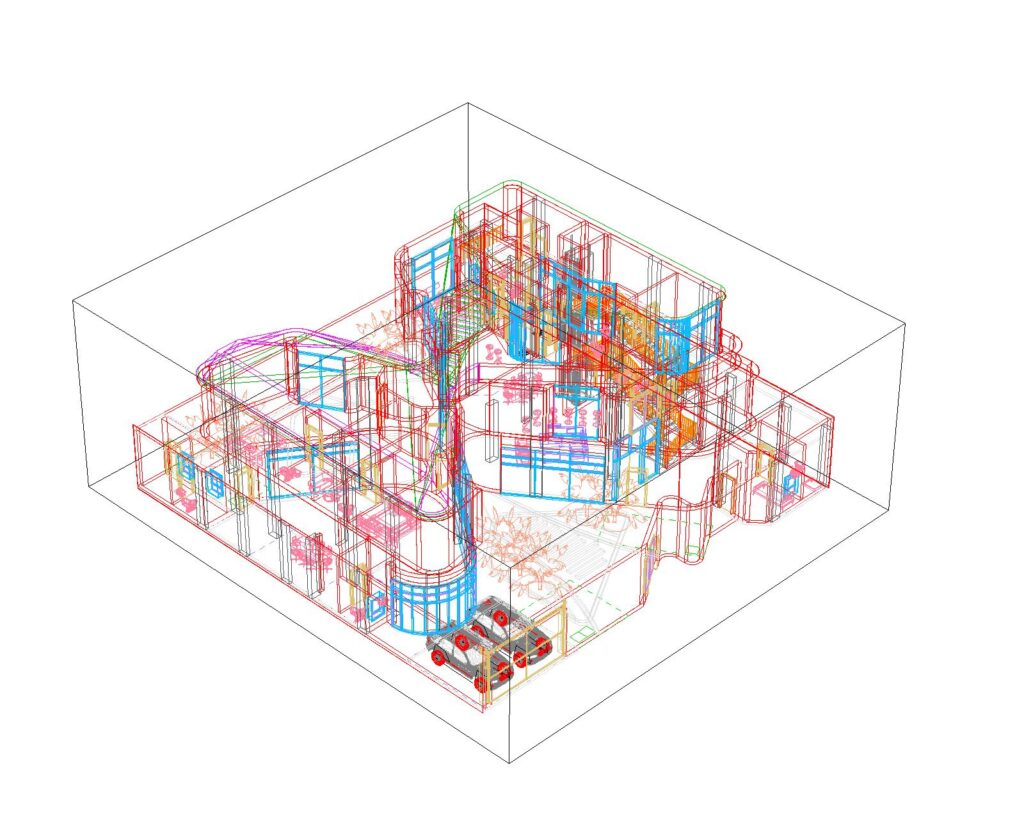

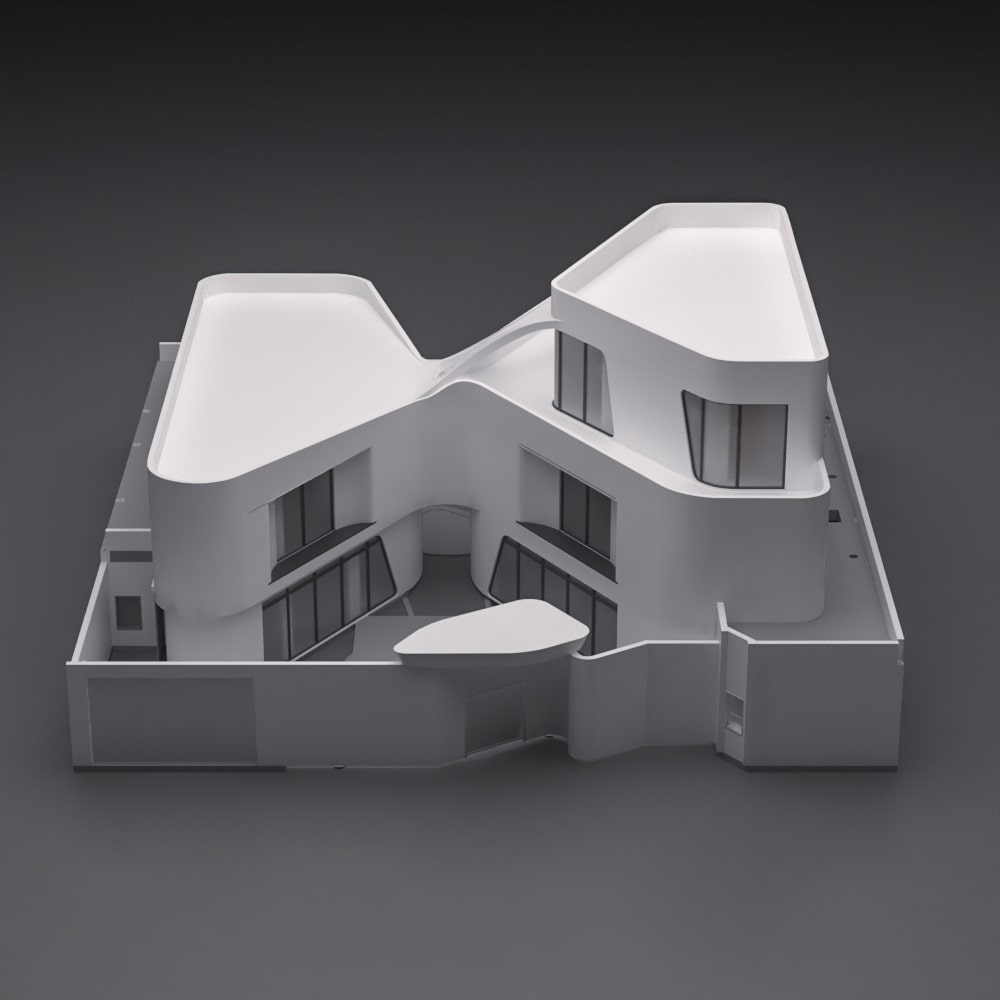
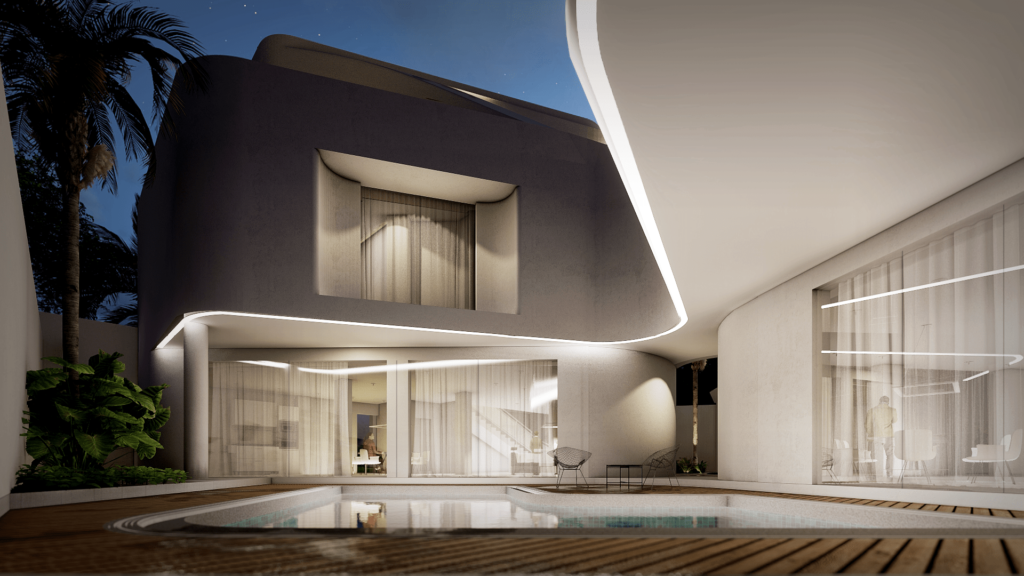
The massing was calibrated to open toward the internal landscape while maintaining controlled edges toward the street. Three primary structural axes organize the plan. This allows columns to retreat from corners and release views toward the pool and garden. As a result, this decision generated extended sightlines across the ground floor and reinforced collective family interaction. Ceiling heights were increased strategically in shared areas to enhance air movement and psychological openness. Meanwhile, private zones remain more contained to reinforce hierarchy.
Facade development followed environmental logic rather than material display. Openings were positioned to capture northern light and limit direct western exposure. Glazing areas were proportioned to maintain thermal control while ensuring visual continuity with the exterior. The material palette remains restrained to prevent construction cost escalation and to ensure long-term durability under Jeddah’s coastal climate.
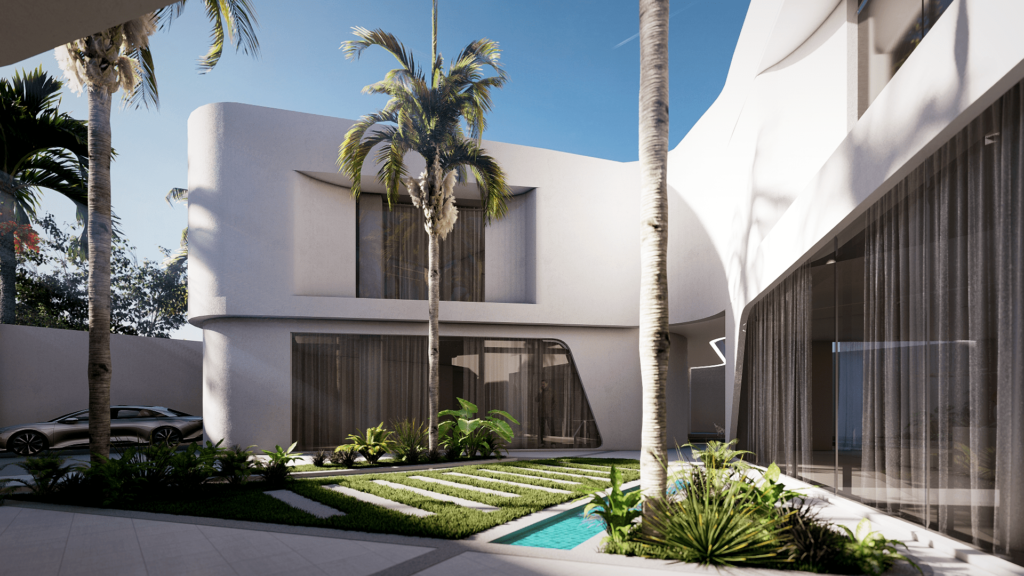

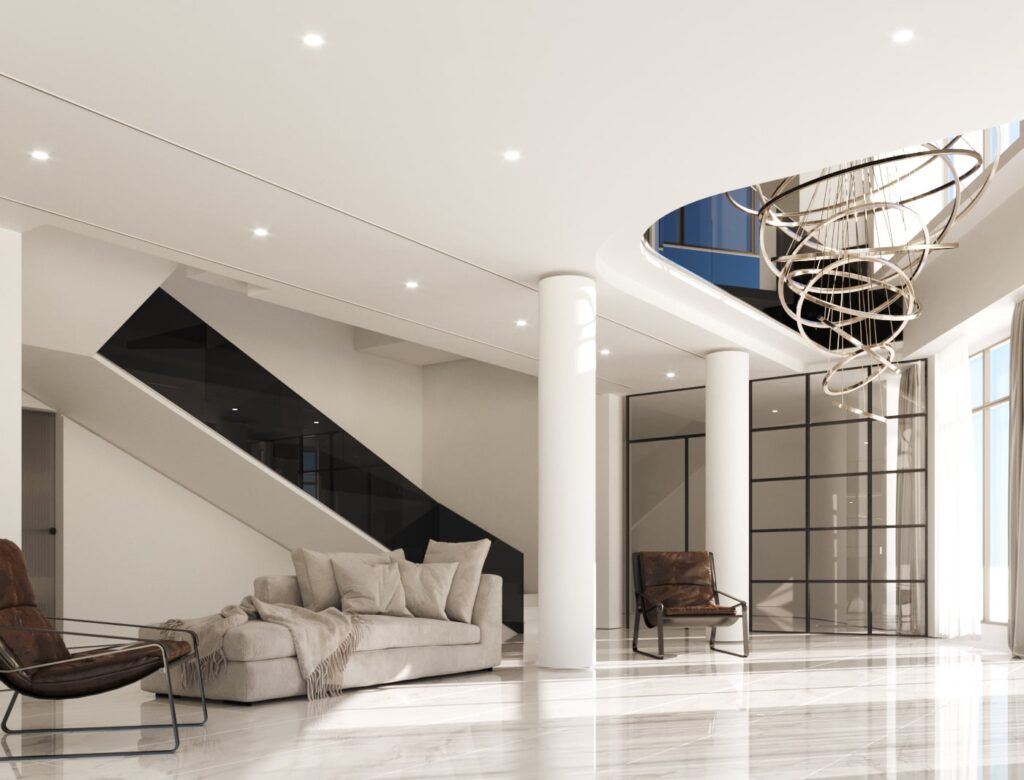
Environmental response focused on passive comfort. Cross ventilation paths were embedded within the plan through aligned openings and internal void calibration. Shading depth and facade articulation reduce solar gain, minimizing mechanical cooling demand. By prioritizing proportion, orientation, and section over surface treatment, the project achieves spatial quality through geometry rather than expense.
Execution required close coordination between design intent and construction feasibility. This was particularly important in translating curved geometries into buildable structural systems within a controlled budget. Detailed studies ensured that form did not compromise structural clarity or extend construction timelines.
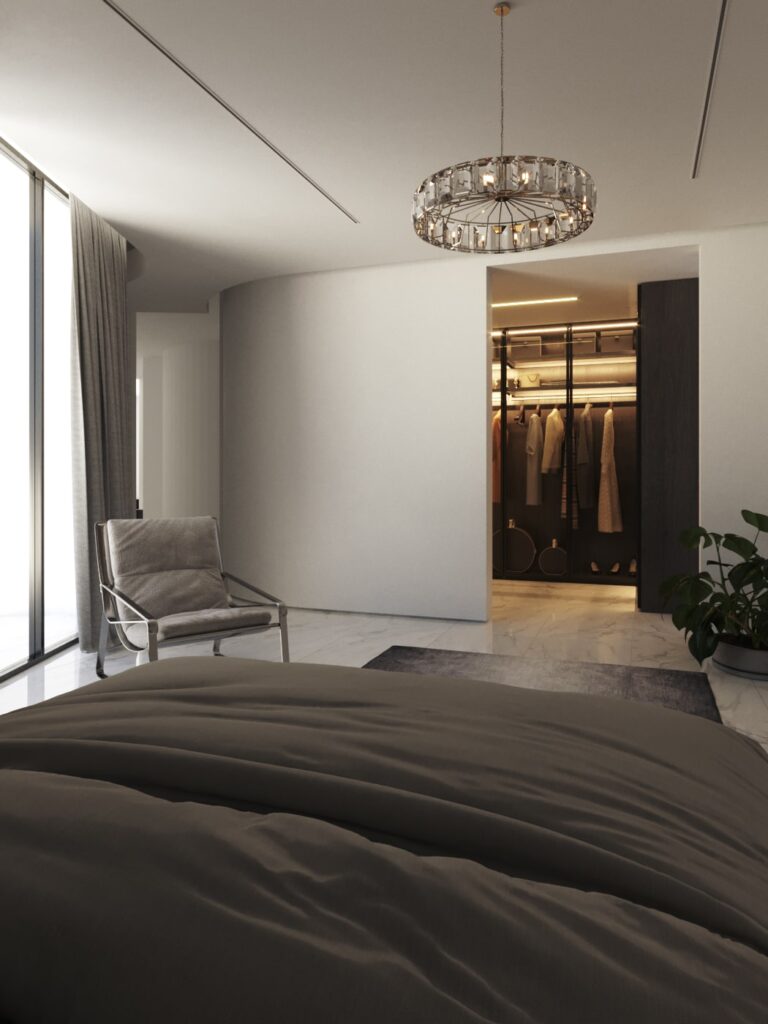
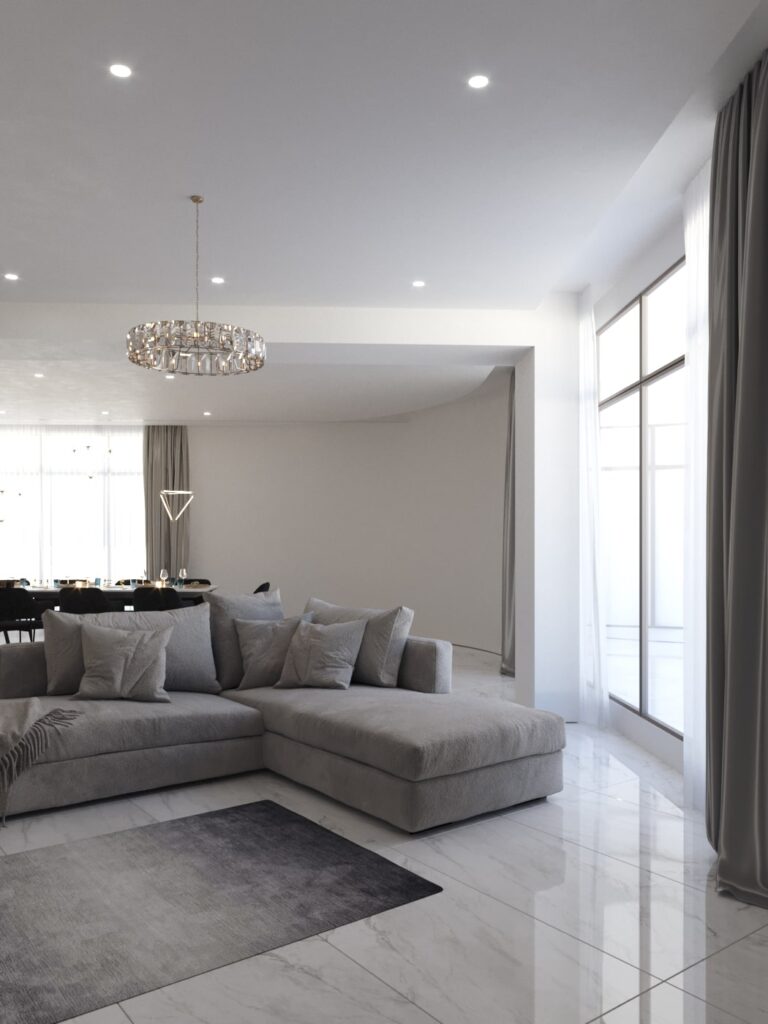
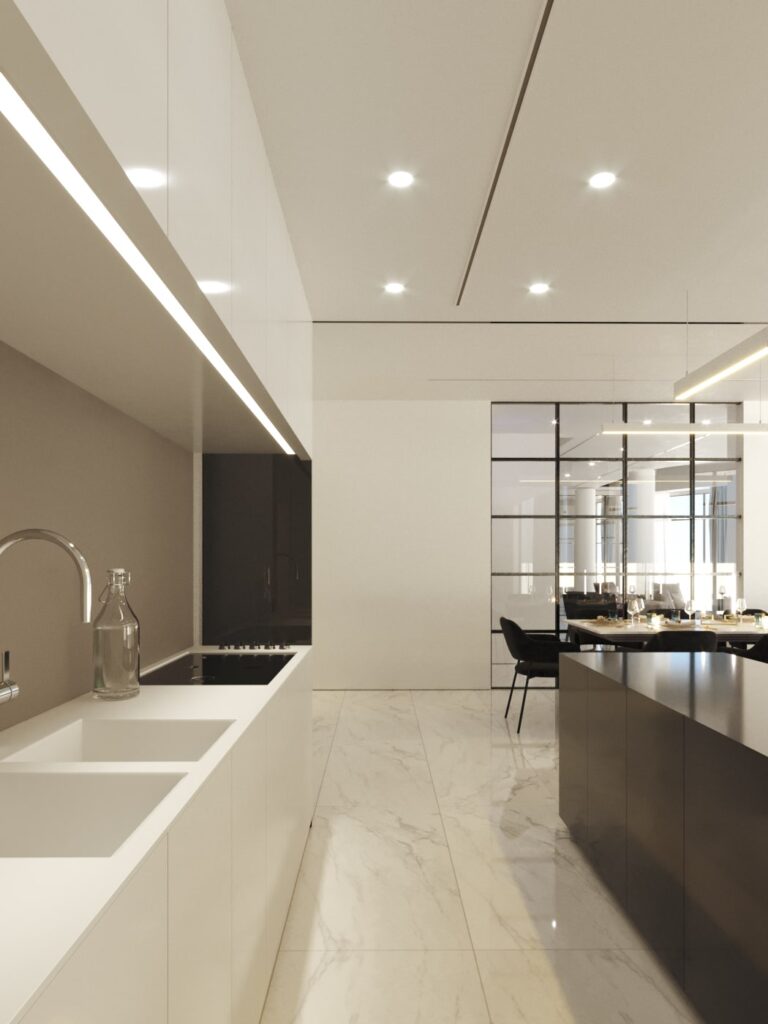
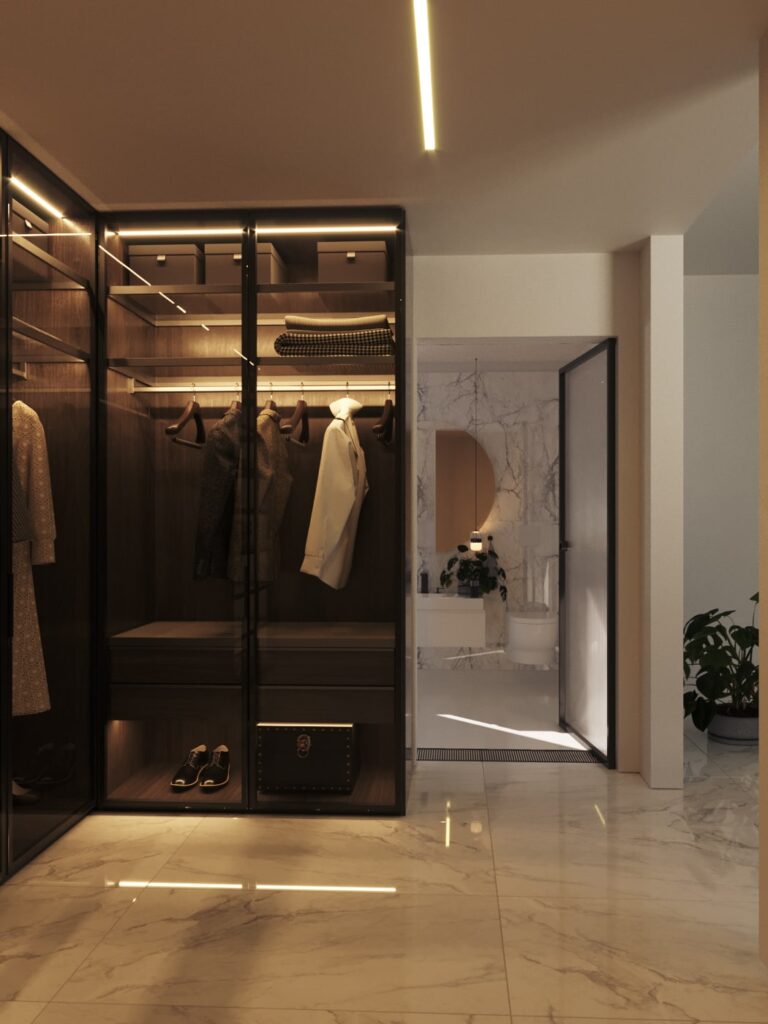

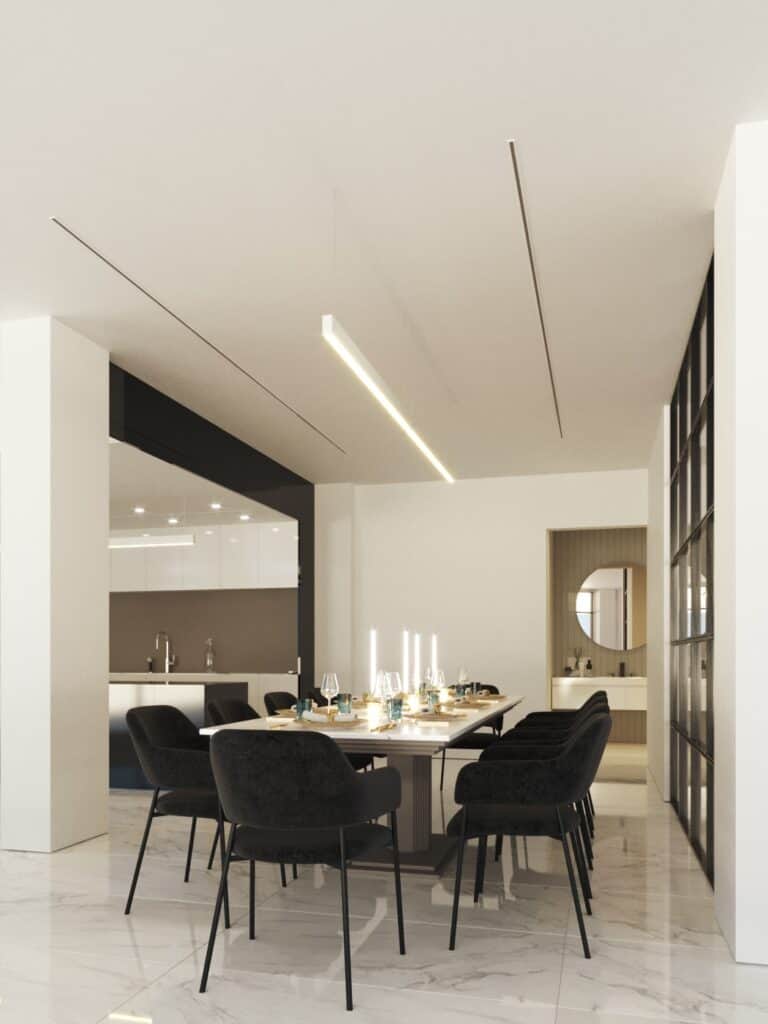
AMA Infinity Villa repositions the Saudi private house as a spatial system shaped by climate, privacy, and family movement. Its value lies in demonstrating that residential distinction can emerge from calibrated mass, continuity of space, and environmental logic. This is achieved rather than from material excess.