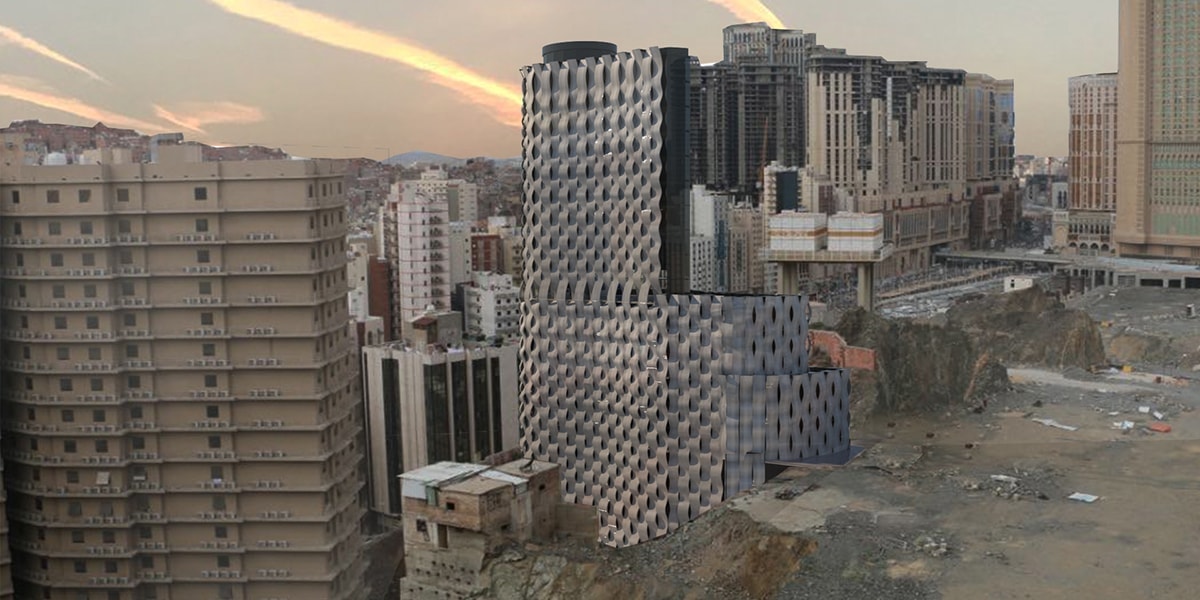
Al Hajlah Hotel
Proximity to the Grand Mosque demands a highly sensitive urban response. The Al Hajlah Hotel project operates as a rigorous highest-and-best-use study, translating complex topographic and meteorological data into a monumental hospitality concept situated less than a kilometer from the Kaaba. The intervention eschews standard commercial extrusion, treating the tower as an active environmental and urban participant.
Location          Makkah, Saudi Arabia
Client            Al Zaho Real Estate Investment Company
Type              Commercial / Hospitality / Research
Status            Concept & Feasibility Study
Year              2019
Principal         Ibrahim Nawaf Joharji
Design System     Performative exoskeleton, passive cooling
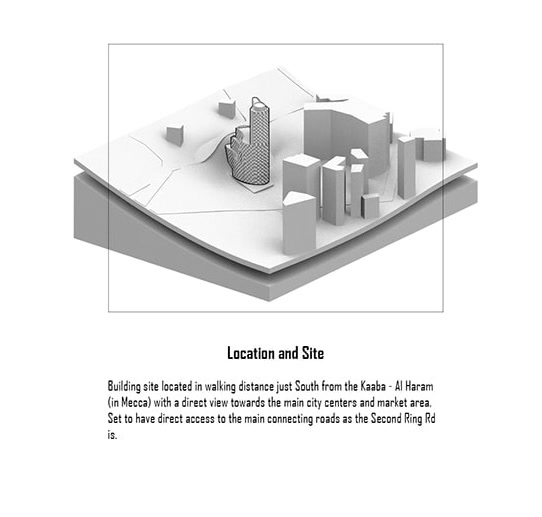
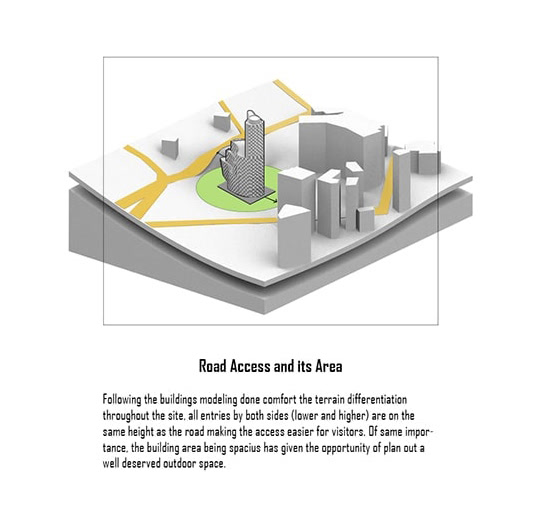
The site occupies a critical transit threshold along the Second Ring Road, characterized by an abrupt topographical shift. Rather than imposing a generic, flattened footprint, the architectural massing is designed to cascade along the changing terrain. This volumetric stepping resolves the ground-level transition while establishing unobstructed, panoramic sightlines toward the Holy Sanctuary from multiple elevations.
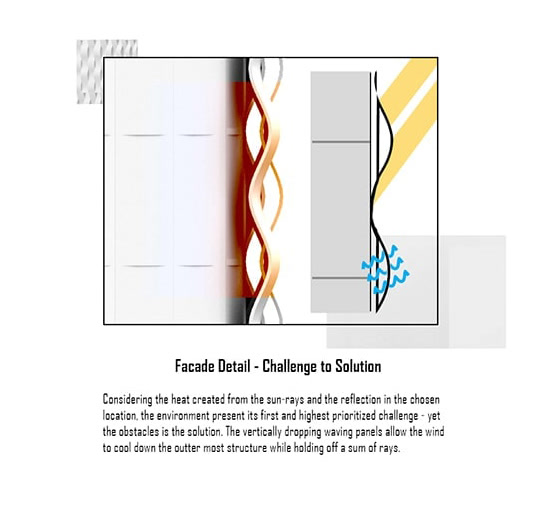
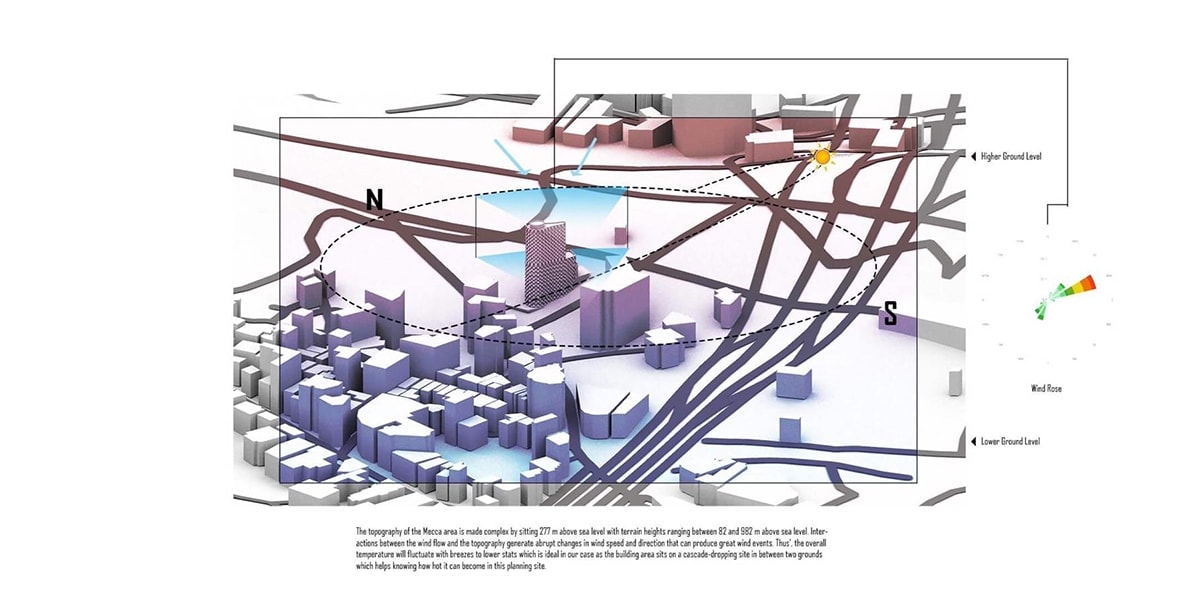

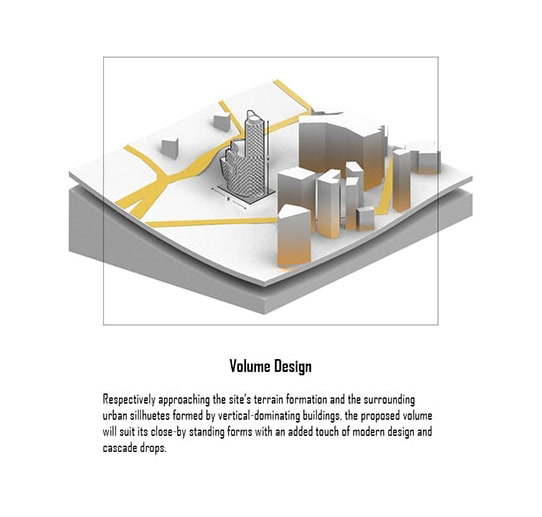
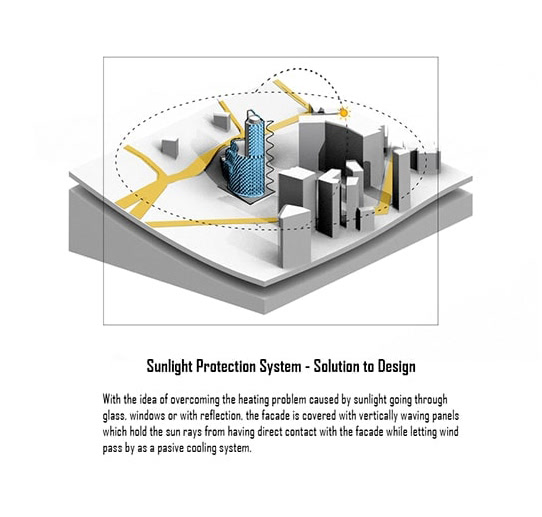
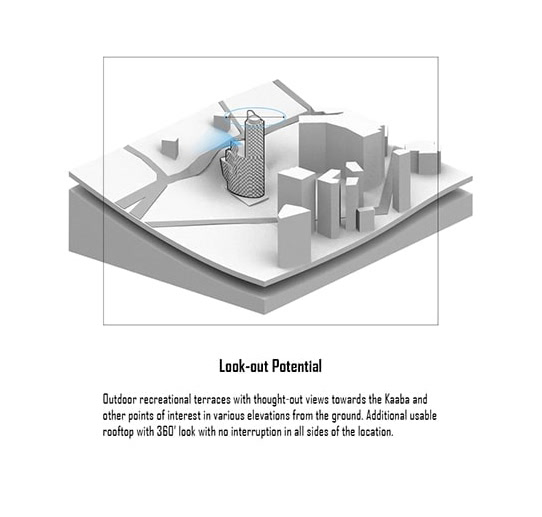
The defining element of the concept is its performative exoskeleton. The wavy, horizontal paneling acts as an intelligent environmental skin. Makkah’s complex topography generates abrupt changes in wind speed; this parametric envelope harnesses those unpredictable patterns to channel cooling breezes while mitigating direct solar radiation. By reducing thermal loads passively, the sustainable facade minimizes the building’s energy consumption without relying on costly mechanical interventions. On the northern elevation facing the Haram, the shading system deliberately dissolves into clear glazing, capitalizing on the naturally shaded orientation to provide uninterrupted views.
The lower podium anchors the tower to the pedestrian scale, integrating tiered outdoor terraces and high-end dining zones. Internally, the rhythm of the external facade translates into vertical spatial envelopes, creating dynamic, wood-textured shadow interplays during sunset. This feasibility study demonstrates how architecture in high-density religious centers can achieve ecological efficiency and structural elegance. For clients seeking advanced contextual analysis and highest-and-best-use studies, our methodology is outlined in how-we-work and bespoke-architecture.