
Cannelloni
The compound as a residential typology has a settled logic in Saudi Arabia: a plot of land, a perimeter wall, and a collection of villas arranged horizontally across the ground. The land is consumed, the privacy is achieved, and the residents live beside each other rather than above each other. Cannelloni asks what happens when that logic is rotated ninety degrees.
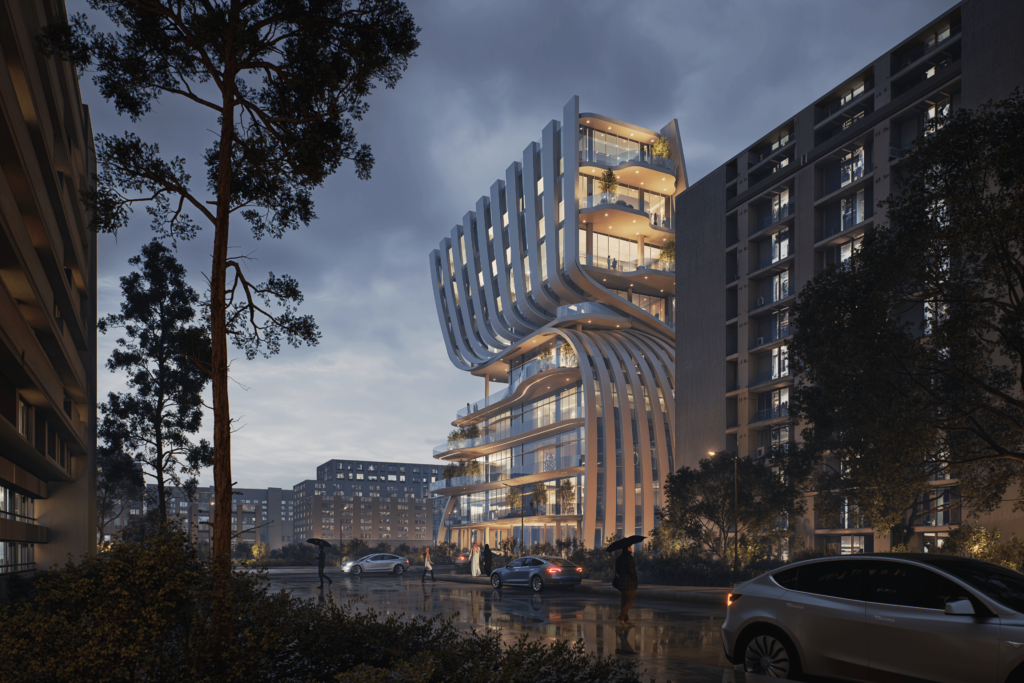
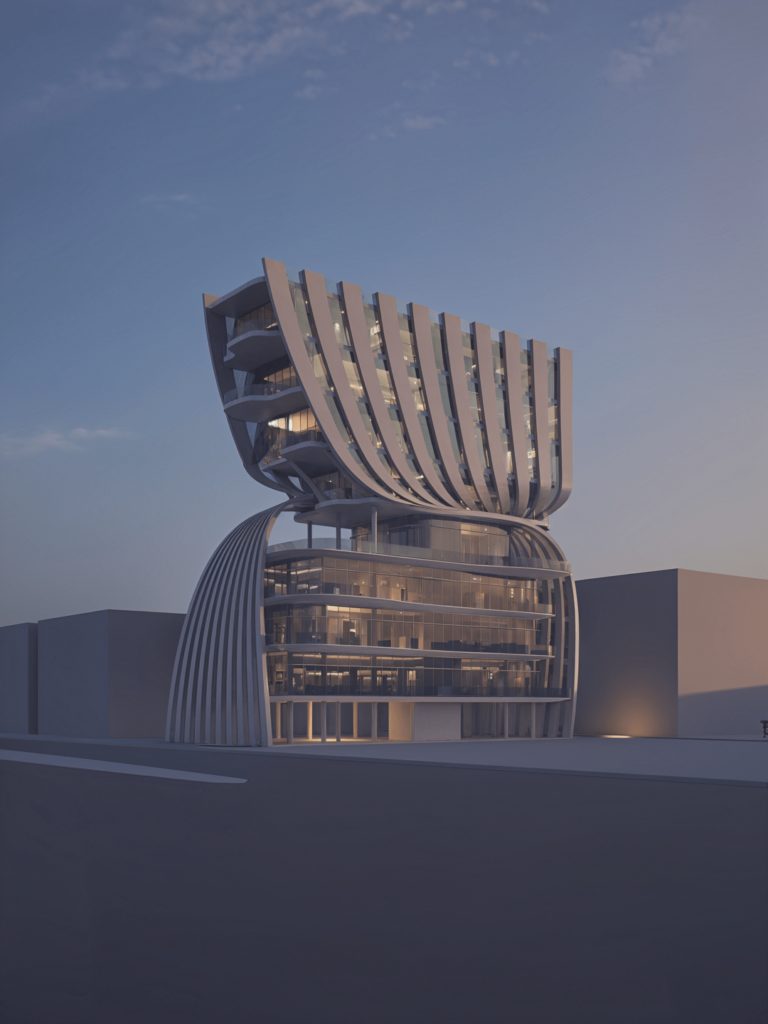
The project is a concept study developed for a private client in Jeddah — a vertical compound in which the individual villas that would conventionally occupy separate ground-floor footprints are stacked into a single organic tower. The 1,300 square meter plot produces 14,356 square meters of total built area across the vertical arrangement, a programmatic yield that horizontal organization on the same ground could not approach. Each unit retains the spatial character of a villa — its own floor, its own outdoor threshold, its own relationship to light and view — while the building as a whole occupies the compact footprint of a tower rather than the spread footprint of a gated compound.
Location          Jeddah, Saudi Arabia
Client            Private
Type              Vertical Villa Compound — Concept Study
Plot Area         1,300 m²
Total Built Area  14,356 m²
Status            Concept — Ongoing
Year              2024
Principal         Ibrahim Nawaf Joharji
Scope             Parametric Design, Residential Typology Research
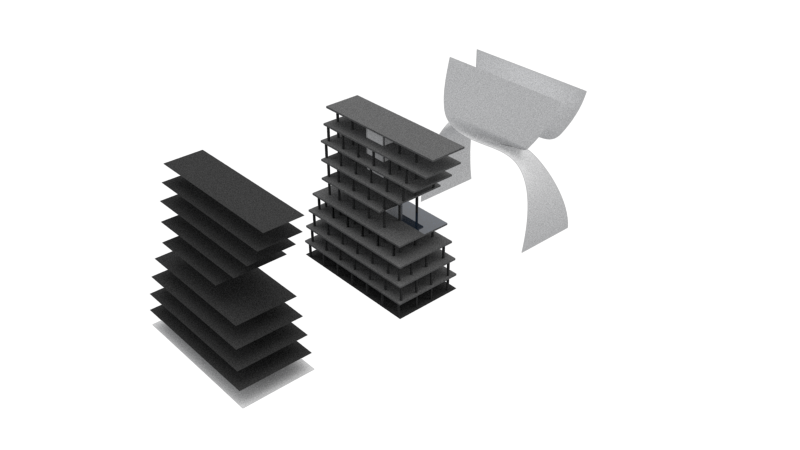
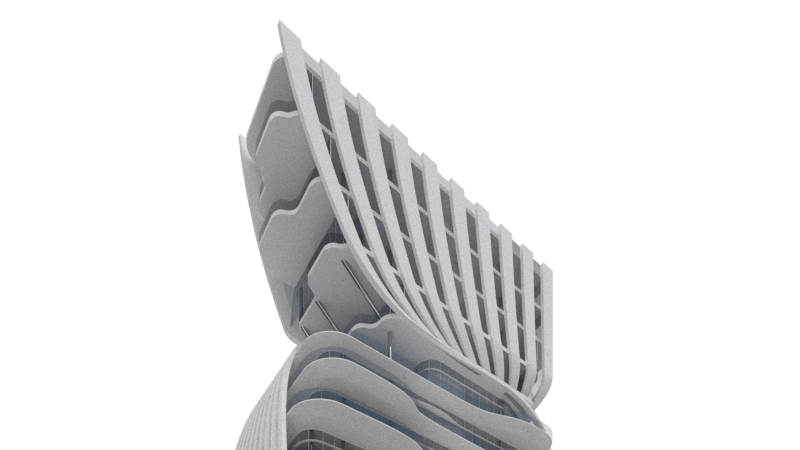
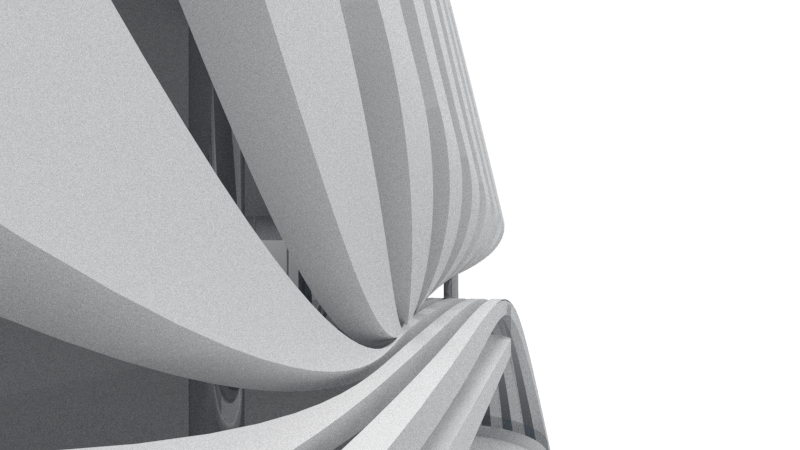
The name Cannelloni carries the project’s formal logic in a single word. The pasta’s structure — cylindrical, hollow, stacked — describes exactly what the building does with the villa unit: it takes a complete domestic volume and places it within a vertical system that allows multiple such volumes to coexist without compromising the integrity of any individual one. The organic parametric geometry of the building’s exterior follows from this stacking logic. Each villa’s section produces a slight shift in the building’s profile as it rises, the accumulated offsets generating the curved, articulated silhouette that distinguishes the building from a conventional residential tower. The form is not applied to the stack — it is produced by it.
The transition spaces between exterior and interior are the design’s primary spatial investment at the unit level. Each villa is given a threshold zone — a buffer between the building’s shared vertical circulation and the private interior of the home — that manages the shift from the collective to the individual gradually rather than abruptly. This threshold is where light changes, where the view opens, and where the acoustic separation from the floors above and below is established architecturally rather than solely through structural isolation. In a horizontal compound, this role is played by the garden, the driveway, the gate. In the Cannelloni building, it is played by a designed transitional space that performs the same psychological function within a vertical section.
Natural ventilation was addressed through the building’s organic massing rather than through mechanical supplementation alone. The parametric study of the building’s form tested multiple sectional configurations against the prevailing wind conditions of Jeddah’s coastal climate, the organic curves of the exterior profile shaped in part by the need to direct airflow through and around the building rather than deflect it entirely. Large windows on each villa’s primary living face admit natural light without compromising the thermal performance of the envelope, the glazing specification calibrated against the solar exposure of each unit’s orientation. The material palette — natural stone, glass, and polished steel in neutral and earth tones — was selected to hold its quality against Jeddah’s climate over time while reading as continuous with the organic geometry of the form rather than in contrast to it.
The Cannelloni concept belongs to a sustained inquiry at INJ Architects into the conditions under which vertical living can carry the spatial quality and the sense of privacy that Saudi residential culture assigns to the horizontal compound — an inquiry that treats the typological shift not as a compromise demanded by land scarcity but as a design opportunity that the horizontal compound cannot offer. The methodology governing this research is detailed in how-we-work. For developers and private clients considering vertical residential typologies in high-value urban plots, the engagement framework is outlined in bespoke-architecture.

“`