Embrace Nature
WWF Nature Reserve: Avian Biomimicry
Architecture within fragile ecosystems cannot operate as an imposition; it must function as a calculated camouflage. In an era where unchecked human encroachment, deforestation, and habitat destruction correlate directly with global ecological crises, the design of a nature reserve requires a fundamental shift in hierarchy: the wildlife must dictate the spatial parameters, and the human observer must be structurally subordinated.
Developed in response to a call by the World Wildlife Fund (WWF), this landscape intervention in Italy seeks to resolve the inherent tension between eco-tourism and habitat preservation. The objective was not merely to construct observation platforms, but to engineer a spatial boundary that allows human education and immersion without triggering defensive responses from the regional fauna. The architecture must act as an invisible mediator, facilitating biological development while actively combating the spatial behaviors that lead to inappropriate land use.
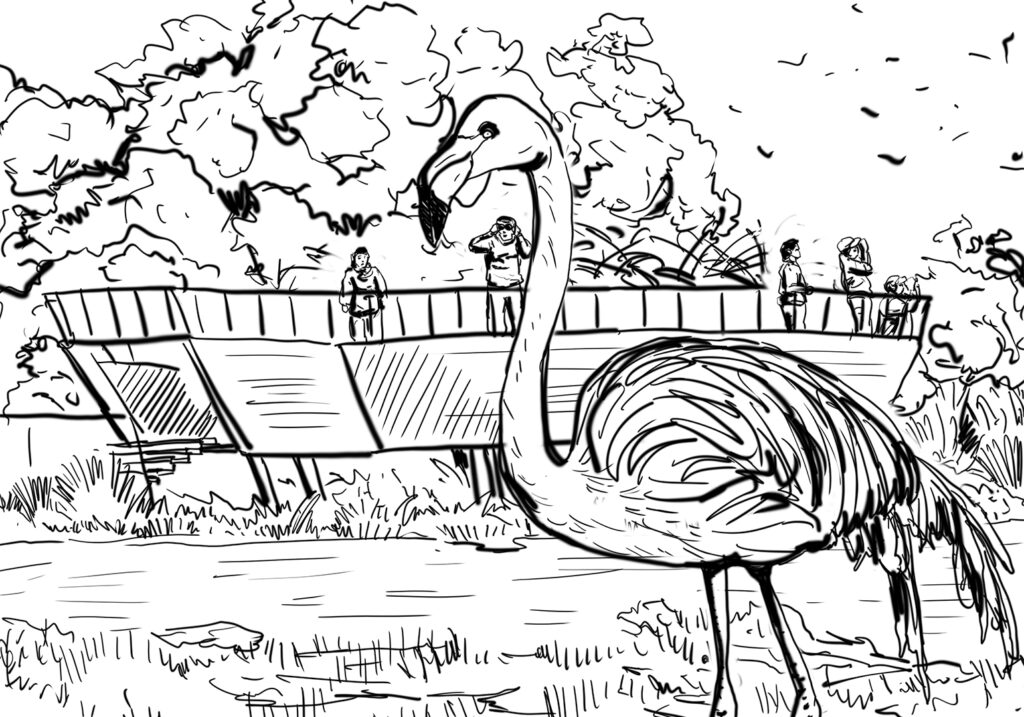
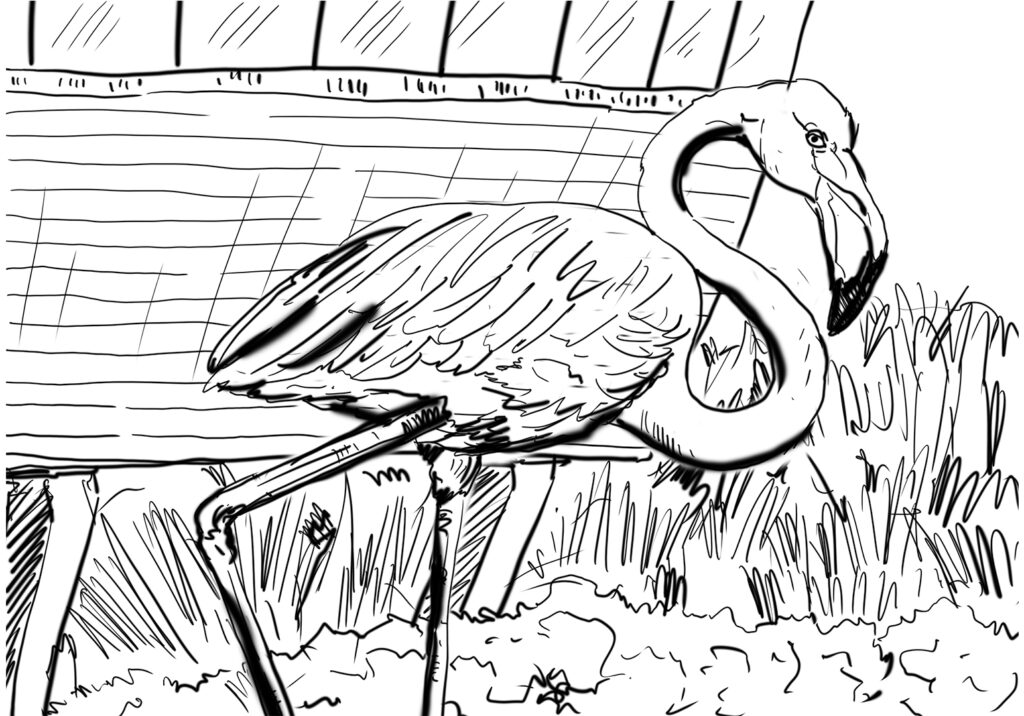
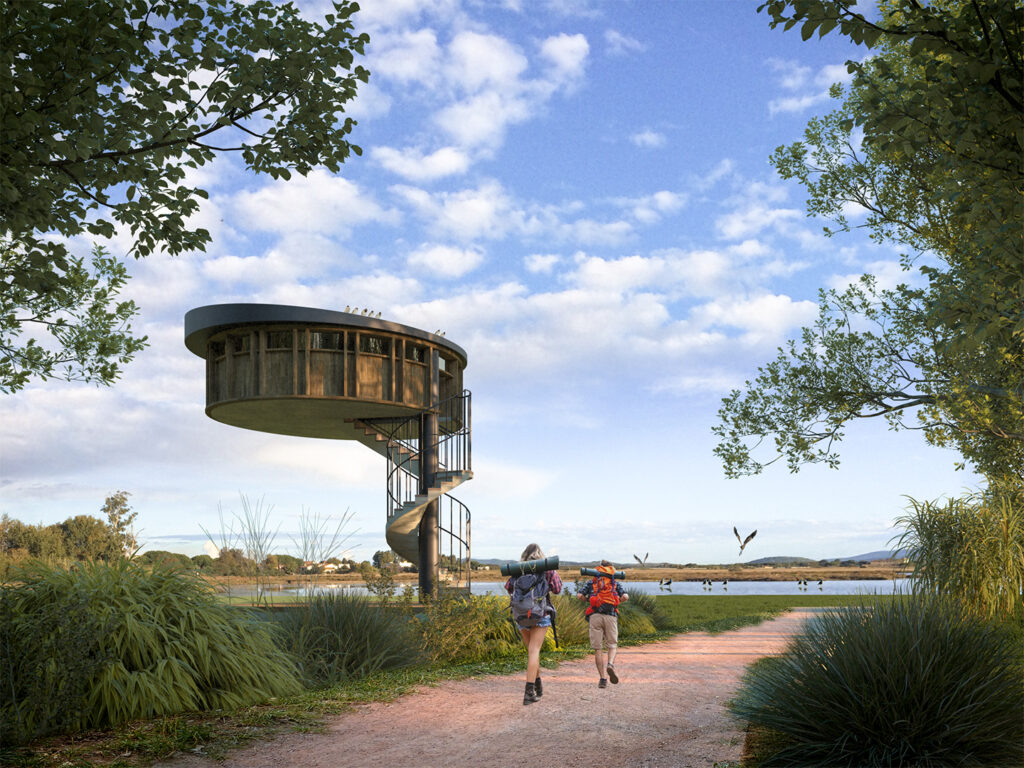
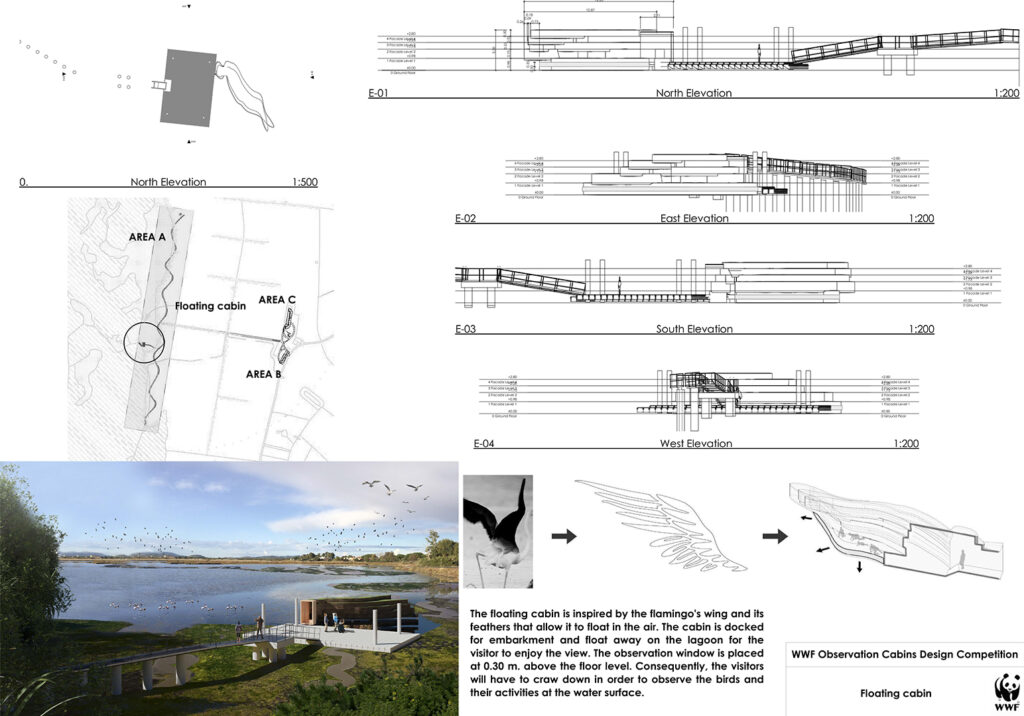
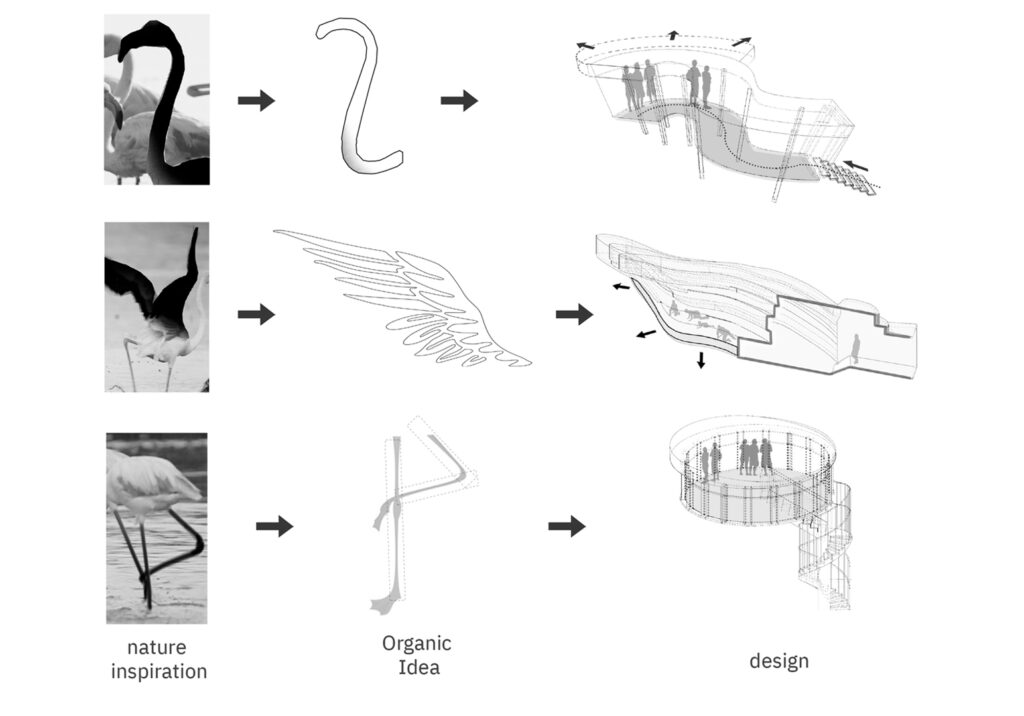
The formal generation of the project relies on biomimetic abstraction rather than arbitrary geometric gestures. The dominant regional species—the flamingo—serves as the structural and programmatic baseline. The physical anatomy of the bird is translated directly into architectural typologies: the zigzag floor plan of the primary circulatory paths mimics the articulation of the neck, while elevated watchtowers adopt the slender, low-impact structural footprint of the flamingo’s legs. Floating cabins, resembling resting wings, hover above the water’s surface, introducing a dynamic, responsive element that moves in harmony with the fluctuating landscape.
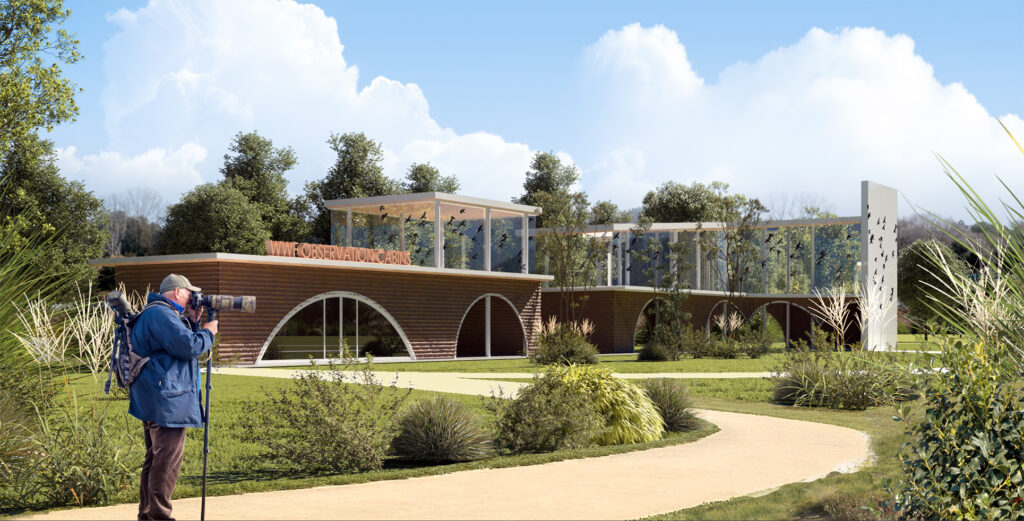
Optical defense forms the core of the architectural envelope. Birds possess highly sensitive motion-detection vision; therefore, the cabins are engineered as visual blind spots. By elevating the observation apertures 1.6 meters above the interior floor and utilizing highly reflective exterior glazing, the structure effectively erases the human silhouette from the avian line of sight. The winding circulatory paths extend this logic, forcing a deliberate, slow-paced movement over terrestrial and aquatic zones, immersing the visitor without penetrating the ecological threshold.

Location          Italy
Type              Landscape Design & Ecological Architecture
Status            Design Proposal
Year              2021
Client            WWF
Principal         Ibrahim Nawaf Joharji
Focus             Biomimicry, avian visual camouflage, ecosystem integration
The WWF Nature Reserve functions as an instrument for ecological preservation rather than a conventional architectural asset. By subordinating human presence through calculated reflective massing and biomimetic form, the project physically manifests the mandate of the Global Environment Fund: repairing the fractured relationship between human society and the natural environment. This rigorous alignment of biological behavior with structural logic reflects the office’s core commitment to sustainability. The analytical modeling required to translate organic behavior into architectural data is detailed in how-we-work. For institutions requiring deeply contextual environmental architecture, the engagement framework is outlined in bespoke-architecture.