
Islamic Geometric Chandelier
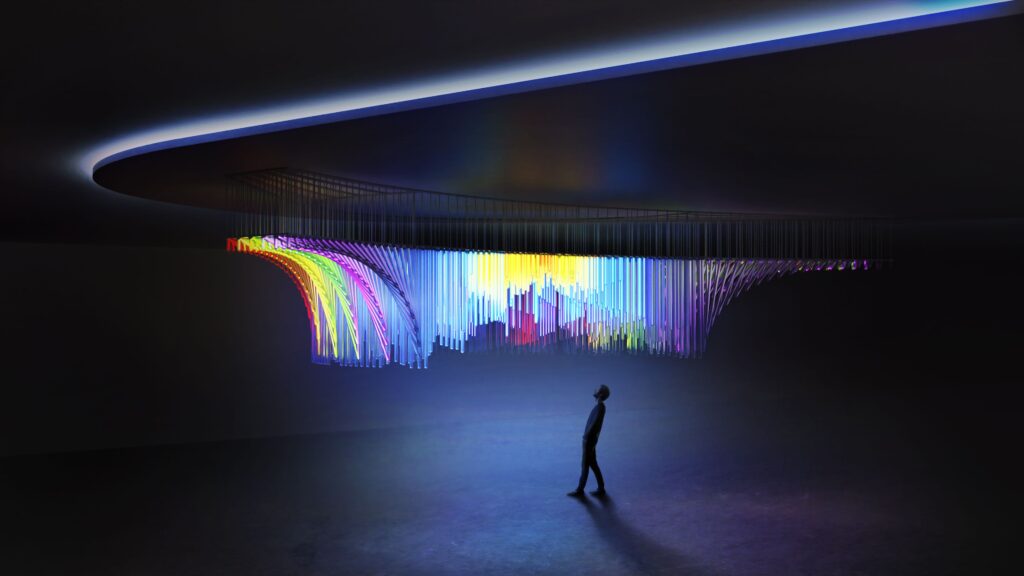
The question that opened this project was not aesthetic. It asked whether the intellectual systems encoded in Islamic architecture — its mathematical logic, its proportional grammar, its treatment of light could be extracted from their historical surfaces and reassembled into a single contemporary object, without quotation and without nostalgia.
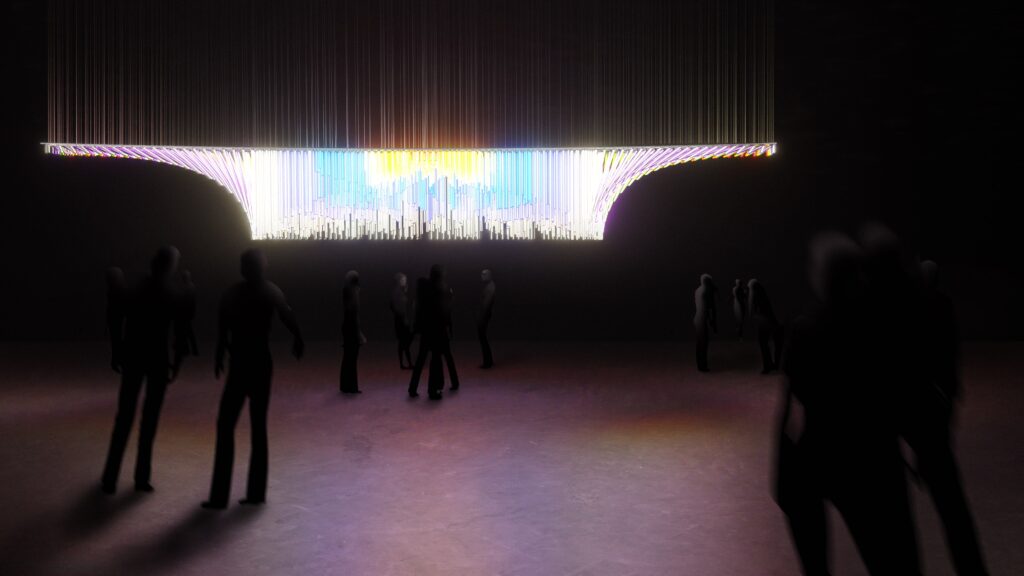
The commission called for an interior installation within a museum environment a space dedicated to preserving material culture, where an object that merely echoes historical form would be redundant. The challenge was not to represent Islamic heritage visually but to recover the generative rules beneath it: the mathematical decisions, the spatial ratios, the logic of how light was understood as an active material rather than a passive byproduct of enclosure. The design had to be legible to both the architectural critic familiar with this tradition and the general visitor encountering it without that knowledge.
Location          Museum Environment
Type              Interior Installation — Glass Sculpture
Status            Completed
Year              2021
Principal         Ibrahim Nawaf Joharji
Design System     Islamic geometric grammar, Quranic color system, Adhan acoustic analysis
Materials         Hand-sculpted glass, structural support system
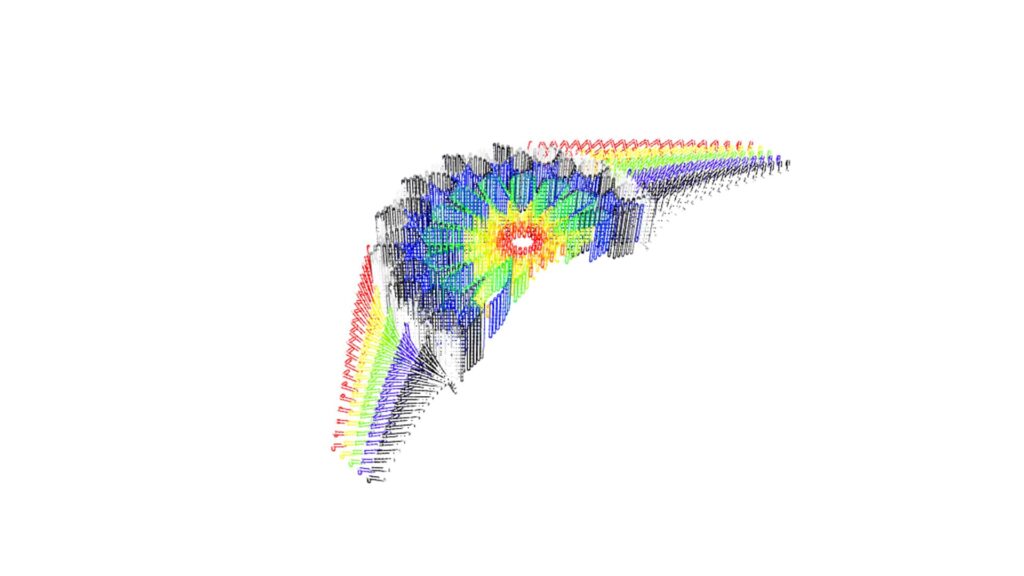
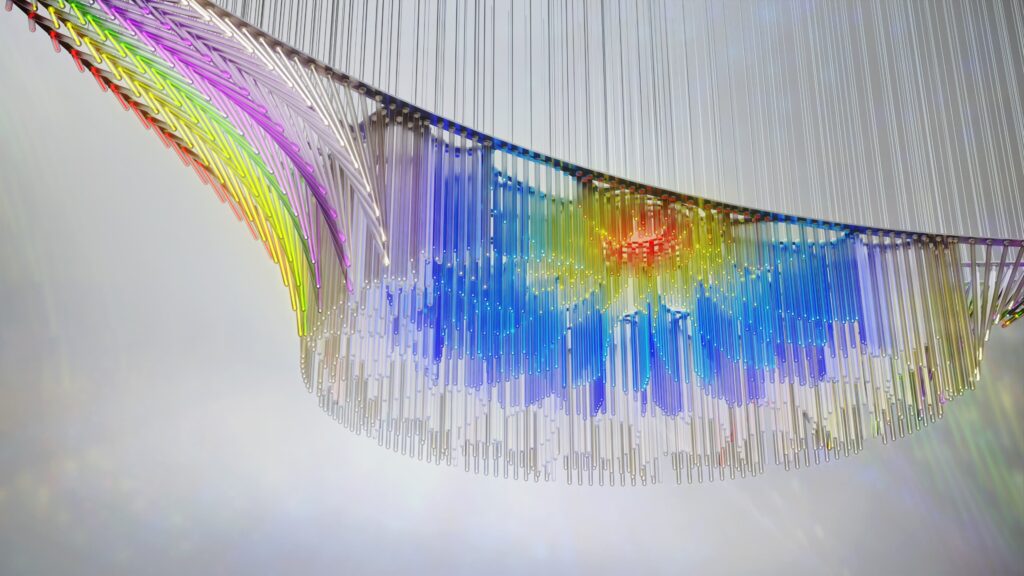
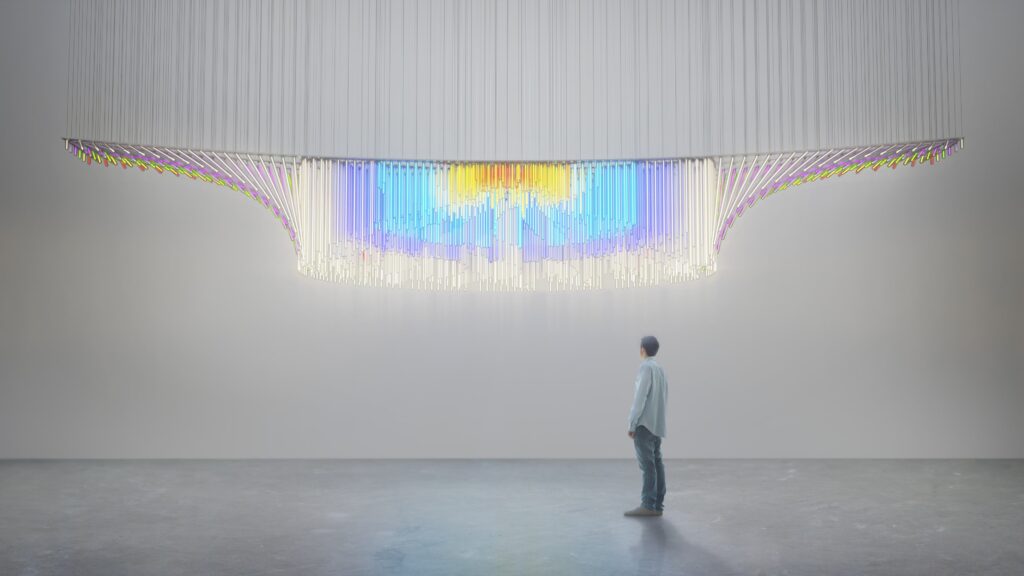
The work was built from three source systems, each operating independently before being resolved into a single physical object. The first is the point-and-line geometry of classical Islamic ceiling decoration not its visual result but the radiating mathematical logic that produces it. This geometry was subjected to a logarithmic transformation that introduces curvature, echoing the way sound disperses outward from a fixed point. The ceiling becomes the acoustic field. The second system is chromatic. The five colors explicitly named in the Quranwhite, black, green, yellow, and red were treated as a closed set. No color outside this system appears in the work, and no color within it occupies more surface than its frequency of textual repetition in the Adhan dictates. The palette was assigned, not chosen.
The third system is acoustic. The Adhan the Islamic call to prayer carries within its phonemic structure a precise letter count and a measurable frequency envelope. The vertical rhythm of the sculpture’s kinetic movement follows the vibration pattern of that acoustic wave. The letter count of the call establishes the proportional ratios that govern the physical dimensions of the object. What the visitor reads as form and movement is, in structural terms, a translation of sound into space — a material transcription of something heard rather than seen.
Glass was selected not for its decorative associations but for its physical behavior. It holds color as transmitted light, shifting its chromatic character with changes in viewing angle and ambient daylight. This aligns precisely with the Islamic architectural tradition’s understanding of light not as illumination but as a spatial medium — something that enters, moves through, and changes the nature of what it touches. The object does not project light outward. It holds it, filters it, and releases it differently depending on where the viewer stands and what hour of day it is.
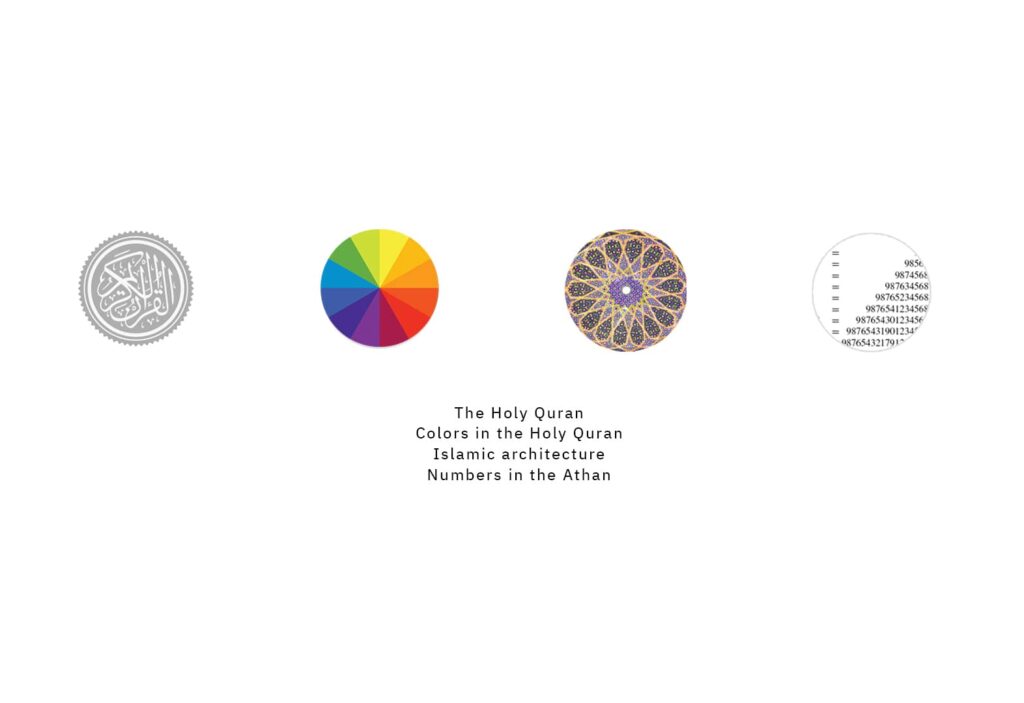
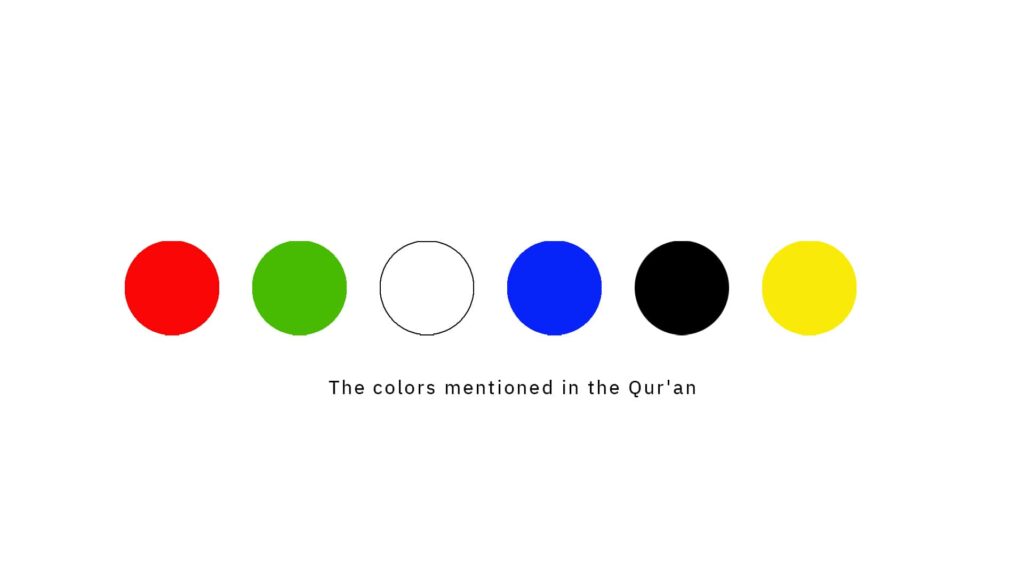
The three systems geometry, color, and acoustic proportion were not layered onto a pre-existing form. They were the form’s generative material. Each design decision traces back to a rule external to subjective judgment: a mathematical transformation, a textual frequency, a measured vibration. This is what separates the work from decorative production. The object is not ornamented with Islamic references it is constructed from Islamic intellectual structure. The surface is the outcome of the logic, not its vehicle.
The kinetic dimension completes the translation. As the sculpture moves through the acoustic envelope of the Adhan rising and descending with its frequency pattern the colored glass elements shift their relationship to the ambient light continuously. The work is never in the same state twice. A visitor who stands before it at morning prayer and returns at midday encounters two different compositions within the same object. The museum context, typically understood as a space of fixed display, becomes a space of temporal variation.
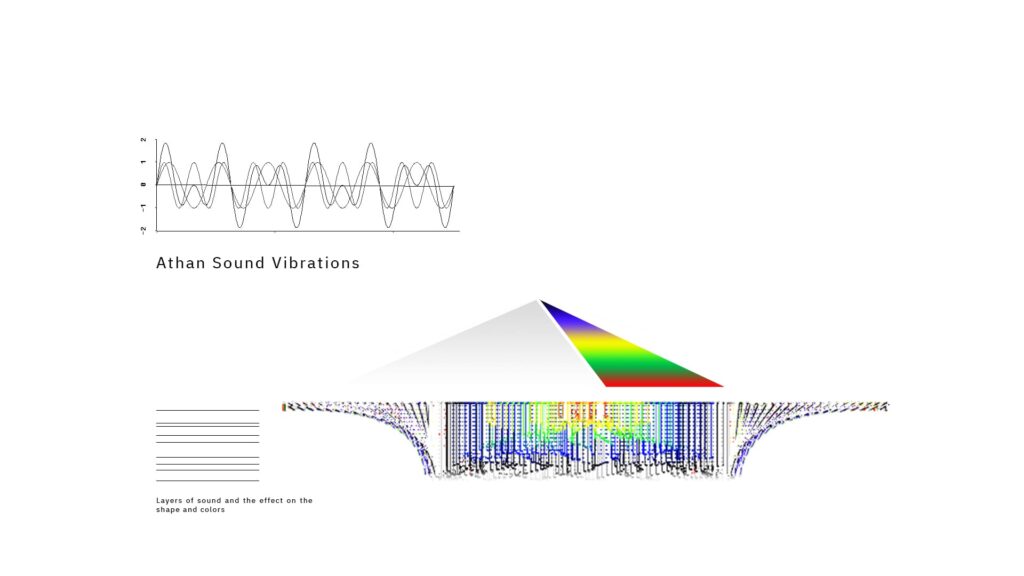
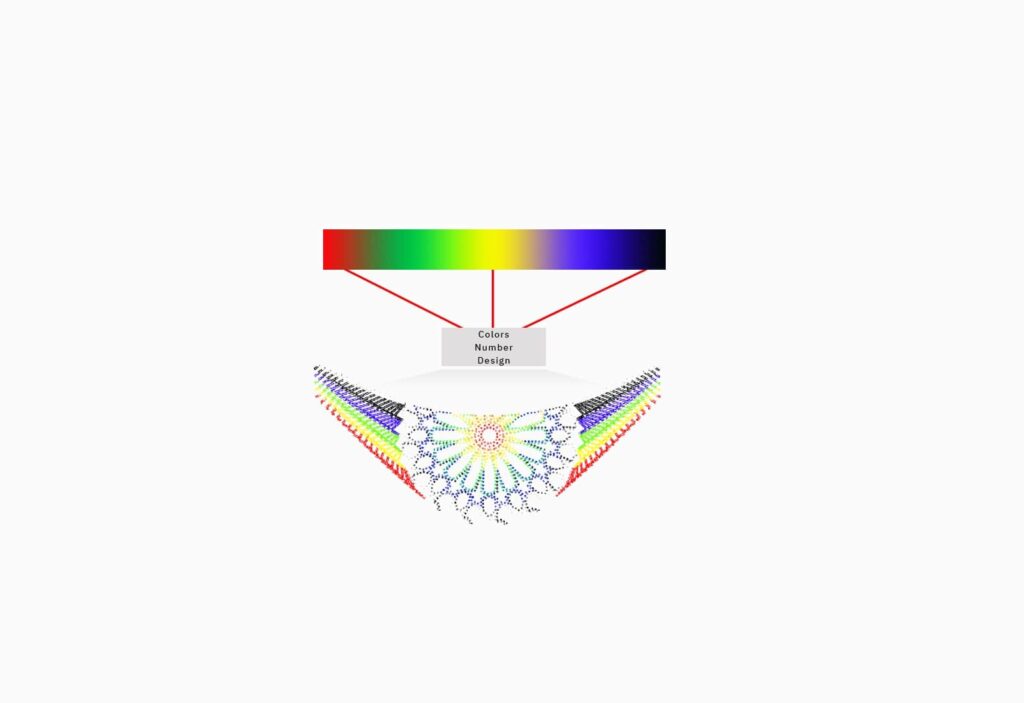
The SoundCloud embed below carries the Hijazi Adhan whose acoustic structure governed the kinetic and proportional decisions of this work.
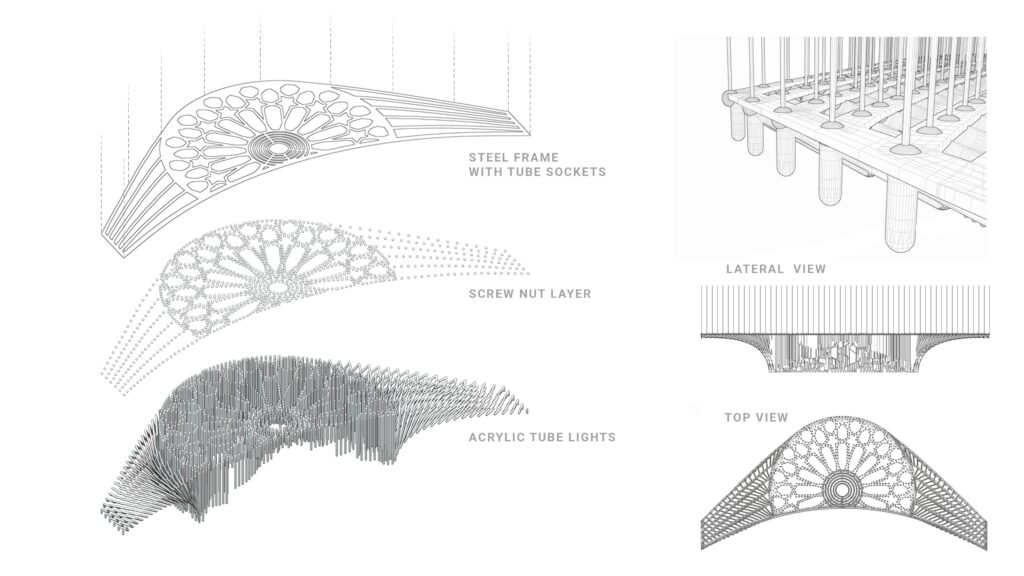
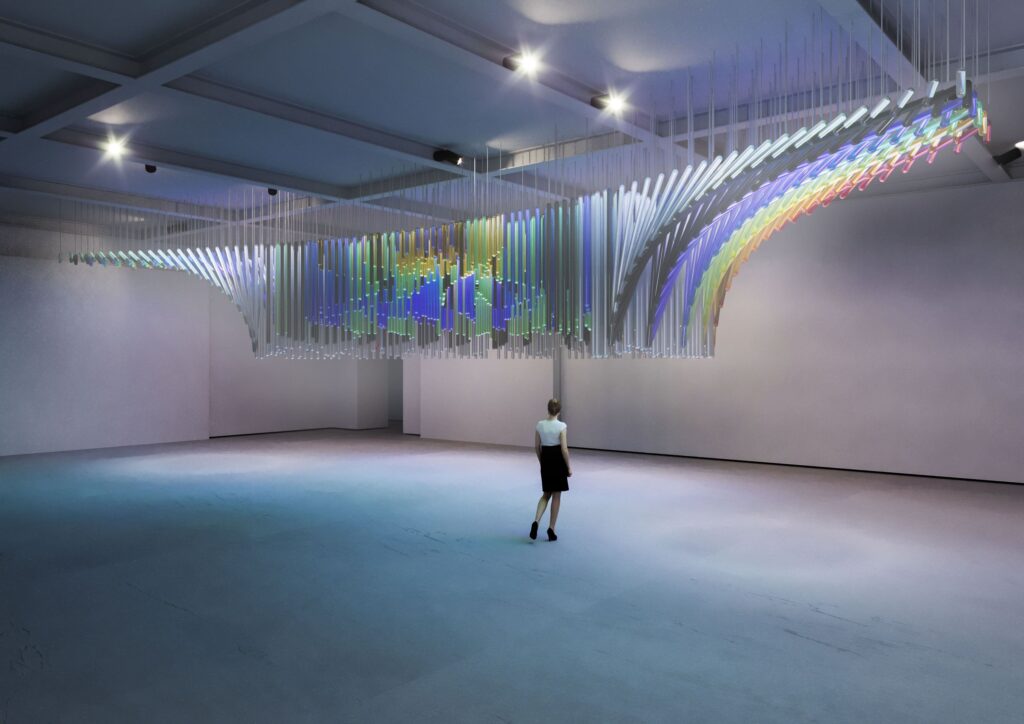
This installation belongs to a sustained inquiry at INJ Architects into the intellectual structure of Islamic spatial culture not its visual grammar as a stylistic resource, but its underlying systems of proportion, color, and acoustic space as active design generators. The methodologies that inform this type of research-driven work are detailed in how-we-work. For cultural institutions and collectors considering commissions of comparable depth, the engagement framework is outlined in bespoke-architecture.