
Last Meal
The Last Meal research initiative by INJ Architects examines the spatial impact of app-based food delivery on modern cities. It identifies a gap between existing urban design codes and the decentralized logistics networks of motorbike couriers. The project advocates for architectural standards that accommodate delivery systems to improve urban efficiency.
The proposed design code introduces standardized infrastructure like dedicated pickup windows, rider waiting zones, and specialized parking. These guidelines aim to enhance safety and sustainability by integrating delivery logistics into the built environment. This approach treats couriers as essential urban actors requiring formal spatial recognition and professional design support.
An Urban Design Code for the Motorbike Delivery Era
The proliferation of app-based food delivery services has produced a new and largely unacknowledged layer of urban activity. Across dense cities, a decentralized logistics network of motorbike couriers now operates at high frequency — navigating streets, gathering at restaurant facades, and occupying sidewalks in patterns that existing urban design codes neither anticipated nor accommodate. Last Meal is a research initiative by INJ Architects that examines this spatial phenomenon and proposes a set of architectural and urban design guidelines in response. The research does not position the delivery sector as a problem to be contained. It recognizes the ecological and economic contribution of two-wheeled urban logistics and proceeds from the premise that architecture has a professional obligation to provide the spatial infrastructure this system requires. The absence of such infrastructure — standardized pickup windows, designated waiting zones, appropriate parking provisions — constitutes a design failure that currently imposes costs on riders, restaurants, pedestrians, and the urban environment alike.
The Last Meal research began with a simple observation: cities are changing, yet architecture isn’t keeping up. As food delivery grows, informal pickup windows and spatial behaviors are emerging without regulation. We support delivery for its environmental benefits, but we believe architects must step in to define clear design codes. This is about structure, safety, and dignity in the built environment — an architectural responsibility long overlooked.
Ibrahim Nawaf Joharji — Learn more about INJ Architects Philosophy
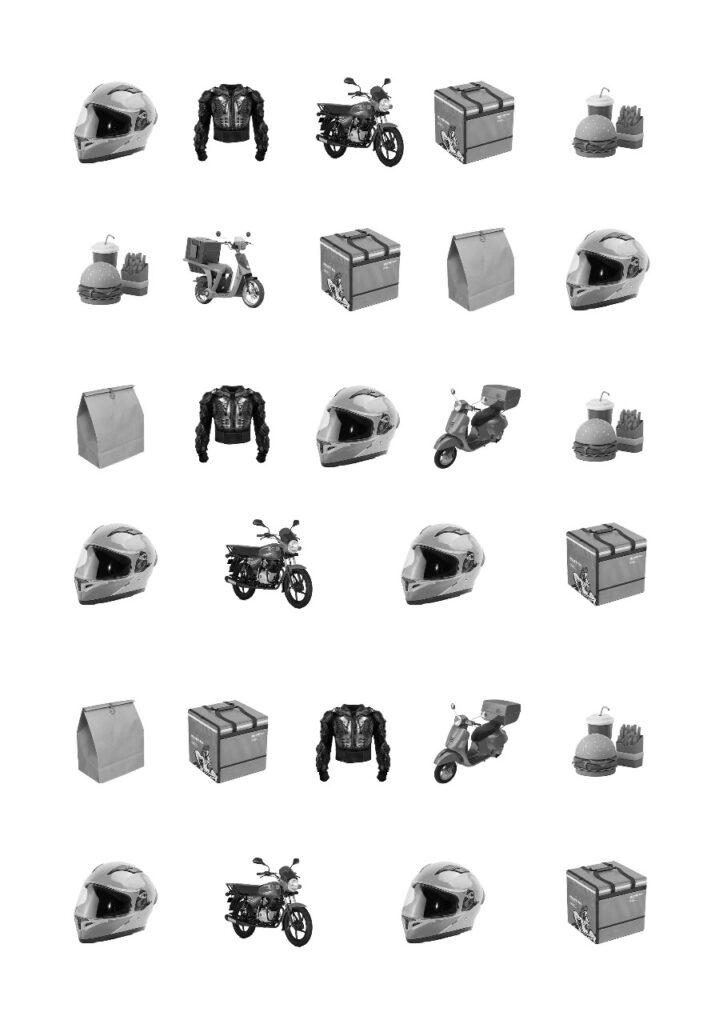
Figure 1. Concept poster for Last Meal, highlighting the daily realities, struggles, and resilience of bike delivery workers in urban environments (INJ Architects, 2025). This visual establishes the human-centered orientation of the research, foregrounding the courier’s spatial experience as its primary analytical lens.
Research Contribution Summary
Following a review of existing academic literature and professional publications, Last Meal stands as the first architectural and urban research initiative to address the motorbike food delivery phenomenon from a spatial design perspective rather than from logistical, economic, or traffic engineering frameworks. The research’s principal contributions, consistent with the interdisciplinary methodology described in How We Work, are as follows.
| Contribution | Description |
|---|---|
| Historical and Contextual Framework | Traces food delivery from ancient urban practices to app-based economies, establishing the current condition within a long logistical evolution. |
| Field Research | Conducted in Jeddah and Riyadh, identifying recurrent spatial anomalies including chaotic pickup zones, facade congestion, and informal rider rest points. |
| Proposed Architectural Urban Code | Includes standardized window dimensions, shade infrastructure requirements, designated waiting zones, and parking interfaces developed specifically for motorbike delivery integration. |
| Ethical and Human-Centered Vision | Repositions delivery workers as urban actors requiring designed spatial accommodation, rather than logistical extensions operating in a design vacuum. |
This research, led by Ibrahim Nawaf Joharji, addresses the gap between the demands of hyper-modern digital delivery economies and the built environment codes that have not evolved to receive them. It represents a contribution to both urban sustainability practice and to the broader discipline of evidence-based architectural code development.
1. Historical Context of Food Delivery
While app-based motorbike delivery appears to be a product of the twenty-first century, the spatial and logistical problem it addresses — moving prepared food from a point of production to a dispersed urban population — has deep historical precedents that illuminate the current condition. Pre-modern cities developed specialized labor systems for this purpose. In ancient Rome, urban taverns employed runners to convey meals to wealthy patrons. In the medieval Middle East, the saqqā (water carrier) navigated dense urban networks to distribute provisions through alleys that wheeled vehicles could not access. These early systems established the fundamental spatial challenge that has persisted across every subsequent iteration of urban food delivery: the last-meter problem, in which the built environment either facilitates or obstructs the transfer of goods between producer and recipient.
The nineteenth century introduced organized, scalable delivery systems. The Mumbai dabbawalas, founded in 1890, established a bicycle-and-rail network capable of delivering over 130,000 home-cooked lunches daily — a system of such operational precision that it has continued to function for more than a century with minimal technological intervention [1][2]. The same period saw the first recorded pizza deliveries in Naples, and by the early twentieth century telephone-based food ordering had entered the domestic routines of urban households across Europe and North America. By the mid-twentieth century, car and scooter delivery of Chinese food and pizza had become embedded in the urban service economy of most major Western cities.
The paradigm shift of the digital era arrived in the late 2000s and accelerated through the 2010s, when smartphone applications and GPS tracking transformed on-demand food delivery from a niche restaurant service into a city-scale logistical infrastructure. Platforms including DoorDash, Uber Eats, and regional operators such as HungerStation aggregated demand across entire metropolitan areas and dispatched freelance couriers on motorbikes and bicycles at unprecedented frequency and scale [3]. The spatial consequences of this growth were immediate and, from an architectural standpoint, largely unmanaged. Experiments currently underway with drones and autonomous delivery robots indicate that this logistical evolution has not reached its end state. The architectural response documented in this research addresses the current dominant form — motorbike courier delivery — while establishing a design methodology applicable to subsequent delivery technologies.
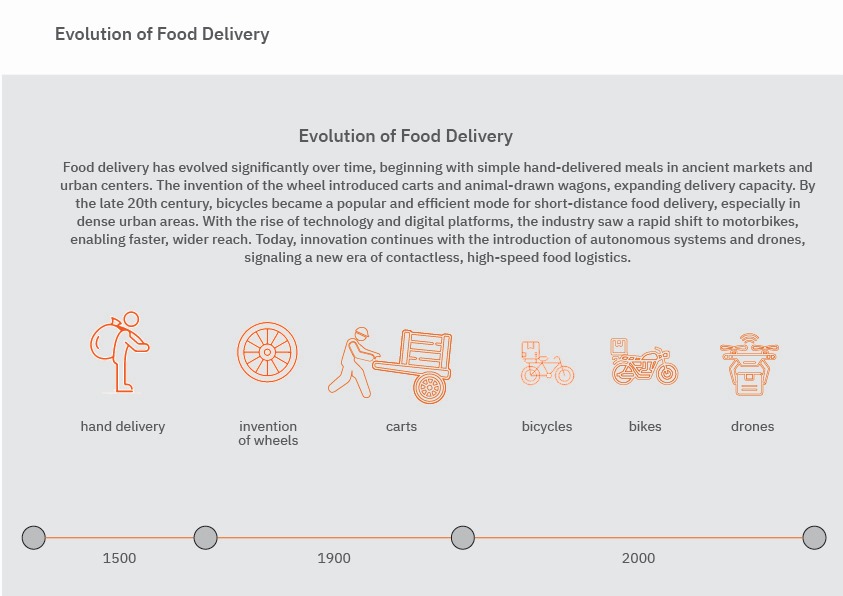
Figure 2. Evolution of food delivery methods over time — from hand-delivered meals and animal transport to bicycles, motorbikes, and emerging autonomous vehicles (Last Meal research diagram). This timeline traces the structural shift from localized physical labor to decentralized, technology-driven urban logistics across five centuries.
2. Field Observations: Jeddah and Riyadh
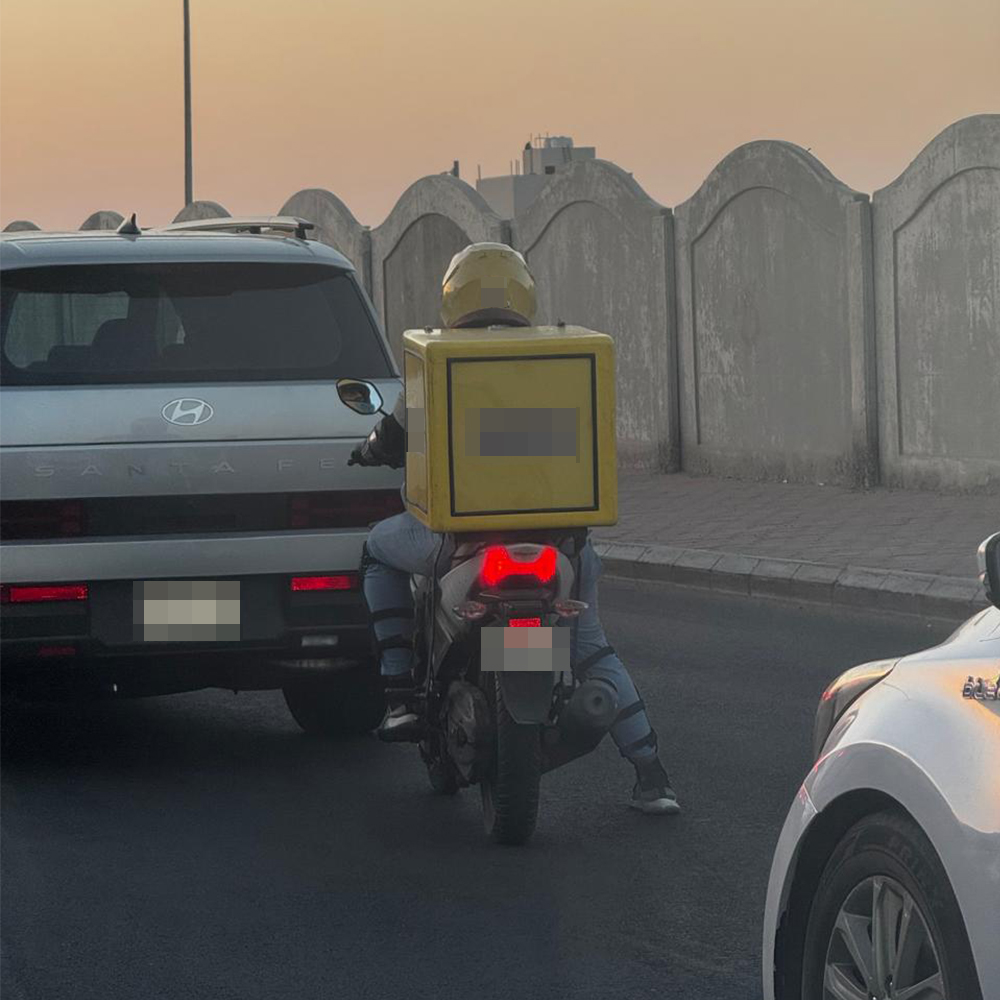
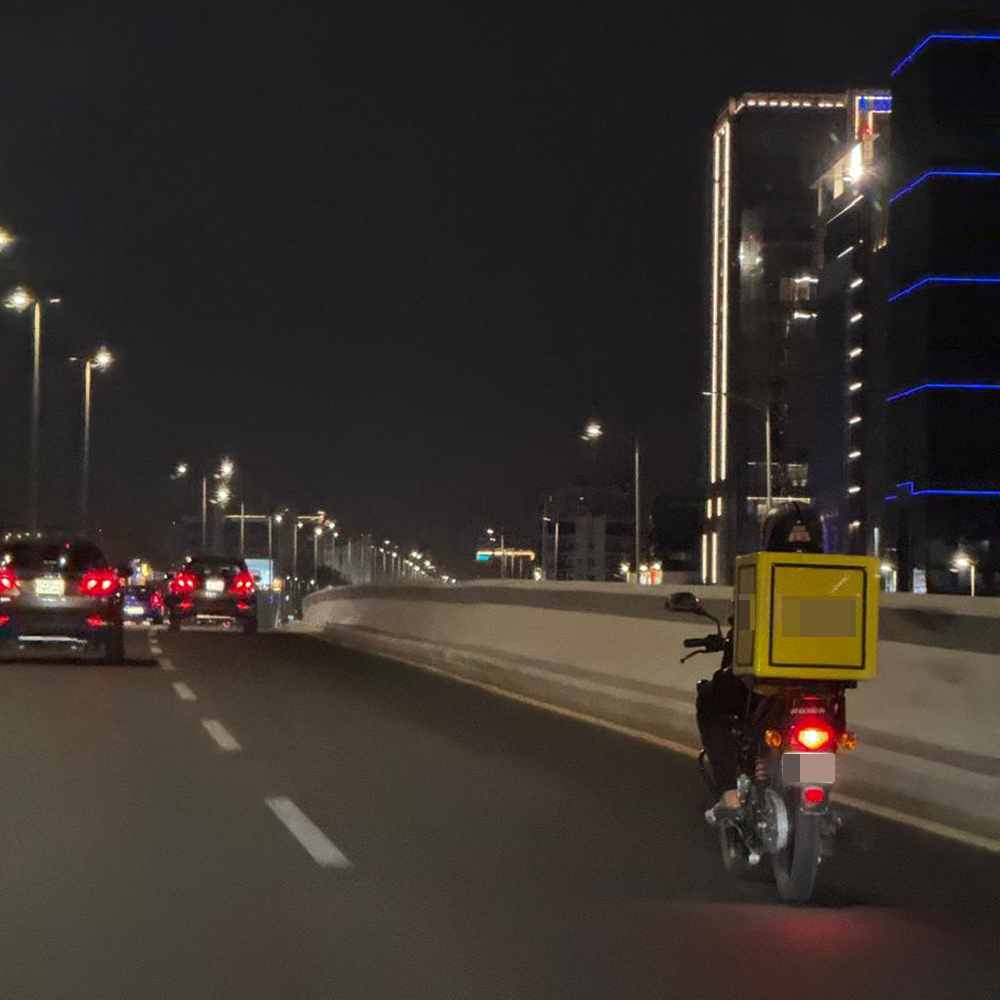
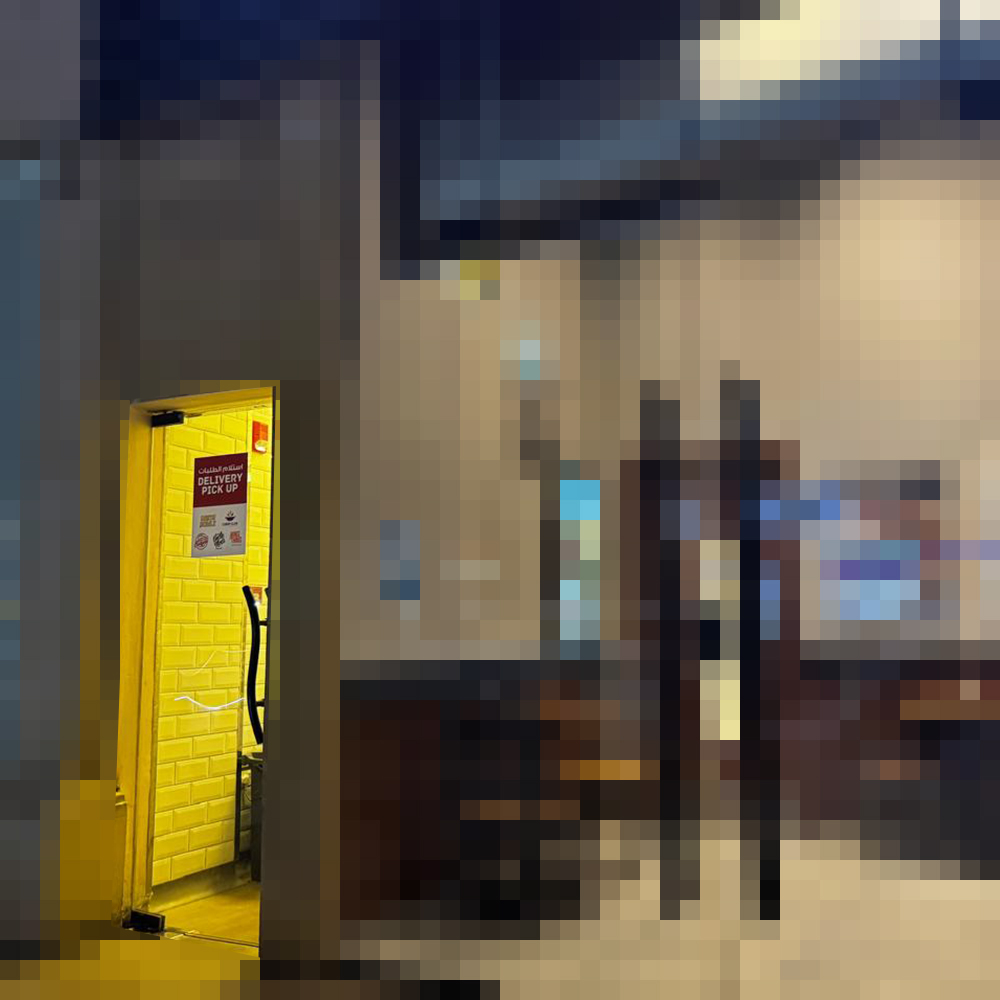
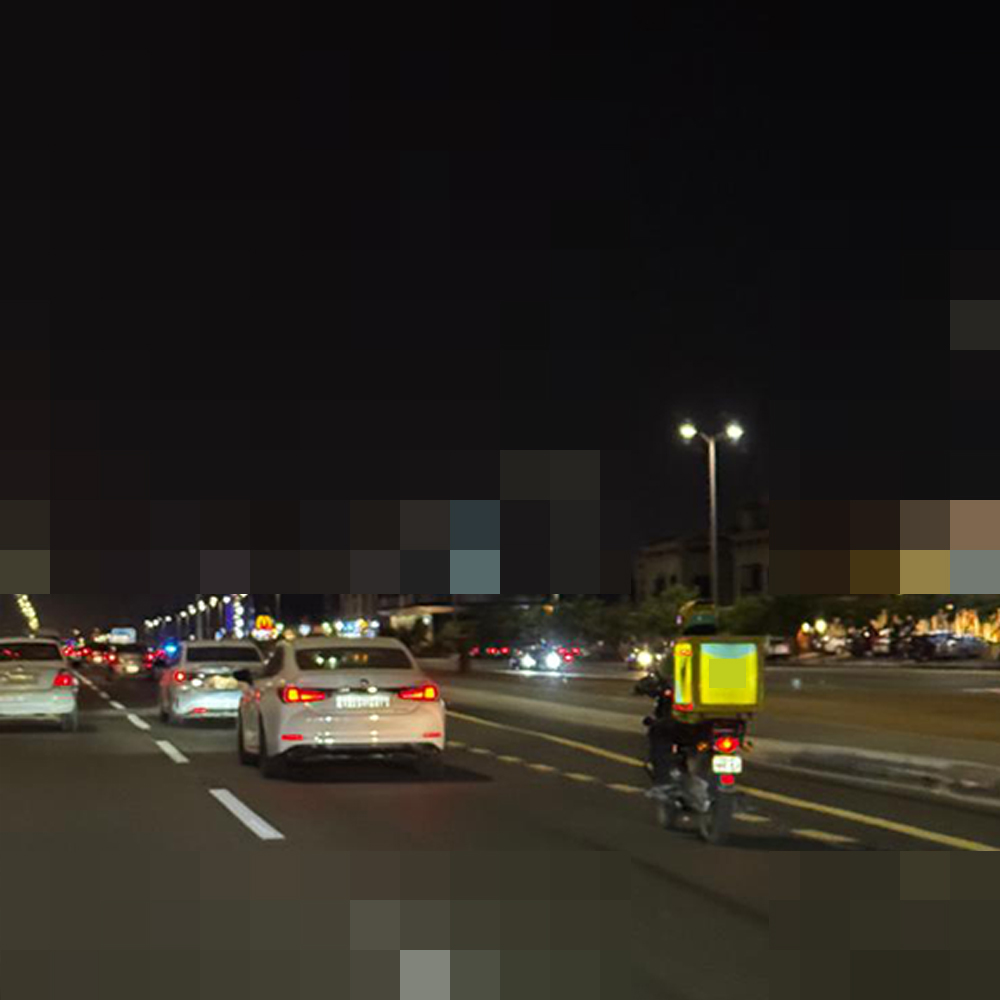
The research conducted direct field observation in Jeddah and Riyadh — two Saudi cities where app-based food delivery has achieved saturation-level adoption. These observations identified a consistent pattern of spatial improvisation that recurs across both urban contexts regardless of neighborhood density or commercial typology.
| Observed Condition | Description |
|---|---|
| Impromptu Curbside Hubs | Motorbikes clustered haphazardly on sidewalks or curbsides, forming unofficial delivery holding areas without designated space, demarcation, or signage. |
| Crowded Pickup Areas | Absence of designated pickup windows forces couriers to crowd restaurant main entrances, generating congestion and conflicting pedestrian and rider flows. |
| Thermal Exposure | Riders waiting in ambient conditions without shade, seating, or water access — a significant welfare concern given Riyadh summer temperatures exceeding 40°C. |
| Traffic and Safety Deficiencies | Unmanaged motorbike activity generates road disruptions and unsafe rider behaviors, with documented increases in traffic incidents involving delivery couriers [4][5][6]. |
| Absence of Maintenance Infrastructure | No dedicated facilities for refueling, servicing, or minor repair, forcing riders to address all mechanical needs individually and informally. |
The pattern these observations reveal is structural rather than incidental. The delivery system has outpaced the design environment in which it operates. A logistical infrastructure of this scale and frequency — operating across every urban district at all hours — requires the same considered spatial provision that cities have historically extended to other dominant modes: bus stops for transit, taxi stands for hired vehicles, loading bays for freight. The absence of equivalent provision for delivery couriers is not an oversight but a gap in contemporary urban design practice that this research addresses directly. Further context on the design approach applied to this problem can be found in the Architecture Style overview.

3. Spatial Analysis: Key Phenomena of the Delivery Condition
Field observation and measurement in Jeddah and Riyadh identified four recurrent spatial phenomena that define the current delivery condition and provide the empirical basis for the design code proposed in Section 4.
3.1 Non-Standard Pickup Interfaces
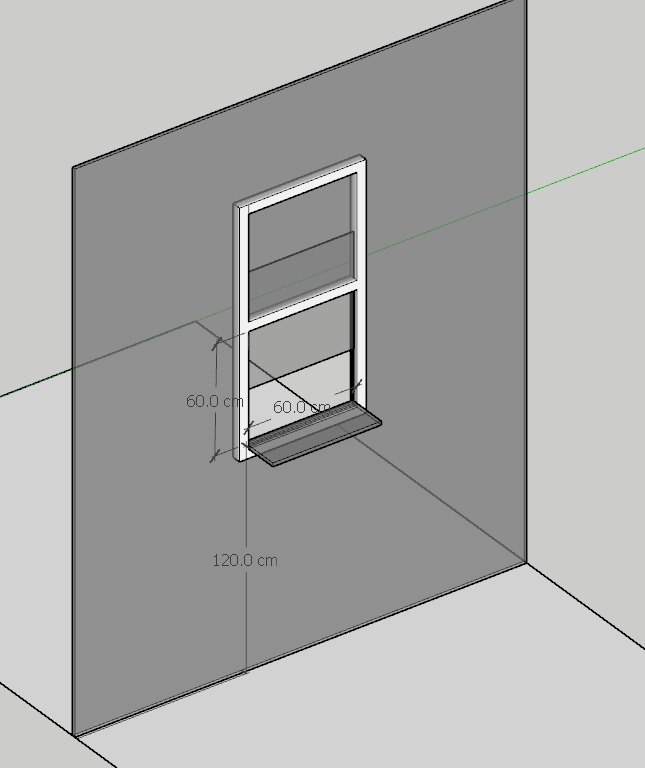
The most pervasive spatial deficiency is the absence of a standardized pickup interface between restaurant staff and delivery courier. Measurements taken at multiple eateries in both cities revealed window and counter heights varying from low reception desks to high pass-through hatches, with no consistent relationship to the ergonomic position of a standing courier or a rider on a stationary bike. Opening dimensions ranged from openings barely wide enough to pass a paper bag to large unshielded shutters that provide no thermal or security separation. The absence of a consistent standard produces measurable inefficiency at every handover point: riders stretching upward to high windows, crouching to low ones, or transferring orders through openings undersized for the insulated delivery box they carry.
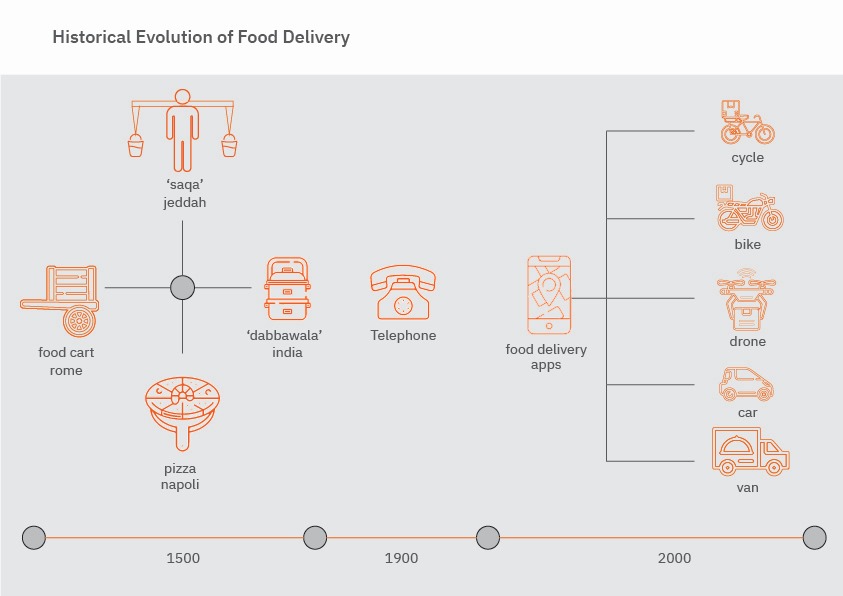
Figure 3. Field analysis of pickup window dimensions across multiple restaurant types reveals the absence of any consistent standard in height, width, or depth — producing ergonomic friction at the primary point of logistical exchange (Last Meal observational study, 2025).
3.2 Informal Rider Clusters and Undesigned Waiting Zones
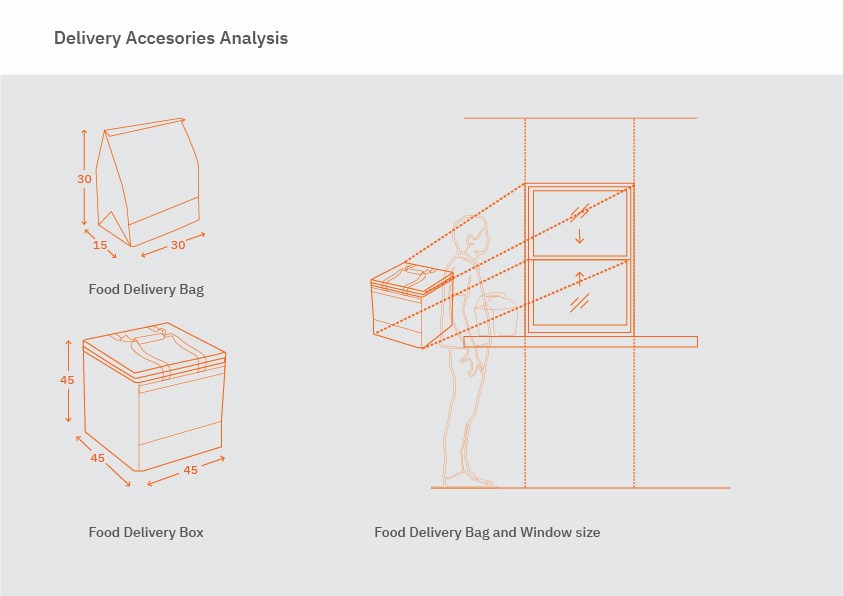
Without designated waiting areas, couriers organically occupy the nearest available surface — typically the sidewalk or curbside directly adjacent to high-volume food outlets. These informal gatherings, often comprising ten or more riders, constitute de facto micro public spaces: outdoor holding areas for couriers that have emerged without any design provision to support them. They obstruct pedestrian flow, encroach on vehicular lanes, and impose on the operators and customers of adjacent businesses. The phenomenon is not a behavioral failure on the part of riders; it is a spatial failure on the part of the built environment, which provides no alternative. The survey of typical delivery equipment established that a standard rear-mounted delivery box occupies approximately 45 cm in each dimension, and insulated backpacks range between 30 and 40 cm in width and height. These consistent dimensions establish clear parameters for designed waiting and parking infrastructure — parameters that currently go unused because no such infrastructure exists.
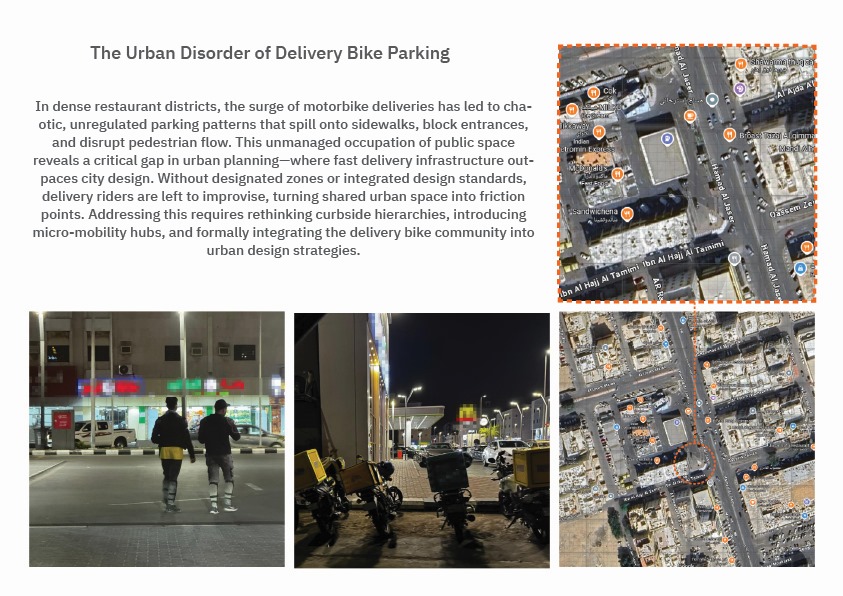
Figure 4. Typical delivery accessories — insulated backpack (approximately 30×30×15 cm), standard rear-mounted delivery box (approximately 45×45×45 cm), helmet, and jacket — present a relatively consistent dimensional profile across the courier population. Standardized equipment dimensions provide a direct basis for the design of appropriately scaled pickup and waiting infrastructure.
3.3 Hygiene, Waste, and Maintenance Deficiencies
The delivery process generates a specific stream of operational waste — melted ice packs, displaced condiment packaging, spilled food — for which no designated disposal point exists at most pickup locations. This produces localized litter accumulation at high-volume delivery sites, a condition that is predictable from the operational pattern and preventable through provision. On the maintenance side, the high daily mileage of delivery bikes — a function of the operational model rather than rider choice — requires frequent servicing and refueling that currently occurs on an entirely ad hoc basis. No city-managed or company-managed servicing infrastructure exists to support this. The contrast with taxi fleets, which historically operated from managed depots with maintenance facilities, illustrates the degree to which the delivery bike sector has been allowed to function as an urban system without urban design support.
4. Proposed Design Code for Delivery Infrastructure
INJ Architects proposes through the Last Meal research a set of architectural and urban design guidelines for the integration of food delivery infrastructure into the built environment. The code is conceived as a constructive framework available to municipalities, regulatory bodies, restaurant operators, and delivery platforms — not as punitive regulation, but as the spatial standards that responsible urban practice requires when a logistical system of this scale and permanence operates within the public realm.
4.1 Standardized Pickup Windows
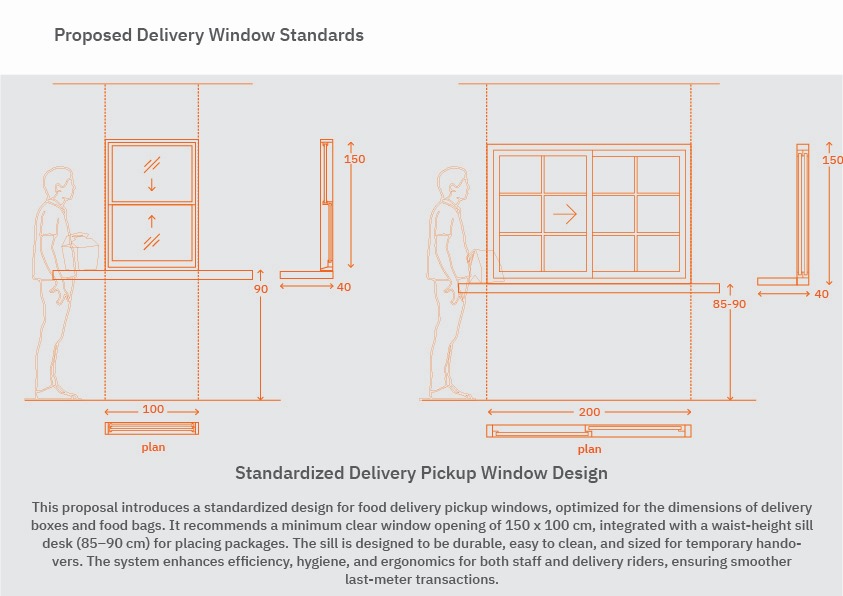
Every food outlet with significant delivery volume should incorporate a dedicated delivery pickup window or hatch, physically and operationally separated from the main customer entrance. The proposed standard specifies the following dimensional and design parameters.
- Sill height: 85–90 cm above finished exterior ground level — consistent with standard waist height for a standing adult and compatible with the position of a courier seated on a low scooter.
- Opening dimensions: Minimum 100 cm wide by 120–150 cm tall, sufficient to pass bulky insulated delivery bags and to allow clear visual and verbal communication between kitchen staff and courier.
- Exterior ledge: A structural shelf or ledge extending a minimum of 30–40 cm from the exterior face of the window, providing a stable surface for a standard 45 cm delivery box during the handover process.
- Weather protection: A fixed overhead canopy or awning shielding the exterior handover area from direct sun and rainfall — essential in climates such as those of Jeddah and Riyadh.
- Legibility: Clear directional signage and adequate artificial lighting to ensure rapid location of the pickup point under all ambient light conditions.
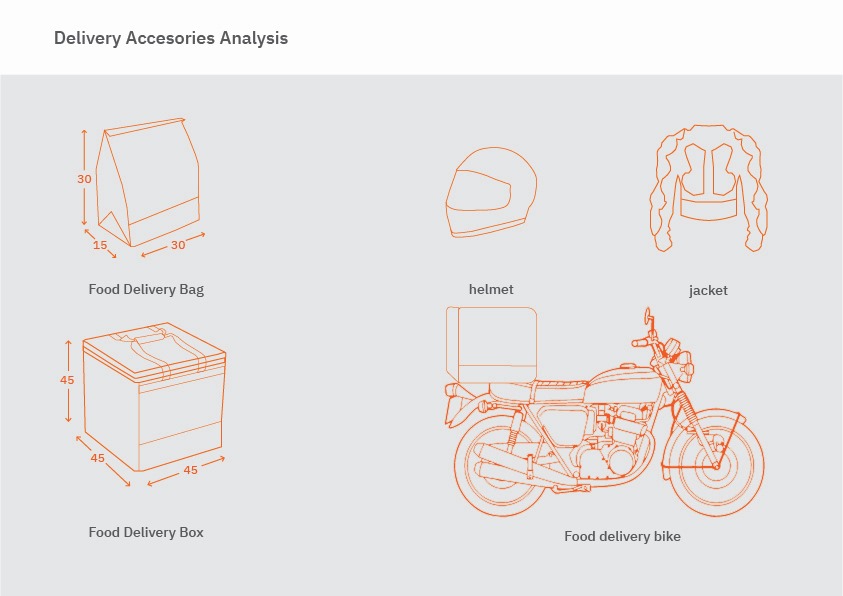
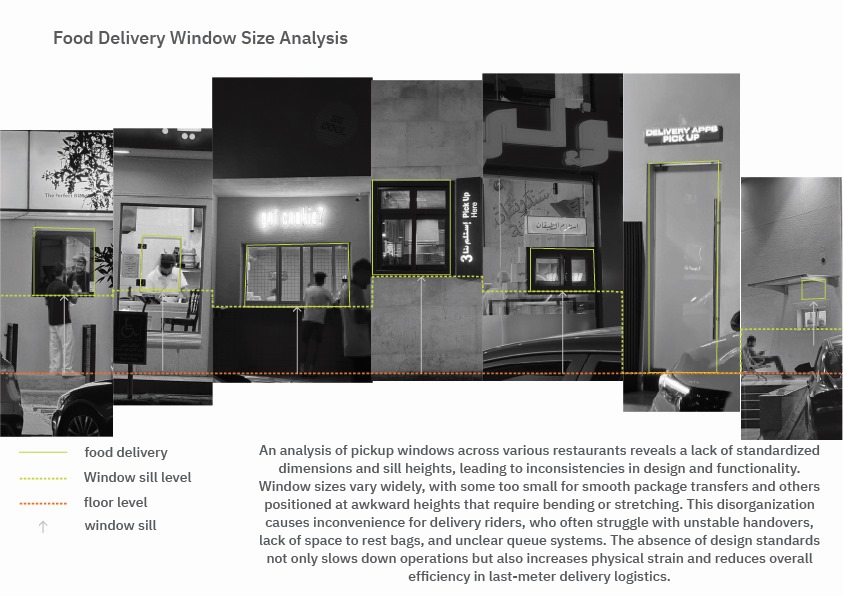
Figure 5. Proposed standard for a delivery pickup window, featuring a pass-through opening of approximately 150×100 cm with an exterior counter at 90 cm height. This specification facilitates ergonomic, efficient order transfer at the primary restaurant-courier interface (INJ Architects, 2025).
4.2 Designated Rider Waiting Zones
Food outlets above a defined delivery volume threshold should be required to provide a demarcated waiting area for couriers, physically separated from pedestrian through-routes and main customer access. The minimum specification for such zones includes a covered area of sufficient depth to shelter riders from direct sun and rain, a lean-bar or bench providing rest without requiring riders to dismount or remove equipment, and clear ground demarcation distinguishing the waiting zone from pedestrian circulation. The principle is well-established in comparable applications: Dubai’s solar-powered rest cabins for delivery riders, equipped with water dispensers, phone charging, and tyre pressure facilities, demonstrate that rider welfare infrastructure is both achievable and operationally beneficial at commercial scale [7][8]. Queue management at the pickup window — whether through digital display, numbered token systems, or clearly marked ground positions — further reduces the crowding and disorder that characterize unmanaged pickup points. Restaurants that install a service window directly linking the kitchen’s packing area to a dedicated exterior courier zone achieve the most complete separation of delivery and dine-in operations, maximizing efficiency for both [9].
4.3 Parking and Mobility Integration
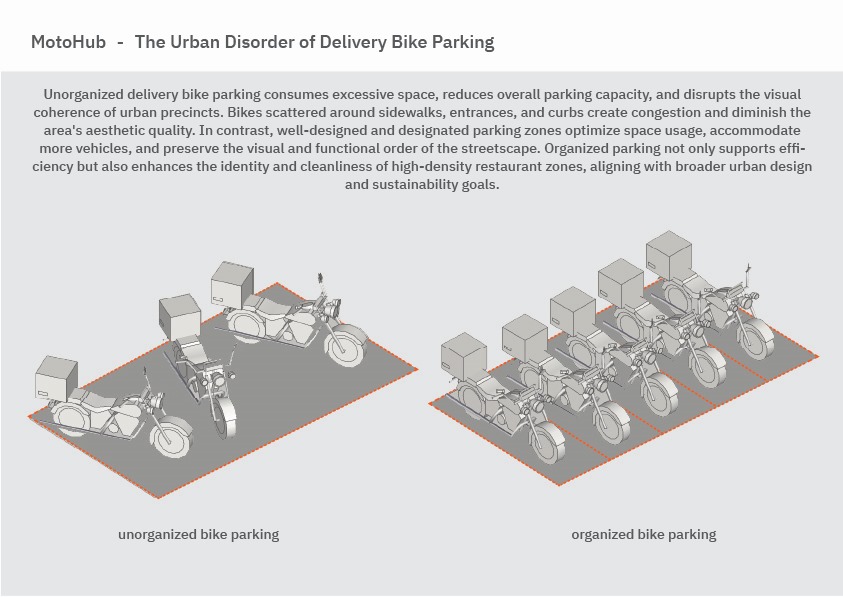
The code recommends that a minimum number of short-term motorbike parking positions be allocated in proximity to every high-volume delivery outlet, ideally as off-street bays or clearly demarcated curbside positions. The spatial efficiency of such provision is significant: a single standard car parking space accommodates three to four motorbikes. Well-designed and conveniently located delivery parking allows couriers to stop without blocking pedestrian or vehicular flow, reduces the time pressure that contributes to unsafe riding behavior, and keeps the surrounding streetscape clear of the informal clustering currently observed [10]. Traffic safety measures — positioning pickup windows on lower-traffic secondary streets where site conditions allow, and installing convex mirrors or warning signage at high-frequency crossing points — complement the parking provisions and address the documented increase in delivery-related road incidents.
4.4 Dimensional Alignment with Delivery Equipment
The internal packing area of any restaurant with significant delivery volume should be designed with the courier’s equipment dimensions as a primary spatial parameter. Shelf units for prepared orders should accommodate 30–40 cm tall packaging at accessible heights. Wall hooks or rack bars at the exterior pickup window allow couriers to hang helmets or bags during the handover without placing them on the ground or compromising the transaction. These micro-scale provisions require minimal space and negligible cost but produce measurable improvements in handover efficiency and rider experience at every pickup point.
4.5 Support and Maintenance Infrastructure
At the district scale, municipalities and delivery operators should develop rider rest stations at strategic locations within high-density commercial areas. These facilities — analogous to historical taxi depots or contemporary transit crew facilities — would provide water, restrooms, shade, and where feasible, charging infrastructure for the electric bikes and scooters that the industry is progressively adopting. DoorDash has documented that electric bikes represent the most energy-efficient form of motorized delivery [11], and multiple operators have begun incentivizing the transition. Charging provisions at delivery hubs and high-volume restaurant sites directly support this transition and align delivery infrastructure with the broader urban sustainability targets that municipal authorities are pursuing. The placement of designated waste collection points at major pickup locations — specifically for the operational waste stream generated by the delivery process — addresses the litter accumulation documented in field observations and is a low-cost, high-impact provision that existing public waste infrastructure cannot adequately serve.
5. Environmental and Urban Implications
The environmental argument for motorbike and bicycle delivery is quantitatively established. Industry data indicates that deliveries completed on two-wheeled vehicles saved over 150,000 tonnes of carbon emissions annually compared to equivalent car-based delivery operations [12]. The spatial efficiency of small vehicles in dense urban conditions — their capacity to reduce the number of individual car journeys, to access locations inaccessible to larger vehicles, and to operate without contributing proportionally to traffic congestion — has been documented in multiple contexts as producing measurable improvements in urban mobility indicators [13]. Research on cargo bike operations in European cities has demonstrated that two-wheeled delivery vehicles are not only lower in emissions but faster than vans in dense urban conditions — a finding with significant implications for the sustainability calculus of last-mile logistics [15][16].
These environmental advantages are, however, contingent on operational conditions that the current built environment does not reliably provide. When couriers cannot locate a designated stopping point, they circle the block or idle in no-parking zones — adding unnecessary vehicle miles and emissions at precisely the high-density commercial locations that generate the most pickup demand. When the pickup process is spatially inefficient — requiring riders to dismount, navigate to an entrance, wait in a crowded threshold, and manage the handover without an appropriate surface — the time and fuel costs of each delivery increase. Safety incidents produce their own environmental and social costs through emergency responses, traffic disruption, and the reduced productivity of injured riders. The design code proposed in this research addresses each of these inefficiency vectors directly, and in doing so amplifies the environmental benefit that the delivery system is inherently positioned to provide.
The transition to electric delivery vehicles — already underway through commercial incentive programs — represents the most significant near-term environmental opportunity in the sector [14]. Charging provisions at the pickup and rest station locations specified in this code directly enable this transition. A rider who can reliably access charging infrastructure at the places they visit most frequently throughout their working day — food outlet pickup zones and district rest stations — has a materially lower barrier to adopting an electric vehicle than one who must manage charging entirely from their domestic situation. Urban design policy that provides this infrastructure is, in effect, a sustainability intervention with measurable modal-shift consequences.
6. Conclusion: Toward a Codified Urban Standard
The Last Meal research project establishes that the motorbike food delivery system represents a permanent and significant reallocation of urban space — one that the built environment has not yet formally accommodated. The spatial conditions currently produced by this misalignment are documented, quantifiable, and architecturally addressable. The design code proposed in this research — standardized pickup windows, designated rider waiting zones, dedicated parking provisions, dimensionally calibrated equipment interfaces, and district-scale support infrastructure — constitutes the minimum spatial standard that professional practice should recognize for any building type that generates significant delivery activity.
The research does not position itself in opposition to the delivery sector. It recognizes the ecological value, economic significance, and civic contribution of a workforce that has, among other services, maintained urban food distribution through periods of crisis when no other logistics system remained operational. The design code it proposes treats delivery couriers as a permanent user group of the urban environment — one with specific, documentable, and designable spatial needs — and calls on architects, urban designers, municipal authorities, and building regulators to extend to them the same spatial consideration that professional practice has historically provided to every other recognized category of urban user.
The path forward involves updating building codes and development guidelines to incorporate the provisions documented here, and establishing pilot implementations — retrofit delivery hubs on existing commercial streets, prototype pickup window standards — that can generate the performance data needed to refine and scale the code. The research provides the analytical and dimensional foundation for those implementations. The profession’s obligation is to act on it.
References
- INJ Architects. Last Meal — Project research diagrams and field observations (2025).
- Thadani, D. (2024). Dabbawalla: Low-carbon urban delivery [1][2]. Congress for the New Urbanism.
- Chipman, L. (2025). Seamless Spaces: Restaurant Design Strategies for the Rise of Food Delivery [3][10]. Chipman Design Architecture.
- Arab News. Road safety fears amid Jeddah food delivery boom [4][5][6]. (2024, February 3).
- Deliverect. 7 Ways to Improve Your Restaurant’s Design for Delivery [9].
- SolarQuarter. Talabat Launches Solar-Powered Rest Areas for Delivery Riders Across UAE [7][8]. (2024, June 27).
- Supply Chain Digital. DoorDash Deliveries: A Major Step Towards Sustainability [11][12][13][14]. (2025, March 5).
- Wired. It’s Time for Cities to Ditch Delivery Trucks — for Cargo Bikes [15][16]. (2022, September 21).
Press Coverage
The Last Meal research has been recognized in international architectural media.
- Archinect — Last Meal: Designing Cities for the Delivery Era. Recognized for its originality in defining new spatial standards for delivery infrastructure.