
MABK Villa
Location          Al Basateen, Jeddah, Saudi Arabia
Client            MABK
Type              Residential Villa / Interior Design
Status            Completed
Year              2019
Principal         Ibrahim Nawaf Joharji
Design System     Climatic adaptation, green building systems
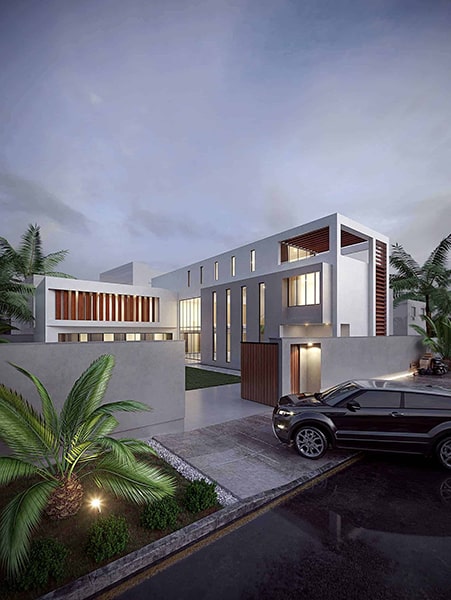
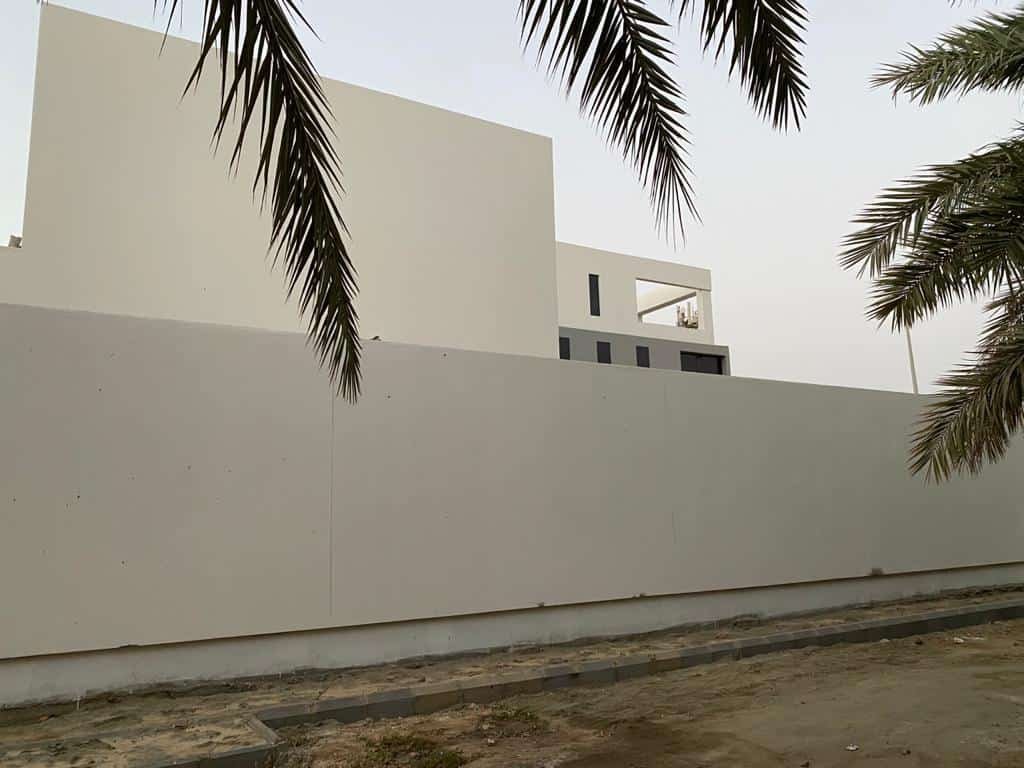
A family villa in Jeddah carries a brief that most residential typologies do not: the climate is the primary design problem. Al Basateen receives intense solar radiation for the majority of the year, the street condition demands privacy at the perimeter, and the family’s daily life requires the full range of indoor and outdoor spaces to function comfortably across both the summer heat and the mild winter months. The MABK Villa, occupying a 750-square-meter plot, resolves this brief not through applied decoration but through the organization of the building itself — its materials, its section, its relationship to the ground, and the way it manages the boundary between interior and exterior.
The exterior material palette is built around two decisions that work in tandem. The primary surfaces are finished in a neutral chromatic range — whites and greys that reflect solar radiation and maintain visual composure against the brightness of the Jeddah sky. Weather-treated wood is introduced as a vertical shading system across the facade openings, its organic warmth providing a counterpoint to the mineral surfaces while performing a specific climatic function: the vertical louvers cast shadow across the glazed areas throughout the day, reducing solar gain on the surfaces most exposed to the afternoon sun. Copper is integrated into the exterior at selected points — not as ornament but as a material that develops its own surface character over time, oxidizing in the coastal air to produce a patina that becomes more specific to this building and this site with each passing year. The green building systems embedded in the construction — low-emission materials, reduced carbon footprint specifications — are not visible as features but as the conditions that allow the building to perform consistently across the decades without the maintenance cycles that less considered material choices would require.
The interior architecture is organized around the same discipline that governs the exterior. Structural rafters are left exposed in the primary living spaces — a decision that reads as warmth but functions as spatial definition, the rhythm of the structural members articulating the volumetric proportions of the rooms without requiring applied ceilings to do the same work. The central fireplace anchors the main gathering zone, establishing a fixed point around which the social spaces of the villa organize themselves. This is a thermal and visual anchor simultaneously — in a climate where outdoor temperatures make a fireplace unnecessary for most of the year, its presence in the interior is a spatial choice rather than a functional one, introducing a quality of domesticity that the villa’s climatic performance alone could not provide.
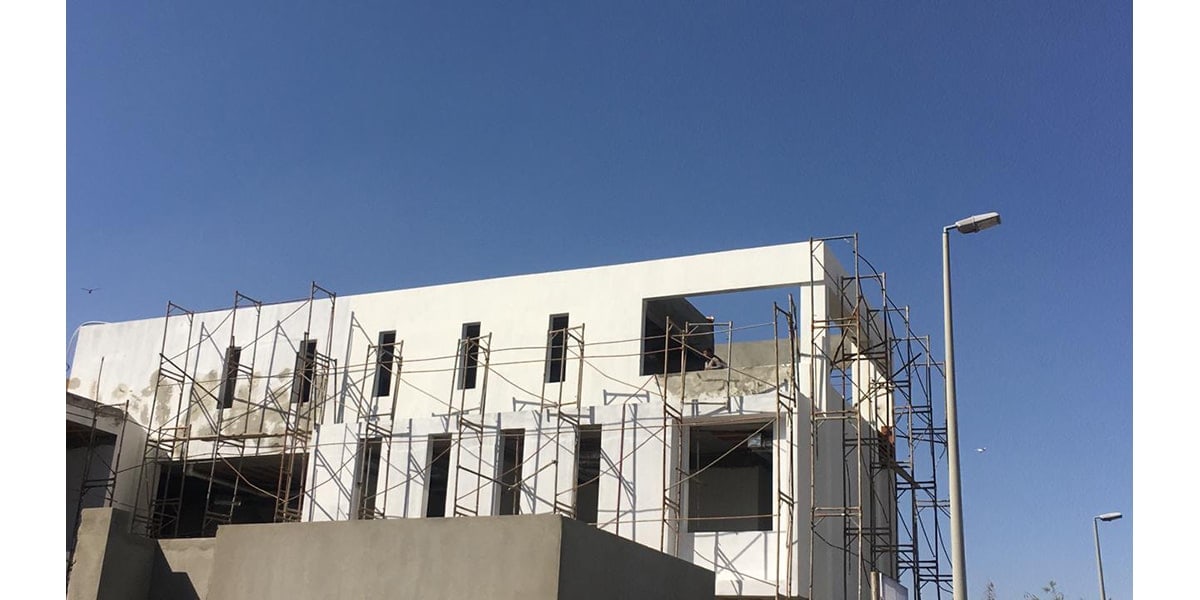


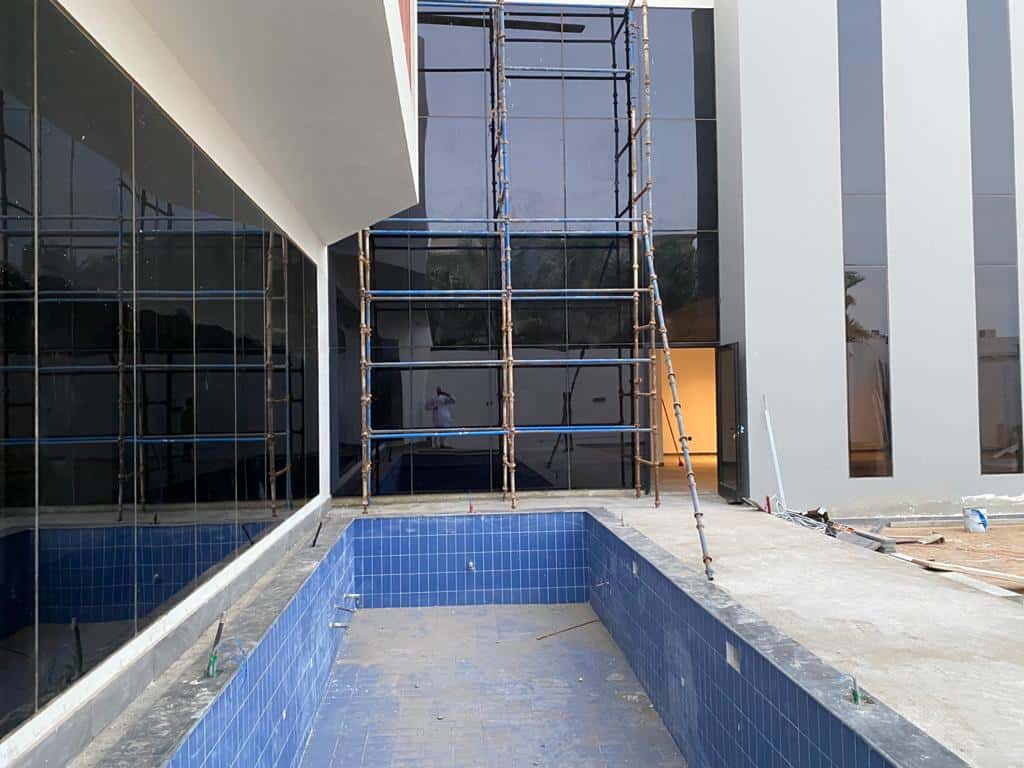
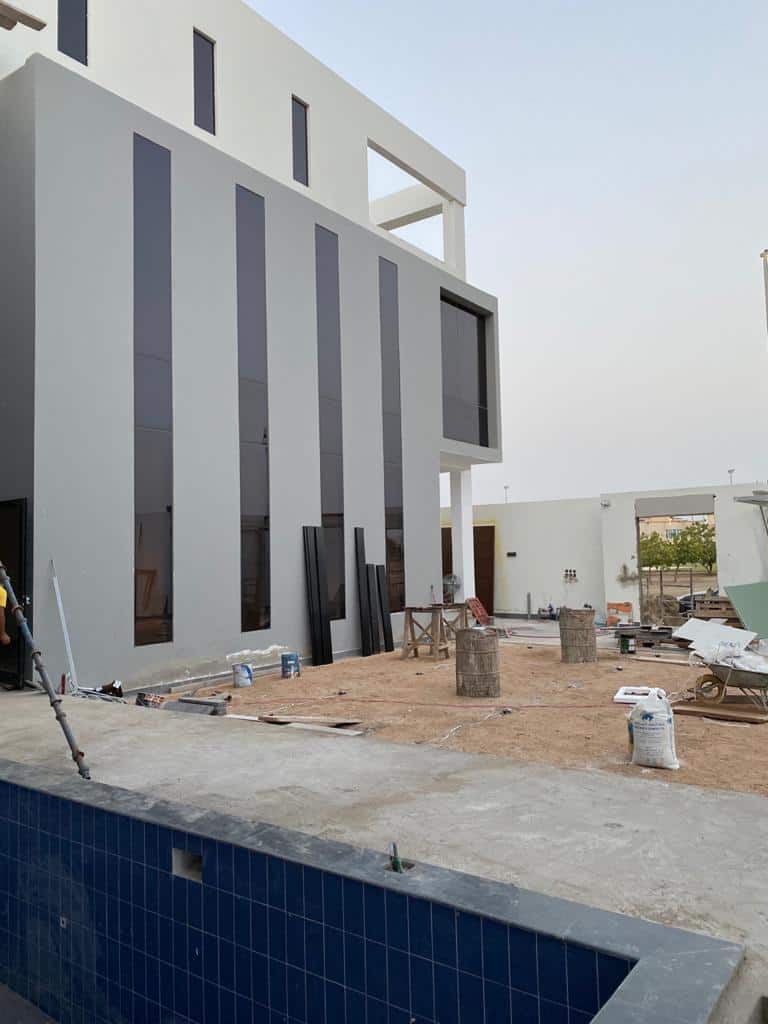
The courtyards embedded within the villa’s plan are the design’s most direct response to Jeddah’s climatic dilemma of outdoor living. A family in this climate does not abandon the exterior — it requires a version of the exterior that the Saudi sun and the social requirements of domestic privacy make usable. The courtyards provide this: sheltered, enclosed, specific to the villa’s internal organization, they allow the family to use outdoor space — including outdoor showers and transition zones between the pool and the interior — without exposure to the street or to the direct overhead sun that makes unprotected outdoor living uncomfortable for most of the year. The boundary between inside and outside is not a threshold to be crossed but a gradient to be moved through, the villa breathing across this gradient rather than sealing against it.
The MABK Villa belongs to a body of residential work at INJ Architects in which climatic performance and spatial quality are resolved through the same formal decisions rather than through separate technical and aesthetic systems applied to the same building. The methodology governing this approach is detailed in how-we-work. For private clients considering residential commissions that treat environmental performance and domestic character as a single architectural brief, the engagement framework is outlined in bespoke-architecture.
“`