
Mansion Complex
The defining condition of this project was not the domestic brief, but the geological resistance of the mountain itself. To build on the slopes of Awali is to engage in a physical negotiation with exposed rock before a single spatial idea can be realized.
Location          Awali District, Makkah, Saudi Arabia
Type              Residential Complex
Status            Completed
Year              2016
Principal         Ibrahim Nawaf Joharji
Focus             Topographical integration, climatic defense, spatial privacy
Positioned on a steep incline in Makkah, the site presented a demanding interplay of severe contours and unyielding terrain that resisted conventional construction logic. Horizontal expansion was highly restricted, forcing the architecture to read the topography and anchor itself only where stable ground permitted. Beyond the geological constraints, the site operates under extreme climatic pressures. Intense solar exposure, high ambient temperatures, and seasonal wind patterns dictated the initial massing and orientation, demanding a structure that defends against the environment while establishing a habitable domestic perimeter.
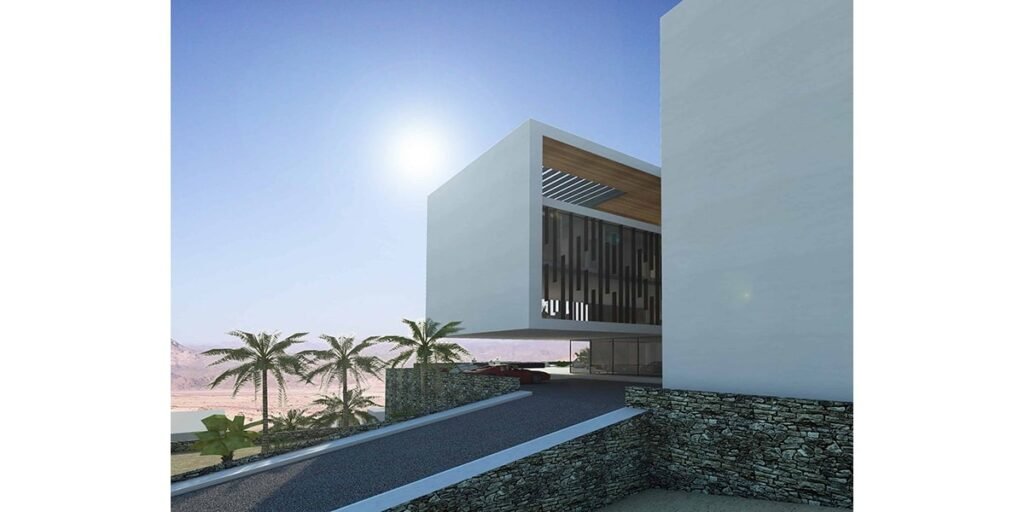
The fundamental concept positions the residence as a constructed landform. Rather than imposing a standard residential template onto the mountain, the architecture terraces with the slope, claiming territory through a sequence of flat-roofed volumes suspended above the open ground. The layout is strictly calibrated to support the behavioral patterns of the Saudi family, prioritizing the separation of public and private zones without sacrificing the necessity of communal gathering. Shared amenities are not treated as secondary additions; they act as the structural joints of the complex, organizing natural movement between individual units while preserving total domestic privacy.
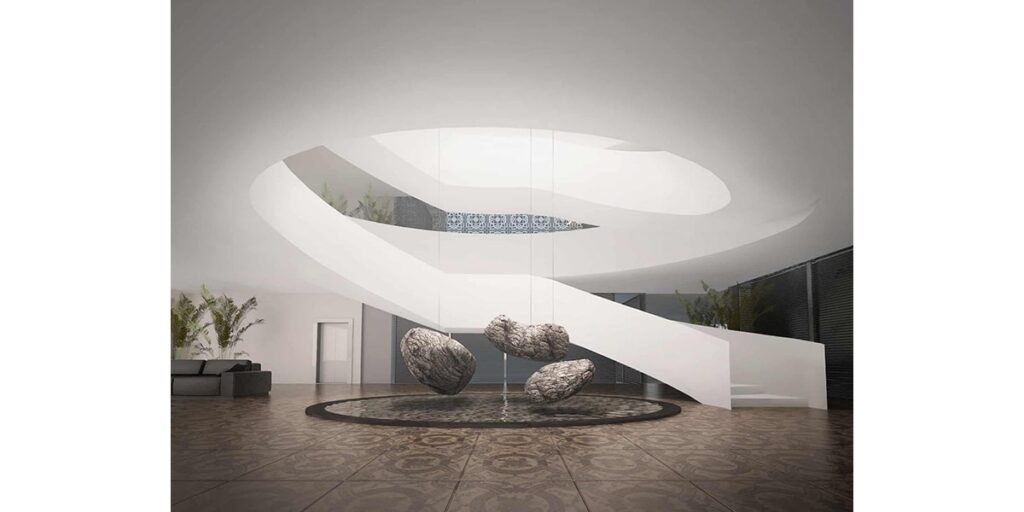
The sequence of arrival is choreographed to reorder the threshold between the harsh desert exterior and the sheltered interior. Suspended upper volumes cast the entry pathways into deep shade, leading to a central core where raw stone and fluid geometry converge around water elements. The street-facing facade presents a controlled boundary, utilizing layered screens to withhold the interior life of the complex and reveal only structural confidence to the public approach.
Once inside the private boundary, the spatial logic reverses. The interior opens toward a pool terrace through calibrated wooden screens that allow the building to breathe while filtering harsh daylight. A continuous timber canopy shelters the primary gathering areas, drawing light and landscape into a single uninterrupted domestic scene. Below grade, the foundation logic was dictated entirely by the rock formations, requiring site-specific engineering responses that relied on direct geological assessment rather than standardized structural assumptions.
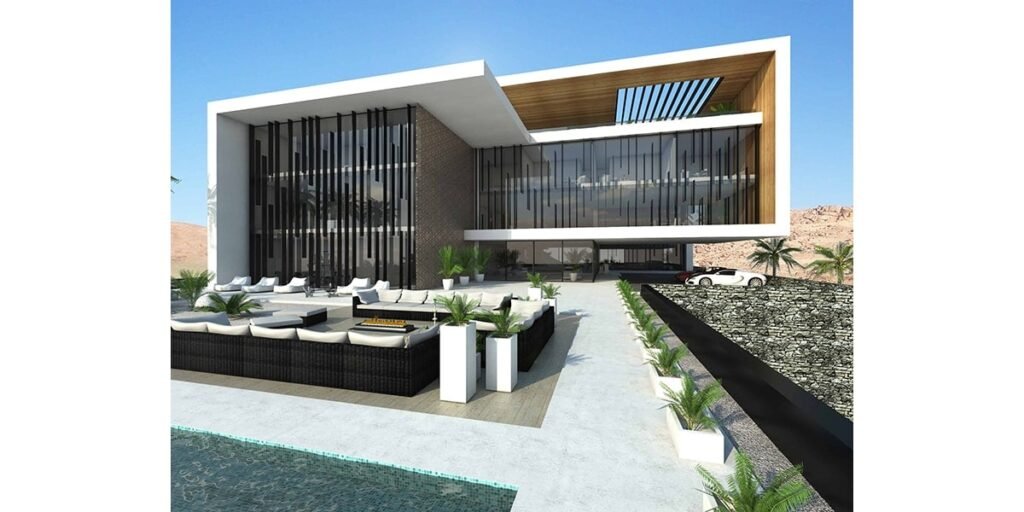
The facade opens toward the pool terrace through a calibrated screen, allowing the interior to breathe without fully surrendering its privacy. © INJ Architects
The Awali Residential Complex operates through a logic of defensive integration. By accepting the severe constraints of the mountainous terrain rather than flattening it into submission, the architecture acquires a sense of permanence usually reserved for civic structures. The heavy use of layered screens, suspended volumes, and deep shading devices is not an aesthetic choice but a climatic obligation, transforming the building’s envelope into an active environmental filter.
The project demonstrates that domestic architecture in extreme environments cannot rely on imported typologies. The decision to embed the shared family amenities as the connective tissue of the complex proves that spatial privacy and communal density can coexist if the massing is manipulated correctly. This rigorous approach to topographical and climatic challenges is a recurring methodology explored in how-we-work. For inquiries regarding site-specific residential architecture in complex terrains, the initial step is outlined in bespoke-architecture.
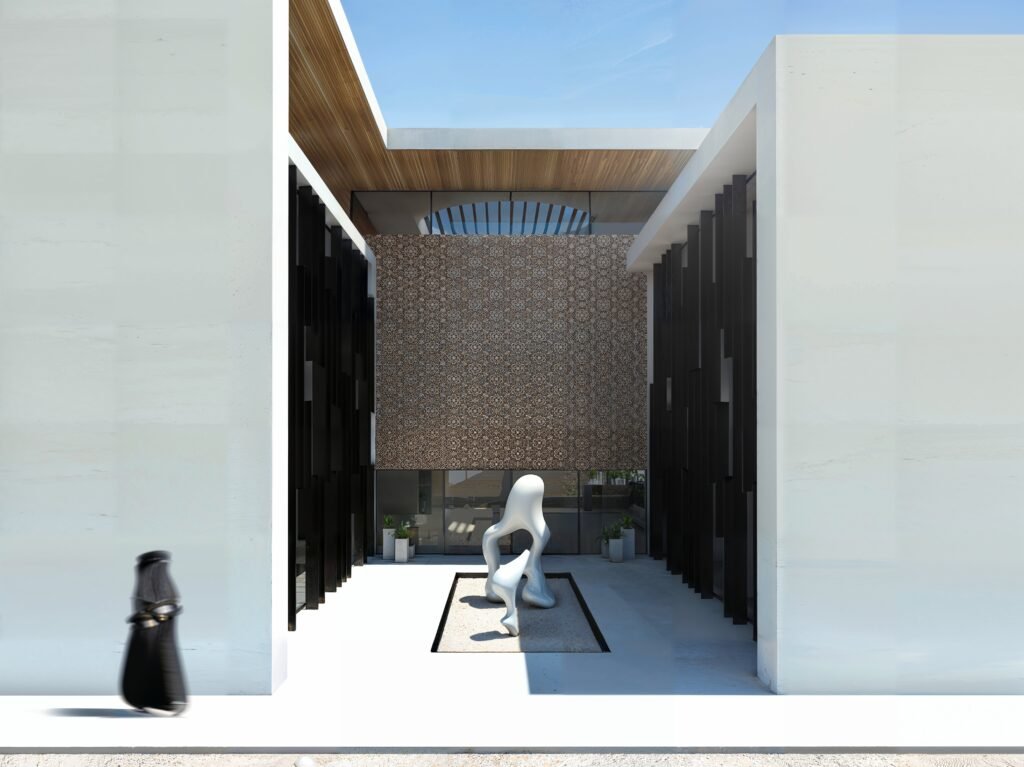
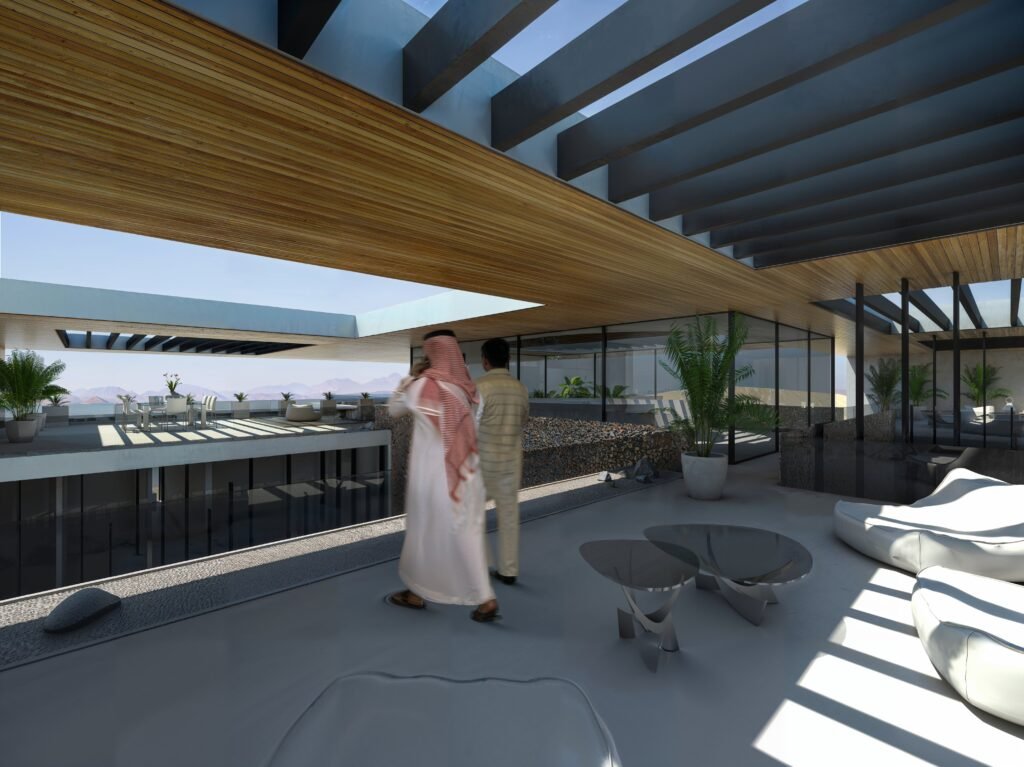
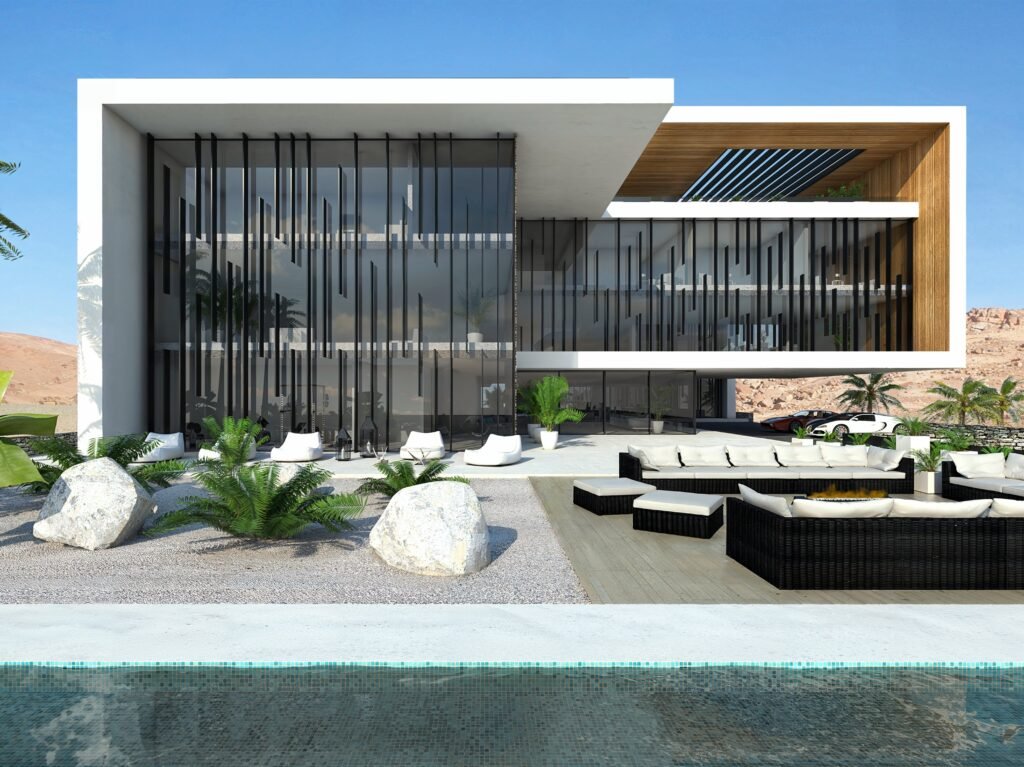
The facade opens toward the pool terrace through a calibrated screen allowing the interior to breathe while maintaining domestic privacy © INJ Architects
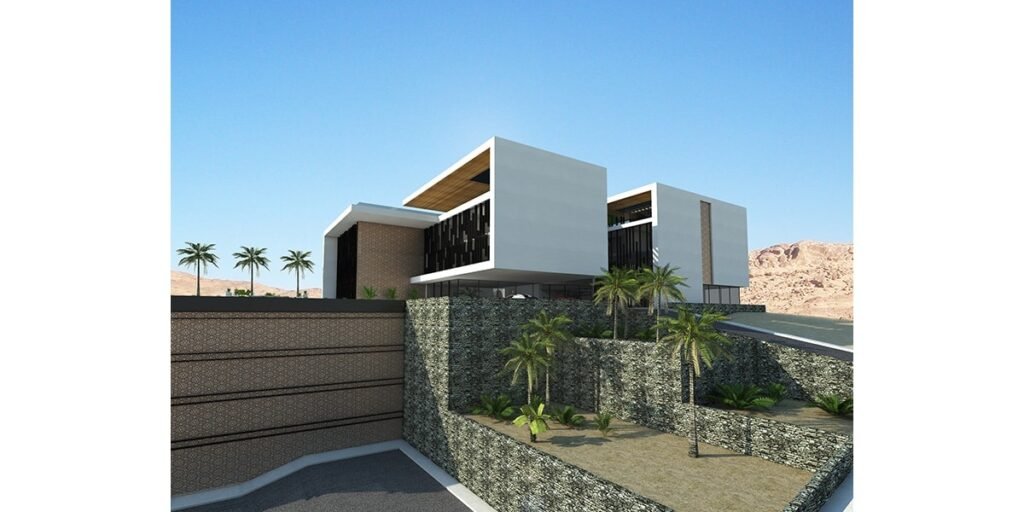
Seen from the approach road, the residence withholds its interior life behind layered screens, revealing only its structural confidence to the street. © INJ Architects
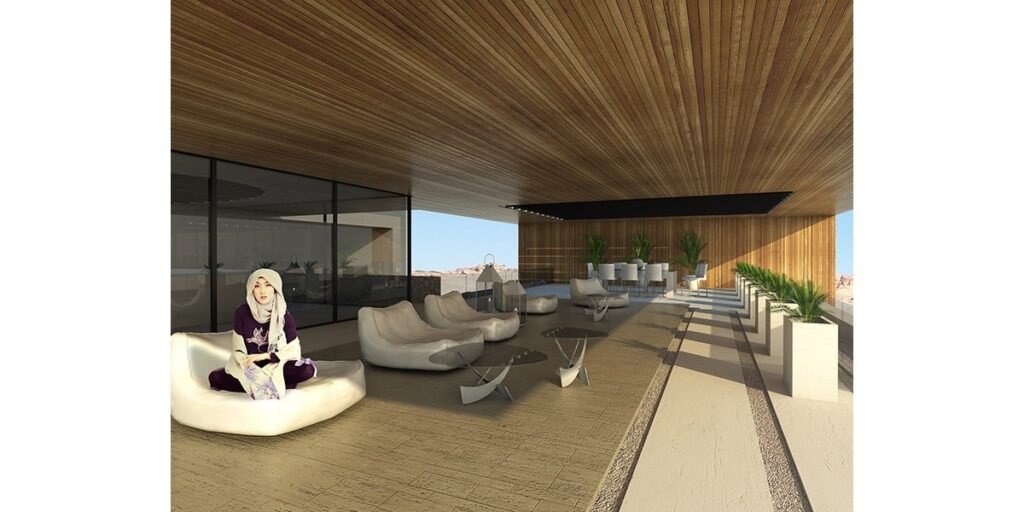
Beneath a continuous timber canopy, the terrace gathers light and landscape into a single uninterrupted domestic scene. © INJ Architects

Seen from above, the residence reads as a constructed landform, its flat roofed volumes arranged to claim territory within an otherwise boundless desert. © INJ Architects