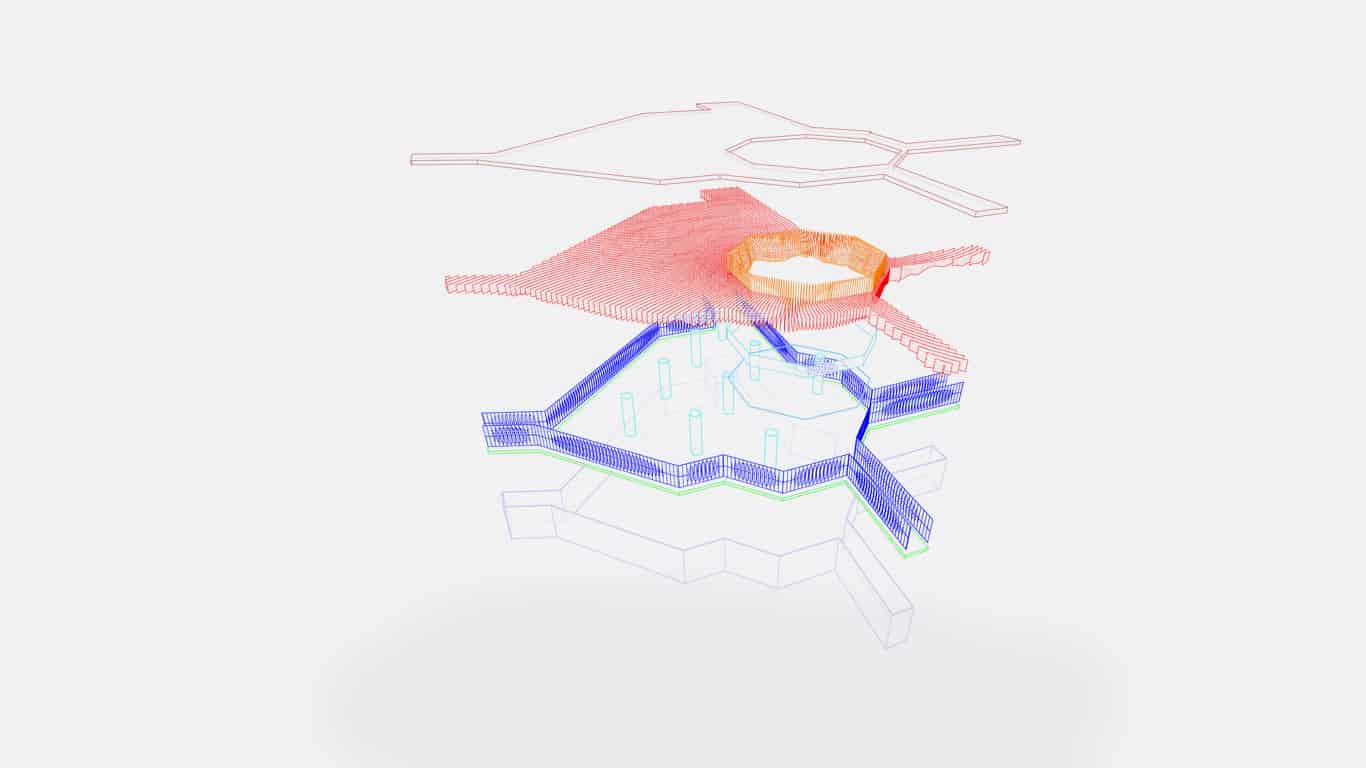
Jeddah Chamber Main Entrance
The entrance of a civic institution is not merely a threshold; it is a spatial declaration of its economic and cultural authority. For the Jeddah Chamber of Commerce—the historic gateway to Red Sea trade—the existing lobby required a radical intervention to restore its institutional weight and correct years of spatial fragmentation.
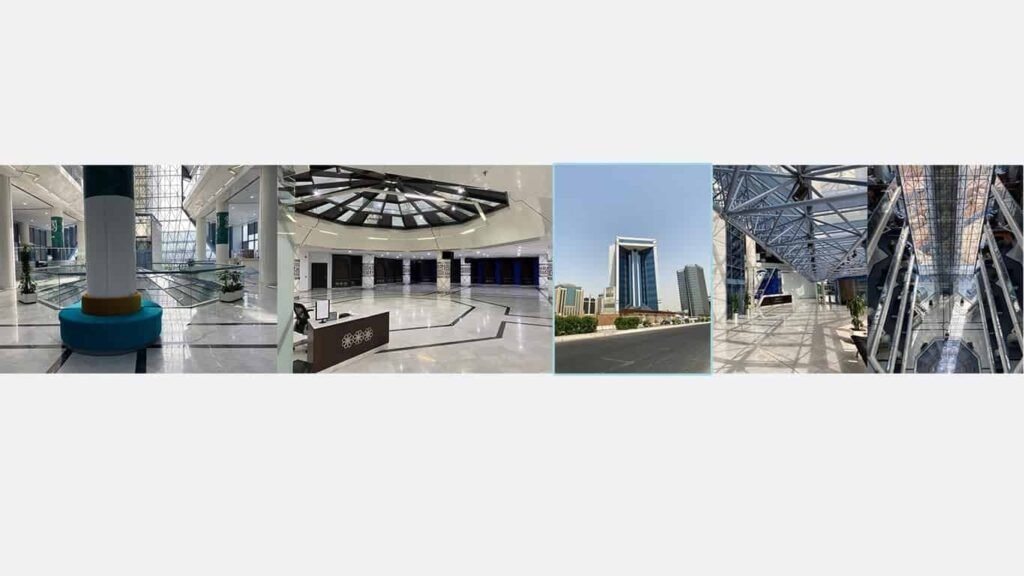
The original interior suffered from a disjointed architectural identity. It was characterized by arbitrary spatial coordination, monotonous color palettes, poor daylight integration, and the misapplication of secondary materials such as wood. The building, while historically significant to Saudi Arabia’s economic boom, had aged out of its functional and aesthetic relevance. The commission demanded a strategy that could inject a progressive spirit into the aging structure, treating cost-efficiency not as a limitation, but as a primary driver for spatial ingenuity.
Location          Jeddah, Saudi Arabia
Client            Jeddah Chamber of Commerce
Type              Commercial / Interior Architecture
Status            Design
Year              2020
Principal         Ibrahim Nawaf Joharji
Design System     Parametric modeling, kinetic ceiling geometry
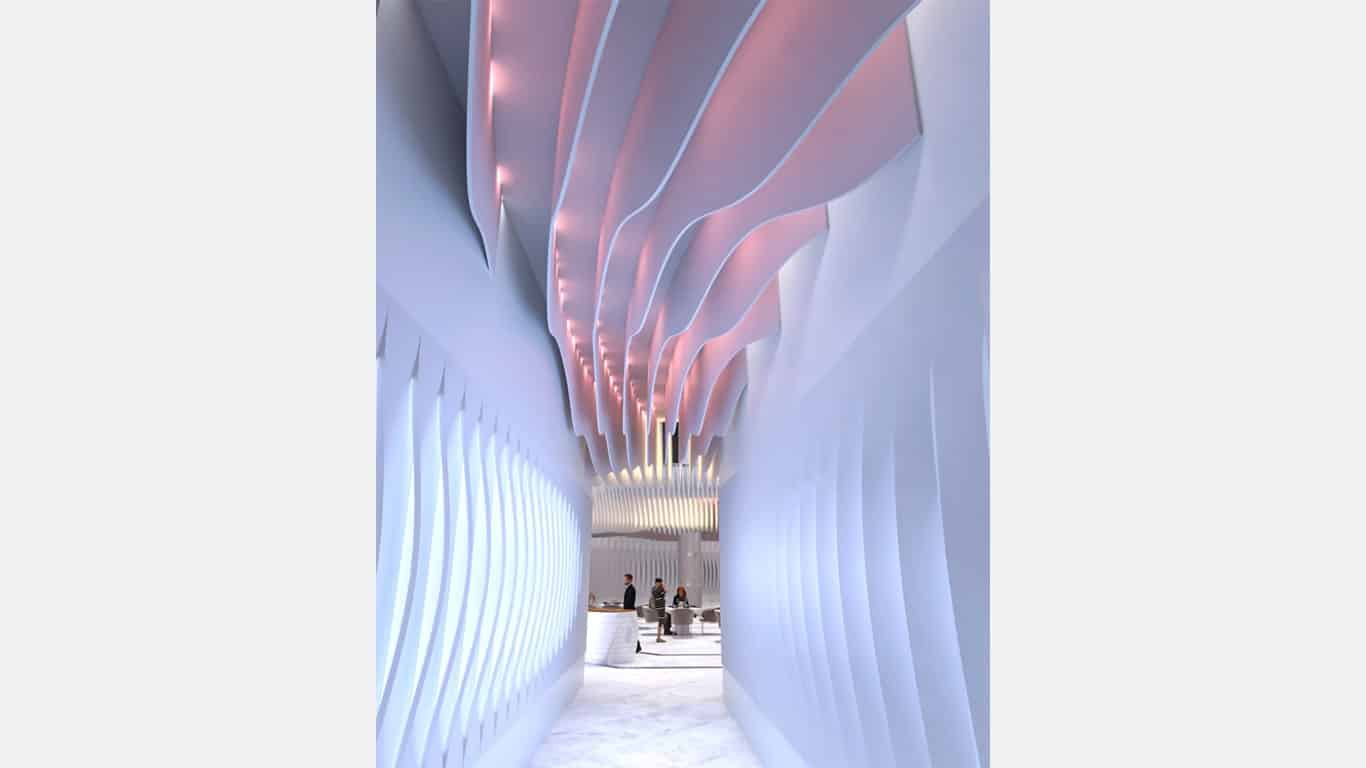
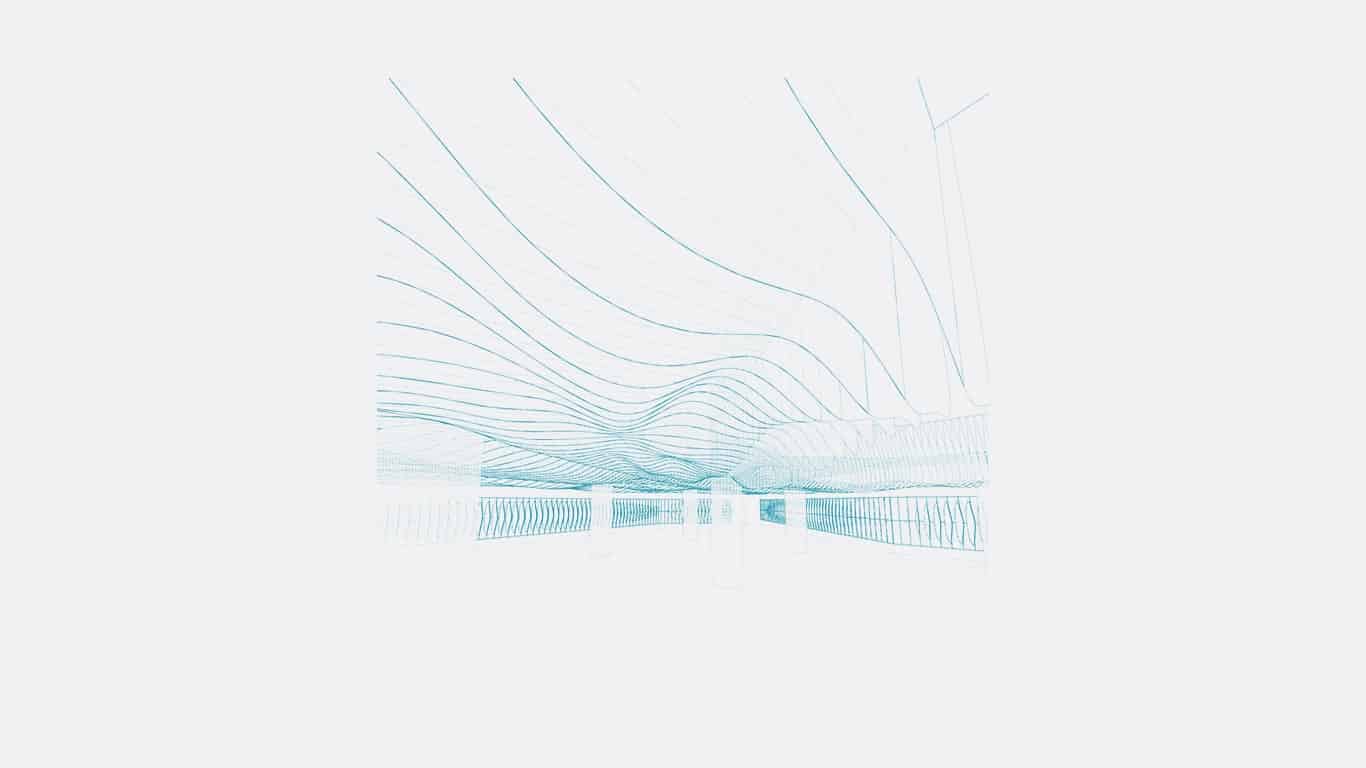
The redesign discards static ornamentation in favor of a dynamic, parametric intervention. Drawing directly from Jeddah’s maritime heritage, the primary ceiling plane is reimagined as a kinetic fluid surface. Suspended fabric elements, engineered to interact with natural air currents, simulate the physical mechanics of Red Sea waves. This dynamic ceiling is not a superficial metaphor; it acts as an active, breathable canopy that redefines the volume of the lobby, diffuses external lighting, and generates a strong interactive symbol for the “House of Trade.”


By restructuring the interior spatial logic, the intervention does more than upgrade the aesthetic identity; it fundamentally improves the operational efficiency of the Chamber. The new layout corrects previous circulation failures, integrates environmental lighting effectively, and introduces high-value rental and investment zones within the lobby. This approach directly elevates staff productivity while redefining the societal perception of the services provided by the institution.
The Jeddah Chamber of Commerce project proves that institutional revitalization does not require total demolition. Strategic interior architecture, driven by parametric logic and material discipline, can transform an aging landmark into a progressive civic hub. The methodologies used to map these interior transformations are detailed in how-we-work. For civic and commercial institutions seeking complex spatial restructuring, the initiation framework is outlined in bespoke-architecture.