
Most used materials in architecture
Stone
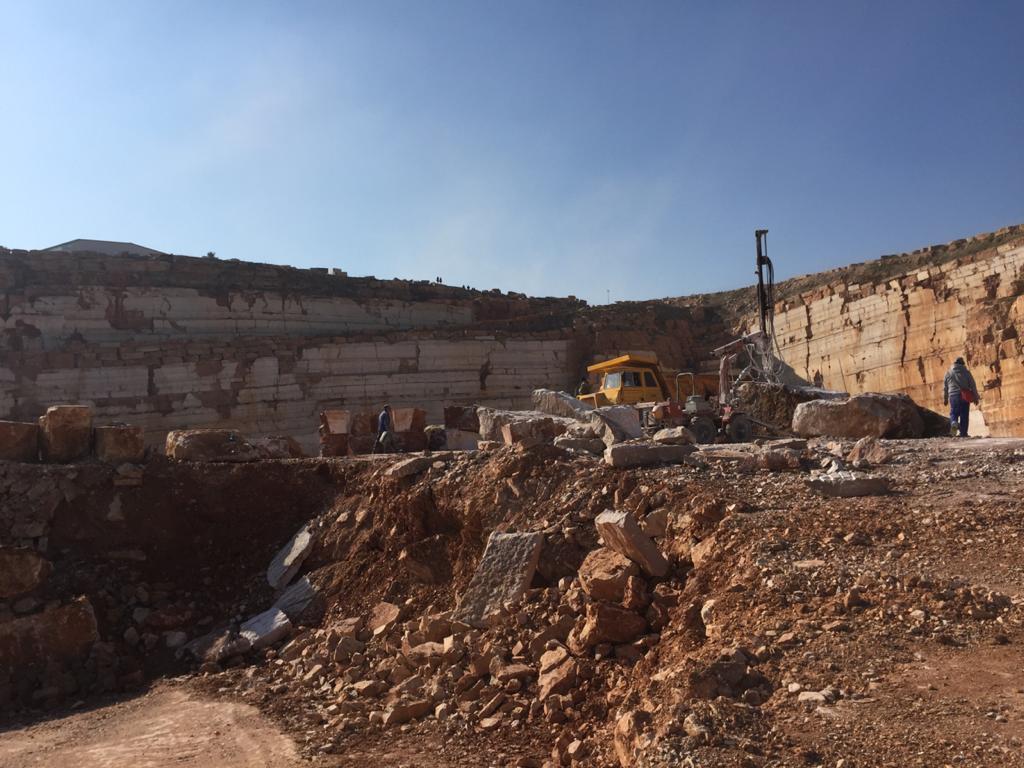
In most areas where the stone is available, it has been preferred over other materials for building monumental architecture. Its advantages are durability, adaptability to sculptural processing, and the fact that it can be used on modest structures in their natural state. But it is difficult to uproot, transport and cut, and its weakness in tension limits its use in beams, lintels, and floor supports.
The simplest and cheapest stonework is rubble. ie: broken stones of almost any shape and bound with mortar. The strongest and most suitable stonework for monumental architecture is the cinder block, which consists of regularly cut blocks (usually rectangular). Because of its weight and the precision with which it can be machined, stone masonry (unlike brick) does not rely on strong bonding for stability as it supports only direct downward loads. For example, the upper parts of the classical system resting on a column capital (entablatures) of an ancient Greek temple were attached with small bronze screws. But the weight creates stability problems when you push loads at an angle; Stone arches and arches require more support and support than similar shapes in other materials.
Brick
Brick compares favorably with stone as a structural material for its fire- and weather-resistant properties and for ease of production, transportation, and installation. Brick size is limited by the need for efficient drying, burning, and handling, but shapes, along with brickwork techniques, have varied widely throughout history. Shapes for molding can be produced to meet certain structural or expressive requirements (for example, wedge-shaped bricks are sometimes used in arch construction and round-faced bricks in columns). Bricks can only be used in masonry with mortar, as the unit is too small, too light, and too irregular to be fixed by weight. Each course (or layer) shall be laid on a wide mortar layer with mortar filling the vertical joints. The most common ancient Roman bricks were cut into triangles and laid with the base and the top set in a concrete fill that provided additional strength. Rectangular bricks are attached either as headers (short side out) or stretchers (long side out).
Wood
Wood is easier to obtain, transport, and work with than other natural materials. All parts of the building can be efficiently built of wood except for the foundations; Its disadvantage is susceptibility to fire, mold and termites. The wood’s strength in both tension and compression stems from its organic nature, giving it an internal structure of longitudinal and diagonal fibers that is unaffected by cutting or prolonged exposure. But like all living things, it contains moisture and is not uniformly strong, so it must be carefully selected and equipped to prevent twisting, splitting, and failure under loads. Wood is used in the construction of solid and structural structures. The main rigid system, called log creation, is used when only non-sophisticated cutting tools are available. Four walls shall be built together in horizontal layers of excavated or uncut logs and connected at the corners. The stability of the wooden building depends entirely on the mutual support of the walls, the method is suitable only for simple structures of limited size.