Concrete Countertops vs Quartz Countertops
Countertops play a central role in kitchens and bathrooms, affecting both daily use and visual identity. Two widely used options are concrete countertops and quartz countertops. While both can deliver strong performance, they differ in how they age, how much care they require, and how they look over time.
Concrete offers a customizable, architectural surface with a raw aesthetic. Quartz provides a highly engineered, consistent finish with low maintenance. The better choice depends on priorities such as durability, upkeep, design intent, and budget.
What are Concrete Countertops
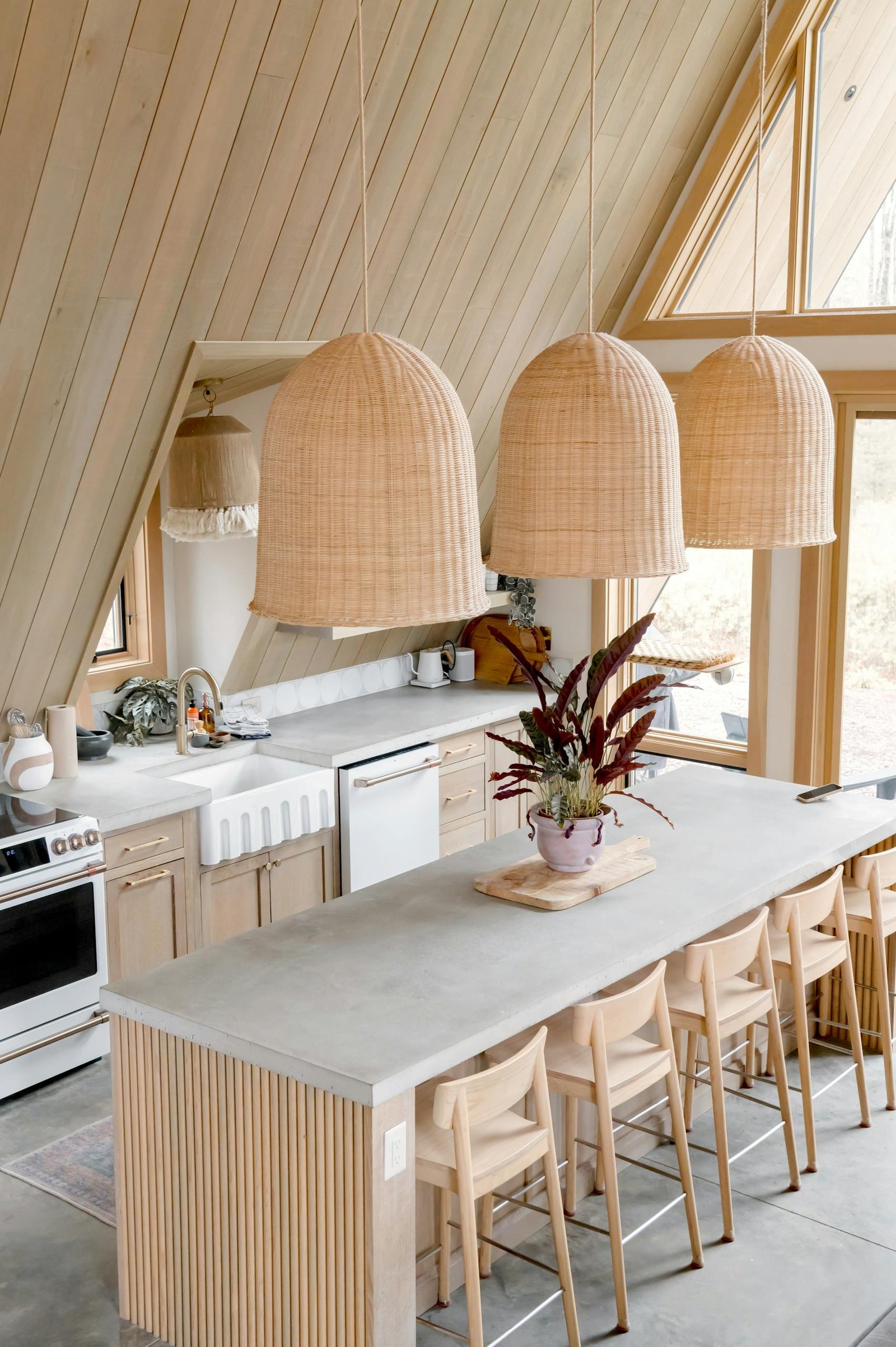
Concrete countertops are cast surfaces made from cement-based mixes, often reinforced and sealed. They can be formed in place or precast.
| Characteristic | Concrete Countertops |
|---|---|
| Material type | Cement-based |
| Customization | Very high |
| Surface variation | Natural, irregular |
| Finish options | Wide range |
| Installation method | Cast or precast |
Concrete allows integrated sinks, custom edges, and unique textures.
What are Quartz Countertops
Quartz countertops are engineered stone surfaces made from crushed quartz bound with resins and pigments.
| Characteristic | Quartz Countertops |
|---|---|
| Material type | Engineered stone |
| Customization | Controlled options |
| Surface variation | Uniform |
| Finish options | Polished, matte |
| Installation method | Factory slabs |
Quartz surfaces are manufactured for consistency and performance.
Durability
Durability includes resistance to cracks, chips, stains, and daily wear.
| Durability Factor | Concrete Countertops | Quartz Countertops |
|---|---|---|
| Crack resistance | Moderate | |
| Chip resistance | Moderate | |
| Scratch resistance | Moderate | |
| Stain resistance | Depends on sealing | |
| Structural stability | Moderate |
Concrete can develop hairline cracks over time due to shrinkage or movement. Proper reinforcement and installation reduce risk but do not eliminate it.
Quartz is generally more resistant to cracking and staining due to its engineered composition.
Maintenance
Maintenance is a key difference between the two materials.
| Maintenance Factor | Concrete Countertops | Quartz Countertops |
|---|---|---|
| Sealing requirement | Regular | |
| Cleaning effort | Moderate | |
| Stain sensitivity | Higher if unsealed | |
| Chemical resistance | Moderate | |
| Long term upkeep | Higher |
Concrete requires periodic sealing to prevent stains and moisture penetration.
Quartz is non porous and typically does not require sealing, making it easier to maintain.
Appearance
Visual character often drives the decision.
| Appearance Factor | Concrete Countertops | Quartz Countertops |
|---|---|---|
| Aesthetic style | Industrial, natural | |
| Color variation | Unique per piece | |
| Pattern consistency | Low | |
| Surface depth | High | |
| Design predictability | Low |
Concrete provides a handcrafted, one of a kind look with visible texture and variation.
Quartz offers a clean, consistent appearance, with options that mimic natural stone or provide solid colors.
Heat and Chemical Resistance
| Performance Factor | Concrete Countertops | Quartz Countertops |
|---|---|---|
| Heat resistance | High | |
| Thermal shock risk | Moderate | |
| Chemical resistance | Moderate | |
| Reaction to acids | Possible |
Concrete handles heat well but can be affected by acids if not sealed properly.
Quartz is less heat tolerant than concrete due to resin content and can be damaged by very hot cookware.
Cost Comparison
Costs vary depending on customization, fabrication, and location.
| Cost Factor | Concrete Countertops | Quartz Countertops |
|---|---|---|
| Initial cost | Moderate to high | |
| Custom design cost | Higher | |
| Installation complexity | Higher | |
| Maintenance cost | Higher | |
| Value consistency | Variable |
Concrete can become expensive with complex forms and finishes.
Quartz typically has a more predictable pricing structure.
Installation and Fabrication
| Installation Factor | Concrete Countertops | Quartz Countertops |
|---|---|---|
| Fabrication location | On site or off site | |
| Installation time | Longer | |
| Weight considerations | High | |
| Precision level | Variable | |
| Installation complexity | Higher |
Concrete requires careful curing, finishing, and sealing. Quartz is fabricated in controlled environments and installed as finished slabs.
When Concrete Countertops Work Best
Concrete countertops are suitable when
• A custom or unique design is desired
• An industrial or architectural aesthetic is preferred
• Integrated features are required
• Slight imperfections are acceptable as part of the design
• Long term maintenance is not a concern
They are often used in bespoke residential and design driven projects.
When Quartz Countertops Work Best
Quartz countertops are better suited when
• Low maintenance is a priority
• Consistent appearance is important
• High stain resistance is needed
• Fast installation is preferred
• Predictable performance is required
They are common in kitchens with heavy daily use.
Hybrid Design Approach
Some projects combine both materials. For example, quartz may be used in main work areas, while concrete is used for islands or feature surfaces.
This allows balancing durability with design expression.

Conclusion
Concrete countertops and quartz countertops represent two different approaches to surface design. Concrete offers flexibility, customization, and a distinctive appearance, but requires more maintenance and careful handling. Quartz provides durability, consistency, and ease of use with minimal upkeep.
The best choice depends on whether the priority is design expression or practical performance. In many cases, combining both materials delivers a balanced and effective result.
Summary
Concrete countertops and quartz countertops offer two distinct approaches to surface design, balancing customization and performance. Concrete provides a highly adaptable, architectural surface with unique textures and integrated features, but it requires regular sealing, careful maintenance, and may develop minor cracks over time. Quartz, as an engineered material, delivers consistent appearance, strong resistance to stains and damage, and minimal upkeep, making it more practical for high-use environments. While concrete excels in design flexibility and visual character, quartz stands out for durability and ease of use. The best choice depends on whether the priority is expressive, custom design or long-term reliability and low maintenance, with many projects benefiting from a hybrid approach that combines both materials.