Athe-LAB 2023
An idea does not originate in isolation. It forms through conversation — through the friction between one mind and another, between one discipline and the next. The Athe-LAB competition brief asked for a building that could serve as the institutional home of that friction: a facility for architects that is also open to other creative disciplines, where the conditions for productive intellectual encounter are built into the spatial program rather than left to chance. Notably, the Athe-LAB concept encourages this interdisciplinary approach as fundamental to its mission. In summary, Athe‑LAB is designed to foster collaboration and creativity at every level. Furthermore, Athe‑LAB is focused on creating opportunities for both dialogue and innovation.
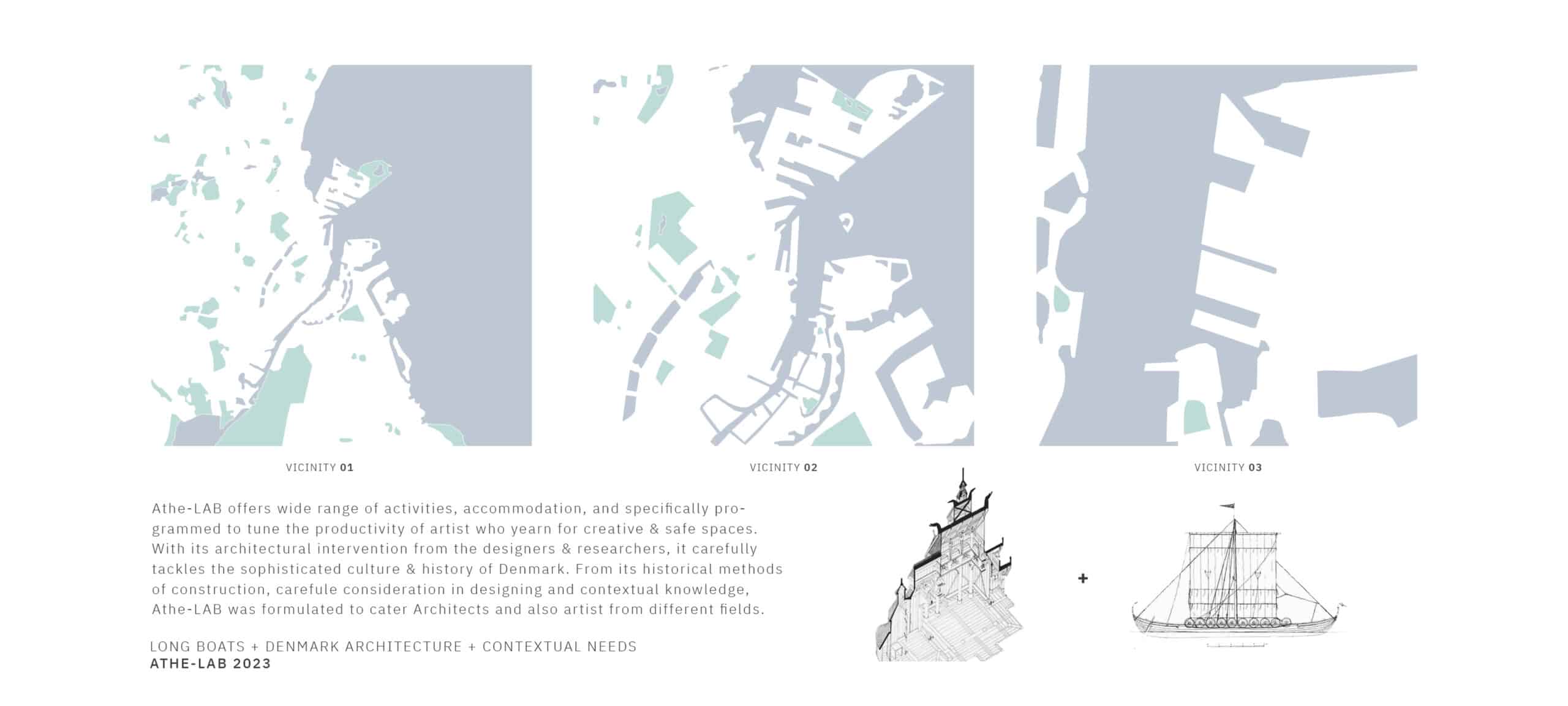
The project begins with two historical sources that are separated by two thousand years and an entire civilization. The first is the Greek Agora — the open space of ancient civic life where citizens gathered to exchange ideas, transact commerce, and participate in the collective thinking of the city. The second is the Viking longboat — the shallow-drafted vessel that allowed the Nordic peoples to navigate rivers, cross oceans, and reach shores that deeper-hulled ships could not approach. The Agora contributes the project’s programmatic logic: an open, collaborative spatial field where expression is shared rather than contained. The longboat contributes the building’s formal logic: a structure so shallow and adaptable that it can go anywhere, carrying its contents across any condition of ground or water it encounters. In fact, Athe-LAB intentionally draws from these sources to establish its unique architectural language, making Athe-LAB a truly distinct concept in contemporary architecture. As a result, Athe‑LAB is recognised for bridging history and innovation in design.
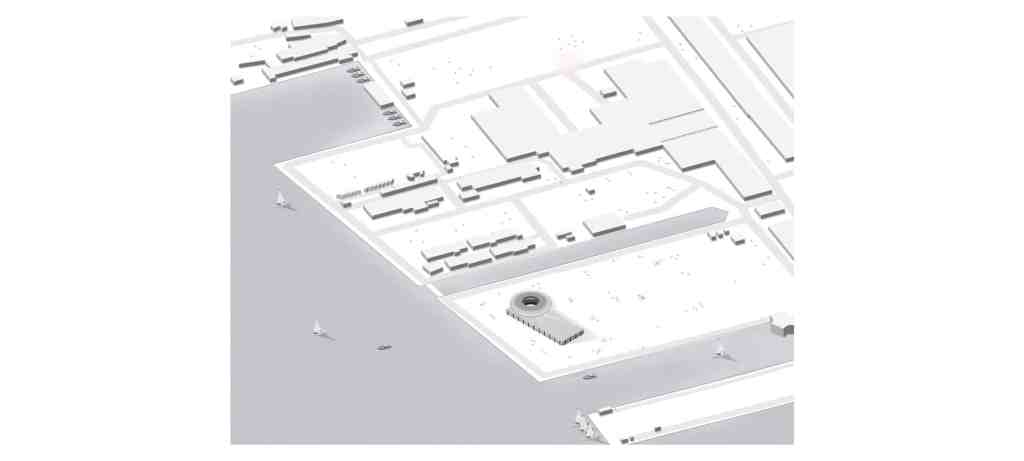
Location          Denmark
Client            uni.xyz Competition
Type              Cultural Institution — Competition Entry
Status            Competition Proposal
Year              2021
Principal         Ibrahim Nawaf Joharji
Scope             Organic Architecture, Cultural Research, Parametric Design
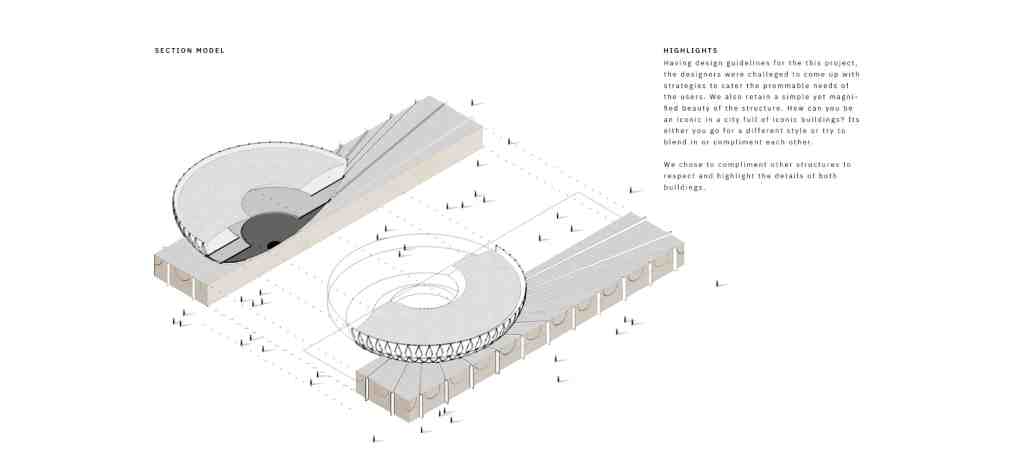
Denmark’s Viking lineage is not a decorative resource — it is a design methodology. The study of medieval Scandinavian architecture, its structural systems, its relationship to landscape and climate, and the behavioral and social programs of the communities that produced it shaped the proposal’s approach before any formal decision was made. The longboat’s structural characteristics — its shallow draft, its curved hull planking, its capacity to flex under load rather than resist it rigidly — were translated into the building’s section and massing logic. This relationship is central to the identity of Athe-LAB, seamlessly merging historic influence with contemporary function. Undoubtedly, Athe–‑LAB bridges past and present with innovation. More importantly, Athe‑LAB represents a commitment to both tradition and modernity.
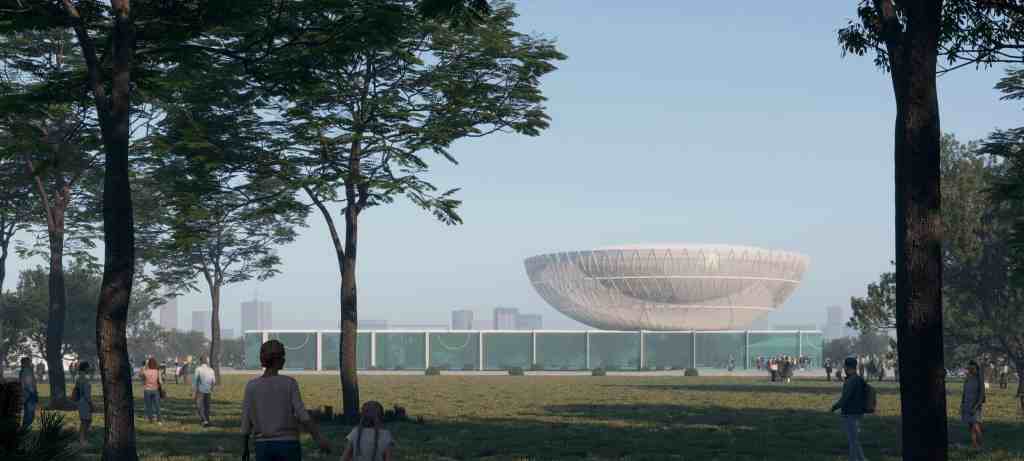
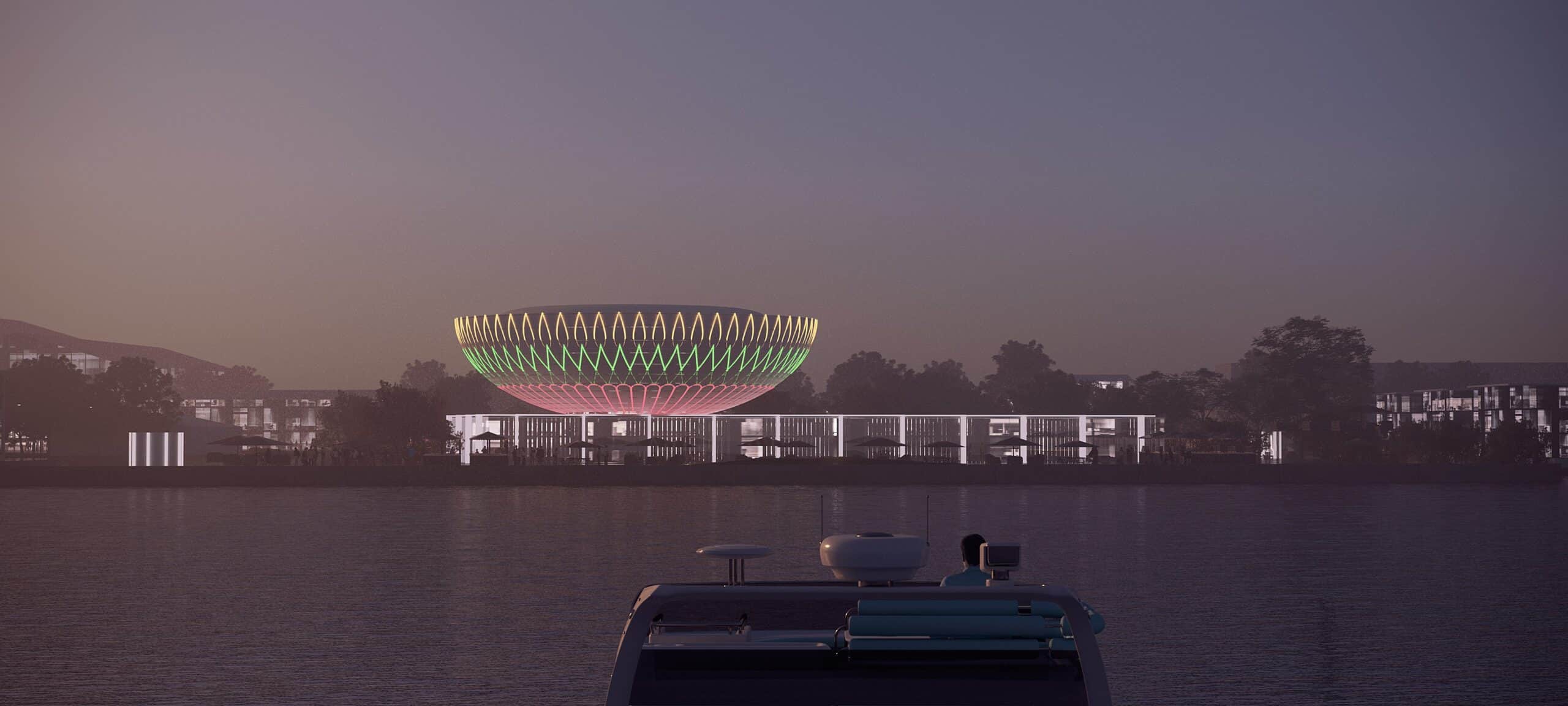
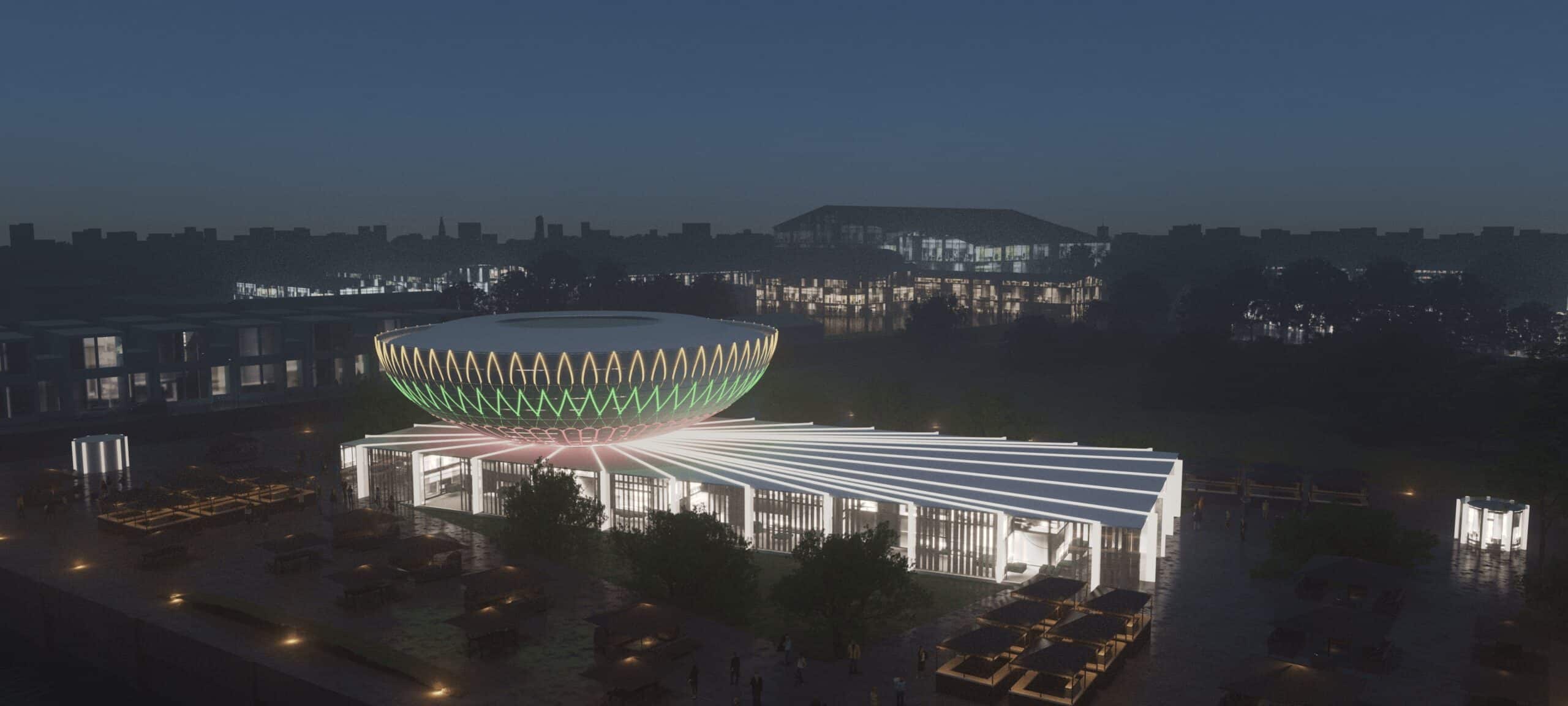
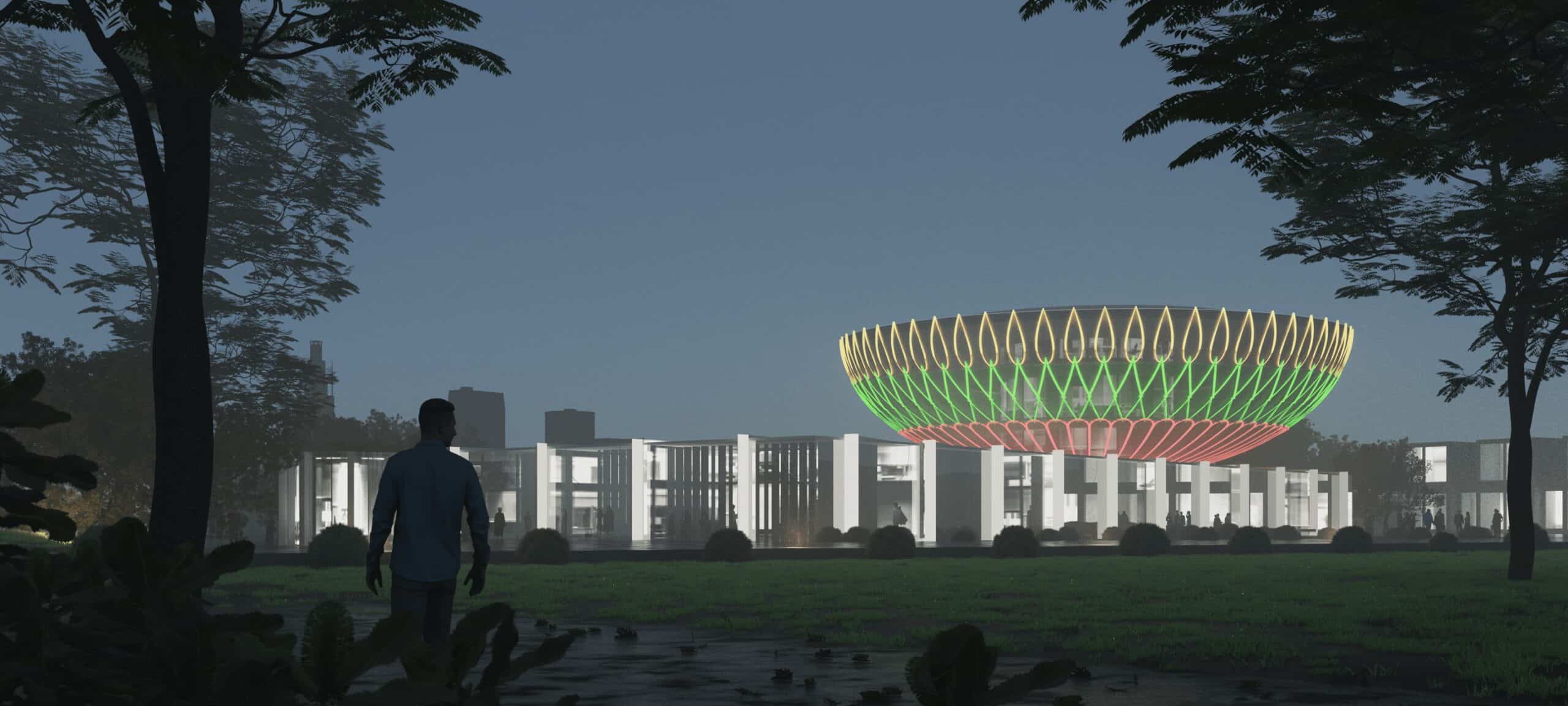
The building’s primary formal element is a giant bowl derived from the convergence of two Viking objects: the shield and the longboat’s cross-section. The patterns are not applied to the facade — they are the facade’s structural argument, their geometry performing the load distribution and solar management functions that the building’s environmental brief requires. Above all, Athe-LAB stands as a testament to the power of architectural synthesis and innovation. Ultimately, Athe-LAB symbolizes how architecture can embody a set of values and inspirations. Clearly, Athe‑LAB demonstrates how creative thinking shapes the built environment.