Azizia Tower
In the geography of pilgrimage, physical proximity to the Grand Mosque is not merely a measure of distance but a strict operational condition. The fundamental architectural challenge of this project was not how to maximize capacity within a narrow plot. Rather, it was how to engineer a high-density vertical structure capable of receiving, holding, and releasing thousands of transients in the concentrated cycles of Hajj and Umrah. This had to be done without systemic failure.
Location          Al Aziziyah, Makkah, Saudi Arabia
Type              Hospitality & Commercial Tower
Plot Area         1,400 m²
Status            Design & Permitting (Unbuilt — Repurposed for Azizia Stores)
Year              2016
Client            Joharji Hotels
Principal         Ibrahim Nawaf Joharji (Architect & Owner's Representative)
Materials         Parametric faceted envelope, structural concrete, glass
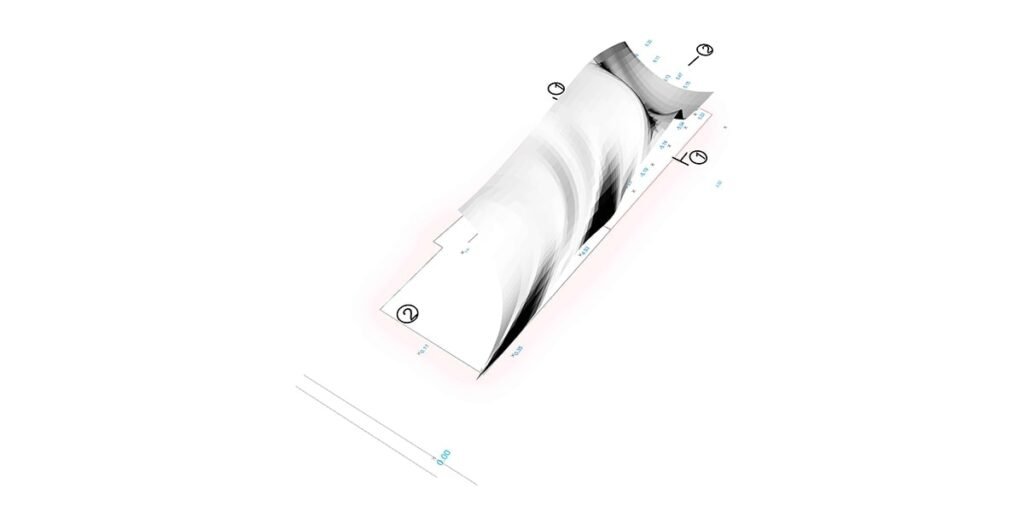
The site occupies an elongated footprint of 1,400 square meters in Al Aziziyah, wedged between two street levels divided by the natural topography of the mountain. This dramatic section rendered conventional flat-site construction logic obsolete. The district relies on extreme hospitality density to absorb seasonal influxes. As a result, to meet this density while preventing spatial friction, the design process bypassed standard programmatic layouts. Instead, it focused entirely on human movement. Importantly, peak-load circulation maps dictated the architectural response. They calculated the precise moments of mass arrival and departure. This information was used to structure the ground plane and vertical cores accordingly.

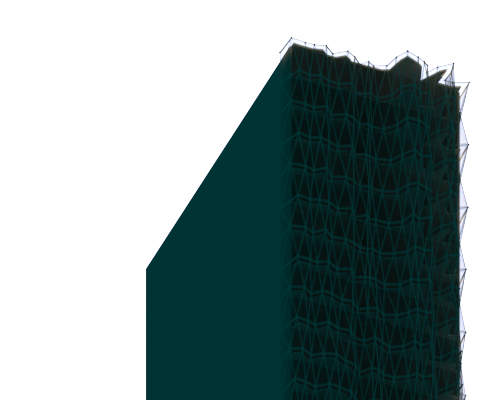
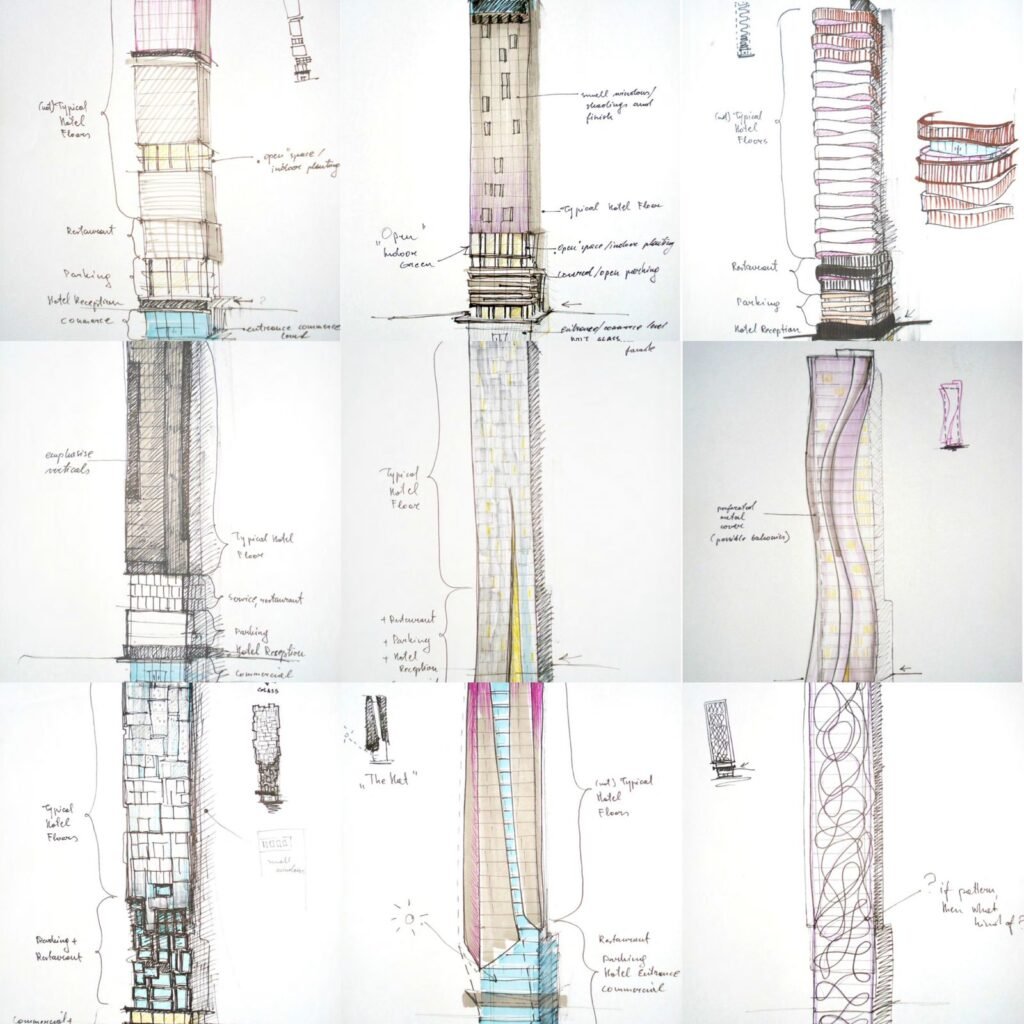
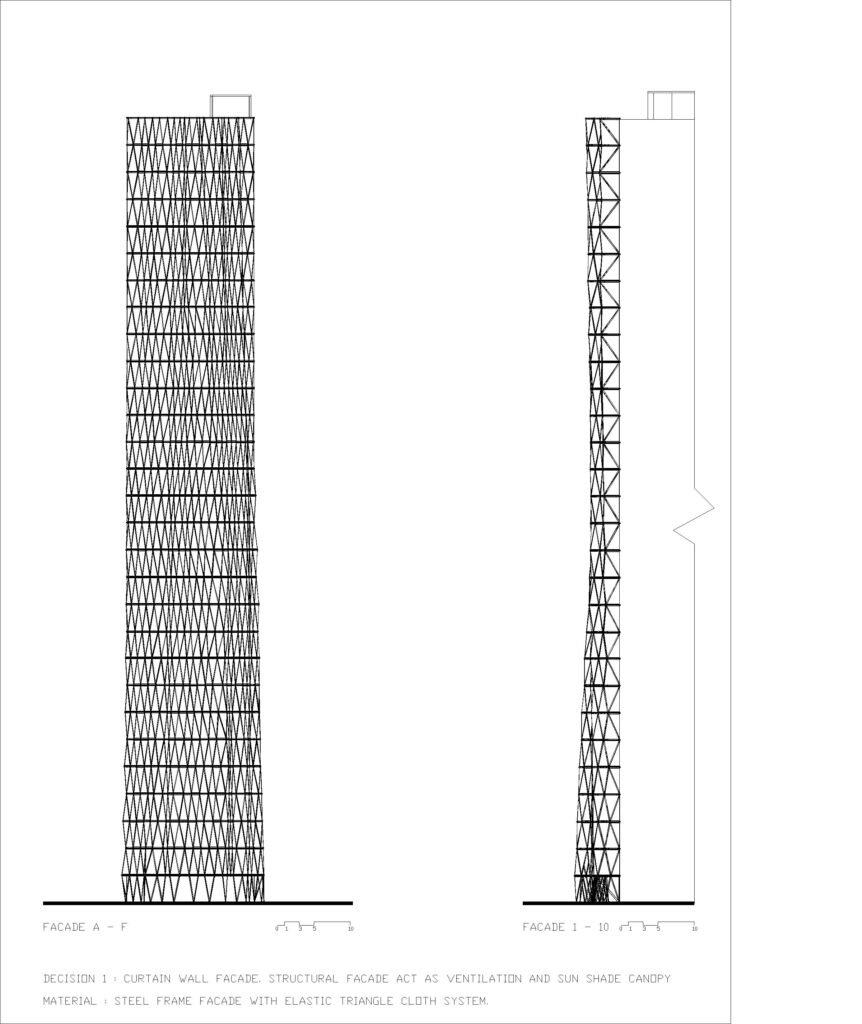
The architectural envelope operates as a climatic and cultural mediator rather than a passive boundary. The primary facade was developed through parametric abstraction, extracting the light-distributing properties of a faceted diamond and crossing them with the environmental logic of the traditional Hijazi Rawshan. These references operate as generative structural rules rather than applied ornament. Thus, the resulting skin modulates intense solar exposure by fragmenting direct light across multiple angled planes. In addition, it embeds the vertical mass within the historic visual lexicon of Makkah.
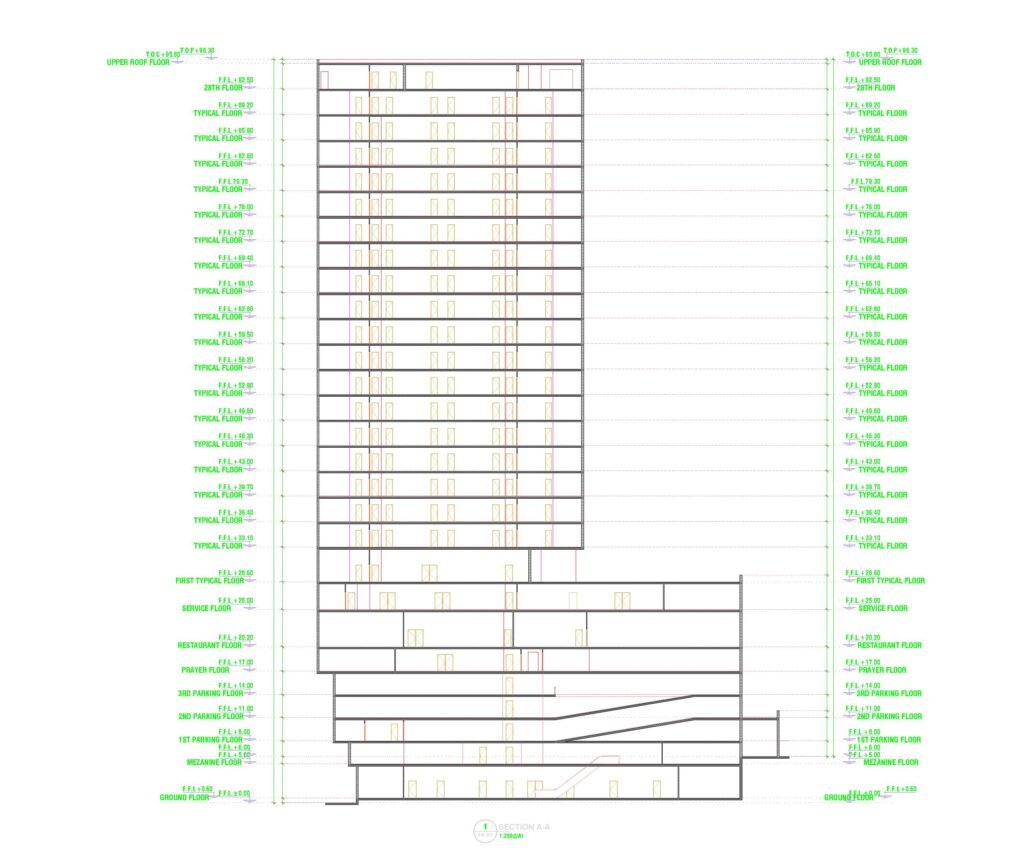
Rising twenty-five residential levels above an active commercial podium, the tower stratifies its functions to protect domestic privacy from public turbulence. The podium absorbs the immediate shock of the street level, organizing retail and arrival sequences before establishing a hard threshold for the inhabited floors above. Vertical circulation for the 280 rooms orbits a highly calibrated central core designed specifically to reduce the room-to-street travel time during peak prayer hours. By engaging both the lower and upper street levels, the building utilizes the mountain’s natural slope as a programmatic asset. At the same time, service and secondary access operate from the upper elevation, completely decoupled from the primary pedestrian flow at the base.
Azizia Tower confronts the paradox of modern pilgrimage architecture: the necessity to house extreme temporary densities while maintaining the physical dignity of the inhabitant. By utilizing the challenging topography to separate service flows from pedestrian movement, the building achieves operational clarity rarely seen on such constrained plots. Notably, the parametric facade transcends mere aesthetic articulation, functioning as a primary environmental defense system that reduces the cooling load of the structure. This fusion of rigorous circulation mapping and culturally rooted climatic response is a direct manifestation of the spatial theories advanced by Ibrahim Nawaf Joharji
. The methodologies governing this peak-load architectural strategy are detailed in how-we-work
. Similar high-density interventions mapped to mountainous terrain can be explored across the projects
index. For developers navigating complex topographical and operational constraints, the framework for initiation is established in bespoke-architecture.