
Beirut Reconstruction
On August 4, 2020, 2,750 tons of ammonium nitrate detonated at the Port of Beirut. The blast killed more than 200 people, displaced 300,000 residents, and destroyed a significant portion of one of the Arab world’s most historically layered cities. The question that followed was not only how to rebuild — it was whether the rebuilt port should occupy the same ground at all.
Beirut is a city of more than 5,000 years of continuous habitation, positioned on the Lebanese Mediterranean coast at the intersection of Phoenician, Roman, Ottoman, and French Mandate histories. Its port was its economic heart and its most dangerous liability simultaneously. The explosion exposed not only a failure of storage regulation but a systemic collapse of governance — a port whose hazardous inventory was known to authorities for years and addressed by none of them. The reconstruction competition asked architects to respond to this condition. The proposal submitted by INJ Architects began by questioning whether reconstruction of the port, in isolation, was the correct architectural question.
Location          Beirut Port, Lebanon
Client            Architecture Competition — Reconstructing Beirut
Type              Urban Reconstruction — Competition Entry
Status            Competition Proposal
Year              2021
Principal         Ibrahim Nawaf Joharji
Scope             Urban Planning, Memorial Architecture, Economic Restructuring
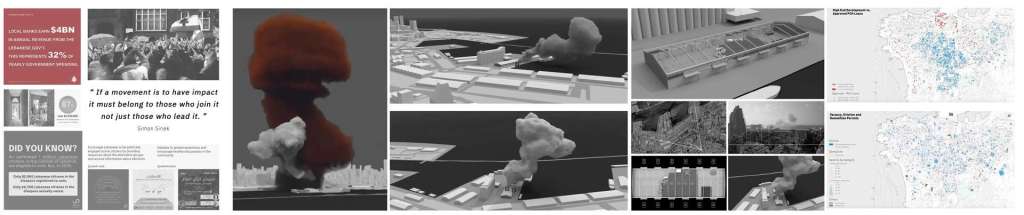
The proposal was developed following participation in a symposium hosted by the Architectural Association School of Architecture titled “Reconstructing Beirut,” which brought together architects, academics, and community organizers to analyze the causes of the explosion and develop strategies for the city’s recovery. The research phase employed geolocated footage and three-dimensional modeling to reconstruct the sequence of events on August 4 — a forensic methodology that revealed the specific spatial and regulatory conditions that allowed the catastrophe to reach the scale it did. This analysis shaped every planning decision that followed. The design did not begin from an image of what Beirut should become. It began from a precise understanding of what had failed.
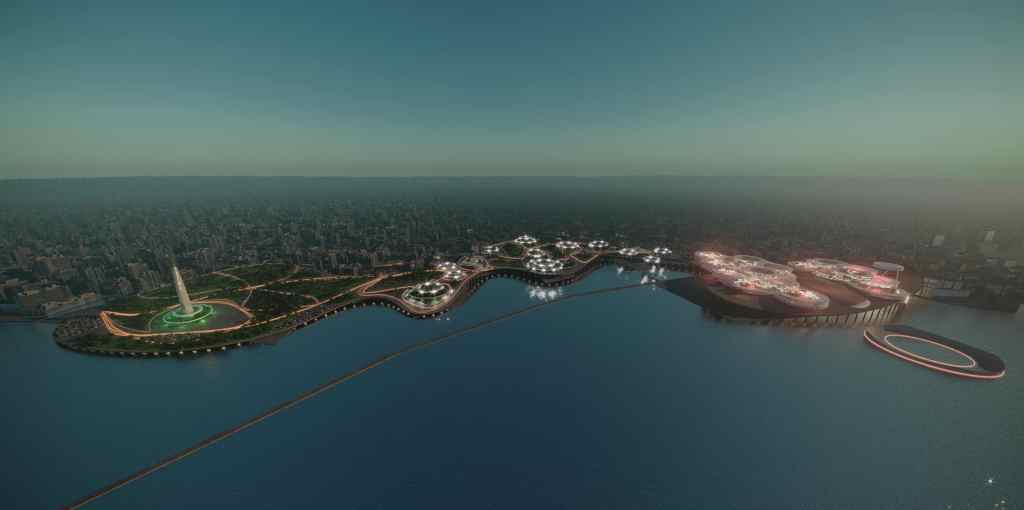
The primary urban proposition is the relocation of the port’s operational functions to a new logistics center outside the city center, releasing the blast-affected waterfront ground for a mixed-use district of significantly higher civic and economic value. The former port land, among the most expensive urban real estate on the Lebanese Mediterranean coast, had been occupied by an industrial facility whose hazardous nature was incompatible with its urban position. The proposal treats the explosion not only as a tragedy but as a forced correction of a century-old planning error — an industrial port embedded within a dense historic city — and designs its response around that correction.

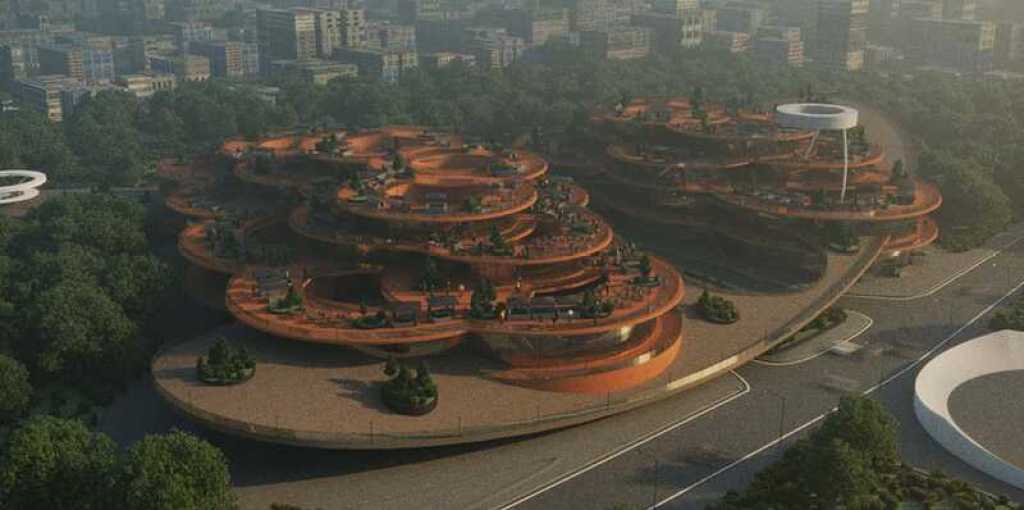
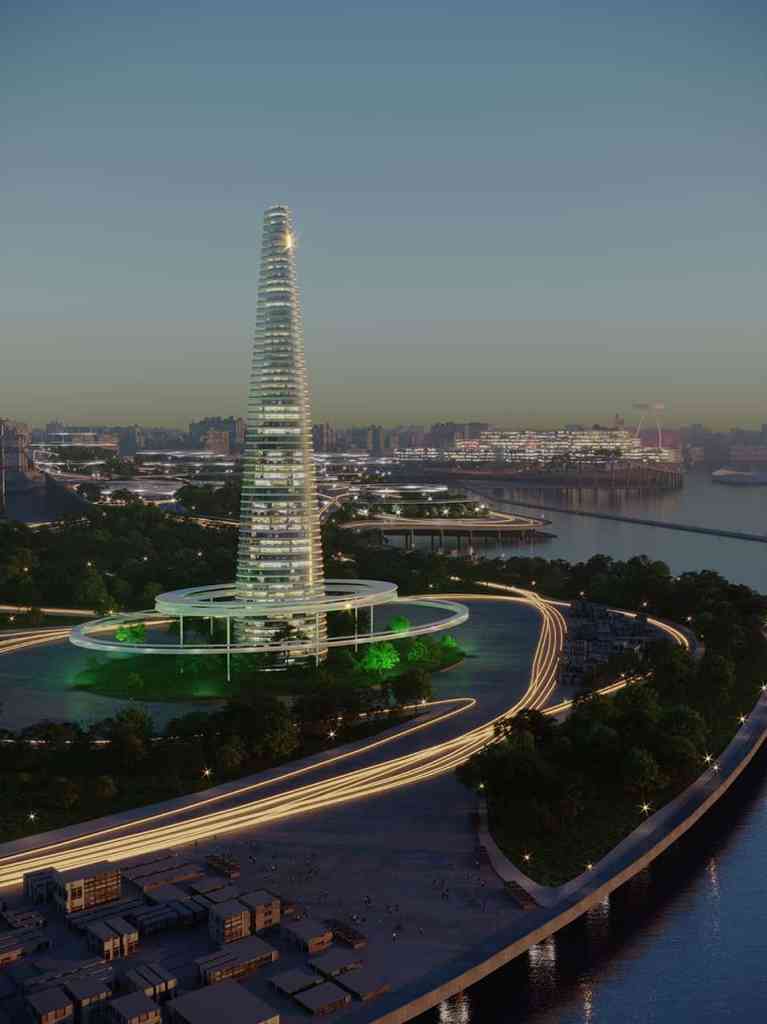
The architectural proposition central to this project is a stacked ring structural system — a building typology in which horizontal annular floor plates are layered vertically with programmatic and geometric offset between each level. This is not a tower. It is not a podium with a tower above it. Each ring is a complete inhabited plane, its inner void open to the sky and to the rings below, the stack producing a building that reads from the exterior as a series of overlapping horizontal gestures rather than a vertical extrusion. The system was developed specifically for the Beirut context as a registered design concept: a building that grows upward through accumulation of complete civic levels rather than through the multiplication of identical floor plates. Every ring contains a different program. Every offset produces a different relationship between the inhabited level and the Mediterranean light above it.
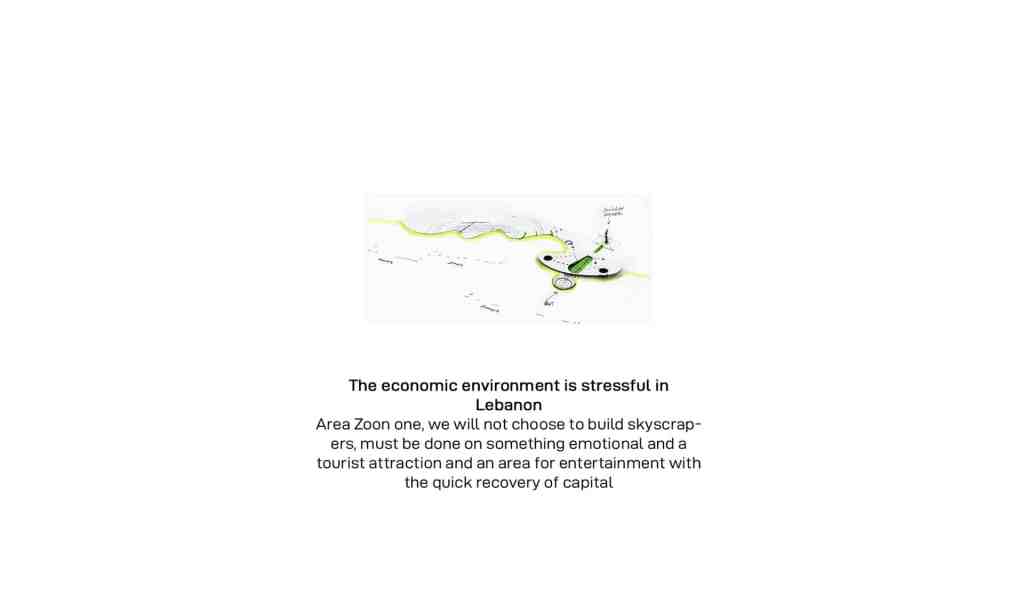
Lebanon considers the environment of great political corruption in the Middle East region who does not remember that video about a Lebanese at Beirut airport saying (We want to suppress corruption, we want someone like Mohammed bin Salman) Rival parties and political intrigues affect the real estate situation, investment and the country’s growth, Beirut explosion It is considered a point of failure in the pattern of politics, citizens and architecture. We participated in this competition because we have distinct ideas as a Saudi office. We see that Lebanon is a country close to us geographically, and the reconstruction of Beirut is a matter that needs architectural expertise and also an insightful urban planning that distinguishes the economic aspect because the economy is an important element.
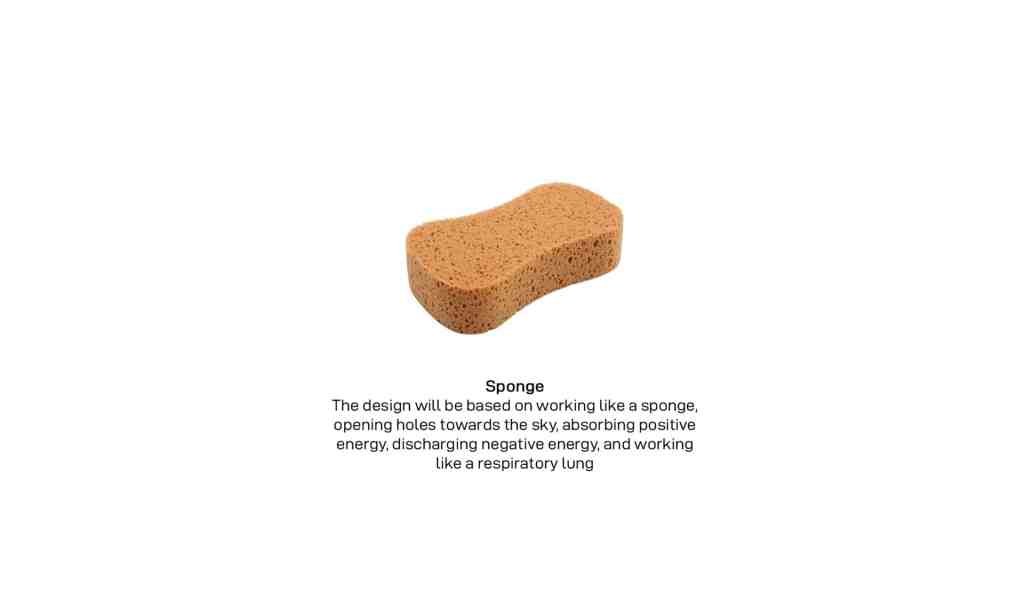
The stacked ring system operates as a structural sponge at the urban scale — a concept the proposal develops as a direct response to Beirut’s specific vulnerability. A conventional dense block absorbs a blast’s energy by failing catastrophically at its most rigid points. The ring system, with its annular geometry and vertical offsets, distributes lateral force through the curvature of each plate rather than concentrating it at orthogonal joints. The open central voids allow pressure waves to pass vertically through the building rather than accumulating within enclosed floor volumes. The stacking offset prevents progressive collapse — if one ring is compromised, its neighbors do not share a direct load path with it. The sponge absorbs rather than resists. This structural logic was not developed as an afterthought to the formal decision. It was the reason the ring was chosen as the building’s generative unit in the first place.
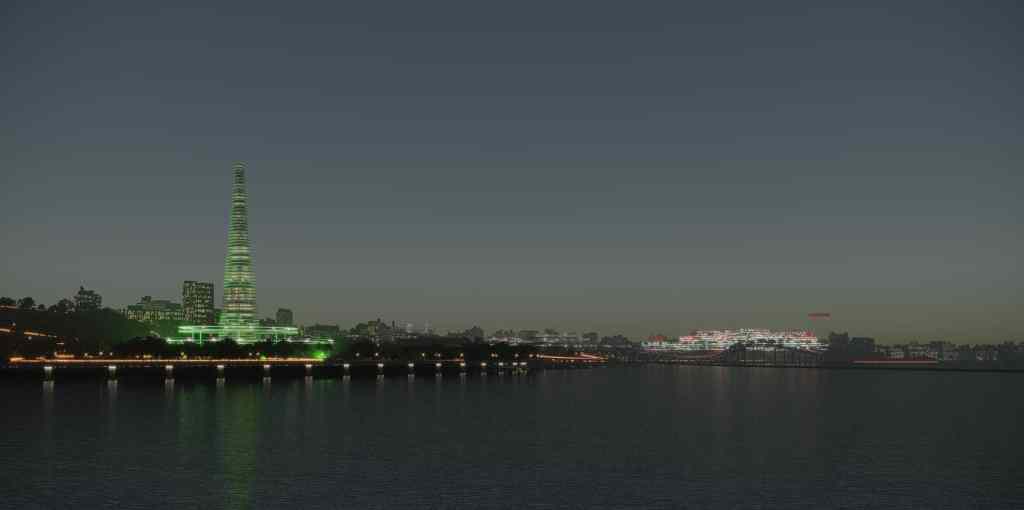


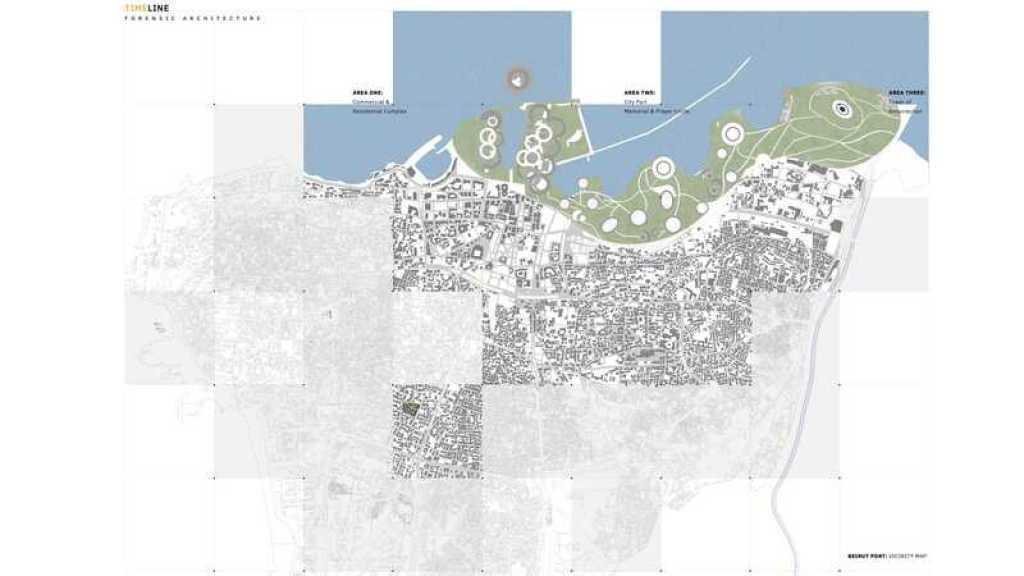
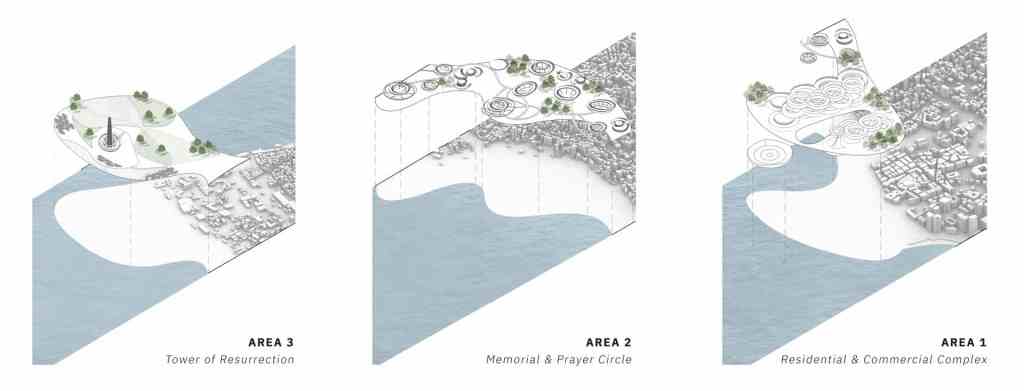
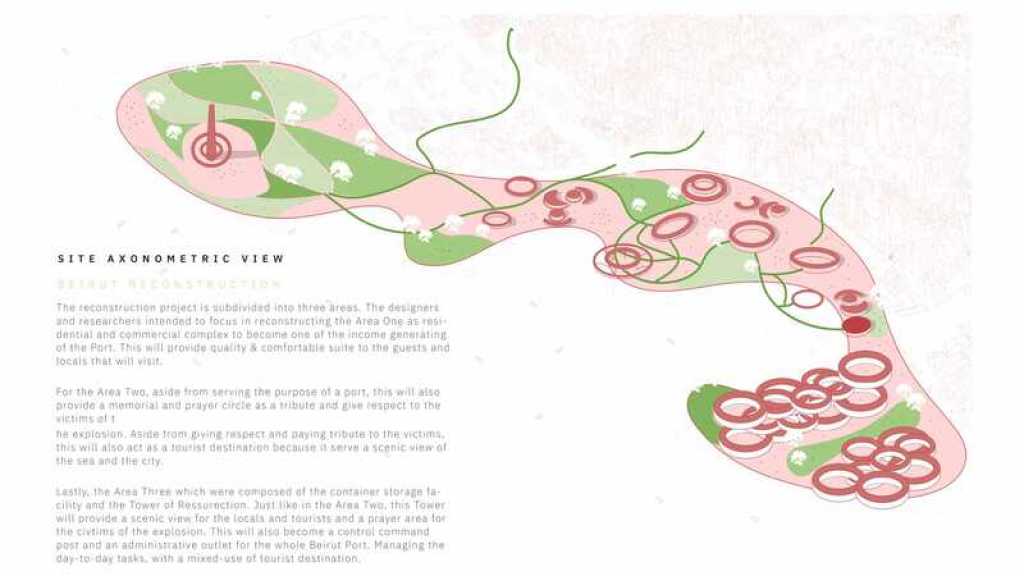
The site is organized into three zones, each with a distinct program and a distinct relationship to the memory of August 4. Zone One occupies the outer edge closest to the existing city fabric and contains residential and commercial development — the economic engine of the reconstruction, generating revenue from the port’s high-value land while reintegrating the waterfront into Beirut’s daily life. Zone Two holds the functional port remnants alongside a memorial site: a prayer circle placed at the center of the former blast epicenter, surrounded by landscaped space for reflection, with unobstructed views of the Mediterranean. This zone transforms the site of maximum destruction into a place of maximum civic meaning. Zone Three contains the Tower of Resurrection — the primary stacked ring structure — which provides administrative and cultural functions at its base and ascends through mixed-use levels to a panoramic platform overlooking both the city and the open sea.
The One-Minute City planning model, originally developed in Sweden, structures the residential and commercial distribution across Zone One. Its principle is that every resident should be able to reach essential daily services within a one-minute walk or cycling distance from their home. Applied to the Beirut context, this decentralizes the service infrastructure across the zone rather than concentrating it at commercial nodes — a direct response to the governance failure that allowed the port’s operational hazards to accumulate unaddressed at a single location. A distributed city is harder to catastrophically compromise than a centralized one. The planning model is also an argument about political structure encoded in urban form.





The stacked ring building system developed for this proposal is a registered design concept under INJ Architects — a structural and programmatic typology conceived specifically for urban conditions that require simultaneous resilience against physical force, programmatic flexibility, and civic legibility at the waterfront scale. Its application in Beirut is the first instance of the system in a reconstruction context. The urban research and planning methodology informing this proposal is detailed in how-we-work. The environmental performance framework that underlies the sponge city structural logic is outlined under sustainability. For government bodies and development agencies managing reconstruction or large-scale waterfront transformation, the engagement framework is available through bespoke-architecture.