
FAWAKHERJI
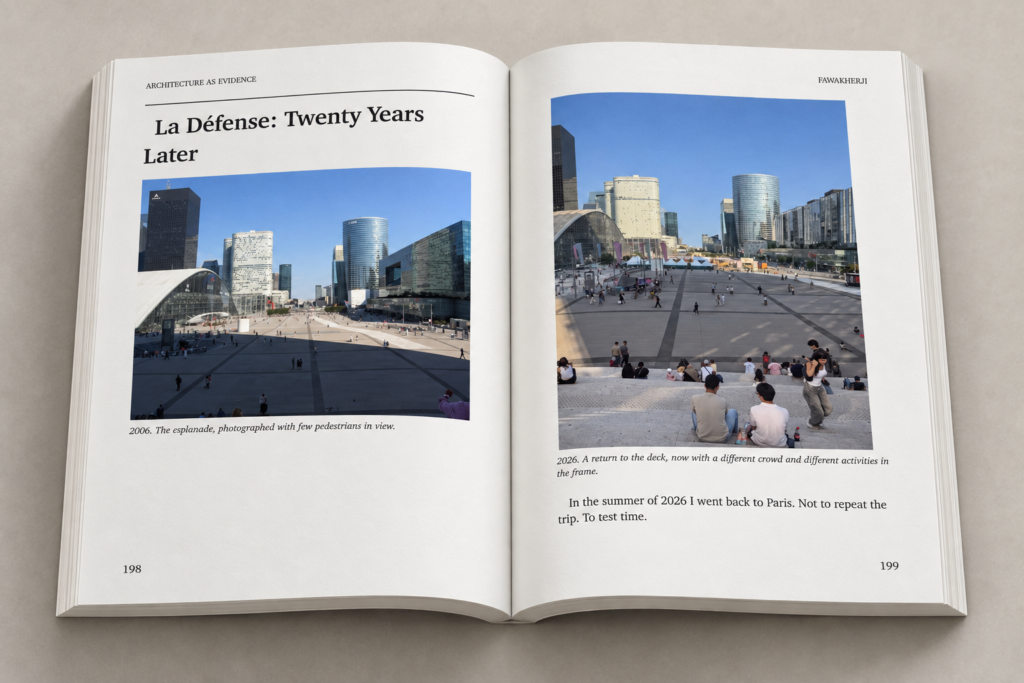
A building holds more than its programme. It holds the decisions of the people who made it, the habits of those who use it, and the adjustments each generation makes without announcing them. Fawakherji — a collection of English-language essays by practising Saudi architect Ibrahim Joharji — begins with this observation and follows it through seven parts: from a construction site, into family homes, across Makkah’s changing landscape, and back to Paris and London seen twice, twenty years apart.
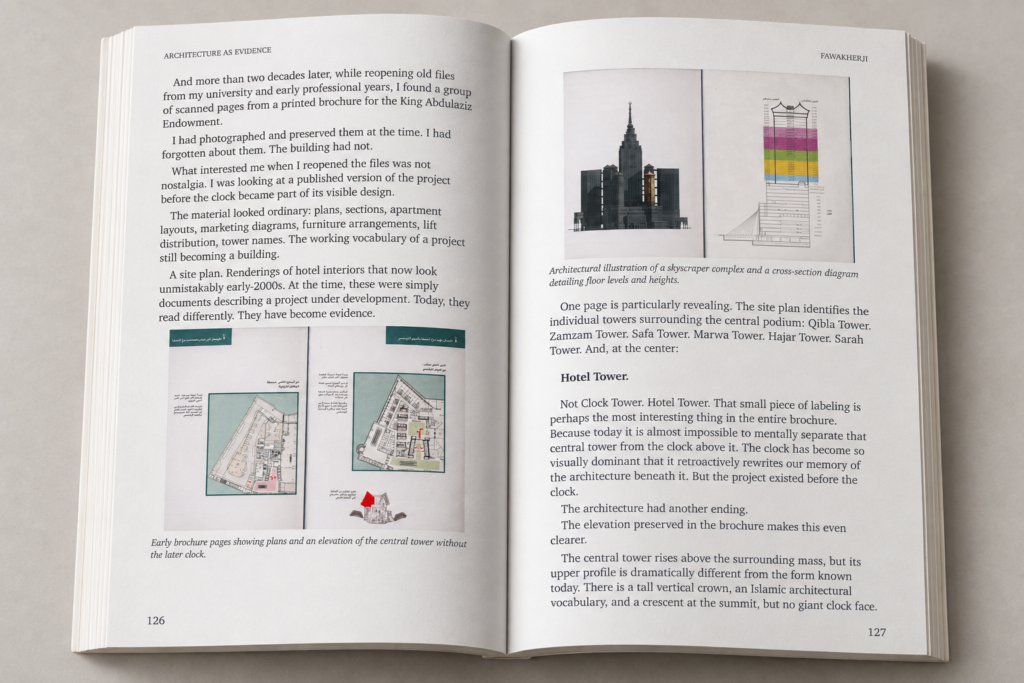
The essays read buildings through the people, habits, bargains, and memories that make them possible. A missing earring clasp becomes a question about labour and accountability on a construction site. A driver’s room discloses something about the household it serves. A worker’s mark cut into stone beneath the Louvre opens onto questions about who is counted and who is not. A kitchen altered by delivery apps reveals a shift in domestic life that no architectural brief anticipated. An old brochure records Makkah before the clock tower became its familiar image. The book moves between professional observation and personal memory, between argument and quiet humour, and it leaves readers with questions they can take into their own streets and rooms.
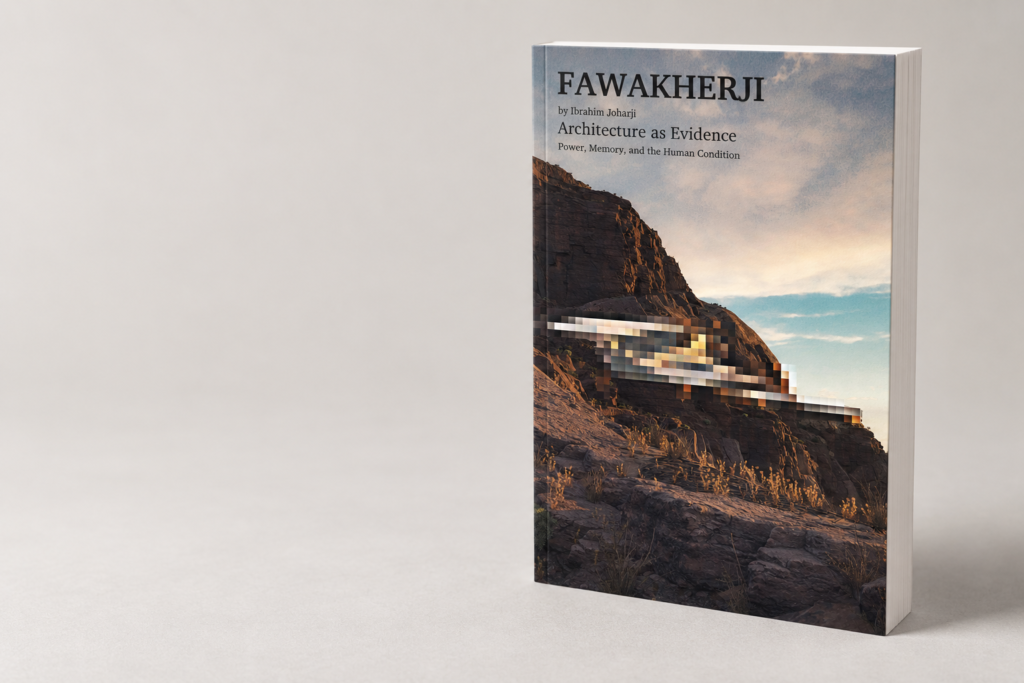
Title             FAWAKHERJI
Subtitle          Architecture as Evidence —
                  Power, Memory, and the Human Condition
Author            Ibrahim Joharji
Type              Essay Collection
Language          English
Format            Trade Paperback
Trim              139.7 × 215.9 mm (5.5 × 8.5 inches)
Pages             252
Parts             Seven
Publisher         fawakherji.com
Principal Ibrahim Nawaf JoharjiThe Book
What can a tiny piece of missing gold teach us about a construction site? What does a driver’s room disclose about a household? What changes when we return to the same city with twenty more years behind our eyes?
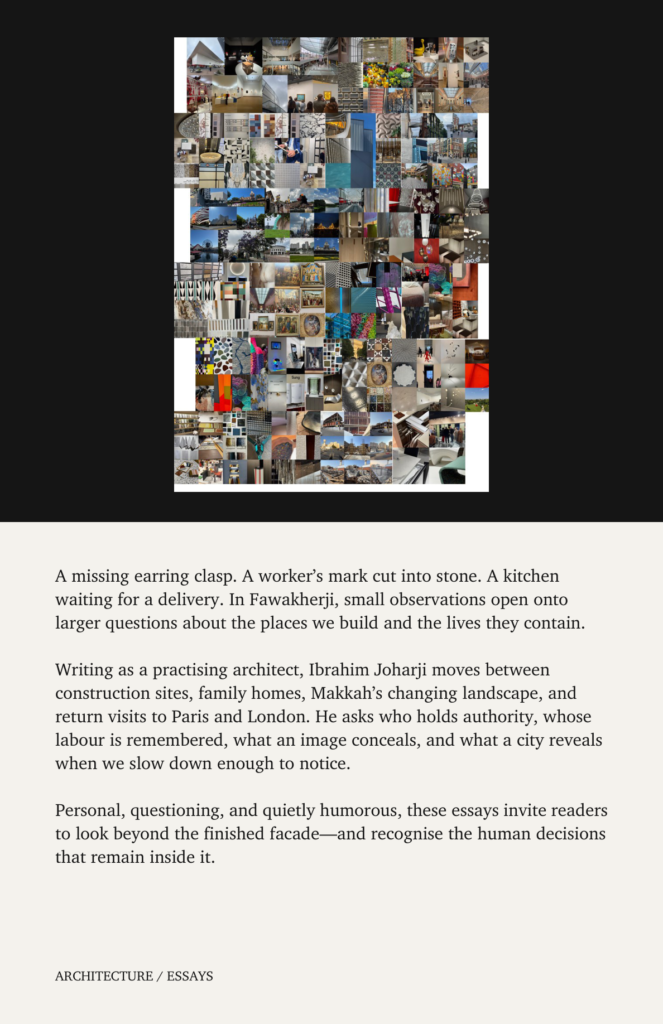
Fawakherji begins with things noticed. Across seven parts, Ibrahim Joharji examines how authority, technology, and ordinary habits enter the spaces we inhabit. The writing combines professional observation with memory, argument, and quiet humour. Photographs and archival material accompany the essays — not as illustration but as evidence, an extension of the same act of looking that the writing performs. The book is not a portfolio or a technical manual. It is a readable architectural essay collection with a personal voice, positioned for architects, students, designers, and readers of essays about cities and everyday life.
The house will outlast the brief.
Before drawing the house, learn who is in the room.
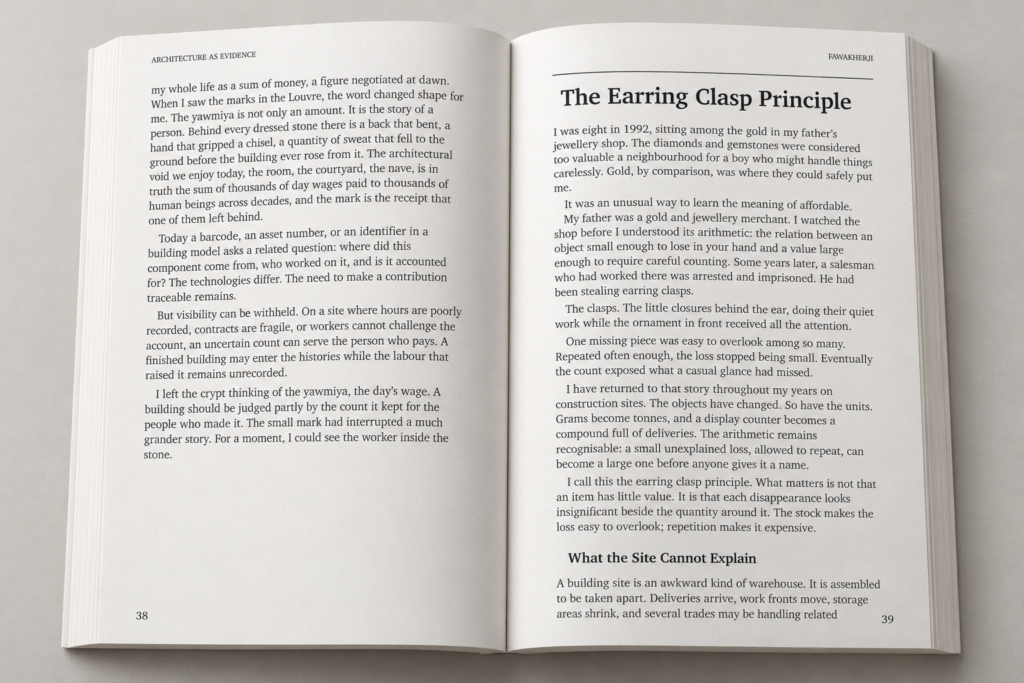
A building should be judged partly by the count it kept for the people who made it.
The kitchen has become an impressive room in which to announce that dinner has arrived.
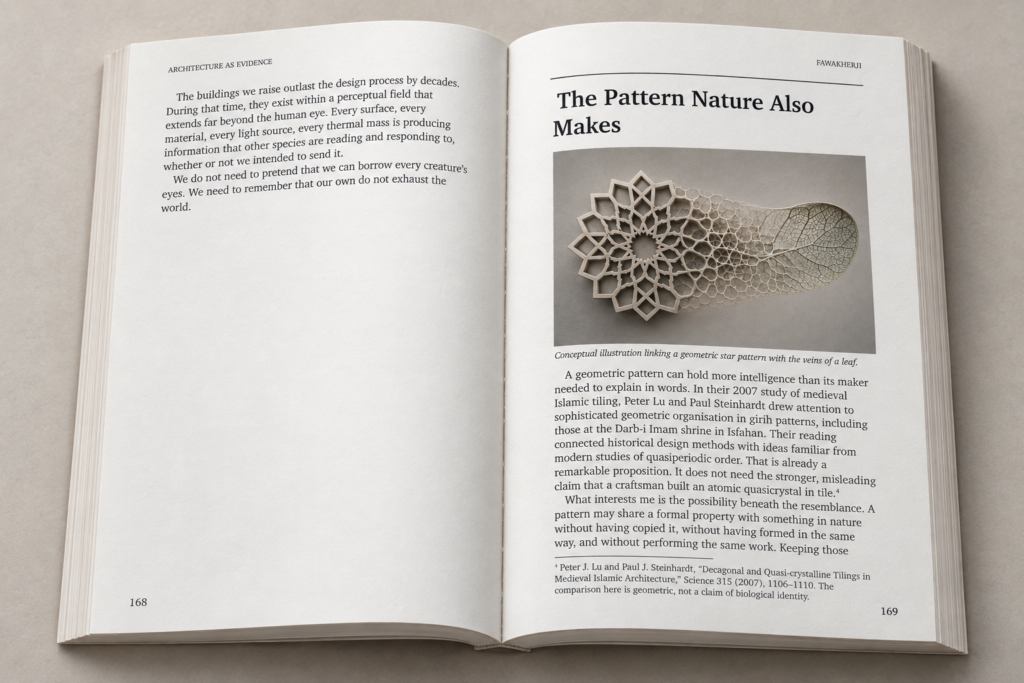
The tile remains beautiful when a hypothesis fails.
Seven Parts
The essays move from the household and the building site into the unequal city, Makkah, the architectural image and the archive, and cities revisited after twenty years. Each part opens a different angle on the same fundamental question: what do buildings keep, and what do they conceal, about the human decisions that produced them?
About the Author
Ibrahim Joharji is a Saudi architect and the founder of INJ Architects, established in Jeddah in 2009. He writes about architecture, cities, and the human decisions that remain visible in the built world. Fawakherji draws on observations from practice, travel, and his personal archive accumulated across more than fifteen years of active work across the Western Region of Saudi Arabia and beyond. His architectural design methodology is detailed in how-we-work. The theoretical framework connecting human identity to built form is documented in Archigenetics. The book is available and further information is at fawakherji.com.
A missing earring clasp. A worker’s mark cut into stone. A kitchen waiting for a delivery. In Fawakherji, small observations open onto larger questions about the places we build and the lives they contain.