Saudi Council of Engineers
A headquarters dedicated to the engineering profession cannot merely house its operations. It must stand as a physical argument for what engineering is capable of — a building that could not have been built without the discipline it is meant to represent. In 2014, the competition for the Saudi Council of Engineers offered INJ Architects the opportunity to make that argument in Riyadh, against a skyline then defined almost entirely by orthogonal geometries and conventional commercial typologies.
Location          Riyadh, Saudi Arabia
Type              Institutional Headquarters
Status            Competition Entry
Year              2014
Principal         Ibrahim Nawaf Joharji
Materials         Steel exoskeleton, photovoltaic glass, aerodynamic louvers
Focus             Structural expression, climatic performance, skyline identity
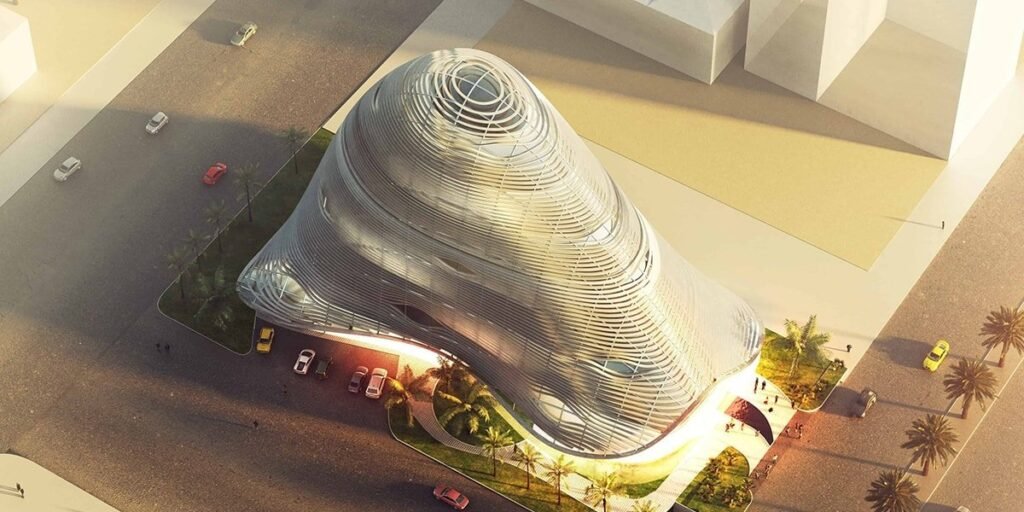
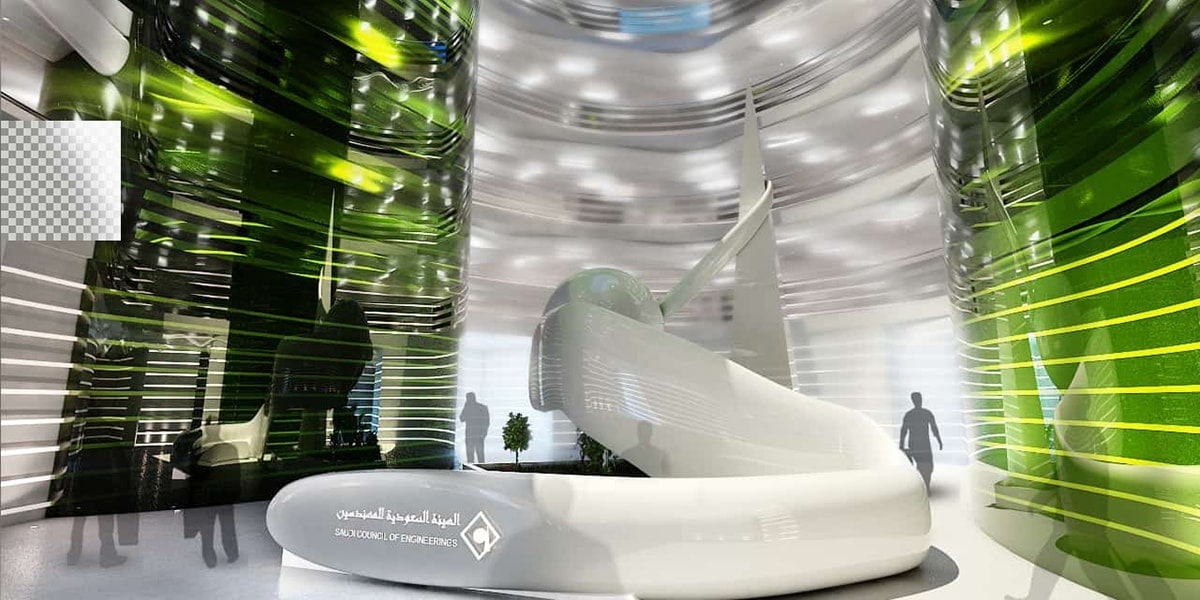
The generative form draws from two references that sit at opposite ends of the cultural spectrum. The first is the Bedouin tent — a structure that has resolved the problem of desert habitation for centuries through geometry alone, its curved membrane shedding wind, capturing shade, and directing airflow without mechanical assistance. The second is the hard hat — the universal mark of the engineer on site, a form defined entirely by its structural function and the protection it offers. The building synthesizes these two references into a single fluid mass: culturally anchored, technically demanding, and incapable of being mistaken for any other building on any other site.
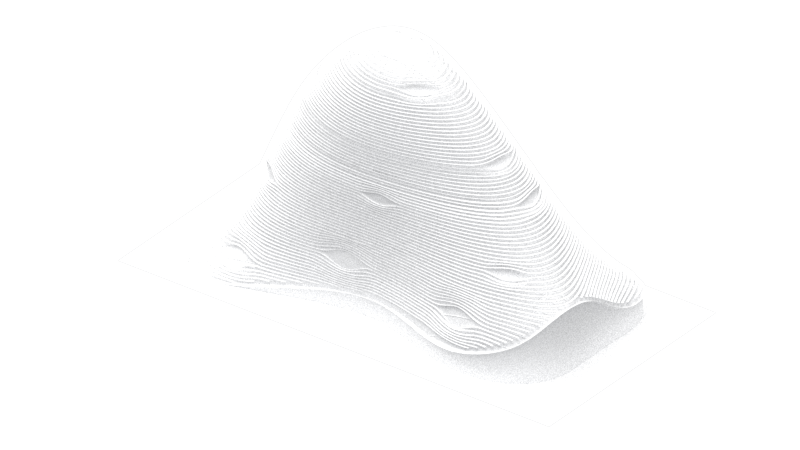
The choice of an organic architectural language in Riyadh’s commercial landscape in 2014 was not an aesthetic preference. It was a deliberate proposition directed at the institution commissioning the building: that a body dedicated to engineering excellence should inhabit a structure that tests the limits of what engineering can produce. The sweeping, uninterrupted curves of the envelope require a complex steel exoskeleton to be realized — a structural system that is not concealed behind cladding but expressed as the primary visual element of the facade. The engineering of the building is its architecture.
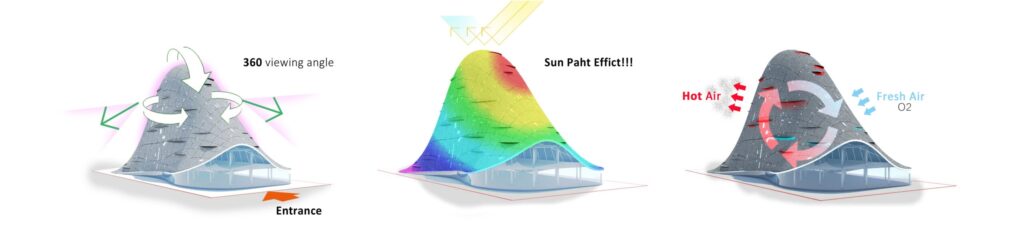
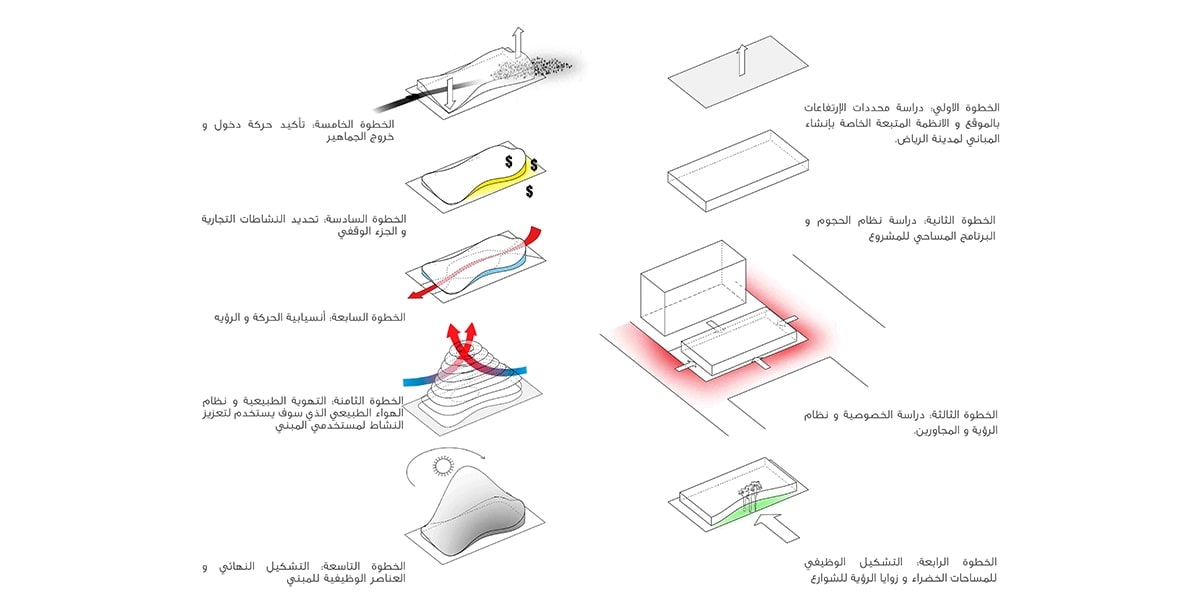
The glass skin enclosing the exoskeleton was specified to perform two functions simultaneously. Its first function is solar management: the panels are angled to deflect the intense direct radiation of Riyadh’s summer while maintaining visual transparency from within. Its second function is energy generation: the photovoltaic integration within the glass surface converts a portion of the intercepted solar radiation into electrical output, making the building’s greatest climatic challenge — the sun — also its primary energy source. The aerodynamic volume was calibrated through computational fluid analysis to channel prevailing winds into the building’s natural ventilation system, reducing the mechanical conditioning load without compromising interior comfort conditions. The integration of structural expression and environmental performance reflects the office’s broader sustainability methodology.
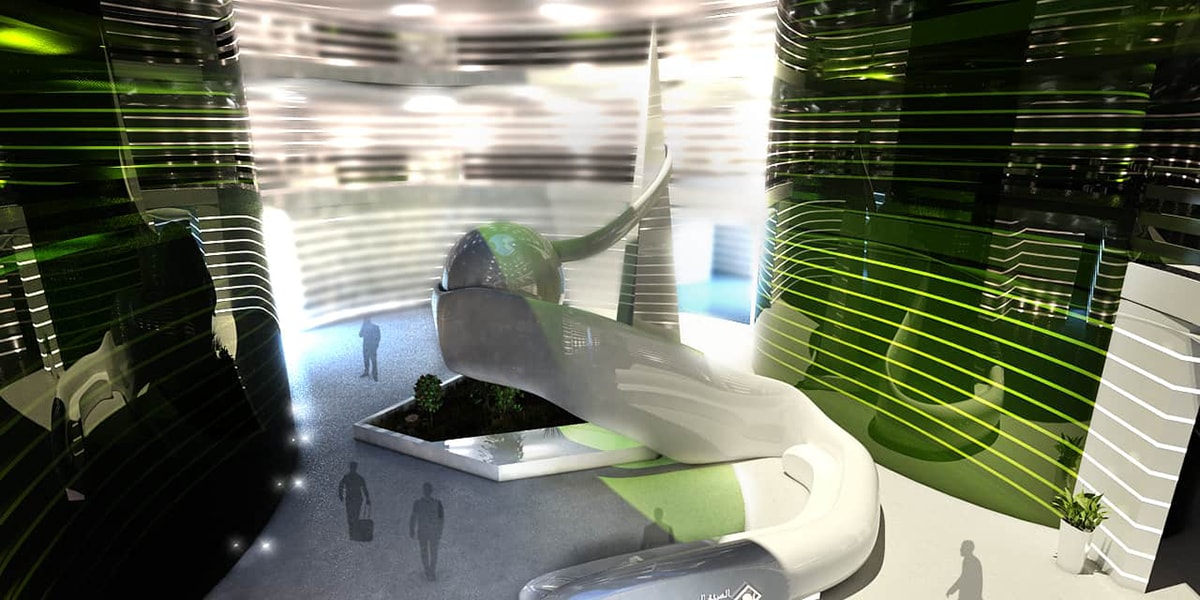
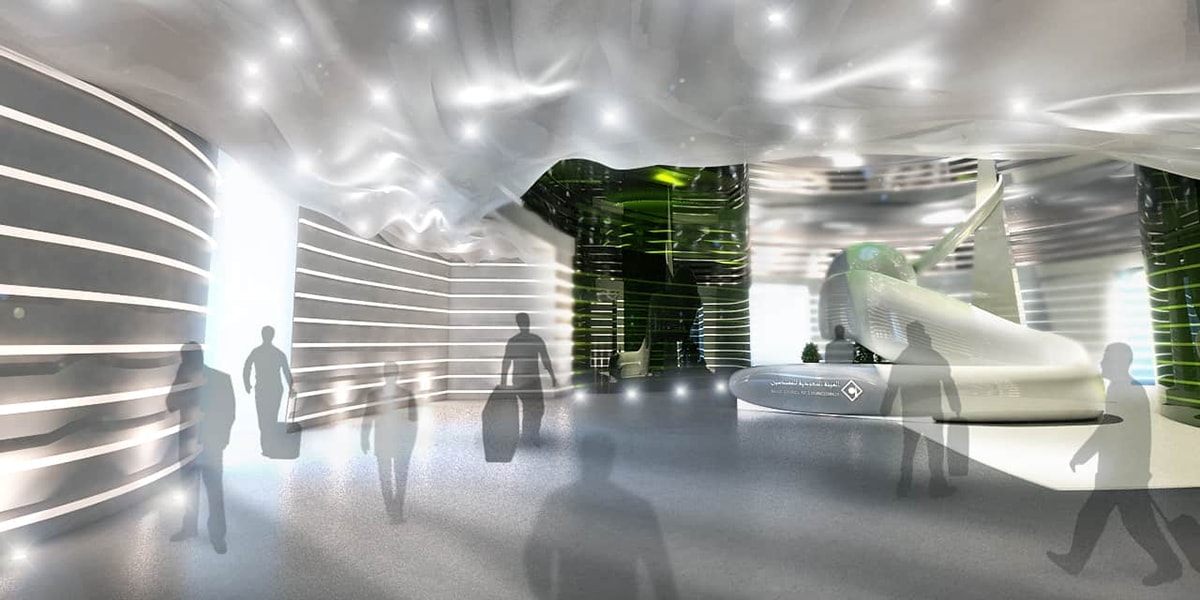
The internal organization distributes the council’s operational programme across floors that follow the curvature of the envelope, producing floor plates that vary in geometry from level to level. This variation is not incidental — it ensures that every occupied level has a different relationship to the exterior, preventing the visual and spatial monotony that afflicts most multi-storey institutional buildings. The entrance sequence moves through the base of the structure, where the exoskeleton converges at ground level to form a compressed threshold that releases into the full height of the central atrium above. The methodology behind this approach to spatial sequencing is described in How We Work.
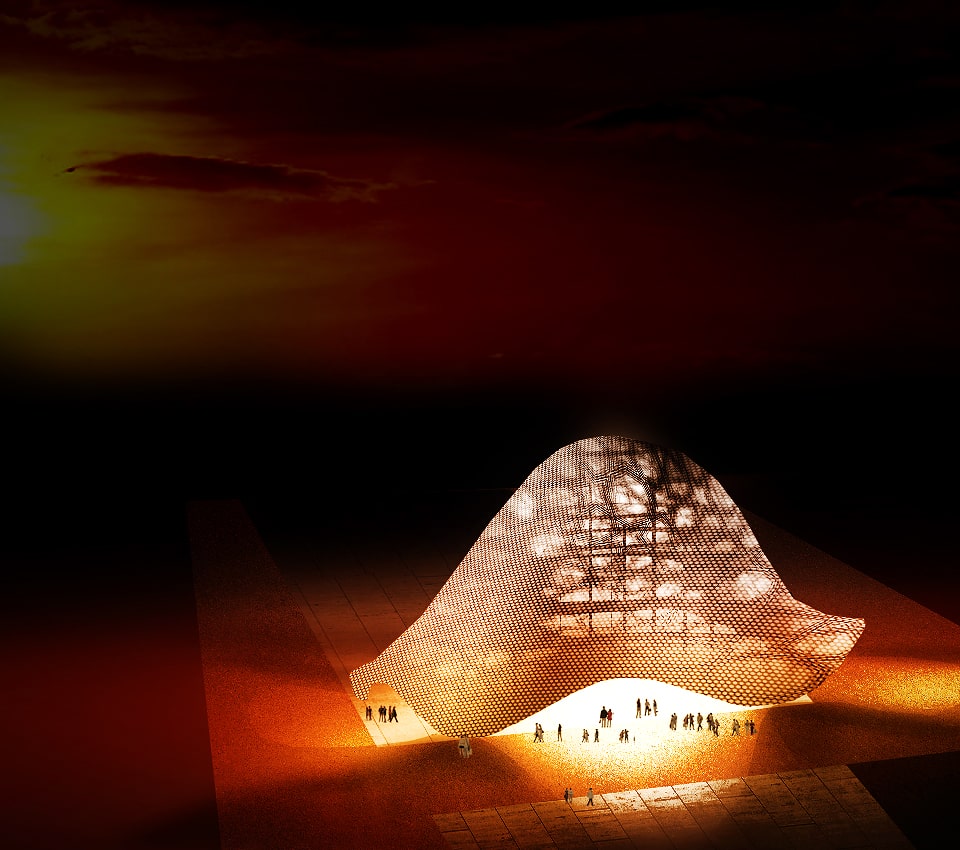
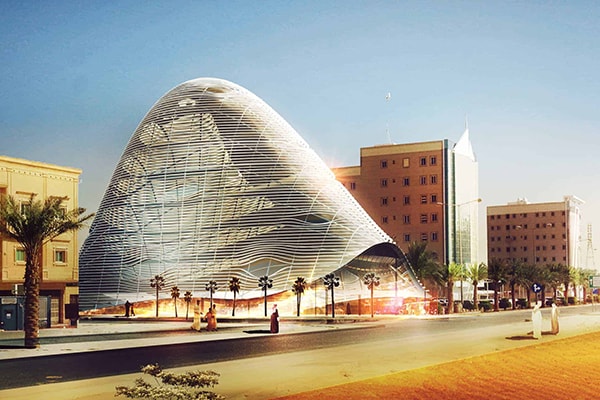
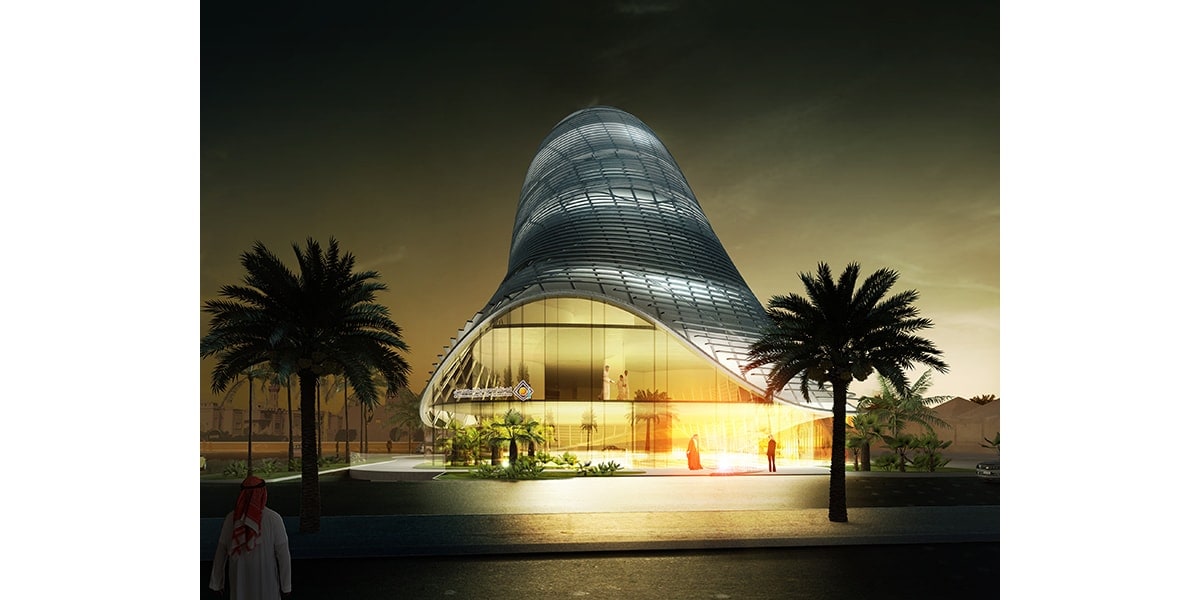
The Saudi Council of Engineers proposal operates on a logic of institutional self-evidence: the building should make the argument for engineering without needing to explain it. This is achieved not through decoration or symbolic gesture but through the structural system itself — a steel exoskeleton of sufficient complexity that its realization requires the same expertise the institution exists to certify. The tent-and-hard-hat synthesis functions similarly: both references are formally derived from structural necessity rather than cultural aesthetics, which makes the reference legible without being literal.
The environmental systems — photovoltaic glass, aerodynamic ventilation, solar deflection — are integrated into the formal logic of the building rather than added as technical afterthoughts. This integration reflects a position the office has maintained consistently: that sustainable performance and architectural expression are not competing priorities but consequences of the same design intelligence applied at the same moment. A building that performs well climatically and a building that looks as it does for structural reasons are, in this proposal, the same building. This consistency of intent across structural, environmental, and cultural registers is what the competition entry was designed to demonstrate. For institutional commissions that operate at this level of conceptual ambition, the starting point is outlined in Start a Project. Related institutional and governmental work is documented in the project portfolio.