
Tawaf In COVID-19
Tawaf Spatial Dynamics
Circumambulation around the Kaaba is one of the most concentrated continuous human movements on earth. When the COVID-19 pandemic necessitated the sudden suspension of mass gatherings, the challenge was not merely logistical—it was a profound problem of spatial mathematics. This original research study developed a geometric framework to redefine the spatial footprint of the pilgrim, ensuring continuous flow while maintaining absolute biological safety perimeters.
The Haram in Makkah is governed by the dynamics of extreme density. Historically, the Tawaf operates as a high-friction fluid mass, where proximity is inherent to the experience. The introduction of strict social distancing protocols required an immediate structural shift in how crowd density is calculated. This study approached the Mataf not as an empty plaza, but as a calibrated grid where velocity, physical distance, and time must be mathematically balanced to prevent systemic gridlock.
Location:Makkah, Saudi Arabia
Type              Original Research & Spatial Simulation
Status            Published
Year              2020
Principal         Ibrahim Nawaf Joharji
Focus             Crowd dynamics, mathematical friction reduction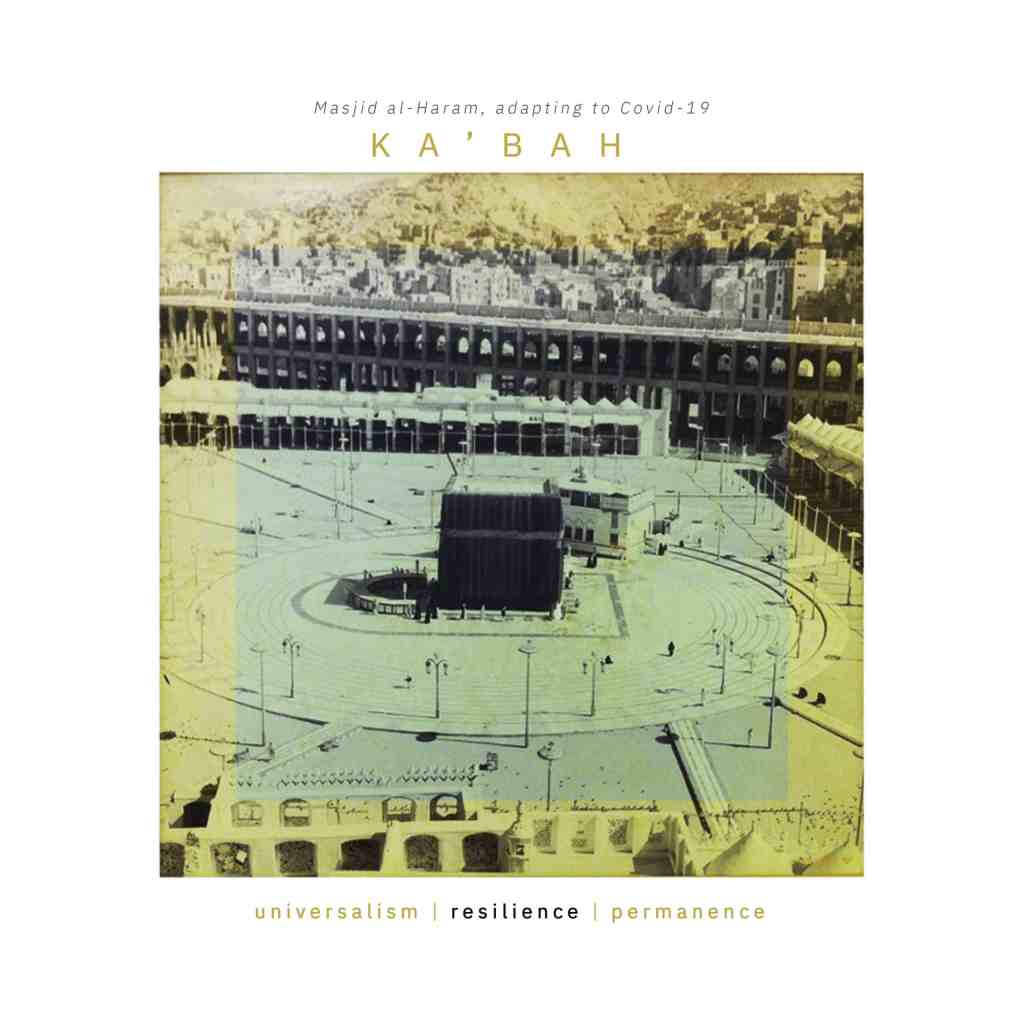
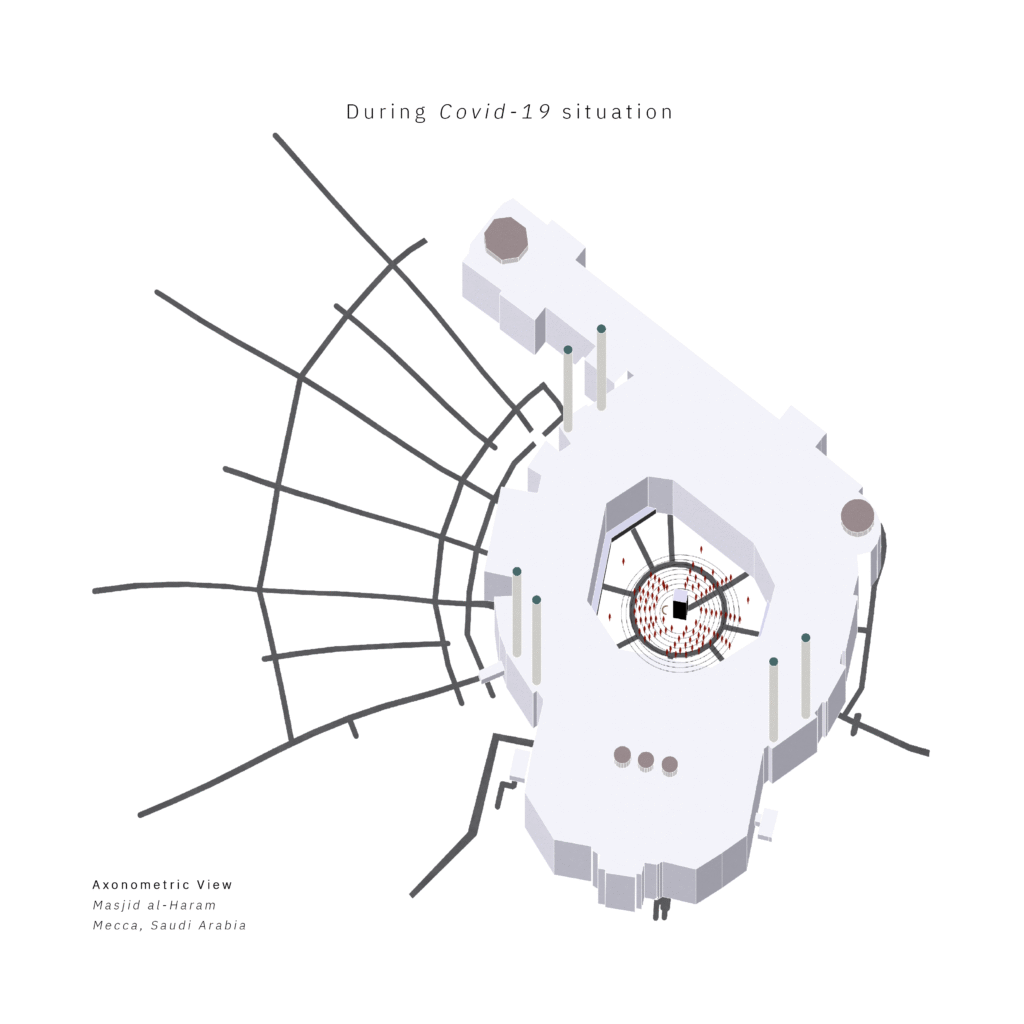
The core of the research rests on a custom movement equation designed to calculate the minimal safe radius for an individual in continuous motion. By translating epidemiological requirements into architectural dimensions, the study generated new spiral trajectories that eliminate cross-directional friction. This parametric segregation of movement lanes ensures that the ritual can be completed at an accelerated pace, optimizing the throughput of the Mataf without compromising the required isolation bubble of each worshipper.
Crowd management during a crisis cannot rely solely on physical barriers; it must be built into the invisible geometry of the space. The simulations produced by this study demonstrate that by manipulating entry intervals and adjusting orbital trajectories based on fluid dynamic equations, the capacity of the Mataf can be optimized safely even under the strictest pandemic constraints. The research removes the element of unpredictable human friction, replacing it with a predictable, mathematically governed flow.
Simulation demonstrating the mathematical distribution and frictionless orbital paths of pilgrims during the pandemic. © INJ Architects
This research shifts the management of religious mass gatherings from reactive crowd control to predictive spatial engineering. Saudi Arabia’s global leadership in crowd management is reinforced by incorporating such advanced spatial algorithms into operational protocols. The methodologies developed here extend beyond the immediate crisis, offering a permanent analytical tool for high-density architectural environments.
This approach is deeply rooted in the office’s research-driven philosophy, where complex civic challenges are resolved through geometric and mathematical rigor, as detailed in how-we-work. For governmental entities and institutions managing complex crowd dynamics and large-scale civic infrastructure, our analytical and spatial capabilities are outlined in bespoke-architecture.
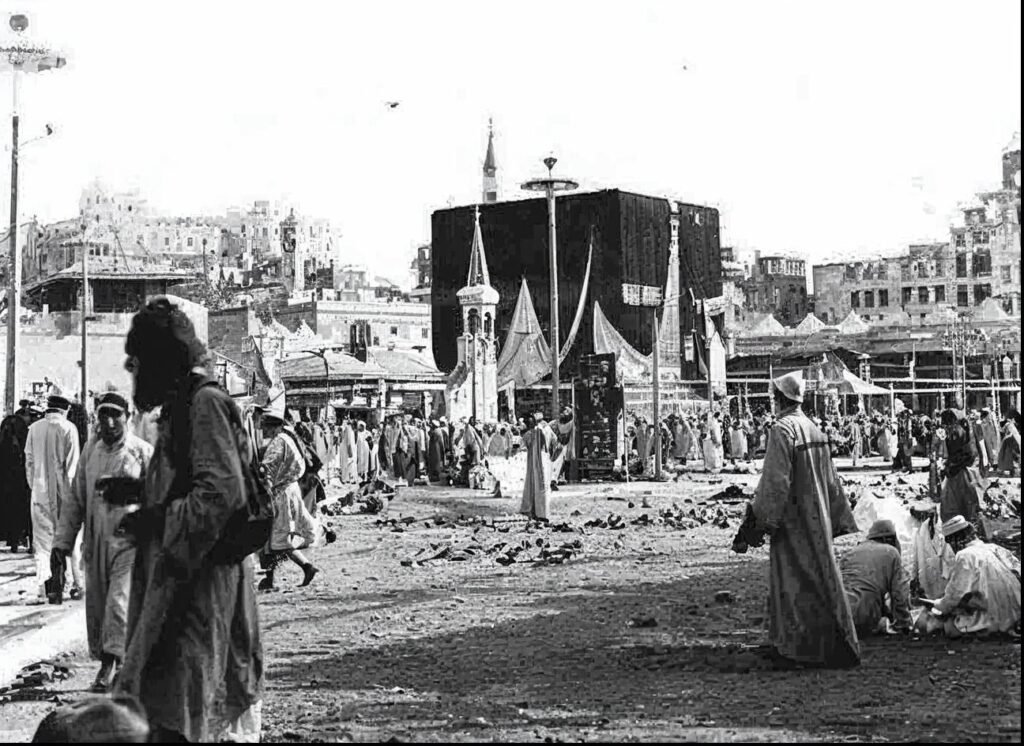
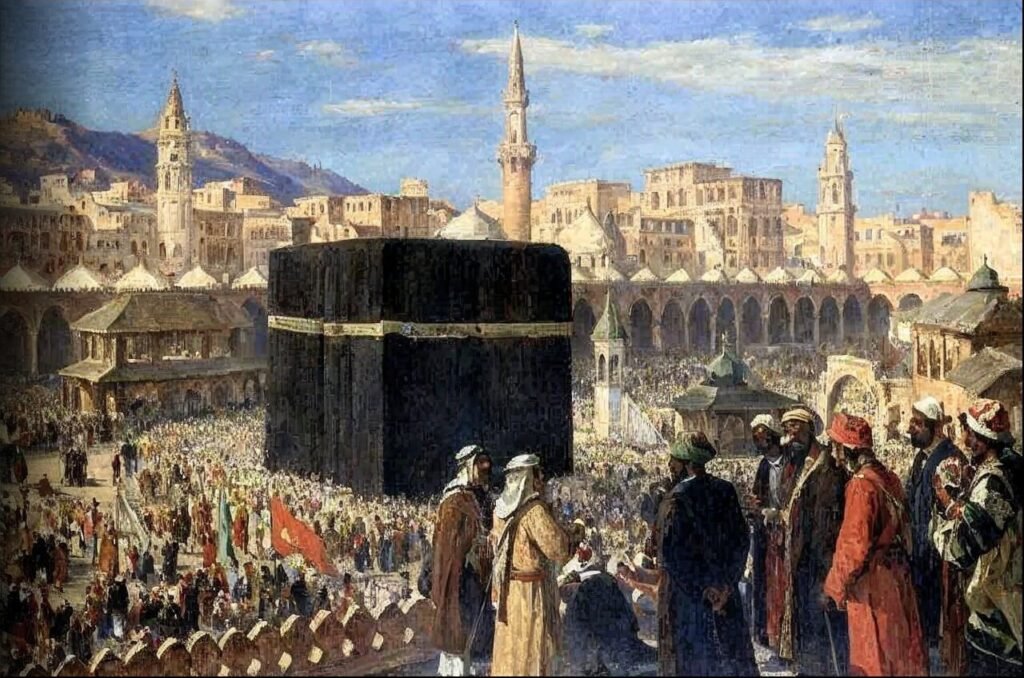
The COVID-19 pandemic has significantly affected global sectors, including the movement of people. Officially recognized as a pandemic, the virus has had a profound impact on the global economy and altered social interactions. This led to the implementation of precautionary measures to limit the spread of the virus. Among the many affected activities were Hajj and Umrah, which the Saudi government prudently suspended to curb the virus’s spread to religious sites worldwide.