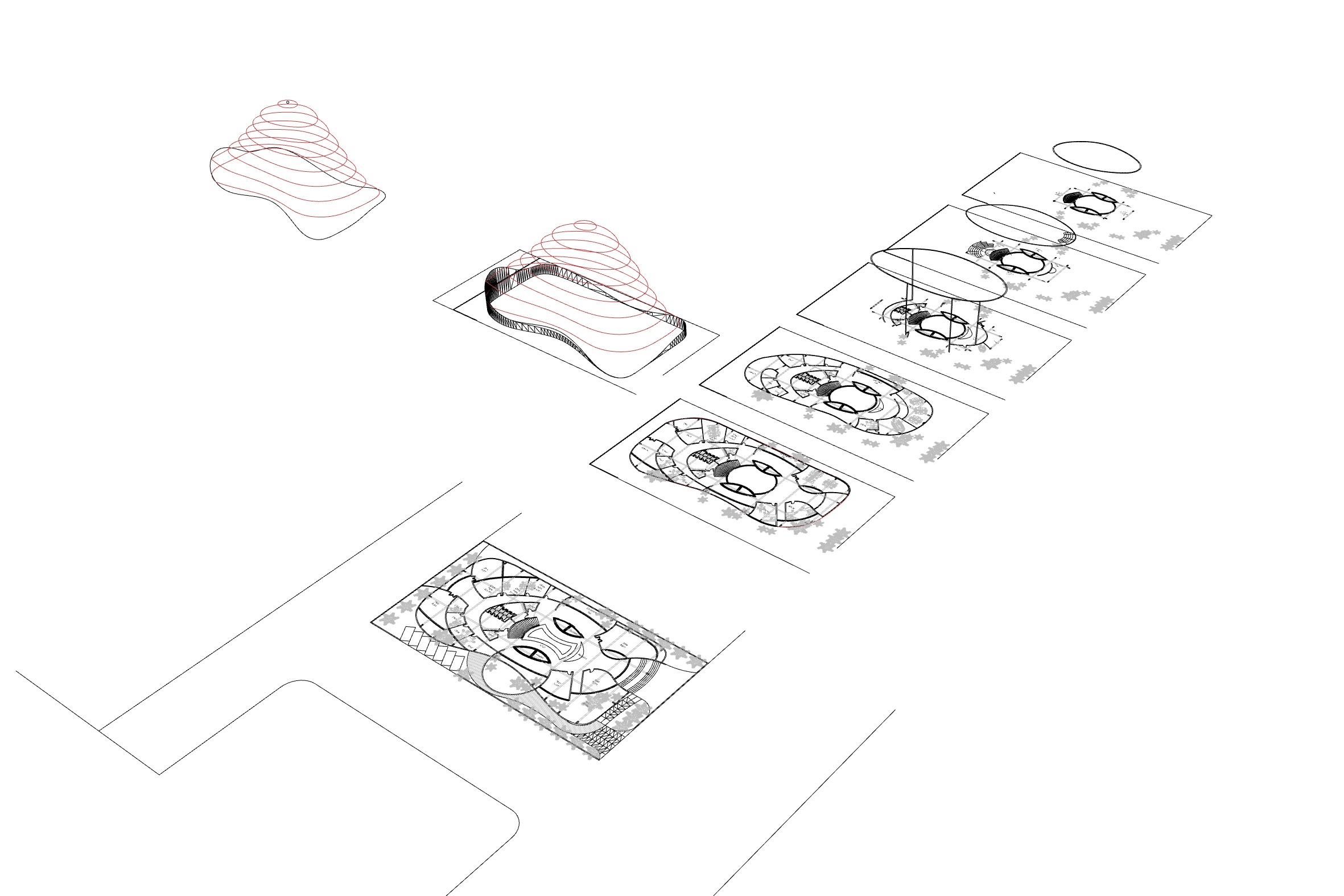
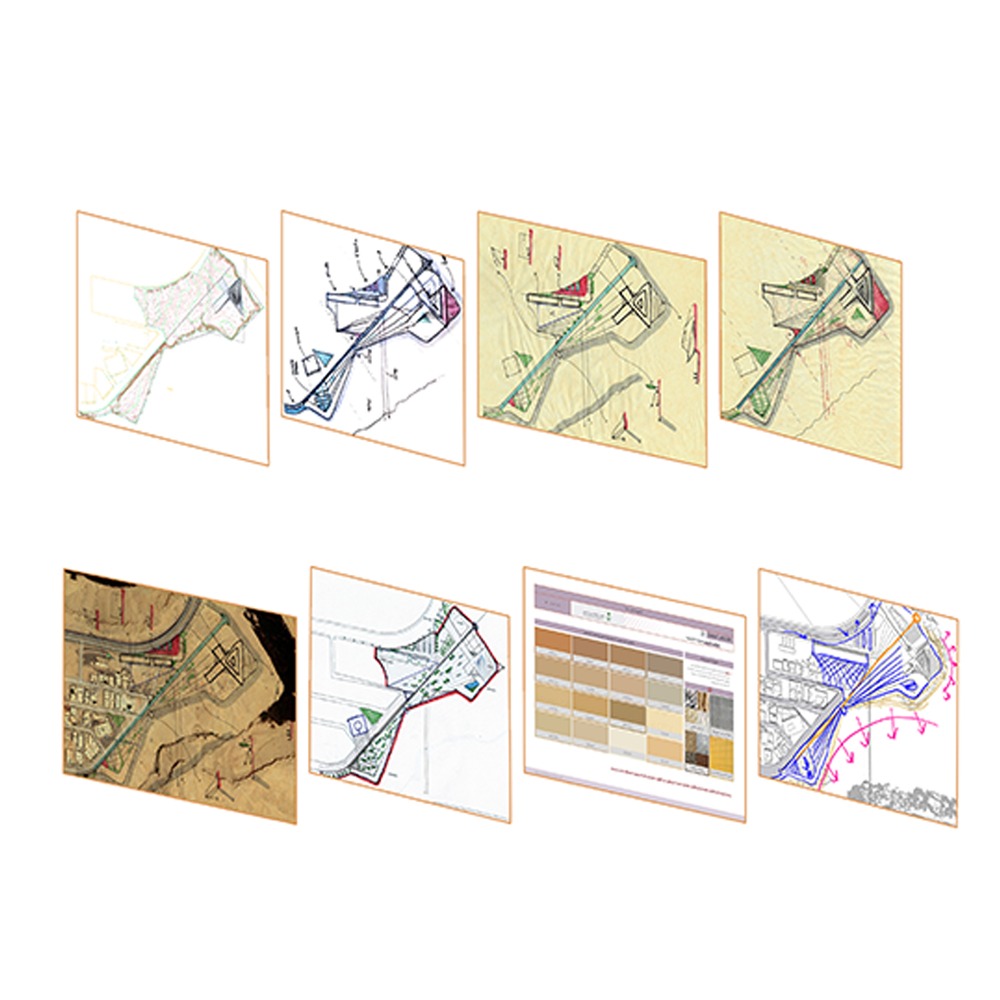
The analytical phase that opens every project at INJ Architects is, in the words of Ibrahim Nawaf Joharji, the most consequential work the office does. Nothing that follows — no concept, no drawing, no material decision — is more important than what is understood here. The process begins with the systematic construction of information layers: the site is read across multiple registers simultaneously — its topography, its solar and wind behaviour, its cultural and historical position, its regulatory constraints, the aspirations and identity of the client, and the precise programmatic demands of the brief. Each of these registers produces its own data layer, and the layers are assembled into a structured knowledge base that governs every subsequent design decision.
This methodology draws on the logic of advanced data intelligence — not unlike the layered analytical frameworks used in large-scale data processing environments — in which the value lies not in any single variable but in the relationships between variables once they are mapped together. At INJ Architects, this knowledge base is built through a combination of parametric modeling, three-dimensional simulation, and, increasingly, artificial intelligence tools that process environmental, spatial, and contextual data at a speed and resolution that manual analysis cannot match. The output is not a brief or a summary; it is a precise, project-specific architectural intelligence — a foundation from which the design can only move in one direction: toward something honest, specific, and irreplaceable.

Our Working Philosophy
At INJ Architects, our approach to design is meticulous and methodical, ensuring that each project undergoes a comprehensive and iterative process. We follow a structured five-stage methodology that integrates innovation, analysis, and precision to deliver outstanding architectural solutions.

Our Design Process
Our design process is a blend of creativity, technical expertise, and rigorous analysis. We believe in a structured approach that allows for flexibility and innovation at each stage. Our process consists of five key phases:
Intellectual Foundation & Aesthetic Logic
Architecture at INJ Architects is viewed as a dialogue between inherited cultural systems and contemporary technical requirements. Our practice rejects arbitrary styling in favor of a “Contextual Logic” where every aesthetic decision is a response to the site’s topography and social fabric.
Aesthetic Stance: We prioritize “Visual Permanence” over fleeting trends, ensuring that our structures remain relevant across generations.
Design Conviction: We operate on the principle that architecture is a functional obligation. Every element within our Projects must serve a dual role: an operational necessity and a contribution to the spatial narrative.
Human-Centric Systems: Our philosophy centers on the occupant’s experience, utilizing Sustainability not as a technical add-on, but as a fundamental driver of the design’s geometry and performance.

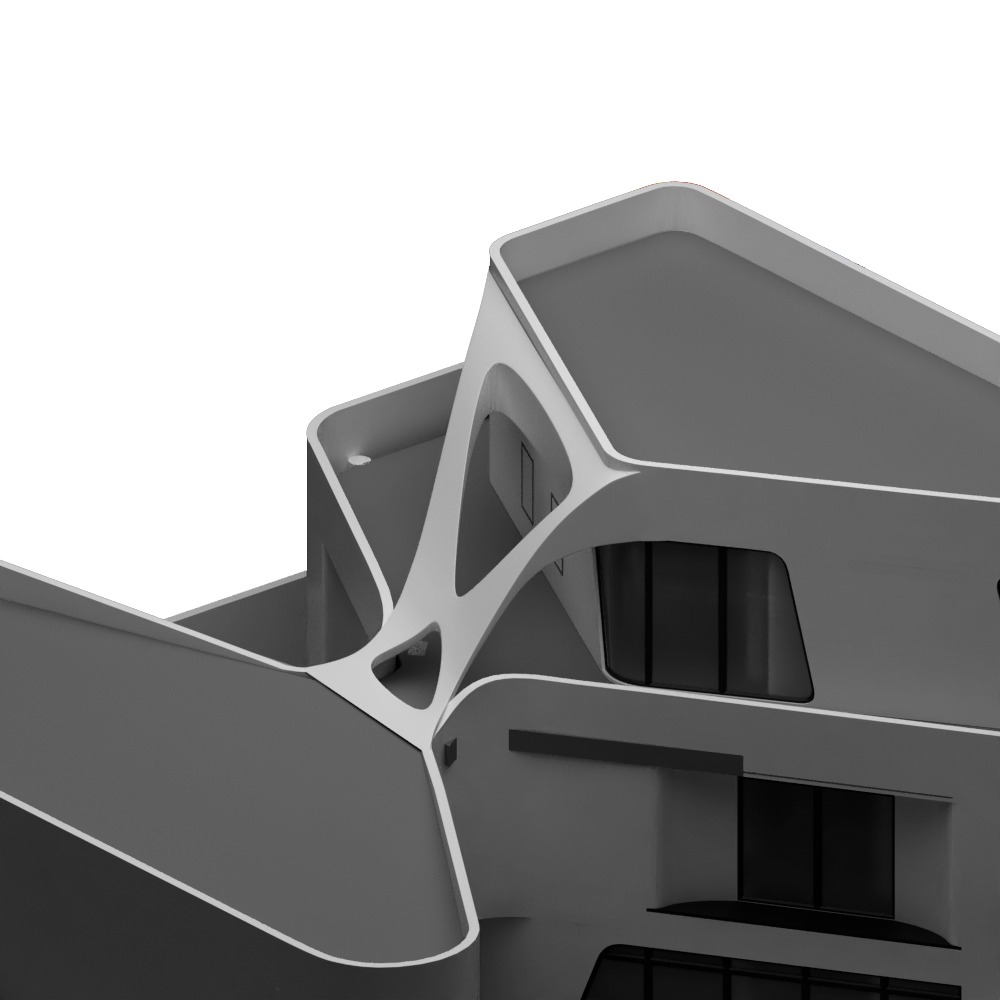
The Iterative Sketch: Investigating Spatial Logic
The sketch at INJ Architects is not merely an initial drawing; it is an investigative tool used to decode spatial variables and transform abstract data into form. Our Heroic Concept phase begins with an intensive sequence of manual and digital sketches, testing visual logic before engaging with complex engineering details. This methodology allows our team to explore limitless possibilities, ensuring that the architectural identity of every Project is the result of an original artistic narrative rather than a purely functional response.

Architectural Modeling & Technical Synchronization
Architectural vision is translated into reality through a sophisticated modeling system that ensures total synchronization across all engineering disciplines. Utilizing advanced BIM environments, we create high-fidelity digital simulations that serve as the definitive “source of truth” for all project stakeholders. This synchronization aims to proactively identify and resolve technical conflicts within the digital model, upholding our Quality benchmarks and mitigating the risk of costly onsite revisions, ensuring execution with absolute precision and structural integrity.

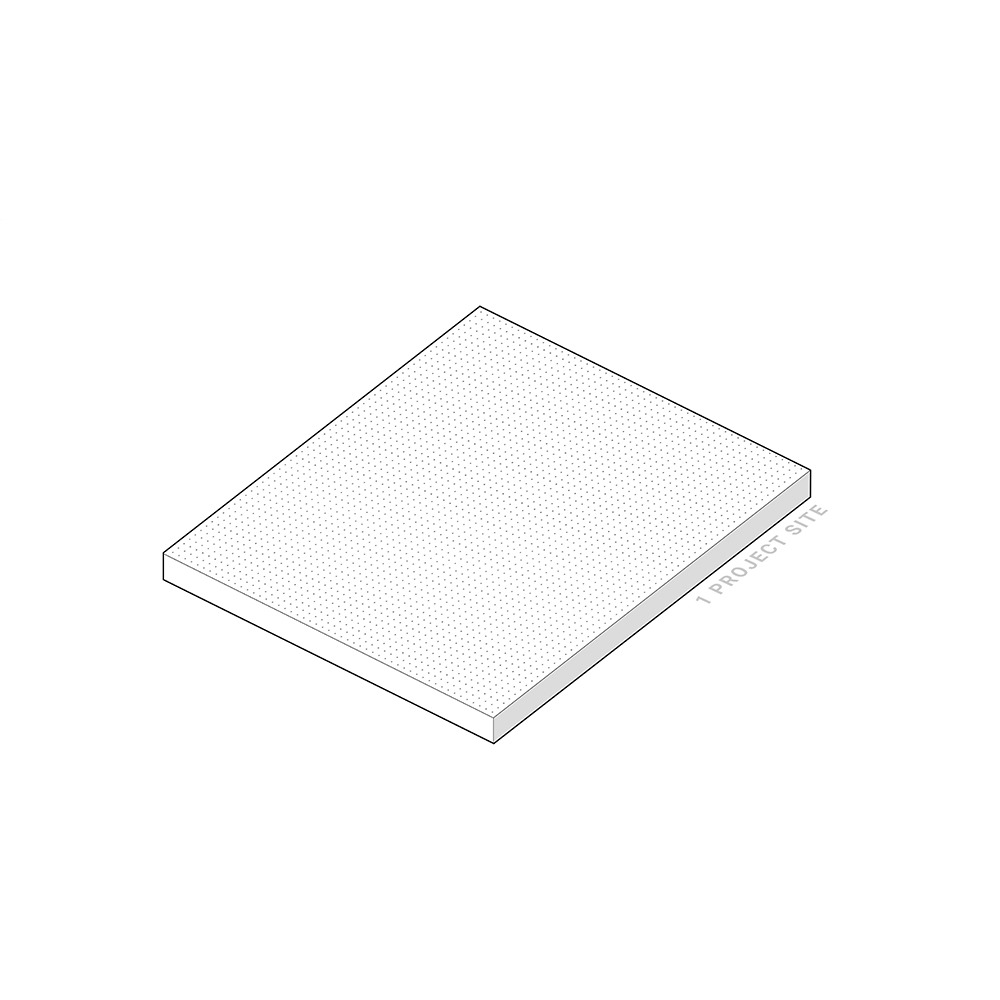
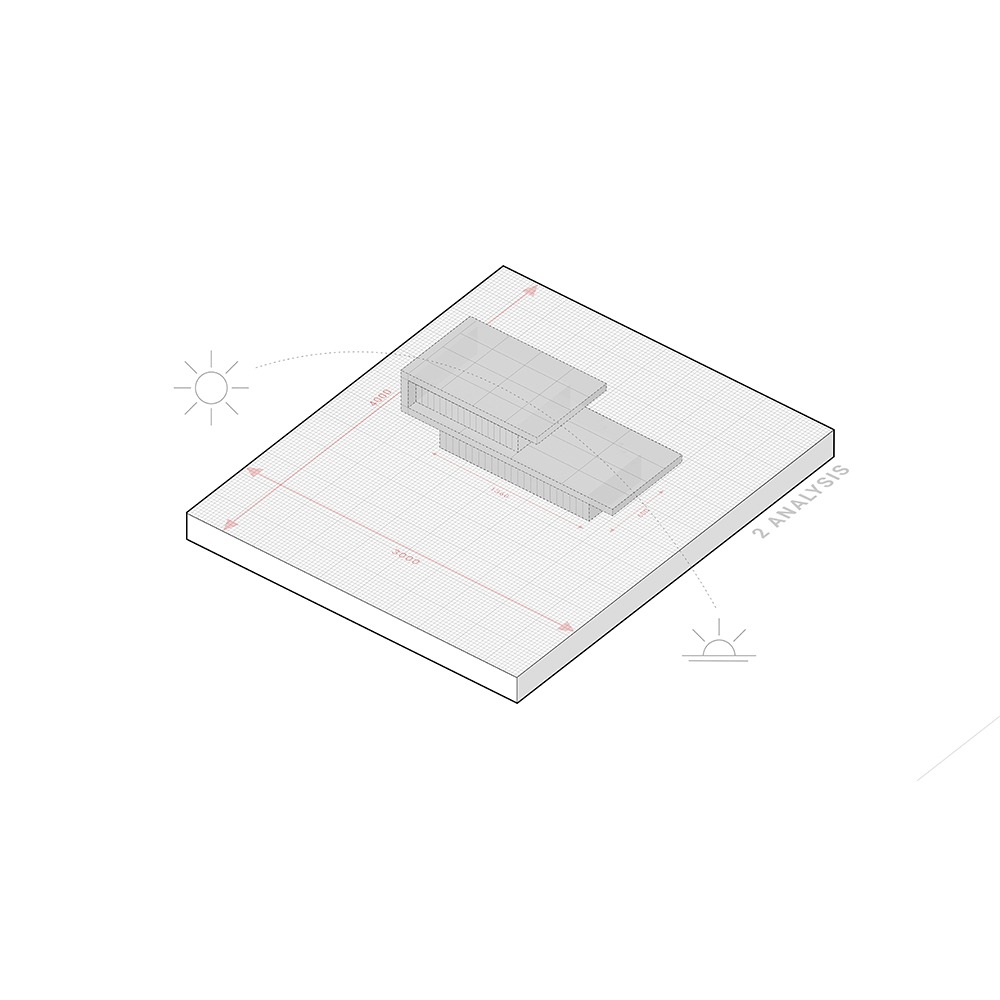
Architectural Analysis
The design process originates in a rigorous diagnostic phase where the site’s physical and cultural constraints are meticulously decoded. Beyond mere surveying, our analysis synthesizes topographic data, climatic variables, and ecological impacts to establish a sustainable operational baseline. This is complemented by deep-tier contextual research into the historical and social fabric of the locale. The result is a precise intellectual framework that ensures the final architecture is an empirical response to its unique environment rather than an arbitrary imposition.
The Heroic Concept
Design at this stage is a structured sequence of decisions rather than a momentary intuition. Projects intended to endure for eight decades demand a rejection of impulsive choices; instead, we employ a protocol of testing multiple intellectual frameworks and analyzing site data. We define the “Heroic Concept” as the specific technical proposal that survives this rigorous evaluation process. This approach ensures that the architectural identity is a logical conclusion of the project’s constraints, establishing a definitive baseline for the How We Work phase.
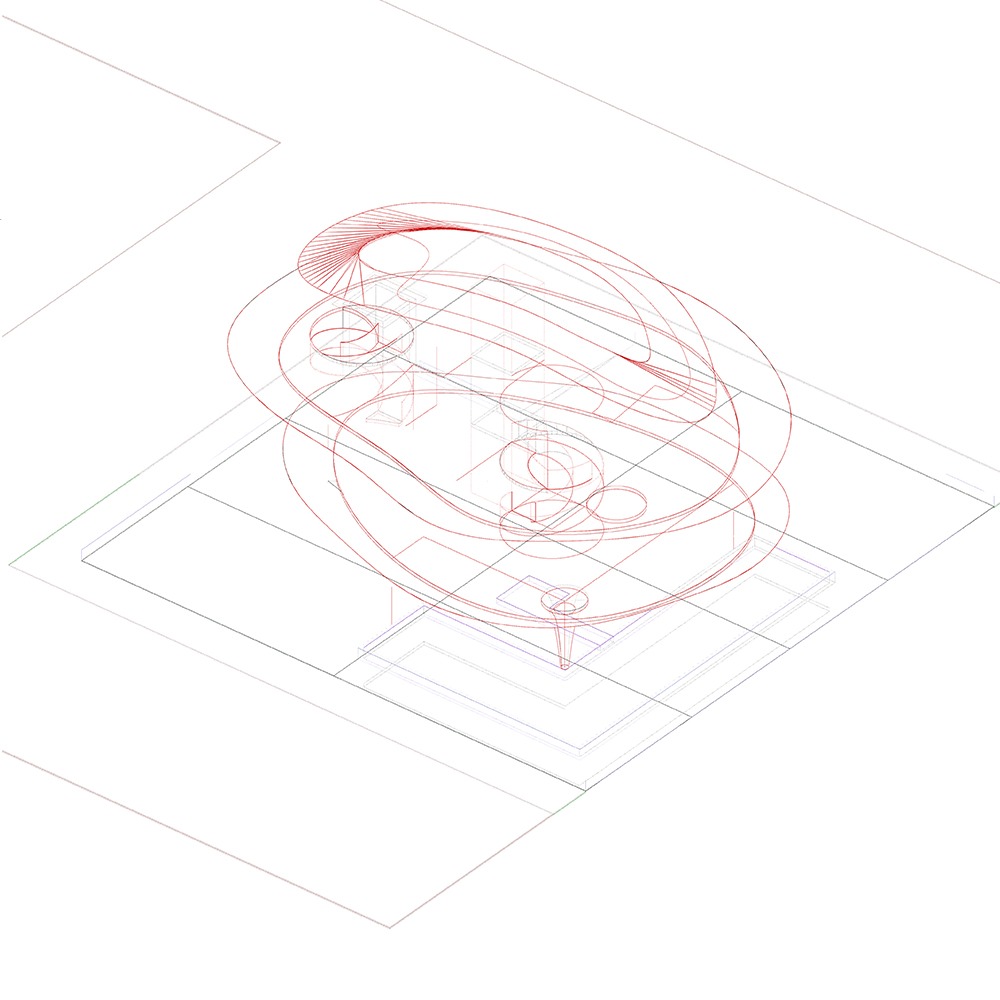
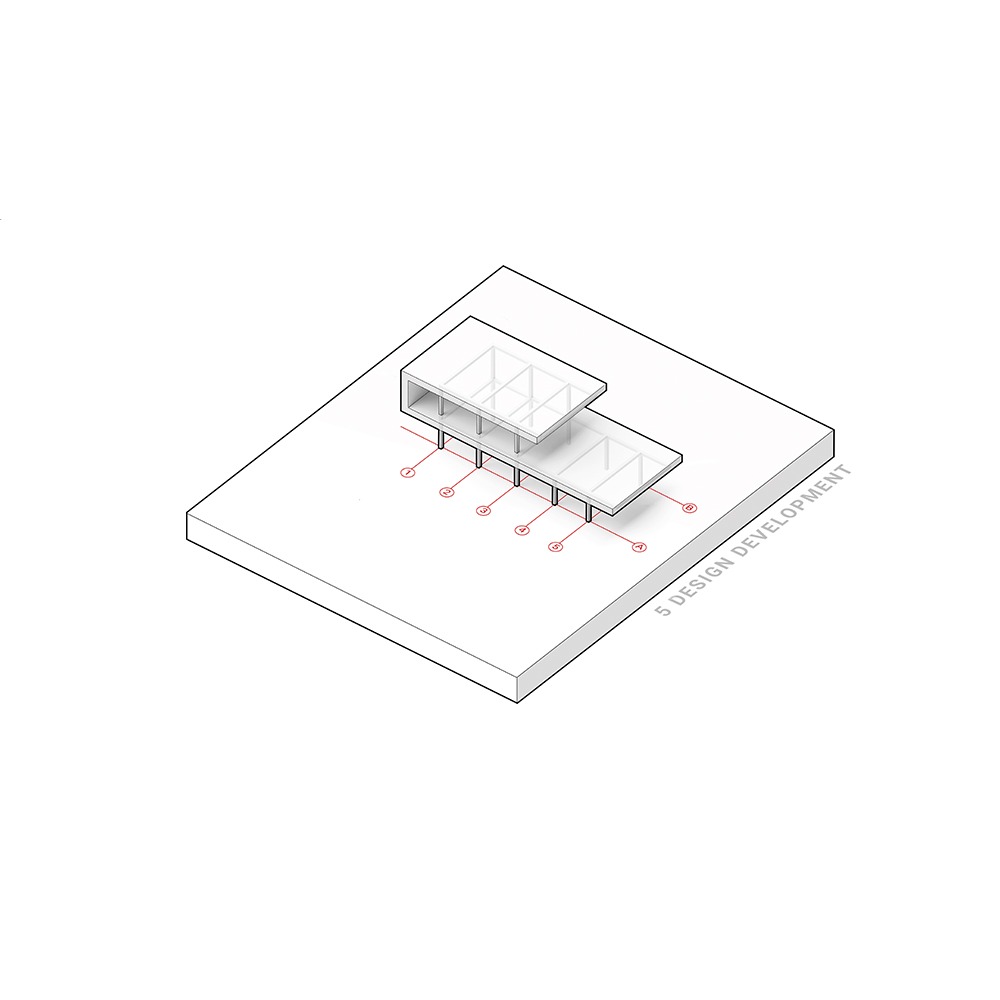
Architectural Development
In this phase, the abstract framework is translated into a comprehensive technical system. Architectural development is defined by the resolution of the friction between the initial spatial intent and the operational demands of the site. Every material selection is governed by performance metrics, durability, and alignment with the established ecological baseline. The transition from concept to an executable plan is a meticulous process of refining technical variables, ensuring the architectural outcome remains as resilient in its execution as it was in its conception.
Layered Architectural Development
In this phase, the project undergoes rigorous stress-testing through iterative feedback loops. This is not merely a revision process but a systematic synchronization of structural, mechanical, and client-specific requirements. By integrating technical reviews with stakeholder feedback, we ensure that every architectural layer is verified for feasibility and long-term performance. This iterative methodology acts as a risk-mitigation strategy, transforming the “Heroic Concept” into a hardened, executable framework where innovation is balanced with absolute practicality.

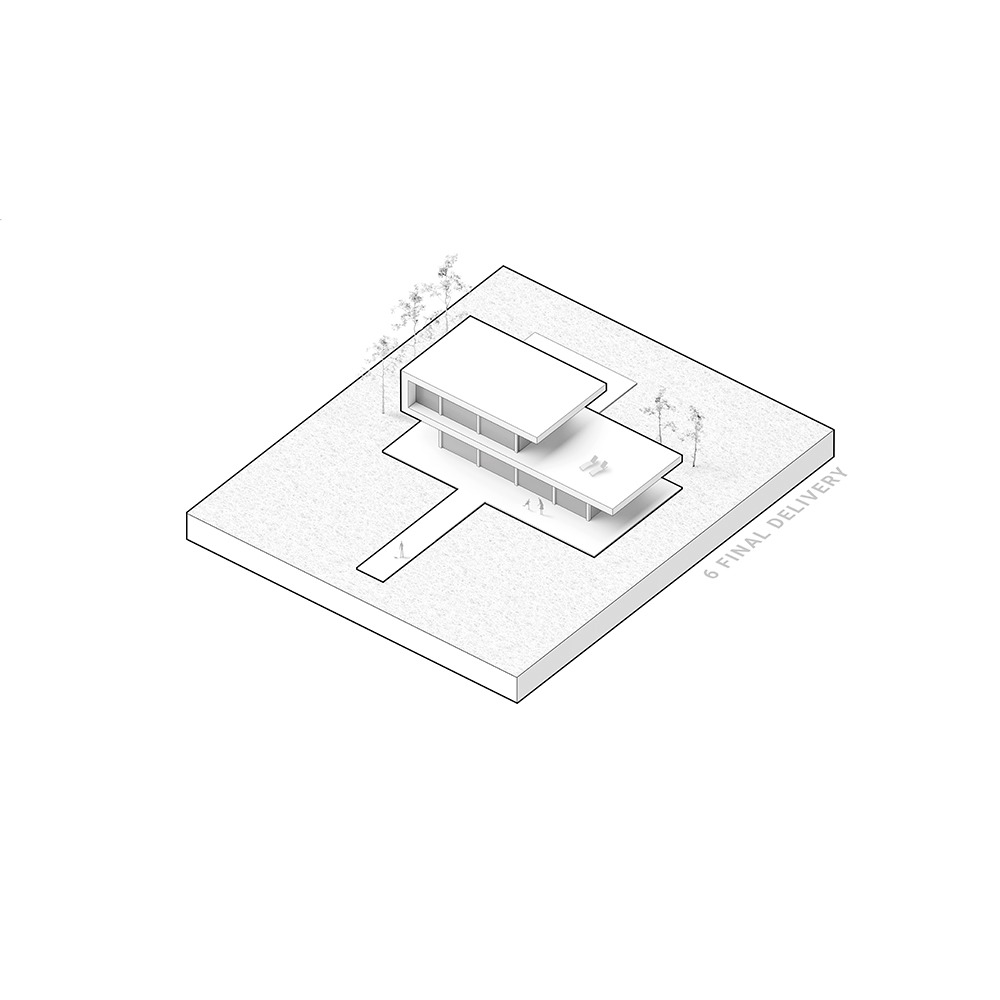
Engineering Phase
The Engineering Phase marks the final transition from architectural intent to technical execution. This stage focuses on the production of comprehensive construction documentation and detailed specifications that serve as the definitive legal and technical reference for the build. Rigorous engineering coordination ensures that all mechanical, electrical, and structural systems are fully integrated within the architectural shell. A final exhaustive review validates that the project is construction-ready, mitigating technical risks and ensuring that the final output adheres strictly to the approved design and building codes.
Environmental Integration & Lifecycle Performance
Architectural practice does not conclude with technical documentation; it extends to the verification of the structure’s interaction with its ecosystem. This phase focuses on the seamless integration of the built form within its natural environment, monitoring ecological performance and long-term resource efficiency. We view architecture as a temporal investment; thus, the building’s lifecycle is analyzed to ensure material durability and the resilience of thermal and lighting systems against climatic shifts. This holistic approach ensures that the project remains consistent with its environmental commitments, maintaining a balance between human function and ecological stewardship throughout its operational life.

Collaborative Framework
The practice operates through a synchronized organizational structure designed to integrate multidisciplinary expertise into a unified project workflow. This framework prioritizes technical precision and operational efficiency, ensuring that every architectural decision is backed by specialized knowledge.
1. Dedicated Project Units
Each commission is assigned a dedicated project unit comprising architects, structural engineers, and technical leads. This assembly ensures that the project’s specific constraints are addressed by a team with the relevant expertise, maintaining a concentrated focus from inception to delivery.
2. Peer Review Protocols
To uphold our established standards of Quality, we implement a series of internal audit cycles:
Design Benchmarking: Systematic evaluations to ensure the evolving design remains consistent with the initial concept and the Sustainability baseline.
Structural Validation: Technical reviews focused on the integrity of engineering systems and logistical feasibility.
Technical Auditing: Rigorous verification of architectural detailing and material specifications.
3. Client Integration Protocol
We manage stakeholder relationships through a professional stewardship model defined by transparency and data-driven communication. This integration is governed by a structured protocol:
Progress Benchmarking: Regular reporting on technical milestones and project development.
Feedback Synthesis: Incorporating stakeholder input as a verified variable within the iterative design process.
Operational Transparency: Maintaining a clear record of architectural decisions and project adjustments to ensure alignment with the overarching vision.
Professional Services
The practice provides a structured range of architectural and consultancy services, defined by a commitment to technical precision and environmental stewardship. Every commission is approached as a unique system of design challenges requiring empirical solutions.
1. Architectural Design & Master Planning
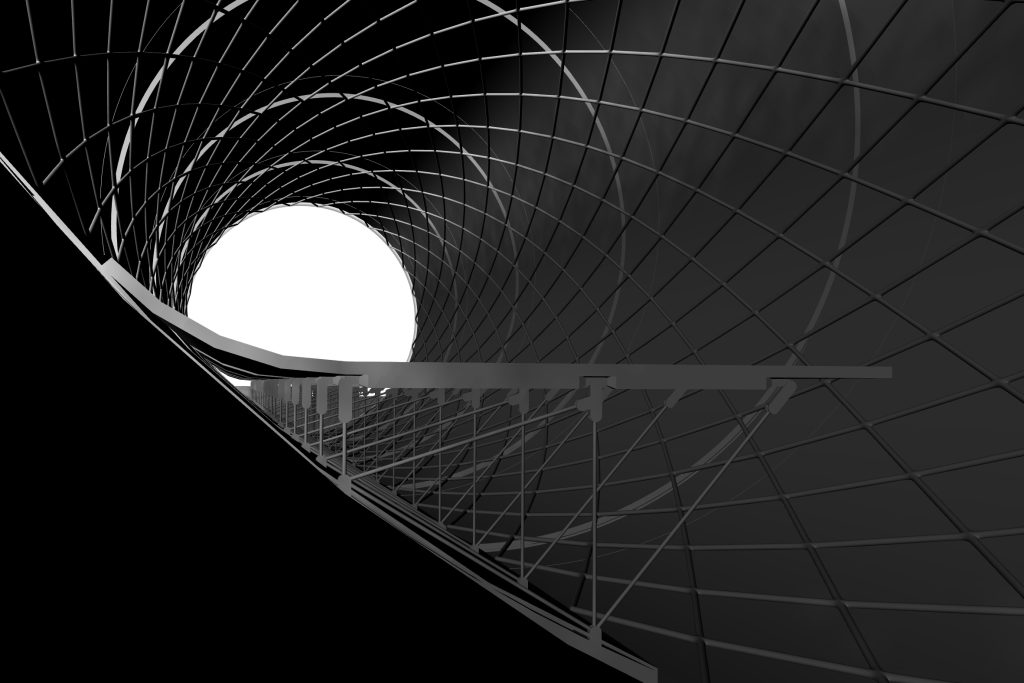
Our design methodology integrates parametric logic with geometric analysis to resolve complex spatial requirements. We move beyond aesthetic surface treatment, focusing on “Spatial Scenography” to create functional environments that interact meaningfully with their occupants. This process is documented through:
Conceptual Synthesis: Translating the initial [Architectural Analysis] into a viable spatial framework.
Technical Documentation: Producing precise drawings and specifications that serve as the definitive blueprint for execution.
Sustainability Integration: Embedding ecological performance metrics into the core design, as detailed on our Sustainability page.
Geometric Parametrics: Utilizing advanced computational tools to optimize form, efficiency, and material performance.
For detailed inquiries on our design process, refer to the Bespoke Architecture section.
1.1 Branded Residences: Defining Signature Luxury
Since 2009, INJ Architects has specialized in the creation of “Branded Residences”—architectural typologies where luxury is an extension of identity. We focus on ultra-luxury mansions and palaces that function as private landmarks.
Identity Mapping: Aligning architectural form with the personal or institutional brand of the client.
Material Integrity: Selecting materials based on durability, rarity, and alignment with our Quality benchmarks.
Tailored Programming: Developing bespoke spatial narratives that ensure every residence remains a unique, non-replicable asset.
1.2 Institutional & Cultural Expertise
The practice extends its analytical approach to public and commercial sectors, managing projects of high complexity that require strict adherence to international standards:
Cultural Infrastructure: Designing museums and galleries that function as immersive public experiences.
Hospitality & Resorts: Developing luxury environments where operational efficiency meets elevated aesthetic standards.
Civic Institutions: Creating visitor centers and institutional buildings that prioritize both functional flow and contextual harmony.
Comprehensive Design Integration
We maintain a holistic oversight of the design-to-build lifecycle. By integrating Interior Design and technical systems from the initial phase, we ensure that the finished structure is a cohesive reflection of the original vision. This disciplined approach allows us to manage cultural, commercial, and residential projects with consistent rigor, as evidenced in our completed Projects.
2. Construction Project Management
The practice provides end-to-end oversight to ensure project delivery within defined technical and financial constraints. Our Construction Project Management model focuses on precision scheduling and rigorous risk mitigation:
Logistics & Scheduling: Timeline management and milestone synchronization.
Financial Control: Budgeting, cost tracking, and comprehensive fiscal reporting.
Quality & Risk: Implementation of Quality benchmarks and proactive risk assessment across the project lifecycle.
Operational outcomes of our management approach are documented in our Projects portfolio.
3. Engineering Arbitration
The practice provides specialized Engineering Arbitration to resolve construction and design disputes through technical neutrality and contractual integrity. Our services focus on providing equitable solutions based on deep-tier engineering principles:
Dispute Resolution: Technical mediation and resolution of complex construction conflicts.
Expert Testimony: Providing formal architectural analysis and expert witness testimony in arbitration proceedings.
Contractual Review: Rigorous interpretation of contract documents to support the resolution of legal and technical discrepancies.
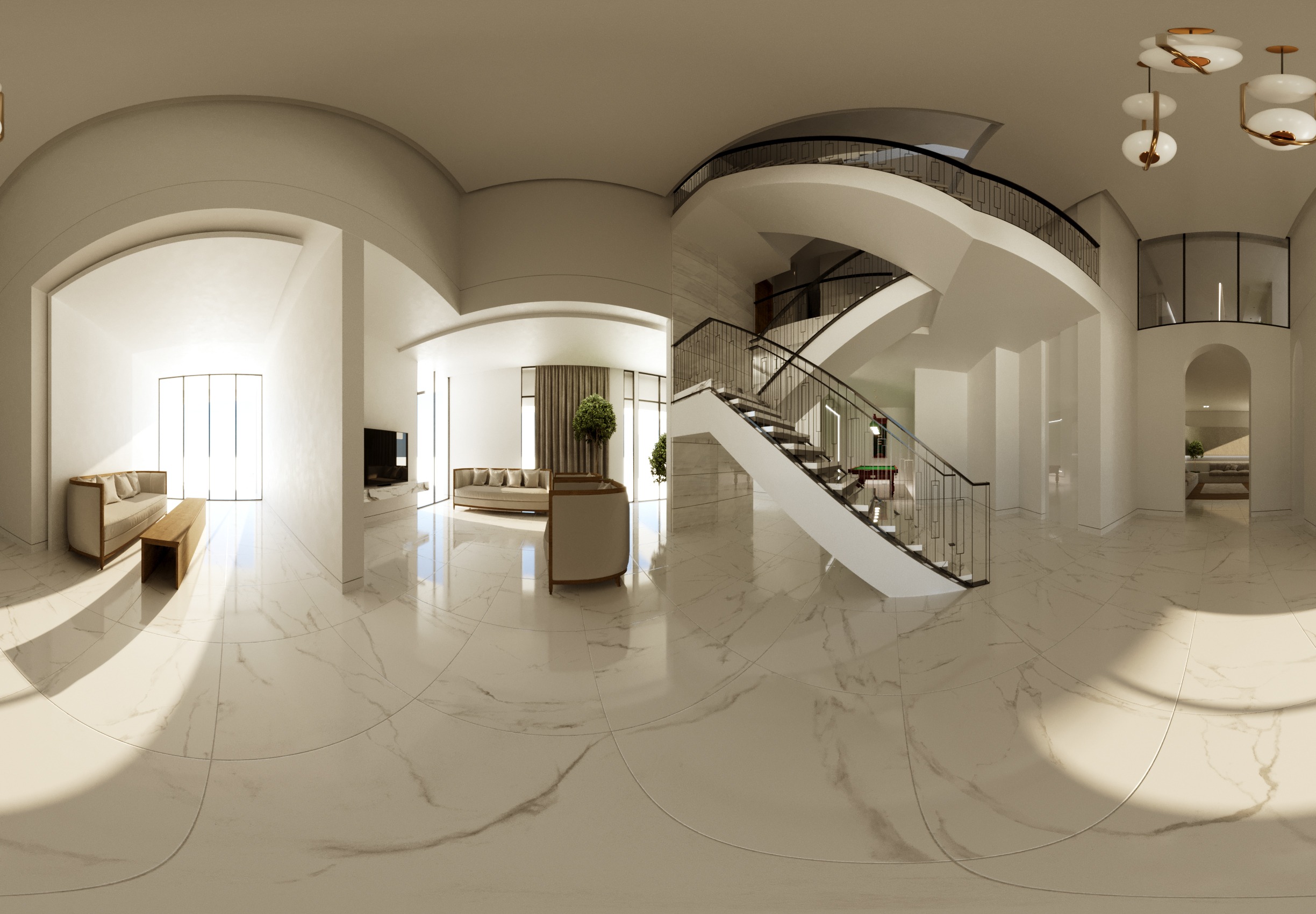
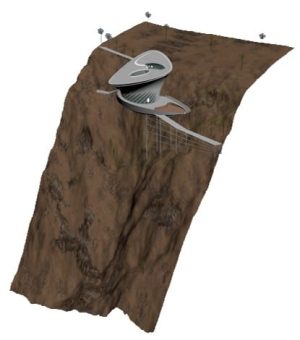
Spatial Simulation & Pre-Construction Validation (VR/AR)
Before the transition to the Engineering Phase, we employ Virtual and Augmented Reality (VR/AR) as critical verification protocols. These are not merely visualization tools, but analytical instruments used to bridge the gap between abstract drawings and physical reality.
Risk Mitigation: VR environments allow for a full-scale immersive assessment of proportions and spatial flow, enabling adjustments while the cost of change remains negligible.
Contextual Overlay: AR technology is utilized to project digital models onto the physical site, ensuring that material selections and technical installations are contextually verified.
Decision Integrity: The primary objective of these simulations is to achieve absolute clarity. By synchronizing the client’s spatial understanding with the architectural intent, we eliminate onsite surprises and ensure that the Bespoke Architecture delivered reflects the verified digital model.
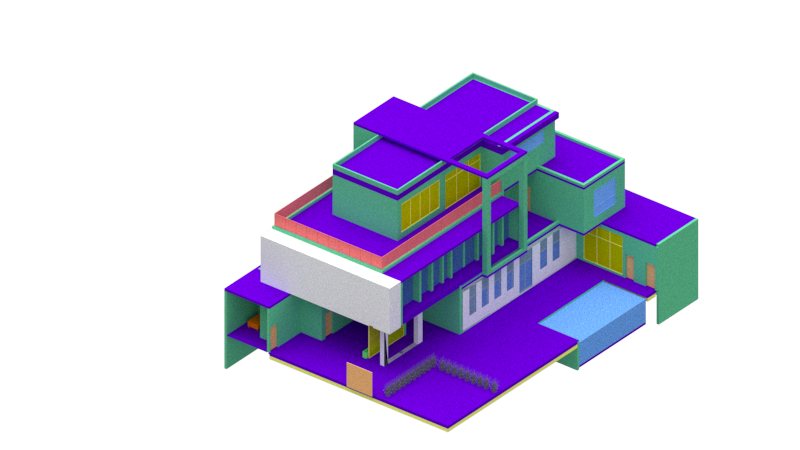
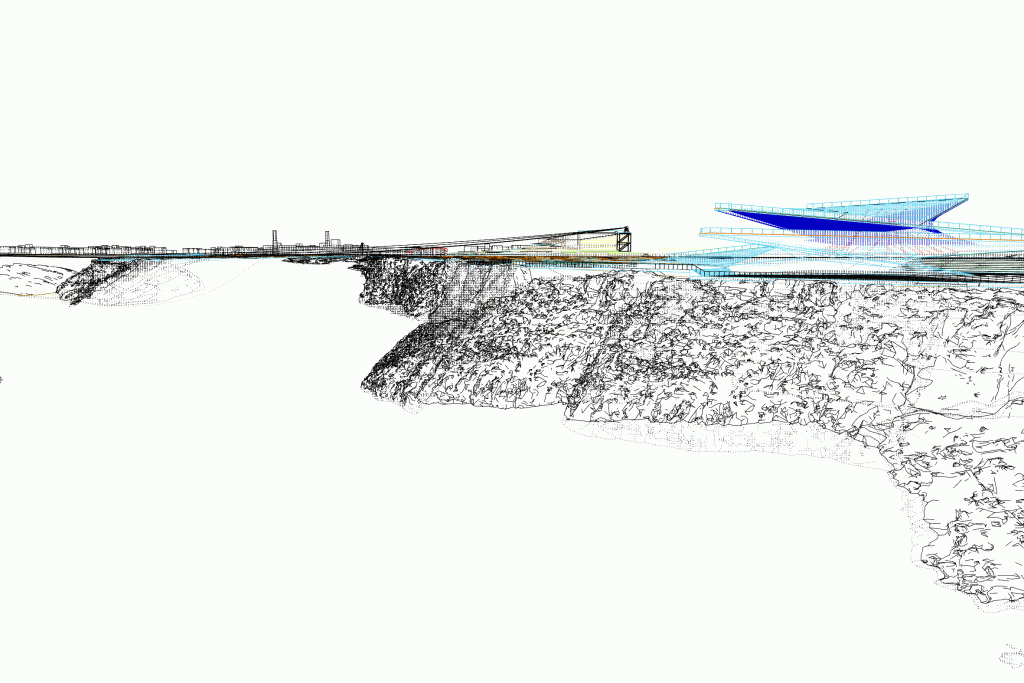
BIM & Computational Infrastructure
The practice utilizes Building Information Modeling (BIM) as the primary data environment to ensure technical precision and cross-disciplinary synchronization. By moving beyond traditional CAD, we manage the project as a live information model, minimizing errors and optimizing the Quality of the final output.
Integrated Project Delivery (IPD): We utilize Autodesk Revit and BIM 360 to maintain a unified, cloud-based model where architects and engineers collaborate in real-time. This ensures that the transition to the Engineering Phase is seamless and data-accurate.
Clash Detection & Risk Mitigation: Through Navisworks, we perform rigorous interference checks to identify and resolve structural or mechanical conflicts within the digital model, preventing costly onsite revisions.
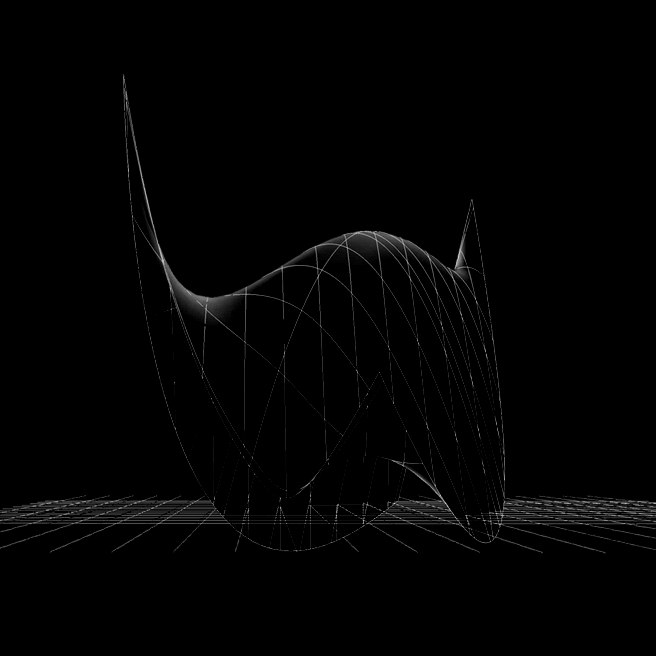
Parametric & Geometric Optimization: For projects requiring complex formal logic, we integrate Rhino and Grasshopper. This computational approach allows us to optimize building performance and material efficiency through precise mathematical parameters.
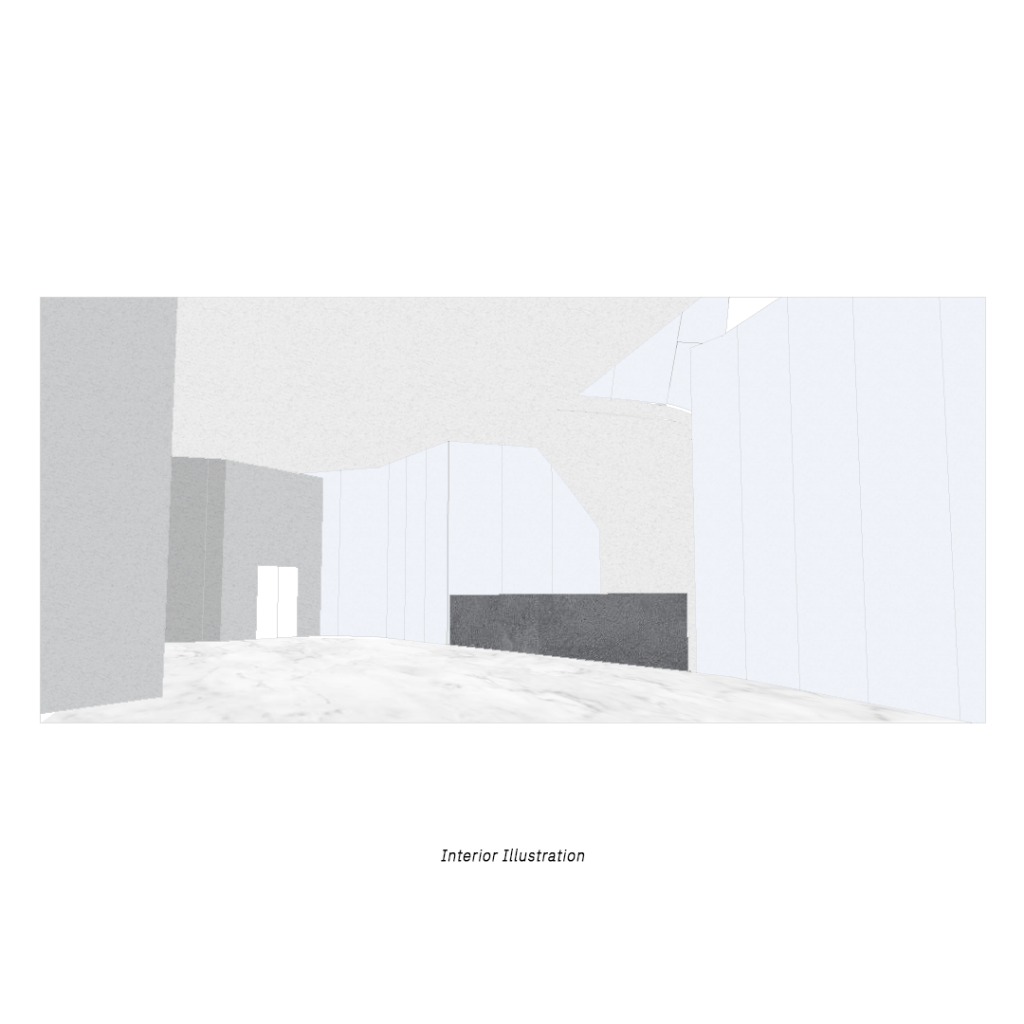


Interior Design & Spatial Continuity
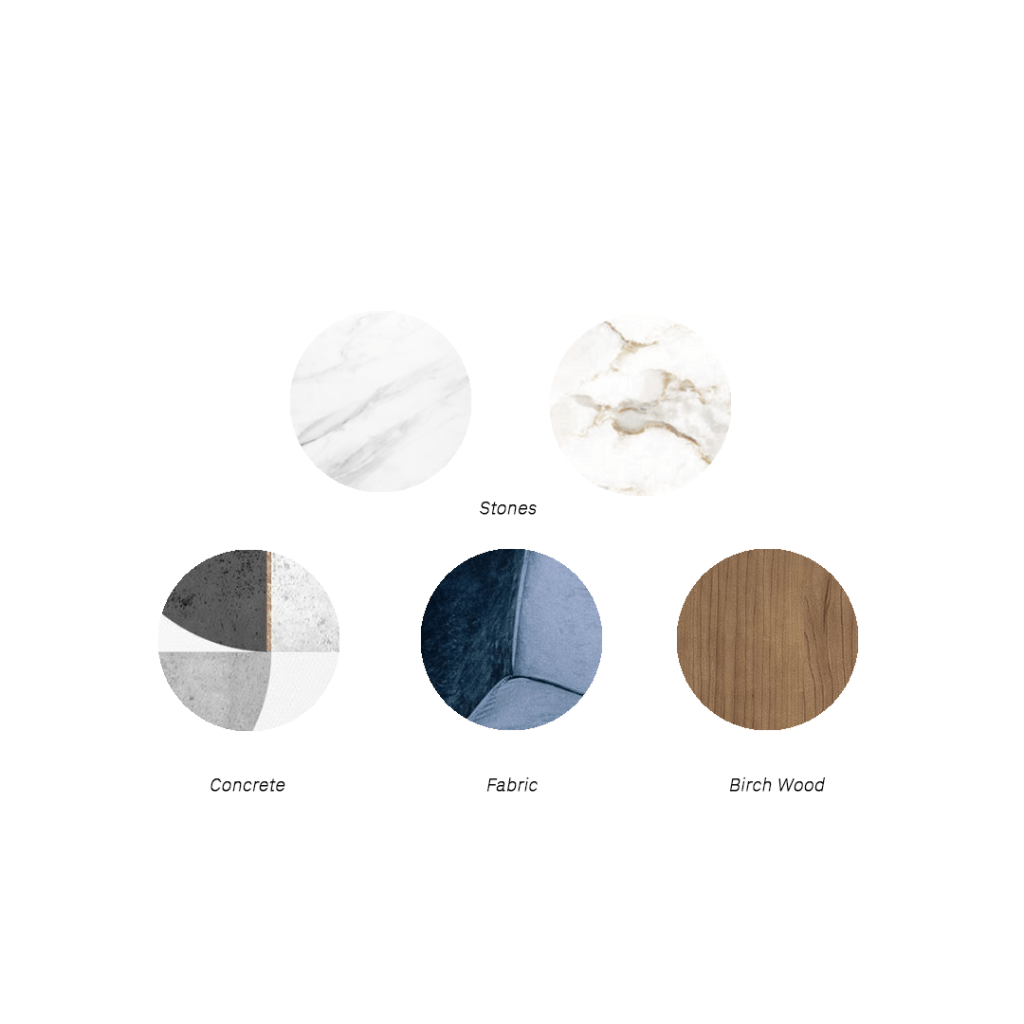
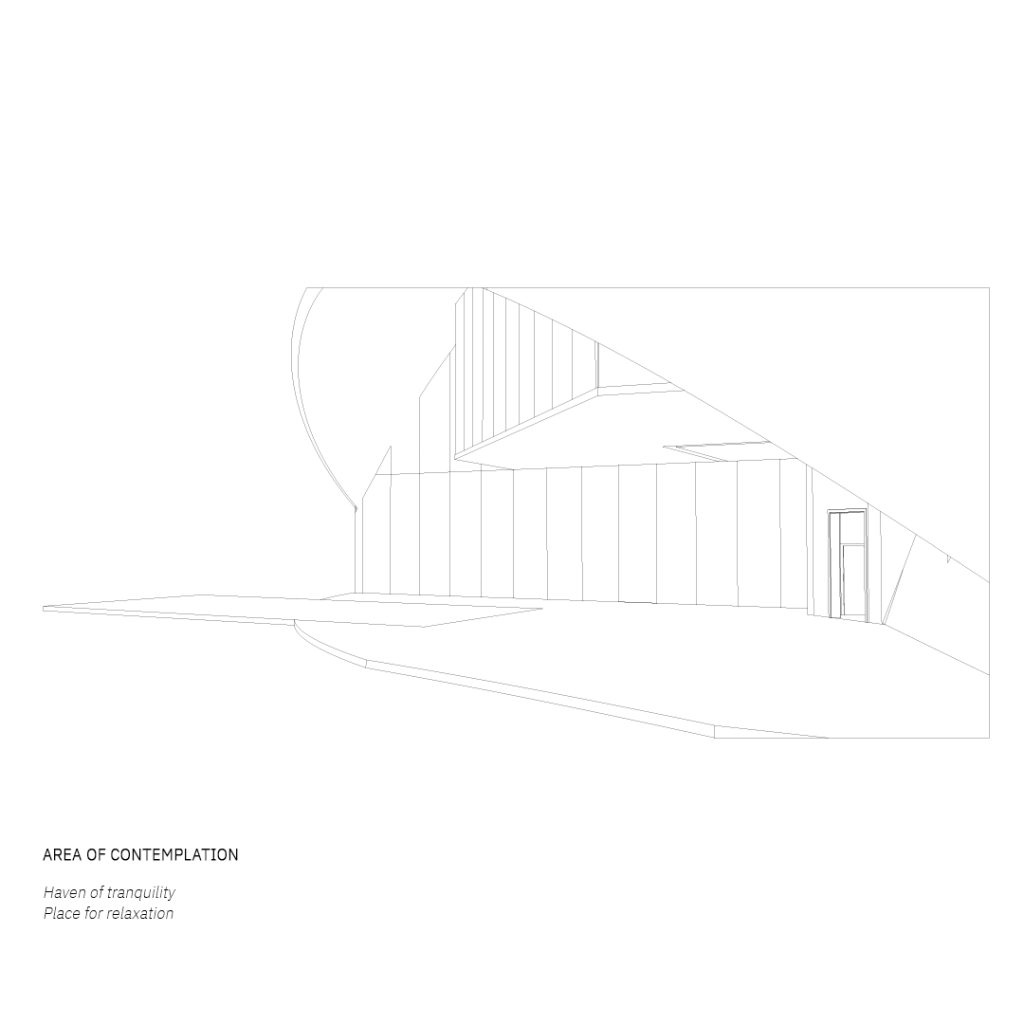
In the practice of INJ Architects, Interior Design is treated as an inevitable extension of the architectural mass, rather than a secondary layer. We advocate for a dual “Inside-Out” and “Outside-In” methodology, ensuring that internal volumes are conceived in tandem with the structural shell. This phase marks a significant increase in design resolution, transitioning from large-scale structural systems to the intimate human scale. By dissolving the boundary between the exterior and interior, we ensure that the building functions as a cohesive organism, where the architectural narrative is translated into a tactile, immersive experience.
Our interior philosophy focuses on delivering ultra-luxurious, bespoke environments tailored for high-end residences and global hospitality projects. Utilizing advanced BIM environments, we integrate sophisticated technical systems and bespoke lighting solutions within the engineering shell from the initial phases, collaborating with elite global partners. This integrated approach adheres strictly to our Quality and Sustainability benchmarks, utilizing eco-friendly materials and energy-efficient systems. The result is a meticulously crafted interior that reflects the client’s identity while maintaining the structural and environmental integrity of the project.

Art, Product Design
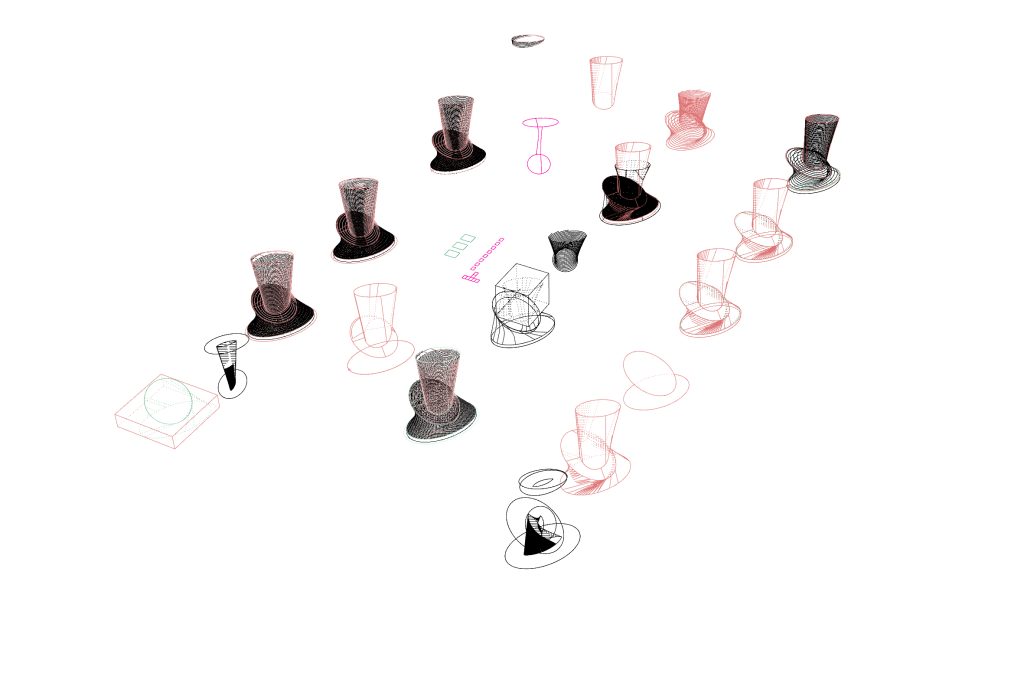
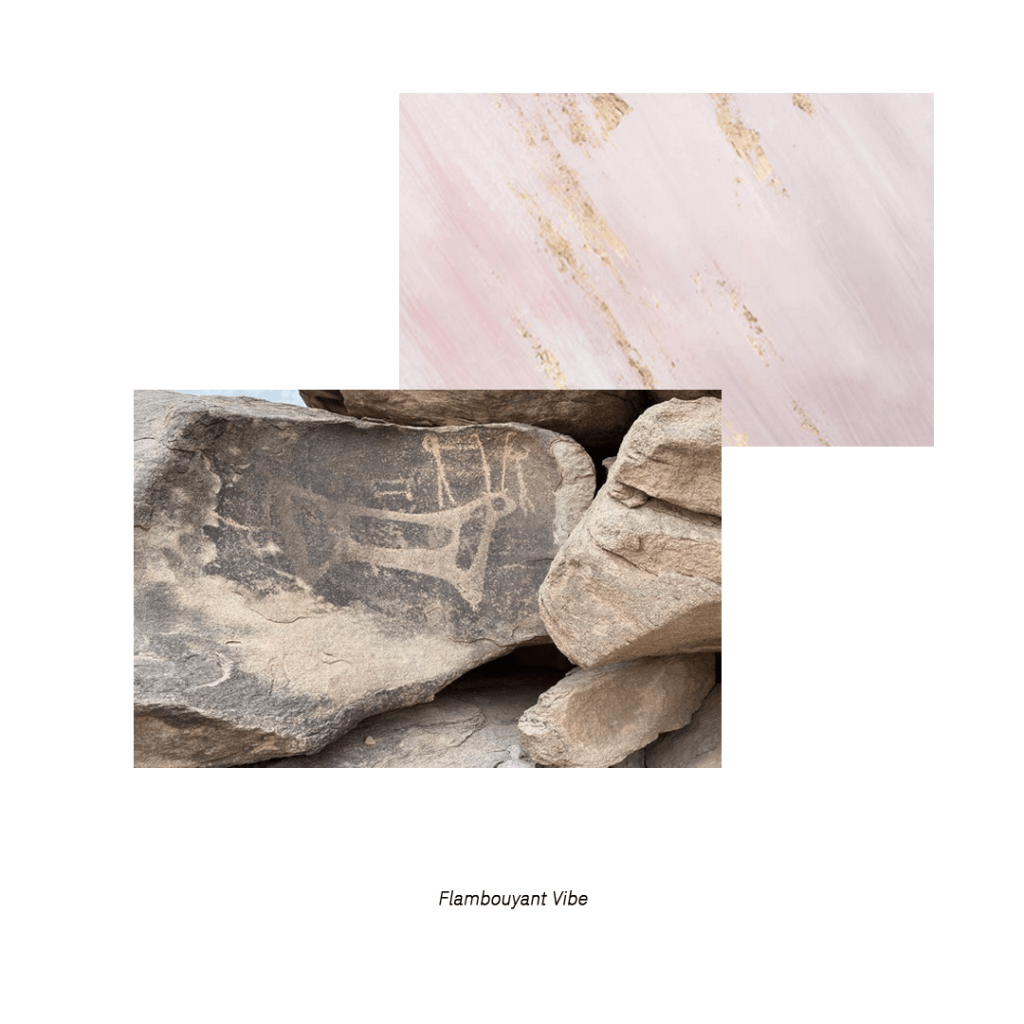
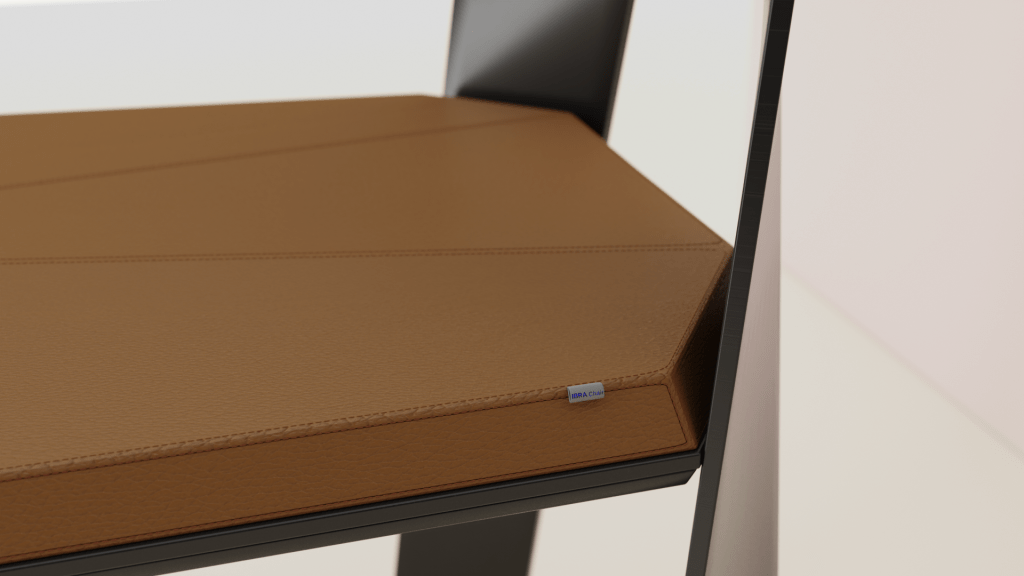
At INJ Architects, architectural mastery is defined by a holistic immersion in all creative scales, from the structural shell to the bespoke artifact. We reject the separation between art and architecture; instead, we treat furniture and lighting as essential variables in the spatial equation. The practice is deeply influenced by the artistic portfolio of Ibrahim Joharji, whose work spans from intricate Islamic art to the development of innovative functional products, such as integrated chandelier-fan systems and custom spatial installations.
This commitment to “Total Design” is exemplified in the creation of signature pieces like the Abra Chair and large-scale Urban Art interventions. By designing for public and urban realms, we transform functional spaces into immersive environments through curated artistic narratives. Whether through fine art paintings or parametric product design, these endeavors ensure that every Project is a cohesive reflection of a singular creative vision. This synthesis of fine art and architectural rigor is fundamental to our identity, as detailed in our How We Work methodology.


Global Procurement & Material Curation
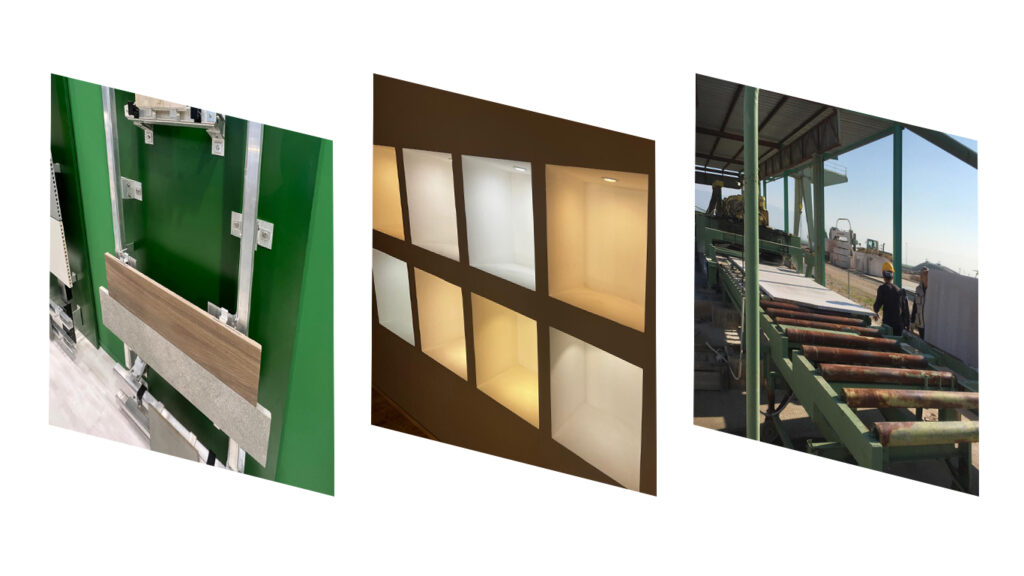
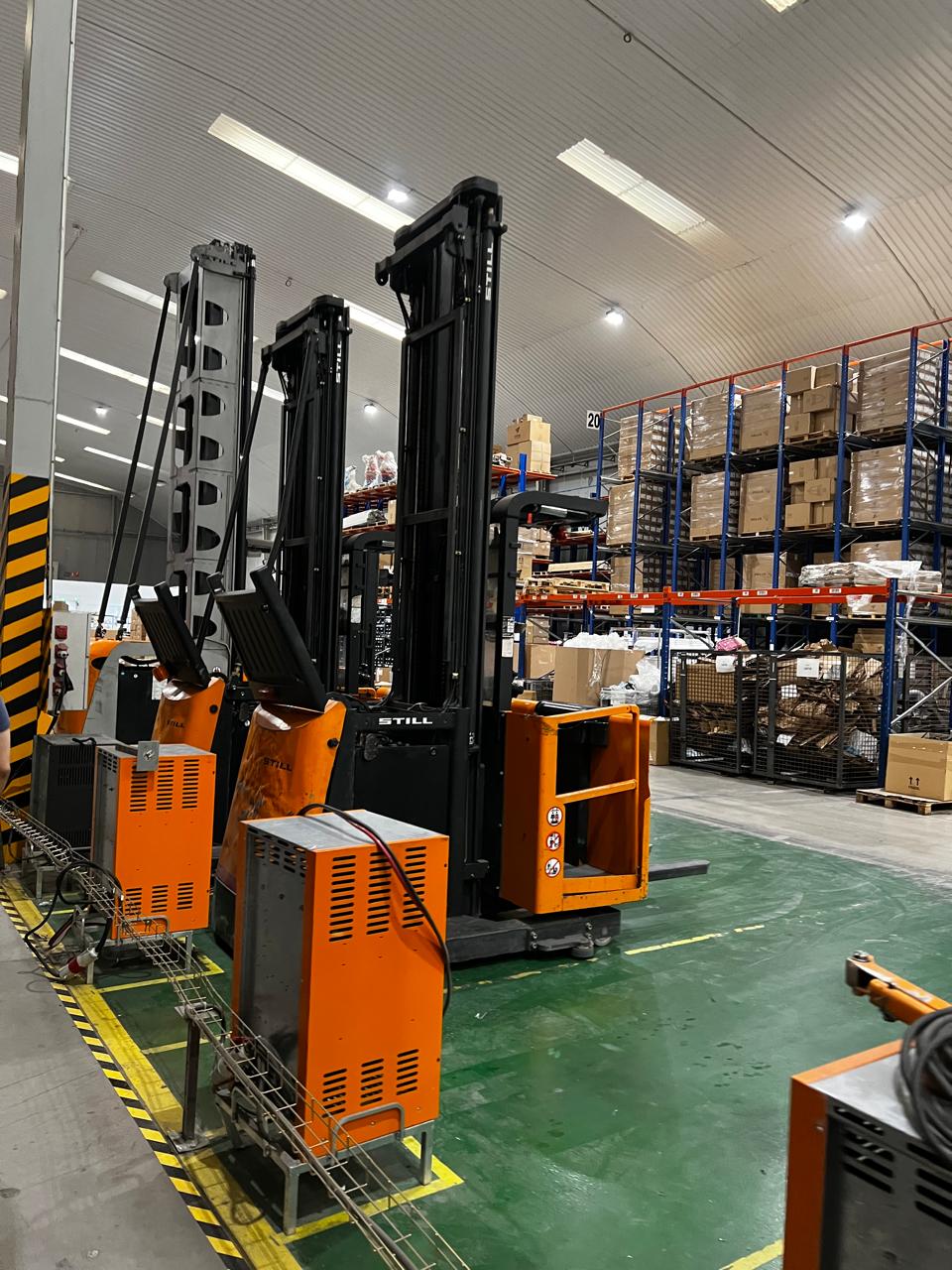
At INJ Architects, procurement is managed as a rigorous alignment between architectural intent and material performance. We operate as both “Architects and Strategic Purchasers,” engaging directly with global and local manufacturers to secure high-end and ultra-luxury materials. Our commitment to industry leadership is reflected in our active presence at international exhibitions and global conferences, where we audit factory production lines and monitor logistical standards to ensure that our Projects utilize the most advanced and sustainable solutions available.
We maintain a verified network of 193+ global suppliers, curated to meet the exacting standards of our bespoke residential and institutional designs. We invite innovative manufacturers of architectural products and building systems to submit their technical portfolios to procurement@inj.sa for potential inclusion in our official service provider database. This disciplined oversight of the supply chain ensures that every material selection is contextually verified and technically compliant before final implementation.

A Unified Architectural Vision
Architecture at INJ Architects is a profound intellectual commitment to shaping spaces that inspire and endure. Our methodology—rooted in rigorous planning and advanced technology—reflects the aspirations of a new era of Saudi design excellence. We invite you to explore our comprehensive service offerings through the Bespoke Architecture page and discover how our collaborative framework brings visionary concepts to life with absolute precision and integrity.
