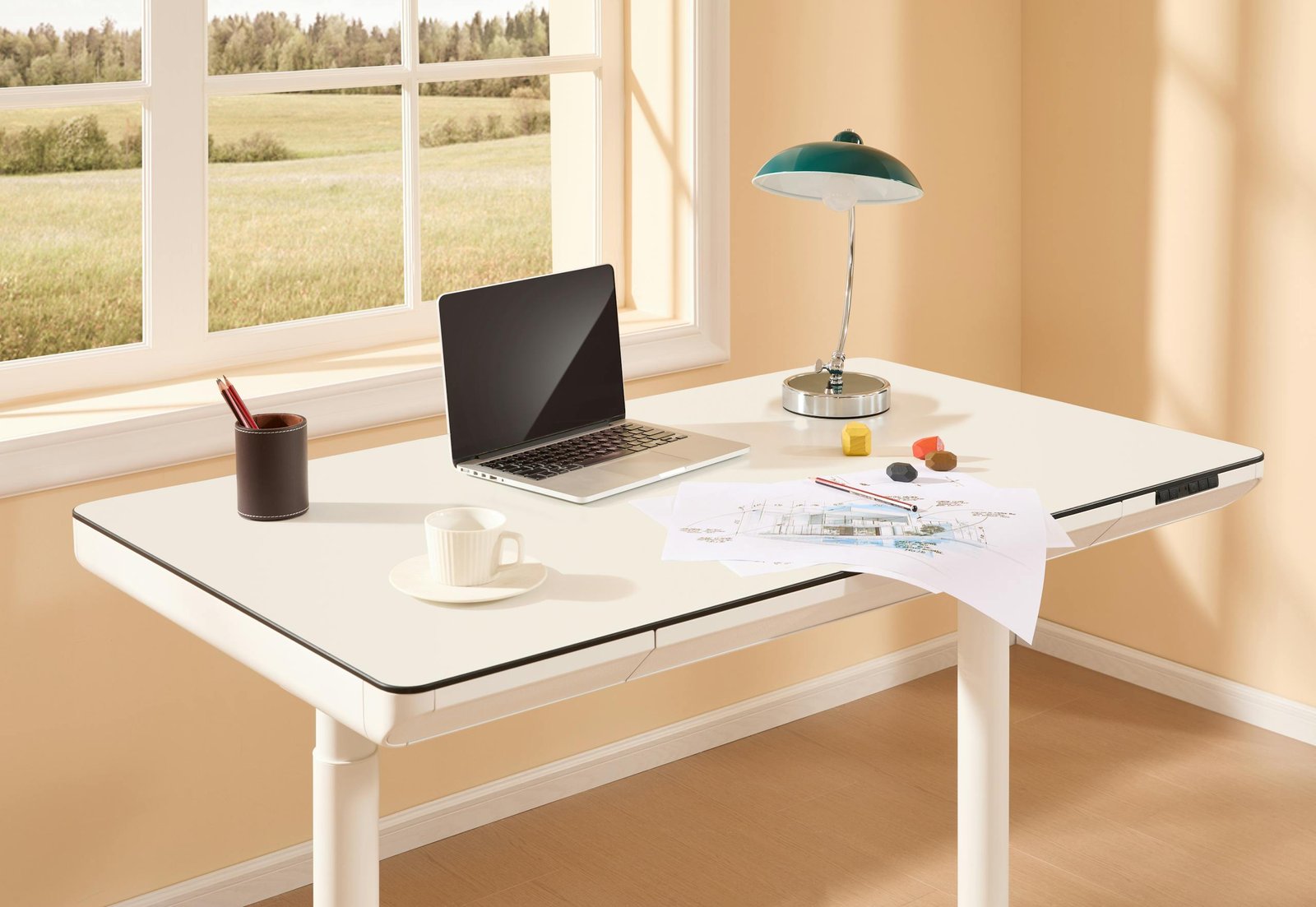
Work furniture directly affects posture, fatigue accumulation, and concentration stability across long working hours. A desk determines screen height, arm angle, wrist support, and how frequently the body shifts position during the day. Choosing between an adjustable standing desk and a fixed desk is a functional ergonomic decision that affects comfort, productivity, and long-term usability.
Adjustable desks allow movement between sitting and standing. Fixed desks provide stability and simplicity. The choice depends on usage patterns, health priorities, and budget.
Core Functional Comparison
| Factor | Adjustable Standing Desk | Fixed Desk |
|---|---|---|
| Posture flexibility | Sitting and standing options | Single fixed height |
| Encouragement of movement | Built into desk design | Depends on user habits |
| Structural stability | Stable but varies by model | Very high rigidity |
| Mechanical complexity | Contains lifting systems/motors | No moving components |
| Maintenance needs | May require servicing over time | Minimal maintenance |
| Initial purchase cost | Medium to high | Low to moderate |
| Installation complexity | Moderate to complex | Simple |
| Best for long work hours | Strong advantage due to posture variation | Acceptable with disciplined breaks |
| Heavy equipment support | Moderate depending on model | Excellent load support |
| Long term reliability | Good, but mechanical wear possible | Extremely durable |
Productivity and Health Insights
Adjustable desks benefit users spending many continuous hours at a workstation, such as designers, programmers, and remote employees. Alternating between sitting and standing reduces fatigue, improves circulation, and enhances alertness during long work sessions.
Fixed desks remain ideal for environments requiring extreme stability, such as laboratories, drafting areas, or setups with heavy equipment. They are also more budget-friendly and easier to maintain.
Financial and Practical Considerations
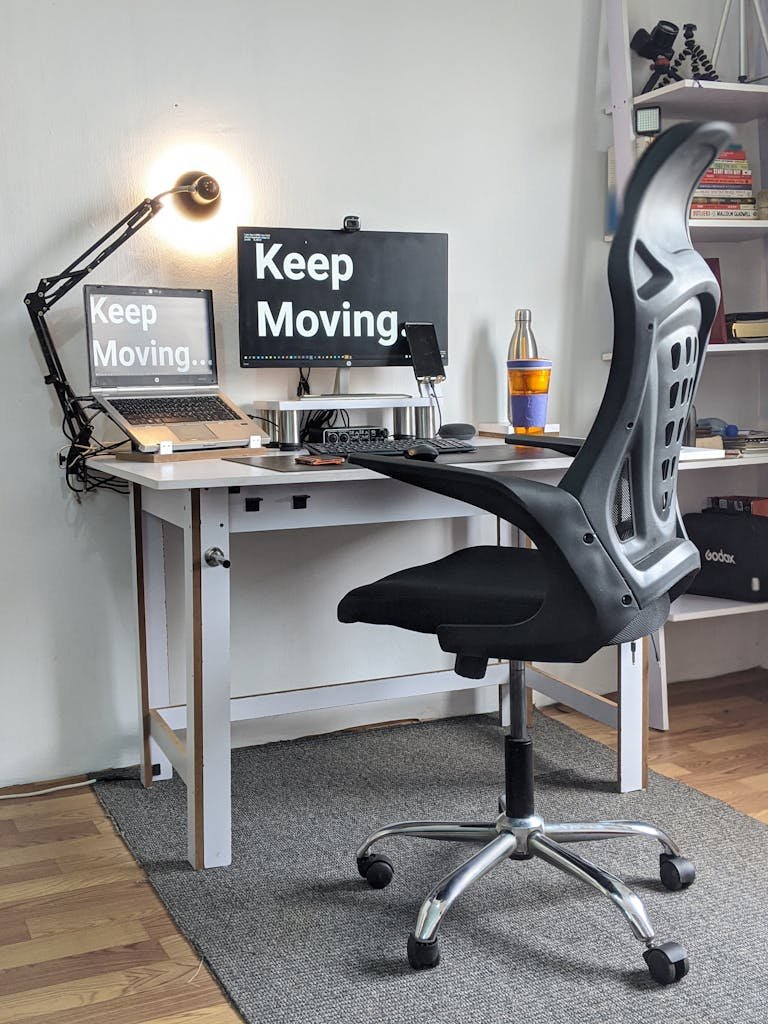
Adjustable desks are higher in cost but can reduce long-term ergonomic issues and support employee wellness. Fixed desks offer excellent durability and low maintenance, making them highly cost-effective, especially in large installations.
Selection Guidance
Choose an adjustable desk if:
- You work long hours at a computer
- You experience back or posture discomfort
- You want long-term ergonomic flexibility
Choose a fixed desk if:
- You need maximum surface stability
- Your budget is limited
- Work sessions are moderate in length
Conclusion
Adjustable standing desks provide posture flexibility and support movement, which is valuable for extended digital work. Fixed desks focus on simplicity, stability, and low maintenance, making them practical for specialized equipment or budget-conscious setups.
A desk alone does not determine comfort or productivity — chair ergonomics, monitor positioning, lighting, and movement habits are equally critical. The desk forms the foundation of an effective workstation, but integrated ergonomic design ensures optimal health and performance.
Summary
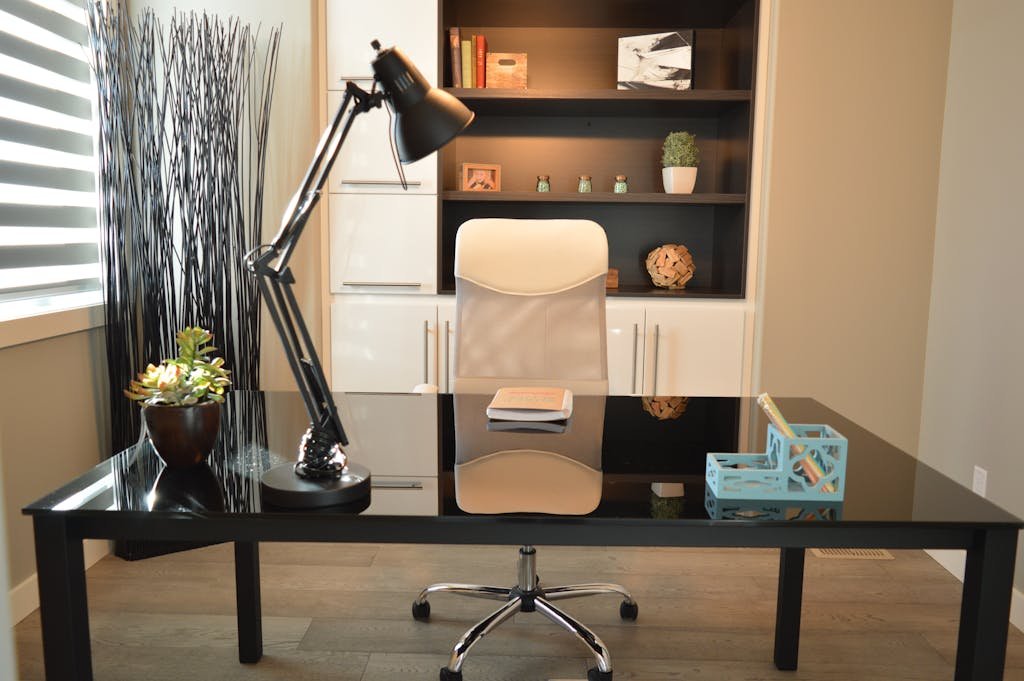
Adjustable standing desks support both sitting and standing, encouraging movement, improving circulation, and helping reduce stiffness during long work hours. They often improve alertness and long term ergonomic comfort, but cost more and may require maintenance.
Fixed desks are simpler, cheaper, and highly stable, making them reliable for precision tasks or moderate daily use. However, they depend heavily on good chair ergonomics and user movement habits to avoid fatigue from prolonged sitting.
Overall, adjustable desks suit heavy daily computer users seeking health flexibility, while fixed desks remain a durable, cost efficient solution for stable work setups.