
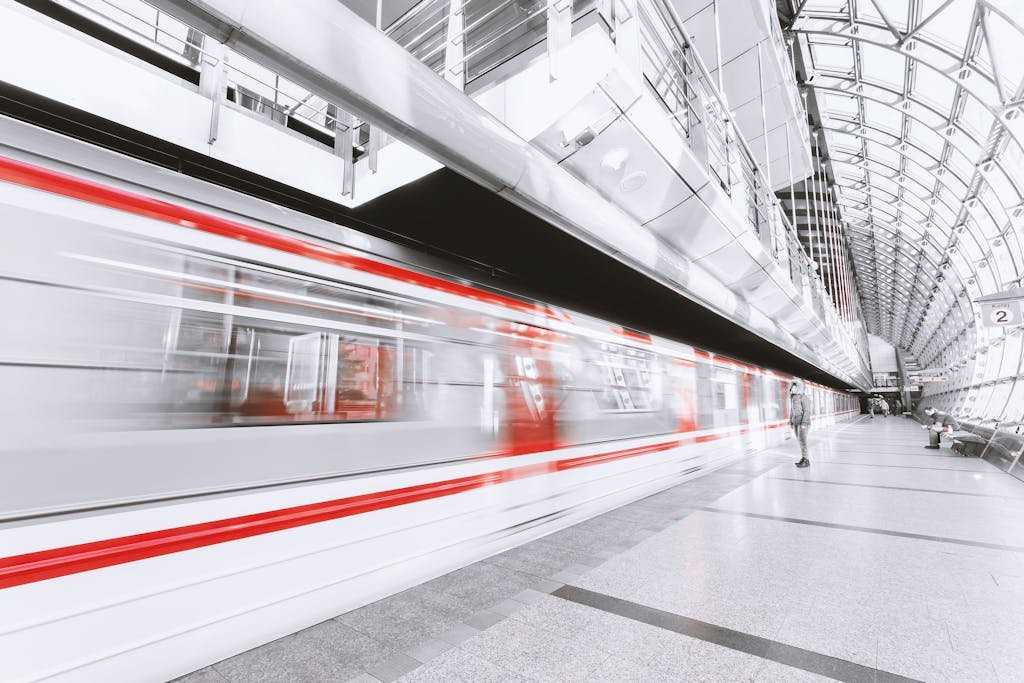
Architecture is commonly perceived as static matter shaped for occupation, yet human experience of space is inherently kinetic. Movement defines how architecture is understood, remembered, and used. Architecture that thinks in motion does not rely on mechanical systems or literal movement. Instead, it is designed around the logic of bodily progression, perception over time, and spatial sequencing. The building anticipates motion and responds to it through form, proportion, and spatial order.
Movement as a Design Generator
In motion-based architecture, movement is not a secondary consideration but a primary design generator. Circulation paths are not added after form-making; they shape the form itself. Spatial compression and expansion, directional shifts, and changes in scale are used to choreograph how the body moves and pauses. Architecture guides motion without instruction, relying on spatial cues rather than signage or barriers.
Movement becomes a language. Narrow passages slow the body. Open volumes accelerate movement or invite gathering. Curved paths soften transitions, while angular turns create moments of awareness. The building is read sequentially, not instantaneously.
Temporal Perception of Space
Architecture that thinks in motion is experienced over time rather than at a single moment. Spaces unfold gradually, revealing themselves through progression. Visual access is controlled so that destinations are suggested rather than fully revealed. This creates anticipation and spatial rhythm.
Time becomes an architectural material. Light changes along a path. Sound shifts as volumes open or close. Temperature and airflow subtly vary. These temporal layers reinforce the sense that architecture is not static but continuously responsive to movement.
Spatial Sequencing and Human Behavior
Spatial sequencing directly influences human behavior. The order in which spaces are encountered affects orientation, comfort, and decision-making. Motion-based architecture uses sequencing to guide behavior without enforcing it.
| Spatial Strategy | Design Approach | Behavioral Effect |
|---|---|---|
| Compression | Reduced ceiling height or narrowed width | Slows movement and increases focus |
| Expansion | Sudden increase in volume or openness | Encourages pause or gathering |
| Directional shift | Angled walls or curved paths | Heightens spatial awareness |
| Visual filtering | Partial views and layered sightlines | Creates anticipation and curiosity |
These strategies allow architecture to think ahead, predicting how people will move and respond.
Architecture Without Mechanical Movement
Thinking in motion does not require moving parts. Static elements can create dynamic experience when arranged intelligently. Stairs, ramps, platforms, and thresholds become tools for choreographing vertical and horizontal movement. Floor level changes alter bodily effort. Handrails, edges, and surfaces guide touch and balance.
This approach emphasizes bodily intelligence. Architecture communicates through gravity, resistance, and rhythm rather than technology.
Cognitive and Psychological Dimensions
Motion-based architecture engages the mind as much as the body. Changes in pace affect attention and memory. Sequential movement helps occupants build mental maps of space, improving orientation and reducing cognitive fatigue. Spaces designed around motion are often easier to navigate because they align with natural human behavior.
The architecture does not demand interpretation. It is understood through movement itself.

Implications for Architectural Design
Architecture that thinks in motion challenges image-driven design. Instead of prioritizing static views or iconic forms, it prioritizes experience over time. Design decisions are evaluated based on how they affect movement, perception, and bodily response.
This approach reframes architecture as an active participant in daily life. The building does not simply exist. It anticipates, guides, and responds to motion, creating environments that feel intuitive, legible, and deeply human.
When architecture thinks in motion, it moves without moving, shaping experience through time, space, and the intelligence of the human body.
Summary
This article presents architecture as an experience shaped by movement rather than static form, arguing that human motion is a primary driver of spatial understanding, memory, and use. It explains how motion-based architecture is designed through circulation, spatial sequencing, compression and expansion, and controlled perception over time, allowing buildings to guide behavior intuitively without mechanical movement or explicit instruction. By treating time, light, sound, and bodily effort as design materials, this approach prioritizes lived experience over image, positioning architecture as an active system that anticipates, responds to, and aligns with natural human movement and cognition.