Podgorica Square
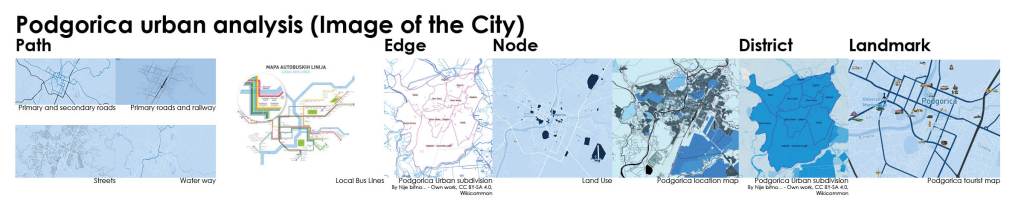
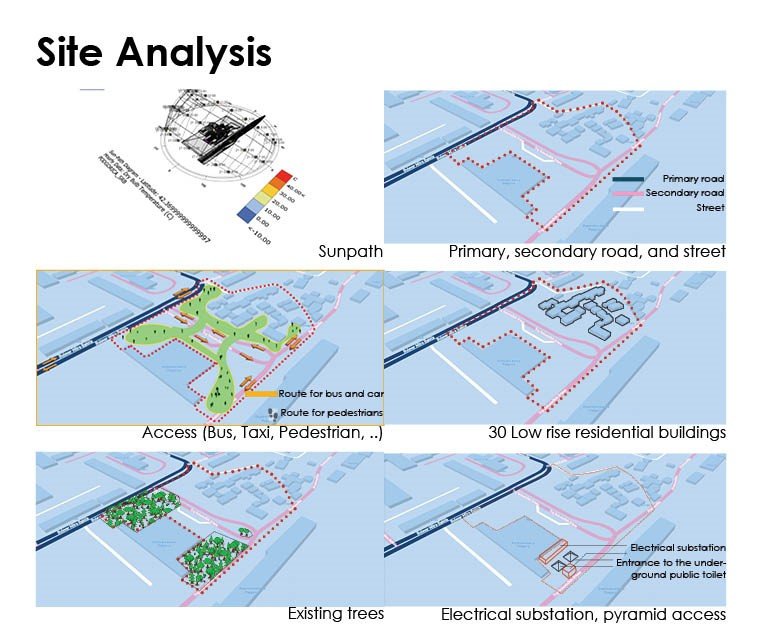
The first observation about Golootočkih Žrtava Square in Podgorica is that it is not really a square. It has no clear boundary, no monument at its center, and no spatial definition that would distinguish it from the broad street it resembles. What it does have is a position — at the convergence of the city’s main bus station and railway station, it is among the most transited points in Montenegro’s capital. The competition proposal began by accepting this condition and asking how a space defined entirely by transit could be transformed into a place worth pausing in.
Montenegro is a young state with a long history — its independence restored in 2006 after the dissolution of Yugoslavia, its capital Podgorica investing in civic infrastructure at the scale of a city that understands its own potential. The Golootočkih Žrtava Square competition was part of this investment: a call for a conceptual urban and architectural redesign of one of the city’s most functionally significant but spatially unresolved public spaces. The proposal treated the square’s transit identity not as a problem to be concealed but as the foundation for a civic program that could serve both the traveler passing through and the resident choosing to stay.
Location          Podgorica, Montenegro
Client            Golootočkih Žrtava Square Competition
Type              Urban Design — Competition Entry
Status            Competition Proposal
Year              2021
Principal         Ibrahim Nawaf Joharji
Scope             Urban Planning, Public Space Design, Landscape
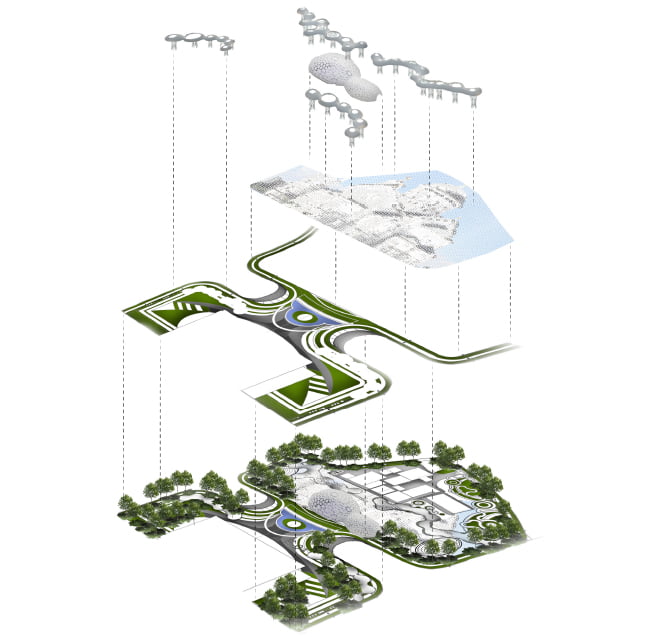
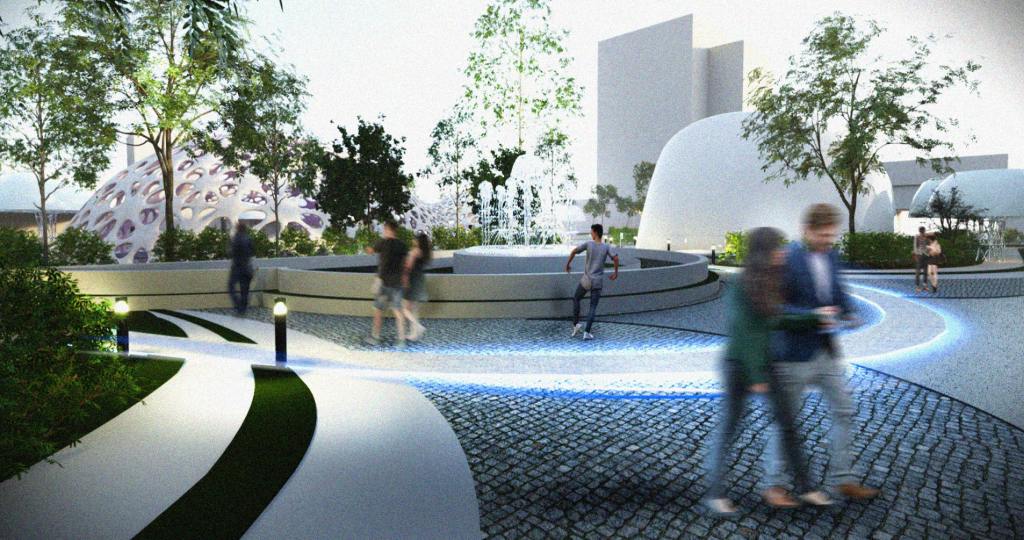
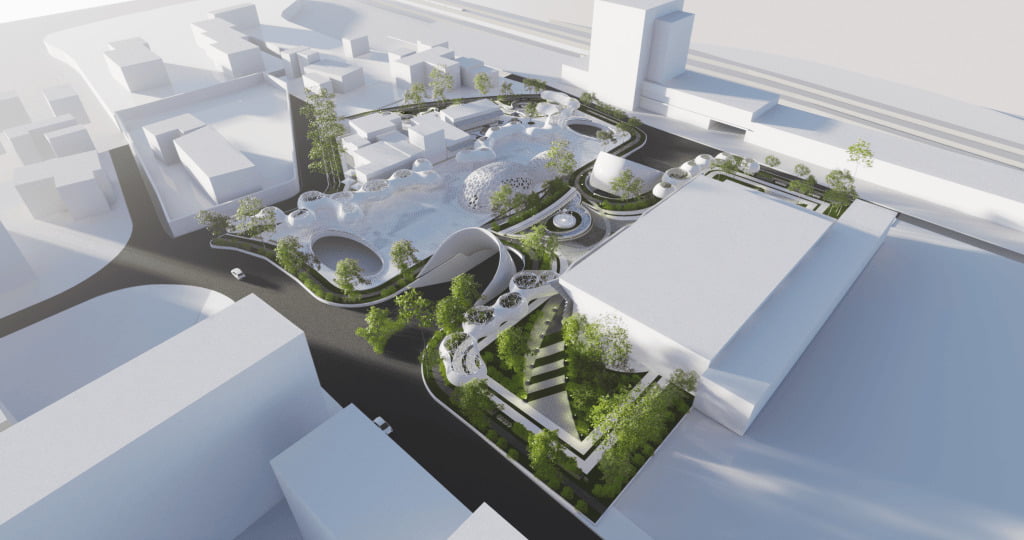
The proposal’s primary spatial decision was to give the square a boundary. A series of dome-shaped pavilions — their geometry drawn from the Cathedral of the Resurrection of Christ, Podgorica’s most prominent orthodox church and the city’s most recognizable architectural landmark — are distributed around the square’s perimeter to define its edge. The domes are not identical. They are curvilinear, interconnecting, and oriented in varying directions, producing a boundary that reads as a family of related forms rather than a repetitive fence. Each dome functions as a spatial reference point for a visitor navigating the square, the irregular but coherent sequence of pavilions making orientation intuitive without imposing a rigid axis. The ETFE membrane specified for these boundary structures is the same material used in aerospace applications — thin, lightweight, extremely durable, and an excellent transmitter of natural light. At night the pavilions glow, their perforated lightweight shell structures turning the square’s edge into a luminous boundary visible from the surrounding streets.
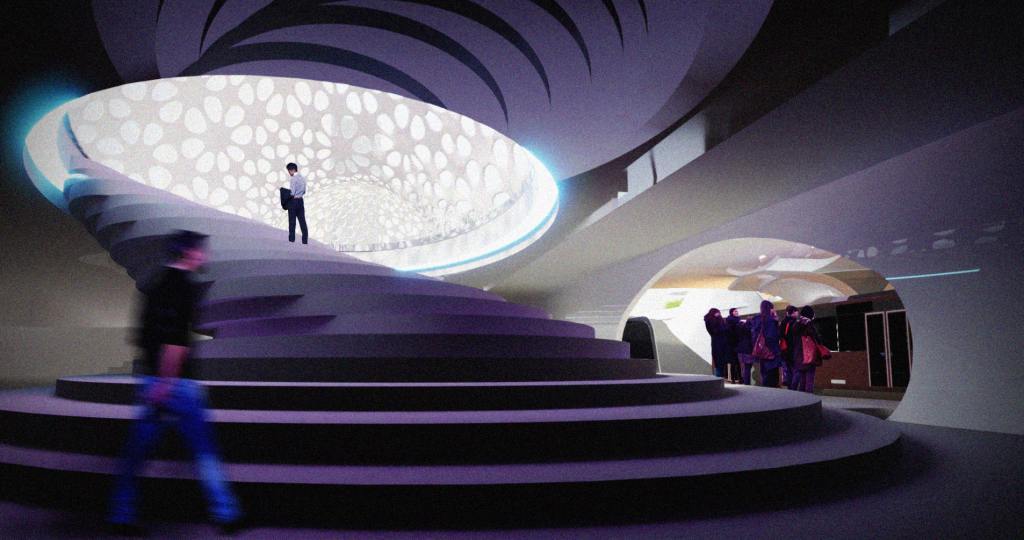
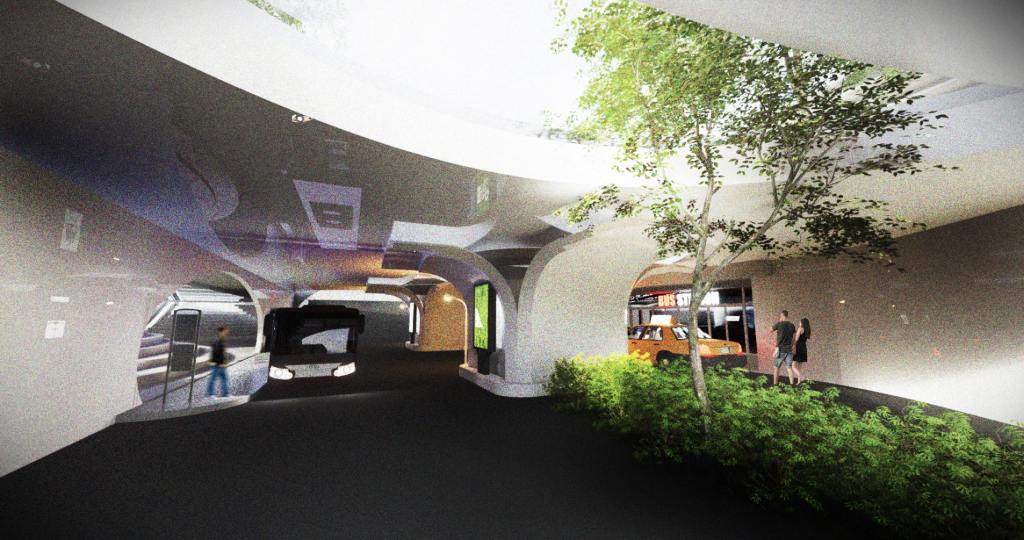
Two larger interconnecting domes anchor the center of the proposal directly in front of the bus station. The larger dome is the entrance to the underground floor — the level to which all vehicular traffic has been relocated, freeing the square’s surface entirely for pedestrians. The smaller dome is the visitor center. Together they form the square’s civic heart: the point from which a traveler arriving at the bus station can transition seamlessly to underground public transport via elevator, escalator, or elliptical staircase, while the visitor center above provides spatial orientation and public amenity at ground level. Three levels of underground parking are accessible from Bulevar Mitra Bakič, their floors brought natural light through apertures in the square’s paving rather than left in the uniform artificial lighting that makes underground parking uncomfortable and disorienting.
The square’s ground plane is unified by a pixel art floor — basalt paving stones painted over with epoxy, durable and cost-effective, their pattern derived from the image of the Cathedral of the Resurrection of Christ at a resolution that reads as abstract urban texture at walking scale and as a recognizable image from above. This floor connects the large plaza in front of the bus station to the low-rise building zone at the square’s edge, unifying what was previously a fragmented collection of surfaces into a single legible ground plane. The low-rise buildings that remain after selective removal of the poorest-quality stock are proposed for renovation in the character of a traditional Montenegrin village — a commercial and hospitality zone that gives the square a resident population of activity beyond its transit function, producing the social continuity that separates a place from a thoroughfare.
The bus station facade receives a new aluminum cladding skin — a curvy pleated surface applied over the existing envelope, its pattern interrupted by pinched variations at intervals that break the repetition and give the building a contemporary identity without requiring structural intervention. The landscape integrates green belts in curvilinear bands that harmonize with the dome geometries above, large trees providing shade and mitigating the urban heat island effect that accumulates in transit-heavy urban zones. A fountain in front of the bus station introduces water at the square’s most active point. Public lighting runs on solar energy. The material selections throughout prioritize ecological performance — ETFE for the boundary domes, basalt paving for the floor, eco-friendly specifications across all fixed urban furniture elements.
The square that results is capable of hosting sport activities, street fairs, concerts, commercial activity, and the daily leisure of both Montenegrins and visiting tourists — simultaneously, without any of these uses excluding the others, because the proposal has separated the transit infrastructure that previously occupied the ground plane from the civic life that belongs there. The methodology governing this type of urban competition proposal is detailed in how-we-work. For municipalities and urban development bodies considering comparable civic space redesigns, the engagement framework is outlined in bespoke-architecture.