
Kinetic Landmark Silicon Valley
Every landmark built before this competition proposal answered the same question: what should a public monument look like. The Silicon Valley Landmark asked a different question entirely — what should it produce.
Silicon Valley’s built environment had grown static relative to its intellectual ambition. The region’s most recognized structures — campuses, towers, signage — were passive objects. They consumed land, consumed energy, and returned nothing beyond their visual presence. The competition brief arrived as an invitation to challenge this condition directly. The proposal began not with a form but with a question: if this place is defined by what it generates, why should its landmark be exempt from the same demand?
Location          Silicon Valley, USA
Type              Public Landmark — Competition Entry
Status            Competition Proposal
Year              2020
Principal         Ibrahim Nawaf Joharji
Scope             Civic Infrastructure, Energy Generation, Urban Identity
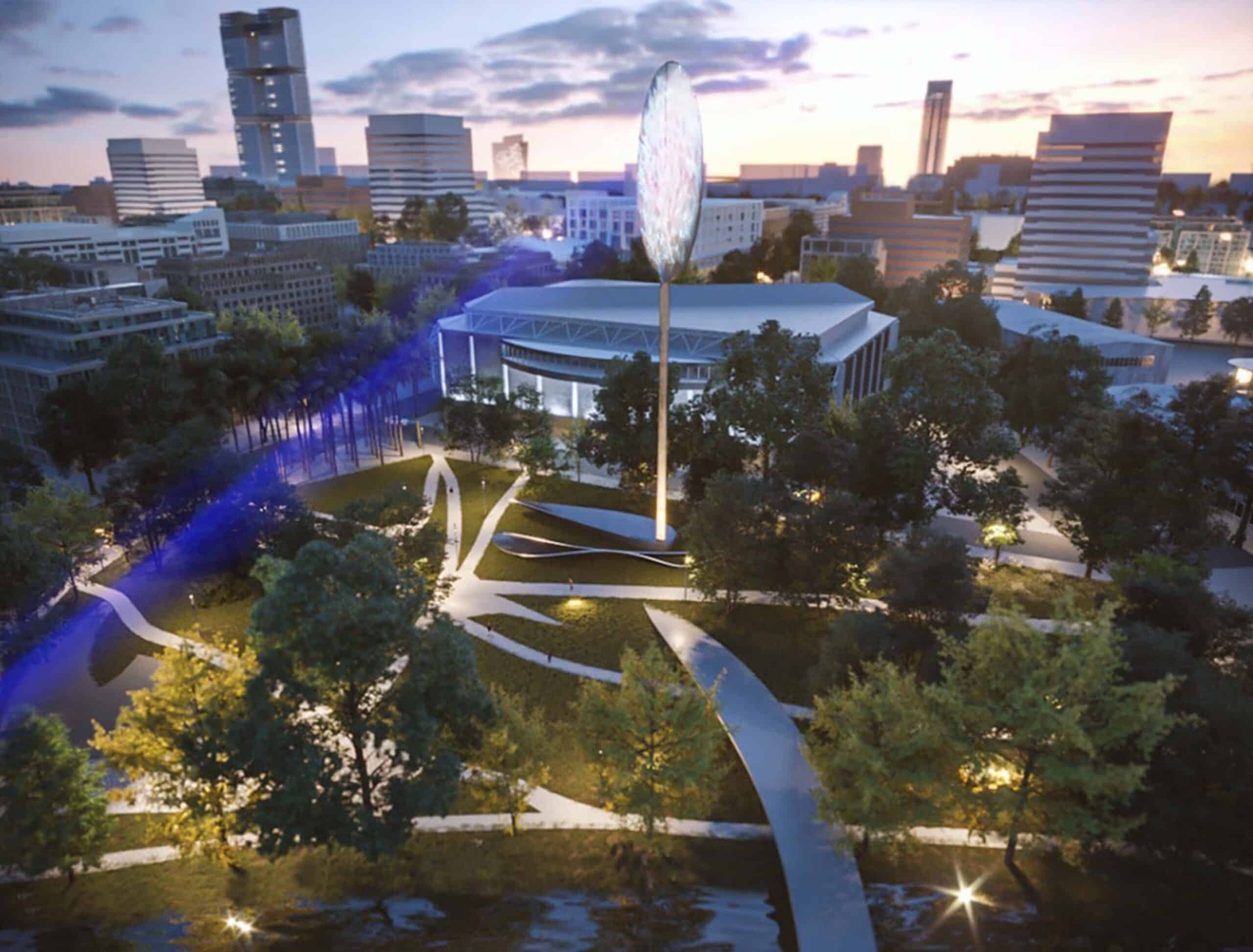
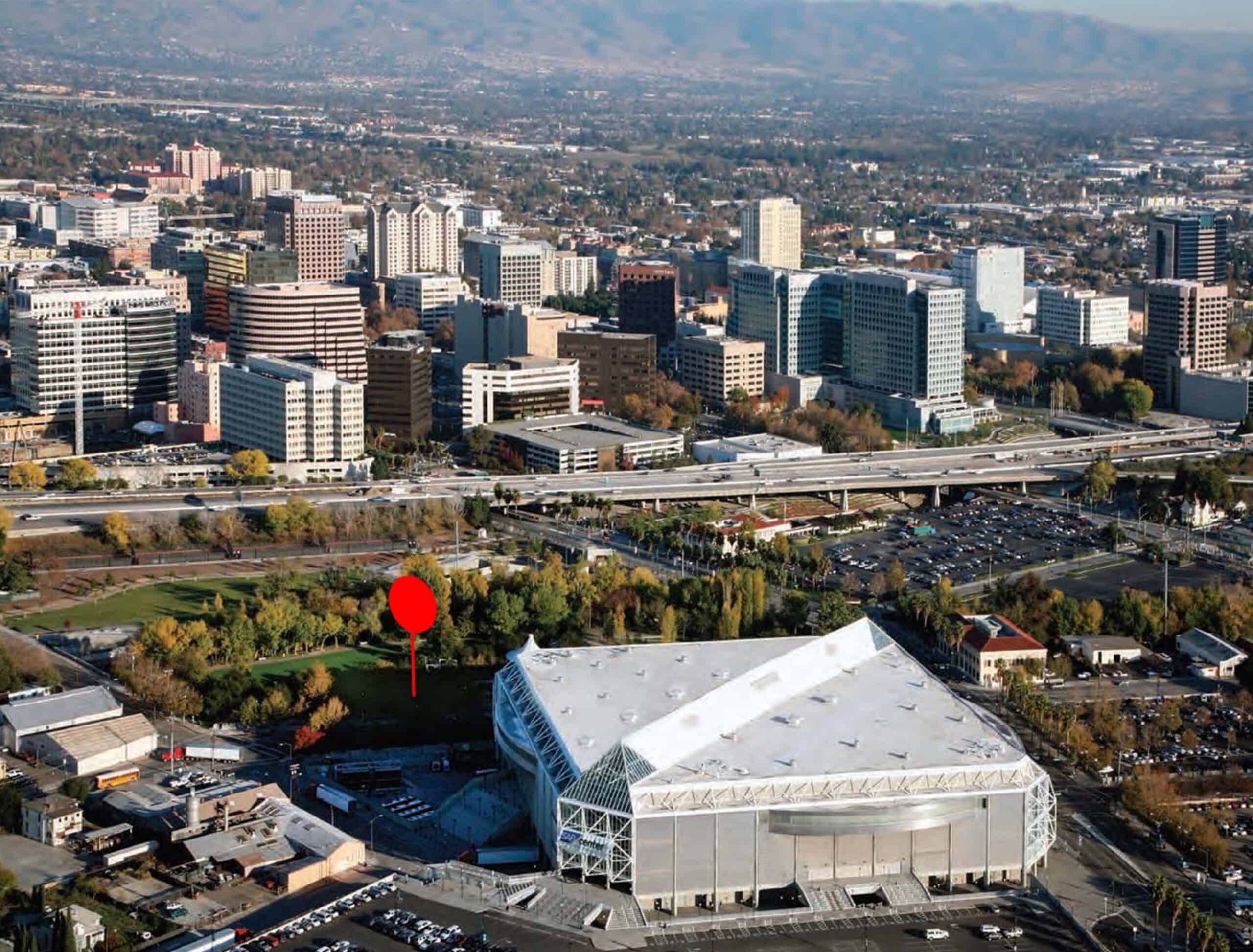
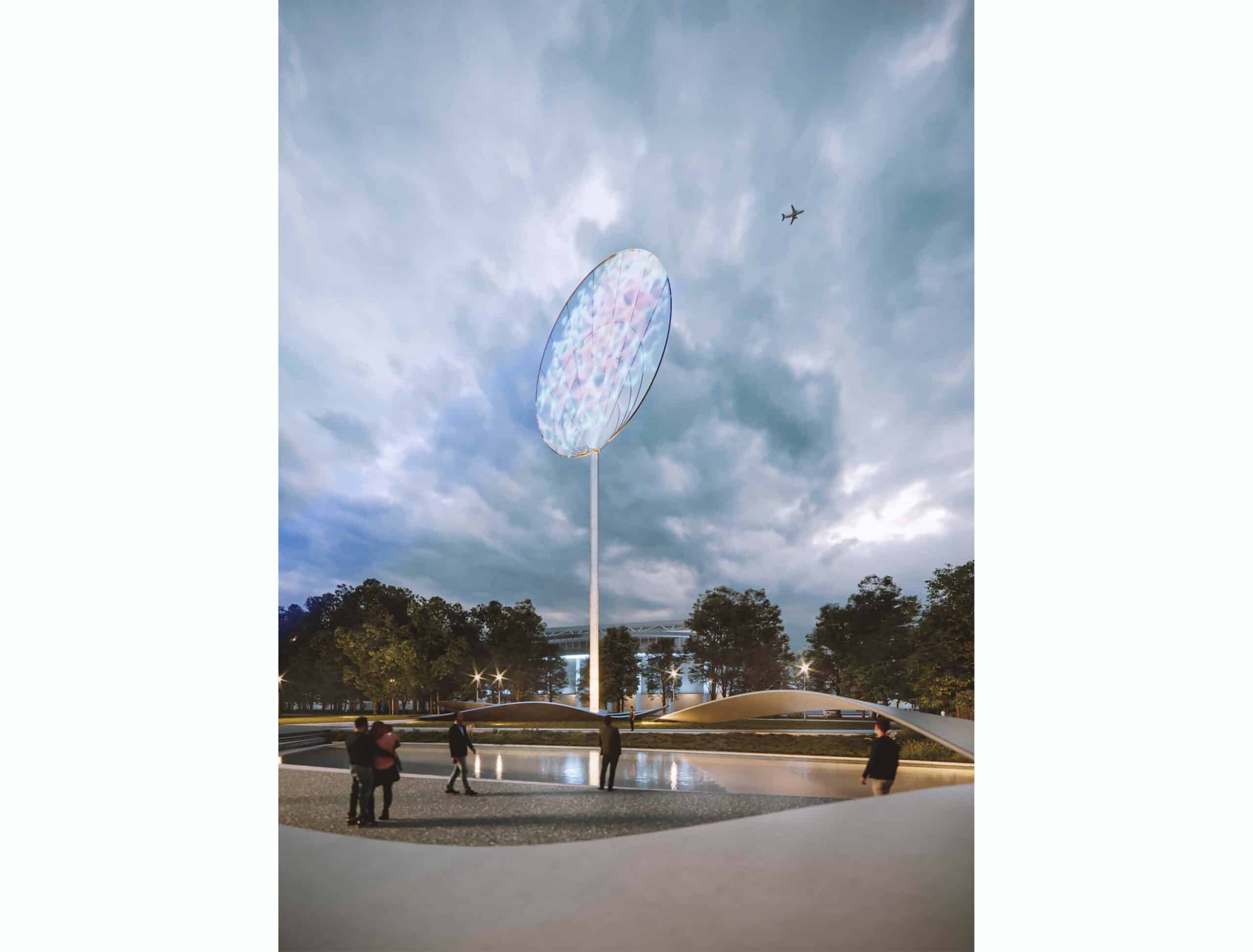
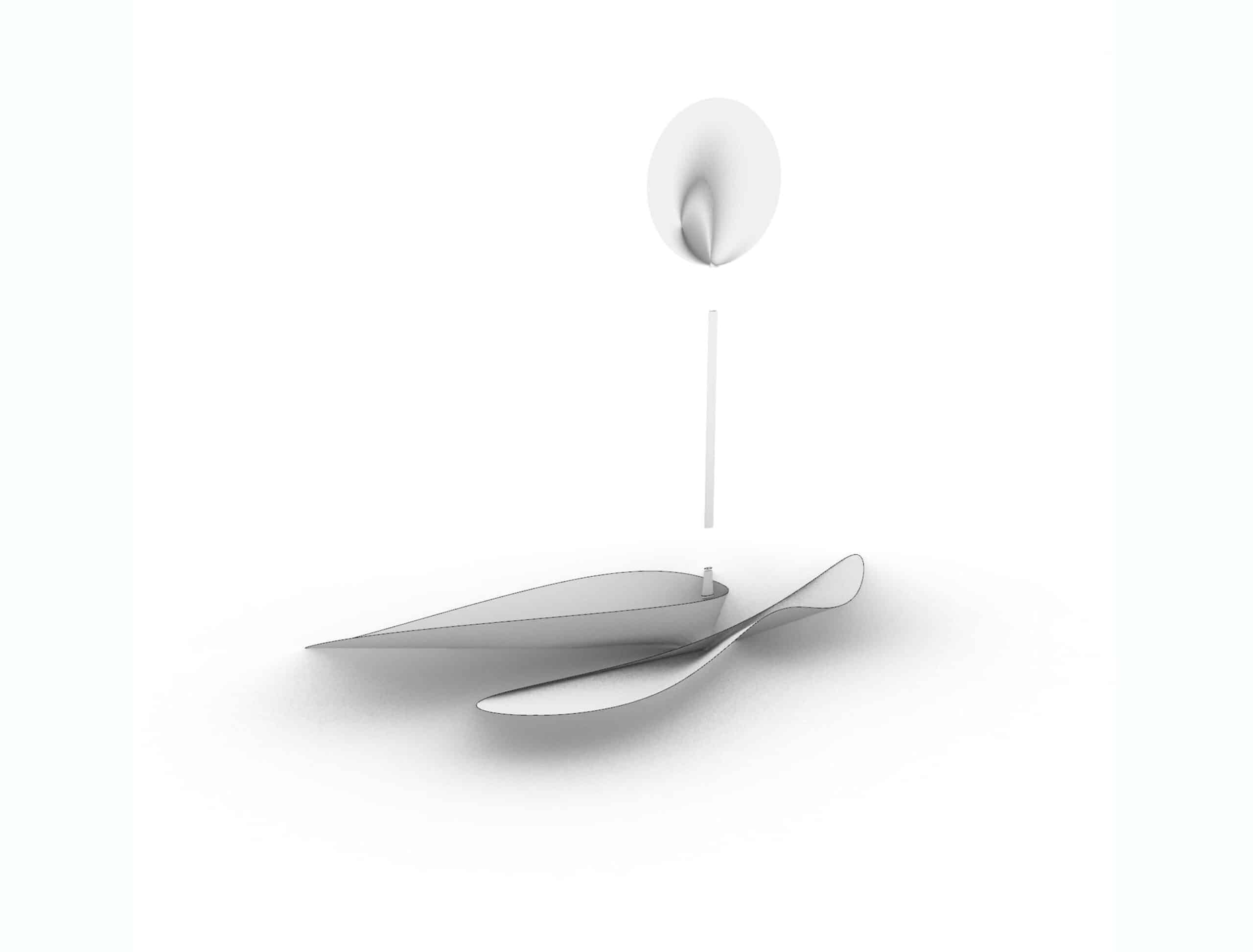
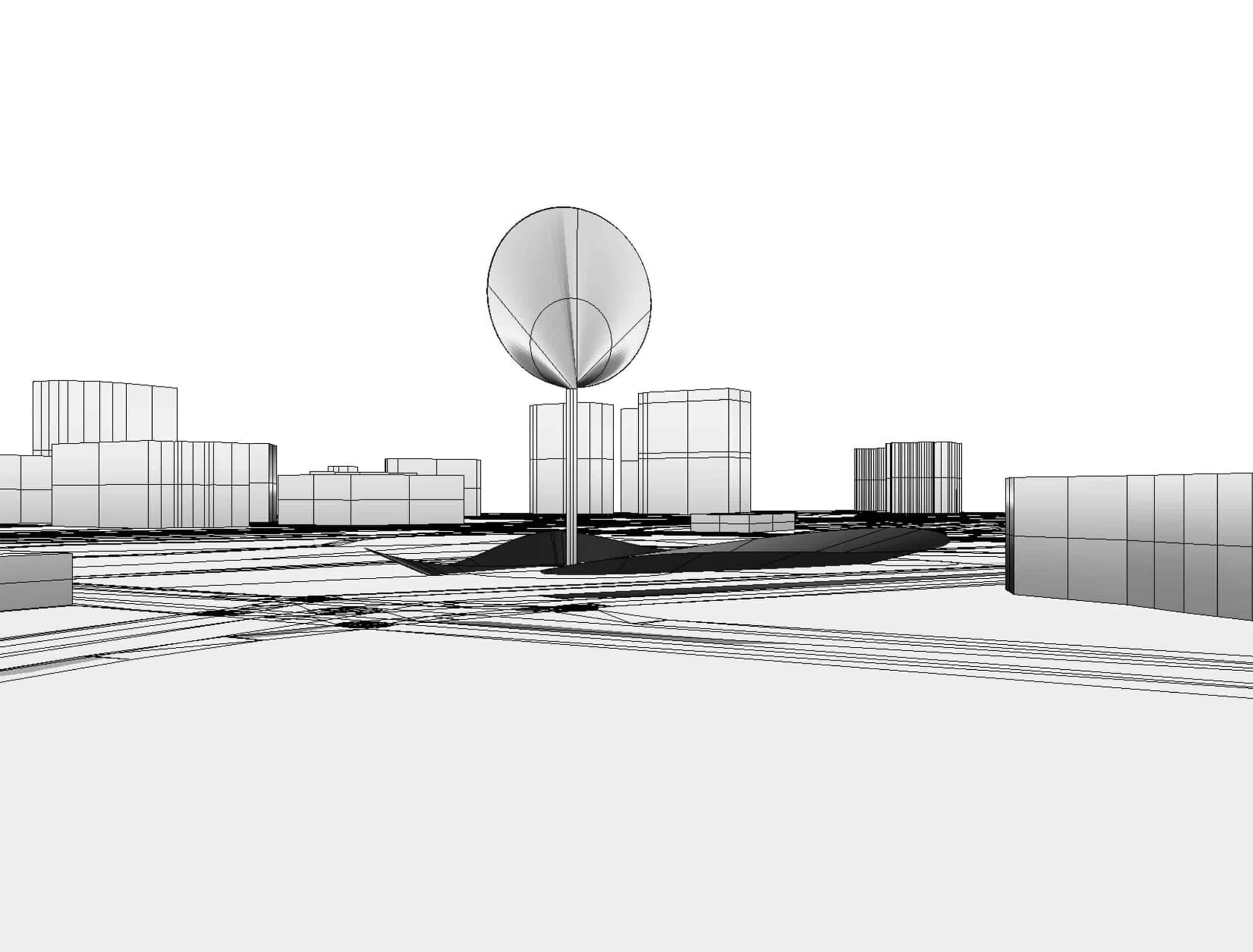
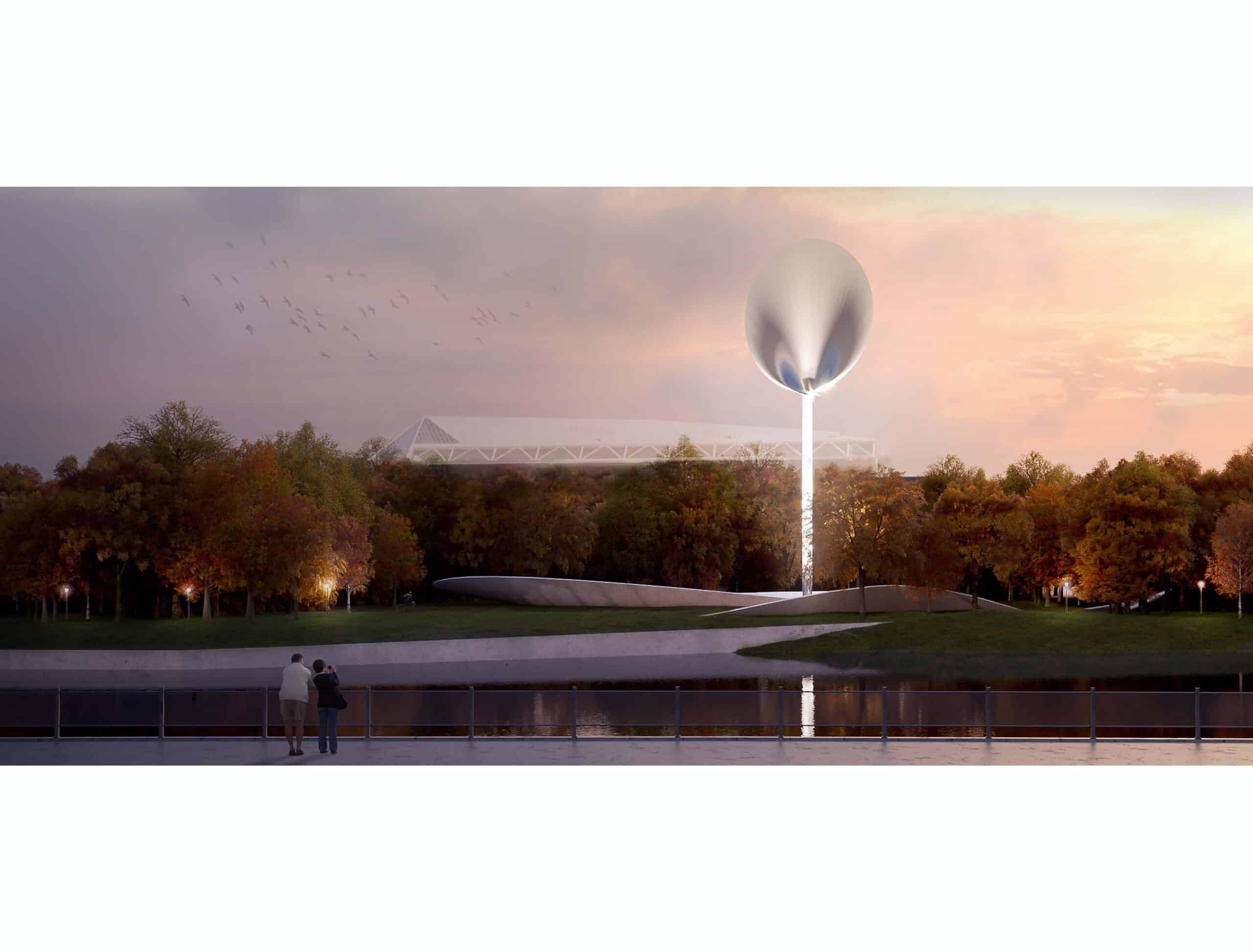
The design takes the form of a rotating dish elevated on a slender structural mast. The geometry draws from the aeronautical mythology long embedded in California’s technological imagination — the flying saucer of mid-century science fiction, reclaimed here as a working object rather than a decorative reference. The dish rotates continuously around its vertical axis, and this rotation is the generating act of the entire scheme. A mechanical generator housed within the mast body converts rotational movement into electricity, making the tower’s most prominent visible feature inseparable from its primary civic function. The landmark does not symbolize the values of this place — it performs them.
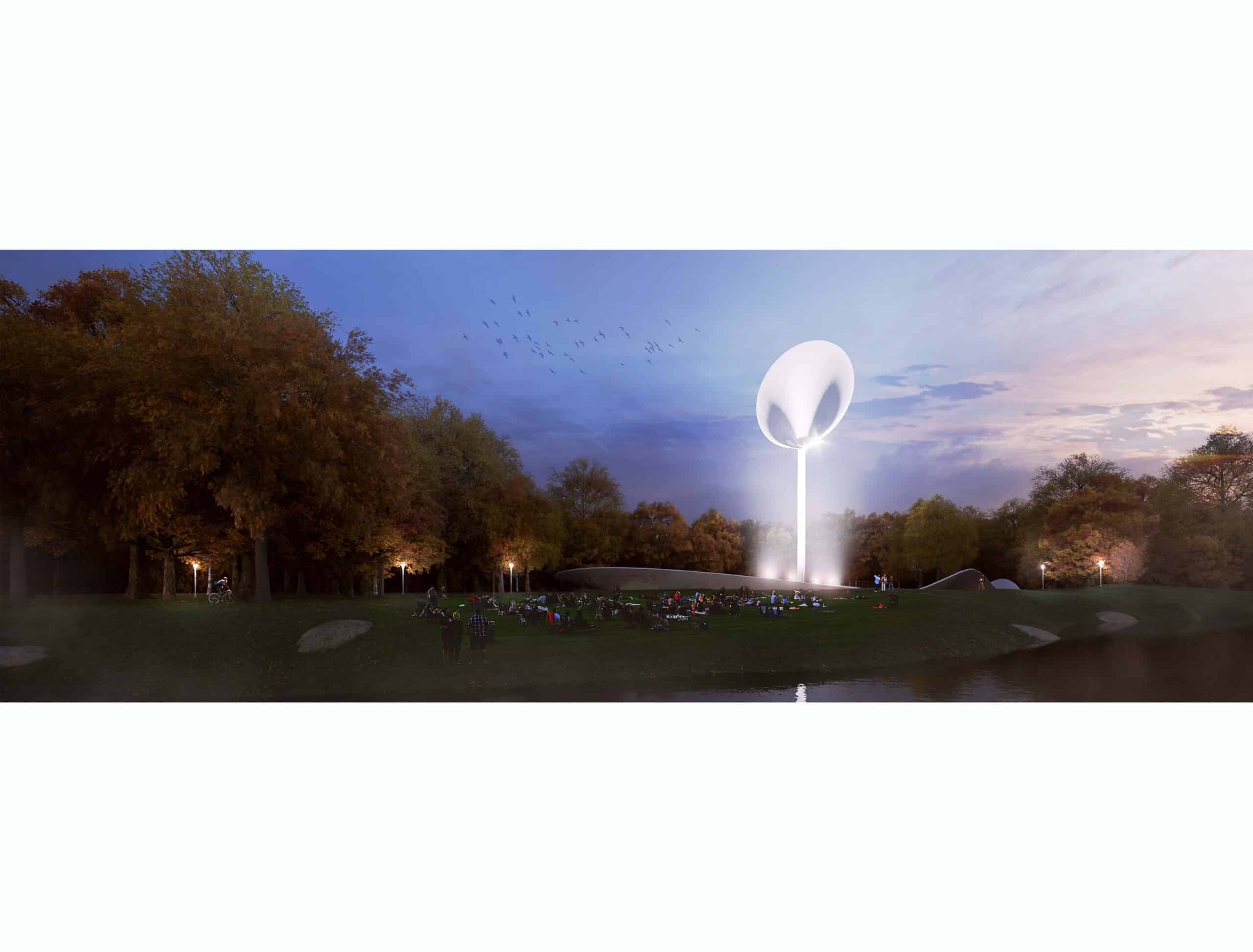
The circular dish surface serves three distinct programs without contradiction. During daylight hours it operates as a solar collector, its upper face carrying photovoltaic cells that supplement the energy produced by rotation. After dark it becomes a projection surface, activated for civic events, national occasions, and public gatherings. The continuous rotation ensures the structure never presents the same face twice from any fixed point on the street. Every approach, every glance from a passing vehicle, registers the dish at a different angle — parallel to the street in one moment, edge-on the next. This variability is not incidental. It is the architectural equivalent of the region’s own condition: a place that refuses to hold still.
The mast was designed with deliberate restraint. A lightweight, minimal body carries maximum program within a compact footprint. The structural economy serves the energy logic: less material weight means less resistance, and less resistance means more efficient rotation. Every reduction in the mast’s mass is a direct investment in the generator’s output. The simplicity of the silhouette is therefore not an aesthetic ambition but a mechanical one — the form is as lean as its function demands.

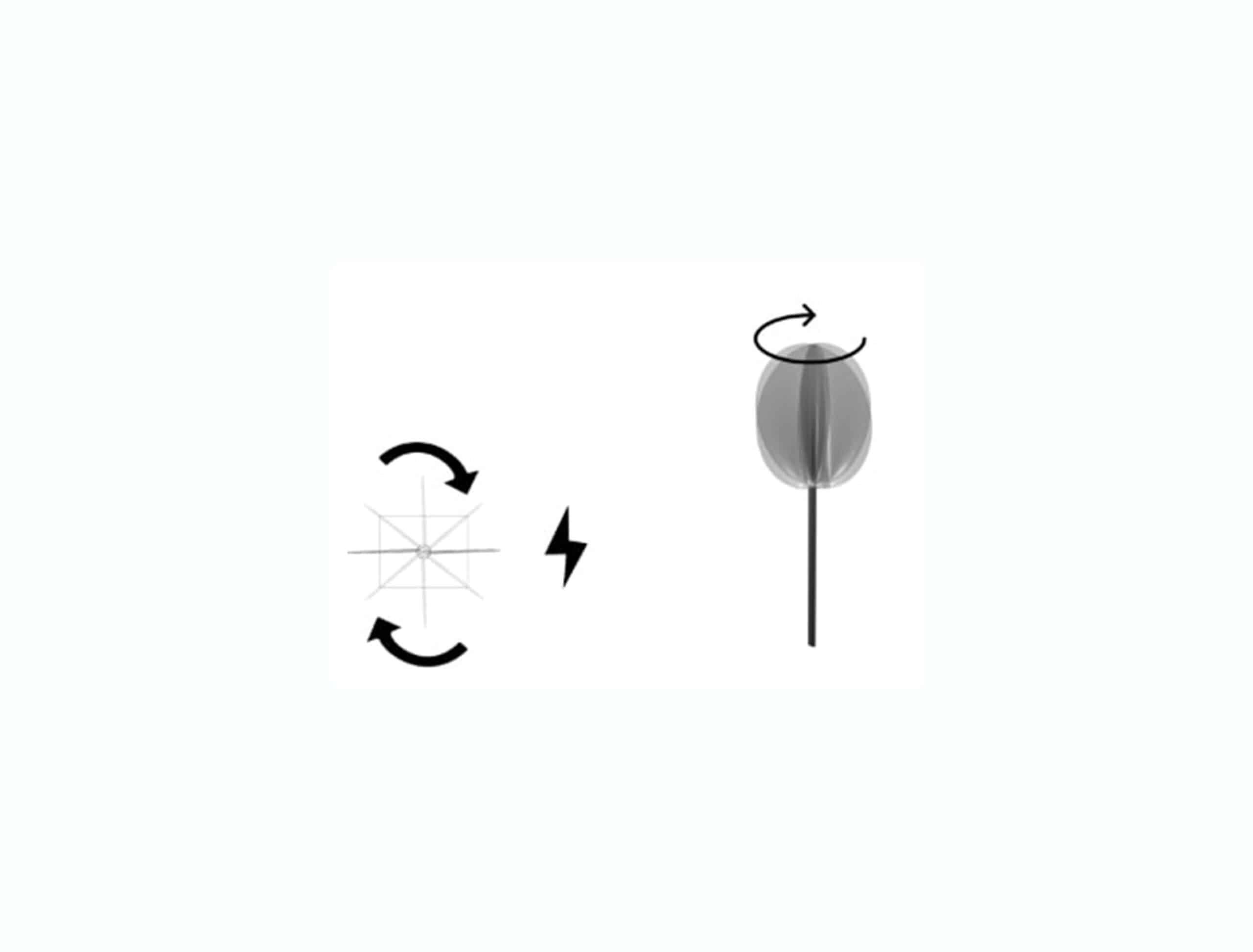
The economic argument embedded in this proposal is structural, not incidental. The tower is designed to recover its construction cost through energy generation — electricity fed back to the municipal grid offsets capital expenditure over time, converting a civic monument into a productive asset on the city’s balance sheet. This logic was not appended to the design after the formal decisions were made. It shaped those decisions from the beginning: the scale of the dish, the placement of the generator, the material economy of the mast. Every dimension follows from the question of return, and the return follows from the architecture itself.
The decision to contain the generator inside the mast rather than in a separate base structure reflects the same economy of means that governs the whole. The structural member that supports the dish also houses its mechanical infrastructure. The dish that produces rotational energy also carries photovoltaic cells and serves as an evening projection surface. No element performs a single function. This layering — of form, structure, energy harvest, and public program — is what separates the proposal from conventional landmark thinking, where visual identity and civic utility are treated as separate problems addressed in sequence. Here they are the same problem, answered once.
This project belongs to a body of research at INJ Architects concerned with architecture as active infrastructure rather than passive object — work that aligns with the principles developed under sustainability and the broader theoretical framework of Archigenetics. The methodologies that govern this type of research-driven proposal are detailed in how-we-work. For institutions and municipalities exploring similar approaches to public infrastructure, the engagement framework is outlined in bespoke-architecture.