
Tawaf In COVID-19
Tawaf Spatial Dynamics
This 2020 Tawaf study examines how movement paths, spacing and entry intervals can be represented within a geometric model of the Mataf. It was developed in the context of the pandemic and the resulting restrictions on gatherings.
The study treats the open area around the Kaaba as a circulation system. Direction, speed and the distance between participants are considered together, rather than describing capacity as a simple count of people within an area.
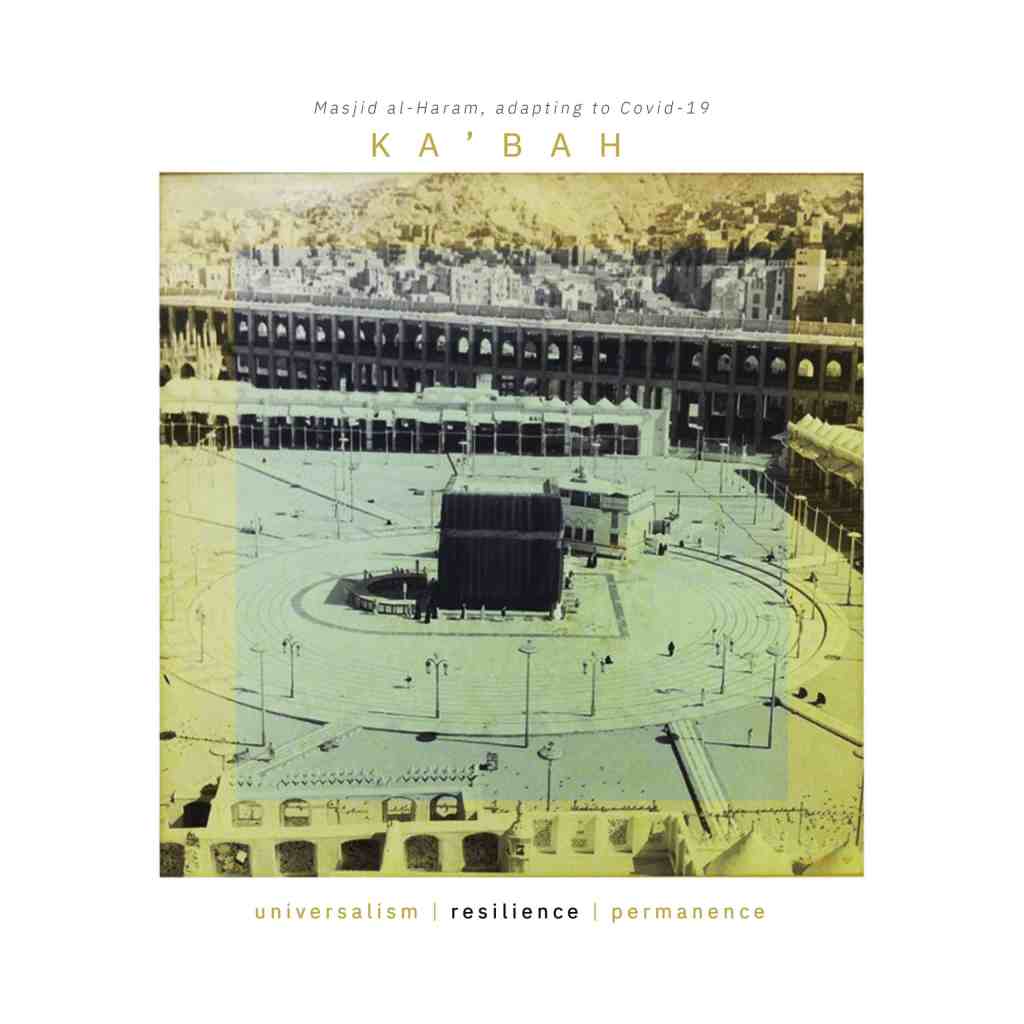
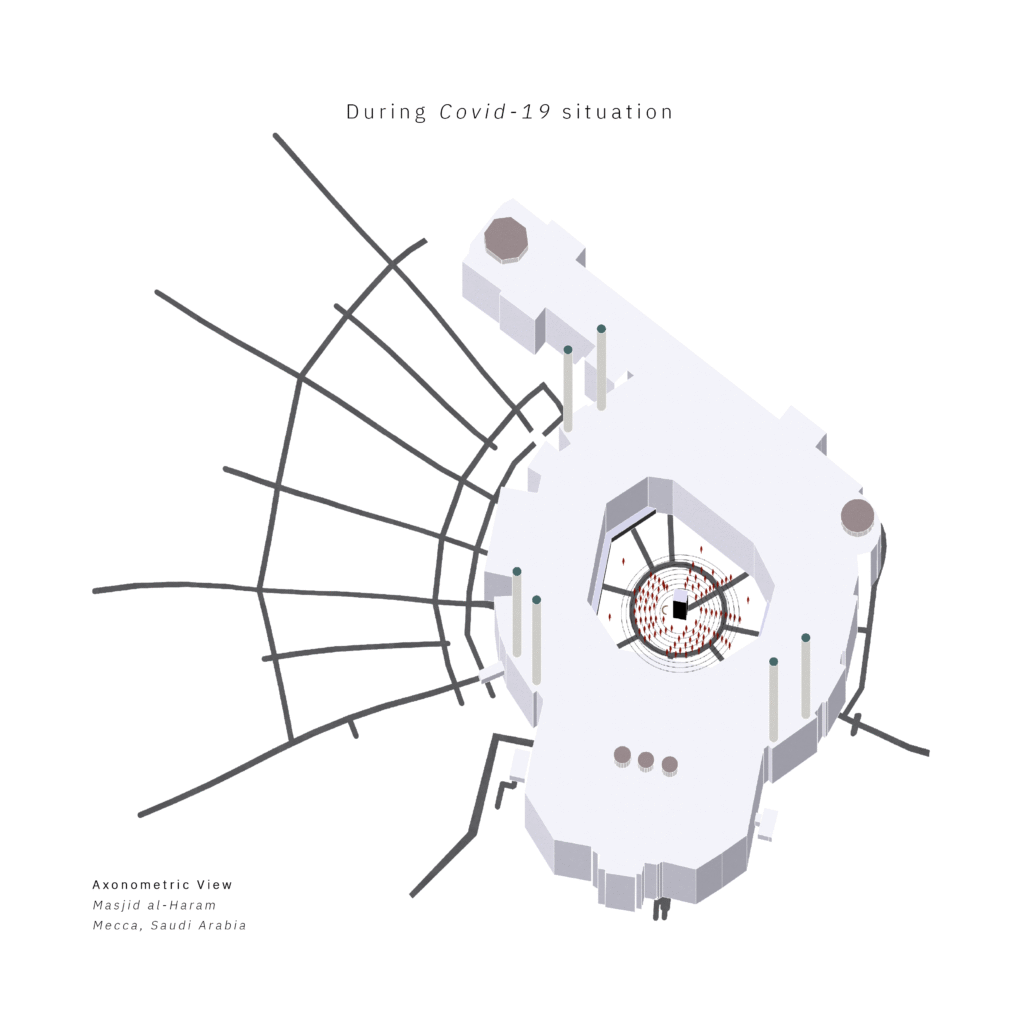
Proposed orbital paths are used to explore the separation of movement streams. The diagrams and animation illustrate a spatial hypothesis; they do not establish infection safety or replace operational crowd-management assessment.
The research considers how changes in entry timing and route geometry may influence the modelled flow. Any application would require validation against observed behaviour, emergency access and the requirements of the responsible authorities.
The accompanying animation presents the proposed distribution of movement around the Kaaba.
Historical images are included as context for the changing spatial setting of Tawaf. They are reference material, not documentation of the proposal’s implementation.
The study contributes a geometric approach to an operational question. Its conclusions should be read within the assumptions of the simulation, without implying that the proposal was adopted or that a mathematically defined route guarantees safety. Related references: How We Work · Bespoke Architecture
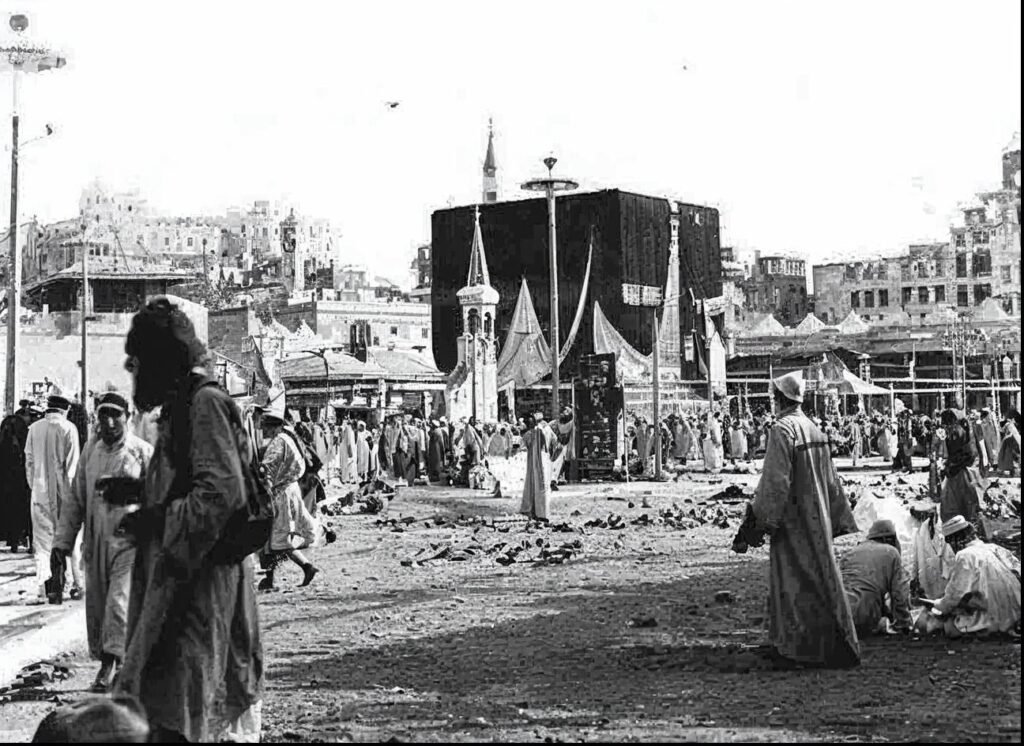
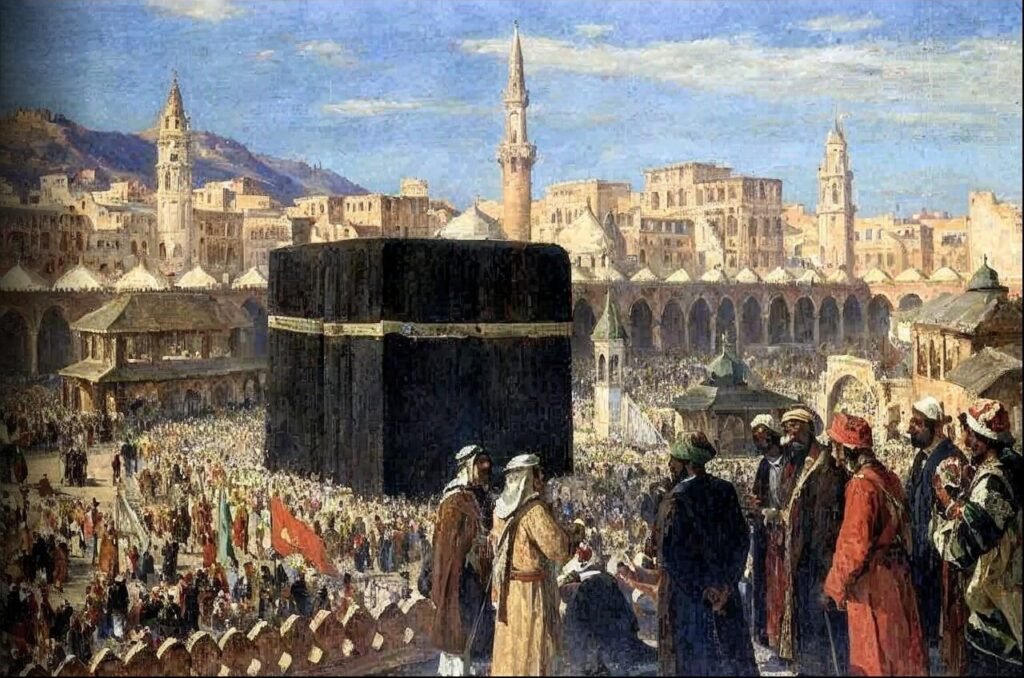
The pandemic forms the historical context of the proposal. The drawings remain a record of a design investigation undertaken in 2020, not guidance for present-day pilgrimage operations. Related project: Tourbanity.