Flooring is one of the most fundamental and visible elements in interior design, yet it is often chosen based on trends or surface aesthetics rather than performance and long‑term suitability. The right flooring affects comfort, acoustics, indoor air quality, maintenance effort, and budget. Wood, tile, carpet, and vinyl are among the most common options, each with strengths and limitations. This article explores each material deeply, compares them on key criteria, and provides practical guidance for real decision‑making in homes, offices, and public spaces.
Wood Flooring
Wood flooring is valued for warmth, natural character, and timeless appeal. It ranges from solid hardwood to engineered wood, each with distinct performance traits.
Durability and Performance
Wood is strong in everyday use, but susceptible to scratches, dents, and moisture damage if not properly specified. Solid hardwood can be sanded and refinished multiple times, extending its life. Engineered wood is more stable in humid environments because its layers resist expansion and contraction.
Cost
Wood is generally mid‑to‑high in upfront cost. Solid hardwood is typically more expensive than engineered options due to material and installation complexity. The cost also varies by species: dense, slow‑grown woods are pricier.
Maintenance
Wood requires regular sweeping or vacuuming and occasional polishing. Spills must be wiped quickly to avoid stains. Refinishing every few years helps maintain appearance, but this adds to lifecycle costs. Humidity control is important to minimize warping.
Comfort and Acoustics
Wood provides a comfortable underfoot feel and moderate warmth. It has better acoustic performance than tile or vinyl but less than carpet. Area rugs often complement wood floors to improve acoustics and comfort.
Best Use Cases
Wood works well in living rooms, bedrooms, dining areas, and spaces where warmth and timeless aesthetics are prioritized. It is less ideal for bathrooms or laundry rooms unless specially protected.
Tile Flooring
Tile includes ceramic, porcelain, and natural stone. It is widely used for its durability and water resistance.
Durability and Performance
Tile is extremely durable and highly resistant to wear, scratches, and moisture. Porcelain in particular is dense and less porous, making it suitable for wet areas. Natural stone offers distinct aesthetic but often requires sealing to protect against stains.
Cost
Tile ranges from budget‑friendly ceramic to high‑end natural stone. Installation cost is relatively high due to labor intensity, substrate preparation, and grouting.
Maintenance
Tiles are easy to clean with sweeping and damp mopping. Grout lines require periodic sealing and cleaning to prevent discoloration. Stone tiles may need more specialized care based on mineral composition.
Comfort and Acoustics
Tile is rigid and can feel cold underfoot. It also reflects sound, which can make spaces feel louder. Underfloor heating systems help improve comfort in colder climates.
Best Use Cases
Tiles are ideal for bathrooms, kitchens, entryways, and high‑traffic areas prone to moisture or spills. Porcelain is particularly popular in kitchens and commercial spaces.
Carpet Flooring
Carpet consists of fibers and backing materials, offering softness and acoustic control.
Durability and Performance
Carpet wears differently depending on fiber type, pile height, and density. High‑traffic areas may require low pile, dense carpets, while plush carpets are better for low‑traffic zones. Stains and wear patterns are concerns without regular maintenance.
Cost
Carpet has a wide cost range, from budget synthetic options to premium wool. Installation is generally affordable, but costs rise with padding quality and carpet complexity.
Maintenance
Carpet requires regular vacuuming and periodic deep cleaning. Spills should be addressed immediately to prevent staining. Dust and allergens can accumulate, so maintenance impacts indoor air quality.
Comfort and Acoustics
Carpet excels in comfort, providing softness and warmth underfoot. It absorbs sound and reduces echo, making it an excellent choice for bedrooms and lounges.
Best Use Cases
Carpet is best in bedrooms, living rooms, and areas where comfort and acoustics are priorities. It is generally avoided in wet or high‑spill zones.
Vinyl Flooring
Vinyl includes sheet vinyl, luxury vinyl planks, and tiles. Modern vinyl offers improved aesthetics and performance.
Durability and Performance
Vinyl is water‑resistant and flexible, making it versatile. Luxury vinyl plank (LVP) and tile (LVT) mimic wood and stone while providing greater water resistance. Quality varies, with thicker wear layers enhancing durability.
Cost
Vinyl is typically budget‑friendly. LVP and LVT cost more than basic sheet vinyl but remain more affordable than wood or premium tile. Installation is often simpler, reducing labor costs.
Maintenance
Vinyl is easy to maintain with sweeping and occasional damp mopping. It resists stains and moisture, making it low‑maintenance compared to wood and carpet.
Comfort and Acoustics
Vinyl feels softer underfoot than tile and often warmer. It does not absorb sound as well as carpet, but better than hard stone or porcelain. Underlayment can improve acoustics and comfort.
Best Use Cases
Vinyl is suitable for kitchens, bathrooms, basements, and rental housing where durability, ease of maintenance, and affordability are important.
Material Comparison
| Criterion | Wood | Tile | Carpet | Vinyl |
|---|---|---|---|---|
| Durability | High with care | Very high | Moderate varying by quality | High for quality products |
| Water resistance | Low | Very high | Low | High |
| Upfront cost | Mid‑to‑high | Variable, often high | Low to mid | Low to mid |
| Maintenance effort | Moderate | Low | High | Low |
| Comfort underfoot | Warm/medium | Cold/rigid | Very soft | Soft/medium |
| Acoustic control | Moderate | Low‑medium | High | Medium |
| Longevity | High with refinishing | Very high | Medium | Medium |
Choosing the Right Flooring for Your Space
Living Rooms
Wood enhances warmth and elegance. Carpet increases comfort and sound control. Vinyl can be a practical alternative when budget or moisture is a concern.
Bedrooms
Carpet and wood both work well. Carpet excels in comfort and sound absorption. Wood delivers durability and timeless appeal.
Kitchens
Tile and vinyl work best due to water resistance and ease of cleaning. Porcelain tile adds durability while vinyl simplifies maintenance and reduces slips.
Bathrooms
Tile is the preferred choice for wet conditions. Vinyl is a strong alternative if comfort and budget are priorities. Wood and carpet are generally avoided due to moisture risk.
Entryways and Hallways
Tile and vinyl stand up well to heavy foot traffic. Wood can be used if protected and maintained regularly.
Installation and Subfloor Considerations
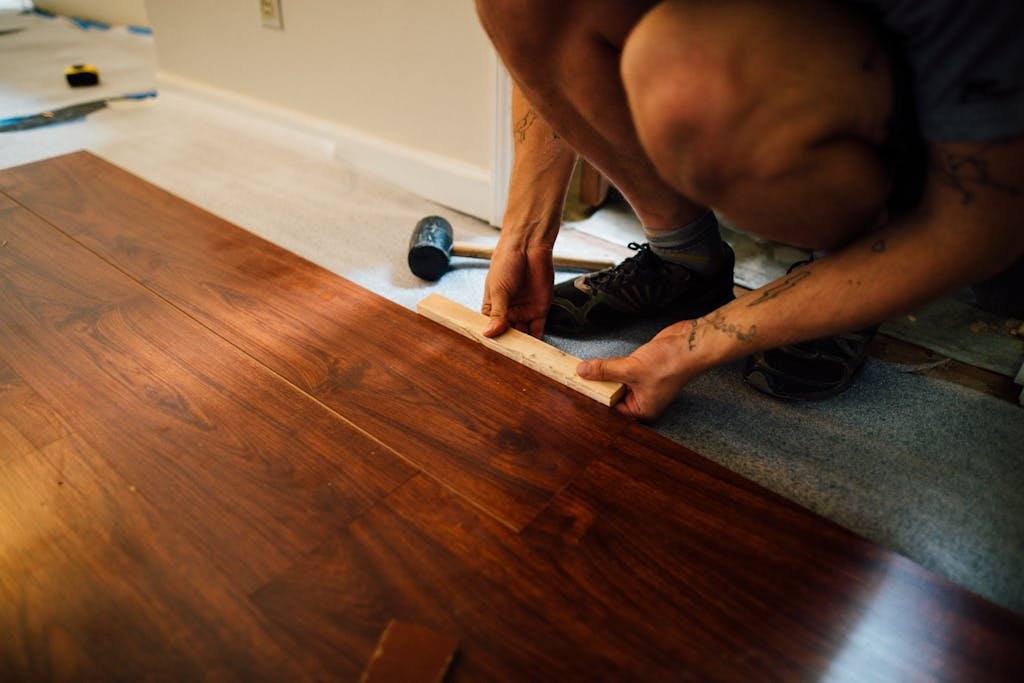
Proper installation affects performance. Wood and tile require stable subfloors with moisture barriers where needed. Carpet benefits from quality underpadding for comfort and durability. Vinyl’s flexibility makes it more forgiving on minor subfloor irregularities, but proper leveling still matters.
Long Term Value Considerations
Flooring is a long term investment. A material that looks good for a season but fails quickly increases lifetime costs. Think in terms of years or decades rather than months.
Wood floors can add resale value and are often viewed as desirable by buyers. Tile’s durability makes it a long‑lasting choice in active areas. Carpet’s comfort may appeal in specific rooms but requires more ongoing care. Vinyl’s practicality and affordability make it a sensible choice for budget‑conscious projects.
Practical Tips for Decision Making
Consider climate and moisture exposure when selecting materials.
Match flooring to daily activity patterns and lifestyle needs.
Factor in maintenance time and cleaning routines.
Balance upfront cost with longevity and lifecycle costs.
Remember that lighting, color, and furniture also influence how the flooring performs visually and spatially.
Conclusion
There is no universal “best” flooring. Each material has rightful places based on durability requirements, cost parameters, maintenance expectations, and comfort needs. Understanding the strengths and limitations of wood, tile, carpet, and vinyl empowers better decisions that improve both performance and long‑term satisfaction.
Summary
This article provides a comprehensive guide to choosing flooring by comparing wood, tile, carpet, and vinyl based on durability, water resistance, cost, maintenance, comfort, acoustics, and longevity. Wood offers warmth and timeless appeal but requires care and moisture control, while tile excels in durability and water resistance but can feel cold and rigid. Carpet provides softness and excellent acoustic performance but demands frequent maintenance, whereas vinyl balances affordability, water resistance, and low upkeep with moderate comfort. The article emphasizes selecting flooring according to room function, lifestyle, climate, and long‑term value, highlighting that the best choice depends on context rather than trends or aesthetics alone.