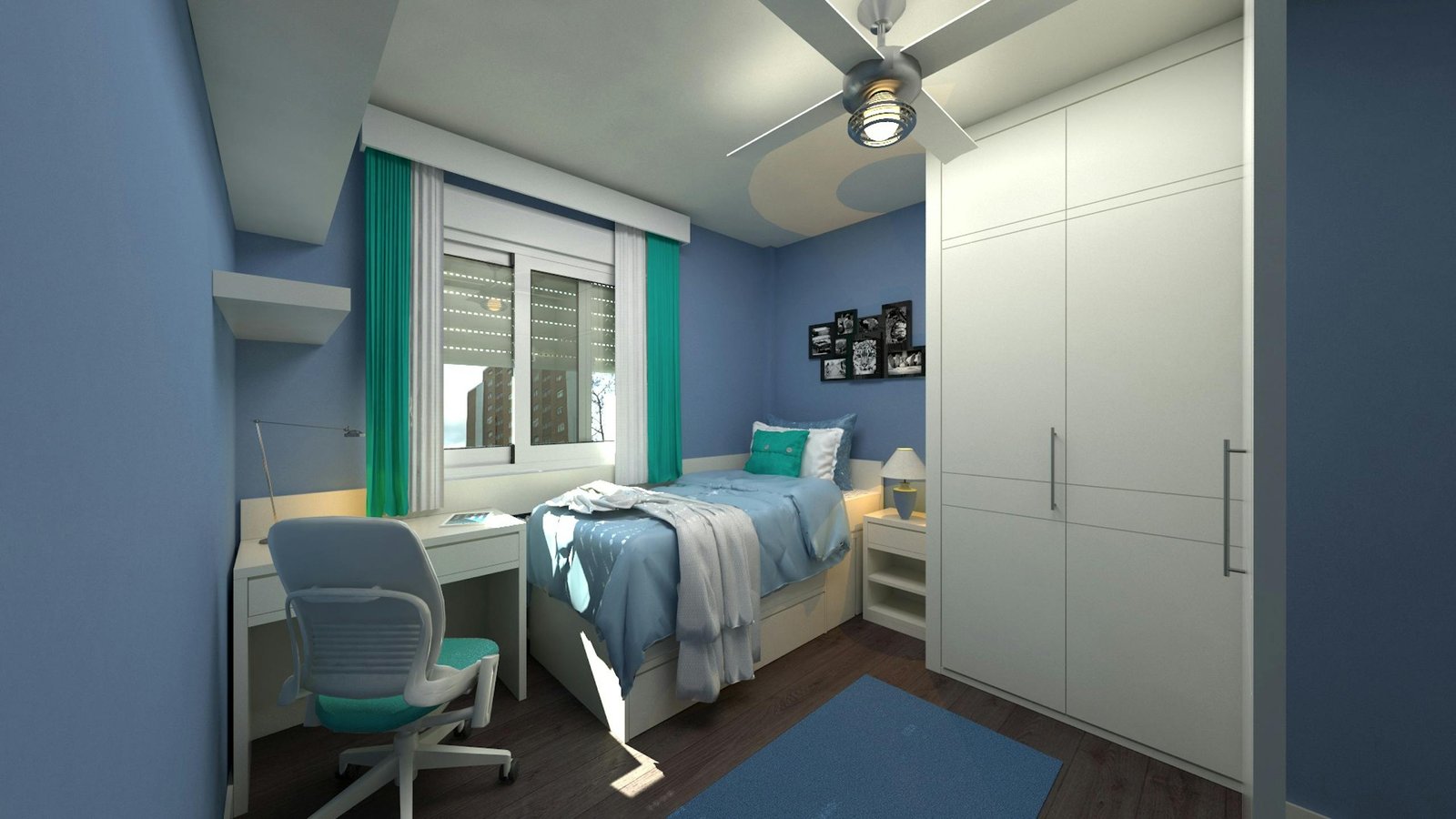
As urban living spaces continue to shrink, architects and interior designers are seeking innovative solutions to make small apartments, studios, and micro-offices functional without feeling cramped. One of the most promising approaches is gravity-shifted interiors — a concept where furniture and storage systems are designed to reorient vertically, horizontally, or even diagonally depending on user needs. By leveraging movement, foldability, and modular mechanics, these interiors transform limited square footage into highly adaptable, multifunctional environments.
The Concept of Gravity-Shifted Interiors
Gravity-shifted interiors are based on the principle of reconfigurable furniture and storage that can move along axes to optimize space usage. Unlike traditional furniture, which occupies a fixed footprint, gravity-shifted designs can pivot, rotate, or slide, allowing areas to serve multiple purposes at different times of day. For example, a wall-mounted bed can fold into the ceiling, while the same unit rotates downward to reveal a workspace or seating area.
This concept combines mechanical ingenuity, smart material use, and precise spatial planning. Designers must consider weight distribution, user ergonomics, safety, and structural support. When executed correctly, these interiors not only save space but also enhance the overall user experience, making small homes feel larger, flexible, and highly functional.
Types of Gravity-Shifted Furniture and Systems
Gravity-shifted furniture can be categorized based on the type of movement and functionality:
Table 1: Types of Gravity-Shifted Systems
| Type | Movement | Primary Function | Example Usage |
|---|---|---|---|
| Vertical Pivot Units | Rotates upward/downward | Transform bed to wall panel, storage to desk | Murphy beds that rotate into ceiling or wall compartments |
| Horizontal Slide Systems | Moves sideways along tracks | Create hidden storage, room dividers | Sliding shelving walls that double as partitions |
| Rotational Modules | 360° rotation on central axis | Switch functions of surfaces | Table surfaces that reveal seating or shelves |
| Foldable/Collapsible Units | Folds flat or compact | Maximize free floor area | Folding desks, chairs, or kitchen counters |
| Stacking and Telescopic Systems | Vertical stacking or extension | Expand storage or surface area | Telescopic kitchen islands or stacked shelving |
Design Considerations
Implementing gravity-shifted interiors requires careful attention to:
- Weight and Balance: All movable components must be engineered for stability, especially when elevated or pivoted.
- Material Selection: Lightweight metals, reinforced plywood, and composite materials reduce strain on pivot points and tracks.
- Safety Mechanisms: Counterweights, soft-close hinges, and lockable tracks prevent accidents.
- Ergonomics: Ensure all movements are intuitive, reachable, and comfortable for daily use.
- Integration: Electrical outlets, lighting, and ventilation must adapt to moving furniture.
Case Studies and Applications
Gravity-shifted furniture is ideal for various small-space scenarios:
Table 2: Applications of Gravity-Shifted Interiors
| Space Type | Implementation | Benefit |
|---|---|---|
| Micro-apartments | Murphy bed folds into wall; desk rotates from bed panel | Combines sleeping, working, and leisure areas efficiently |
| Studio apartments | Sliding partitions reveal hidden kitchen or closet | Maintains open space while providing functional separation |
| Small offices | Foldable desks and stacking storage | Quickly adapts layout for meetings or private work |
| Urban retail pop-ups | Rotating shelving and display units | Changes store layout without additional footprint |
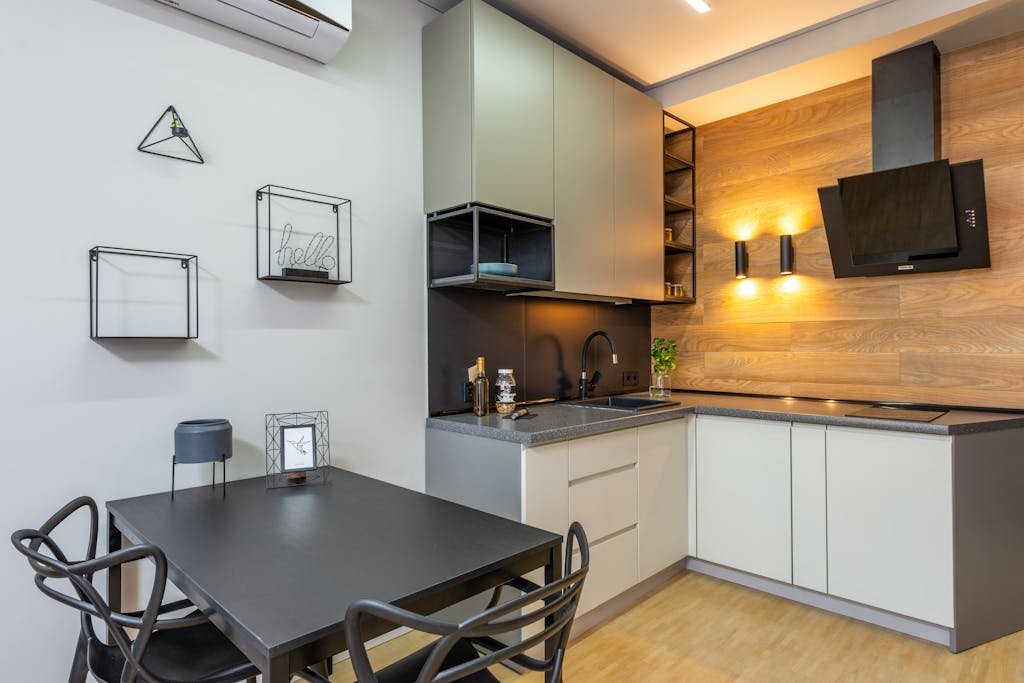
| Compact kitchens | Telescopic counters and movable cabinets | Increases working surfaces while maintaining circulation space |

Materials and Mechanisms
The effectiveness of gravity-shifted interiors depends on the combination of durable materials and precise mechanical systems:
- Lightweight Metals: Aluminum and steel frames provide structural support without excessive weight.
- High-Density Plywood and Laminates: Strong yet flexible panels for rotating or folding surfaces.
- Hydraulic or Pneumatic Systems: Smooth movement for heavy components like beds or cabinets.
- Sliding Tracks and Bearings: Ensures silent and durable horizontal motion.
- Smart Sensors: Optional technology to automate movement or provide safety alerts.
Psychological and Spatial Benefits
Beyond efficiency, gravity-shifted interiors enhance user experience in small spaces:
- Perceived Spaciousness: Reconfigurable furniture reduces clutter and opens up the floor plan.
- Flexibility: One room can serve multiple purposes: living, working, sleeping, or entertaining.
- Engagement: Interacting with adaptable furniture creates a dynamic, playful environment.
- Minimalism: Concealed storage and multifunctional surfaces support cleaner, simpler aesthetics.
Challenges and Solutions
Despite the benefits, implementing gravity-shifted interiors comes with challenges:
Table 3: Challenges and Design Solutions
| Challenge | Solution |
|---|---|
| High Initial Cost | Use modular kits or semi-custom units to reduce fabrication costs |
| Mechanical Failure Risk | Choose robust materials, regular maintenance, and quality hardware |
| Limited DIY Implementation | Provide clear installation guides or partner with specialists |
| Complexity of Automation | Start with manual pivot/fold systems before integrating sensors or motors |
| Safety Concerns | Install counterweights, locks, and soft-close mechanisms for user protection |
Future of Gravity-Shifted Interiors
As urban spaces shrink further, the future of interior design will heavily favor adaptable, gravity-shifted solutions. Integration with smart home technology, AI-assisted movement, and sensor-driven optimization will allow furniture and storage to move automatically based on time of day, user habits, or occupancy. Materials will evolve to become lighter, stronger, and more responsive, further enhancing flexibility.
Conclusion
Gravity-shifted interiors represent a paradigm shift in small-space design, offering a sophisticated balance between function, aesthetics, and spatial efficiency. By combining intelligent mechanisms, durable materials, and thoughtful ergonomics, these interiors allow compact living spaces to become versatile, comfortable, and engaging environments. As technology and materials continue to advance, gravity-shifted solutions are poised to become standard practice in urban residential and commercial design, redefining the way we interact with our interior spaces.
Summary
This article examines gravity-shifted interiors as a solution for maximizing functionality in small spaces. It explains how reconfigurable furniture—capable of pivoting, sliding, folding, or stacking—transforms limited square footage into multifunctional areas for living, working, sleeping, and entertaining. Key design considerations include weight distribution, material selection, safety mechanisms, and ergonomic integration. Case studies demonstrate applications in micro-apartments, studios, small offices, pop-up retail, and compact kitchens. The text highlights materials and mechanical systems, such as lightweight metals, high-density plywood, sliding tracks, and hydraulic supports, that enable smooth and durable operation. Psychological and spatial benefits include enhanced perceived spaciousness, flexibility, engagement, and minimalist aesthetics. Challenges like cost, mechanical failure, and complexity are addressed with modular design, robust materials, and safety solutions. Looking forward, the integration of smart home technology and AI-driven automation promises further evolution, positioning gravity-shifted interiors as a forward-thinking approach to adaptive urban living.