
Bahar Tower DWD
Detroit does not need another tower. It needs a reason to believe that the waterfront it lost can be reclaimed not through nostalgia but through architecture that earns its position on the skyline by understanding, precisely, what that skyline has become and what it needs to face.
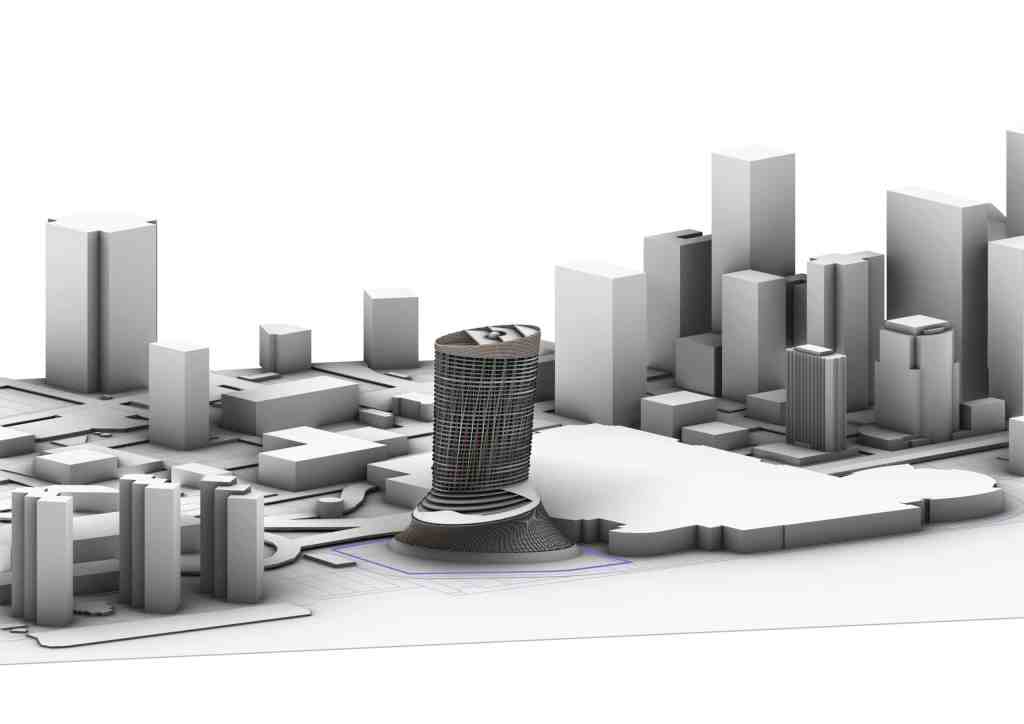
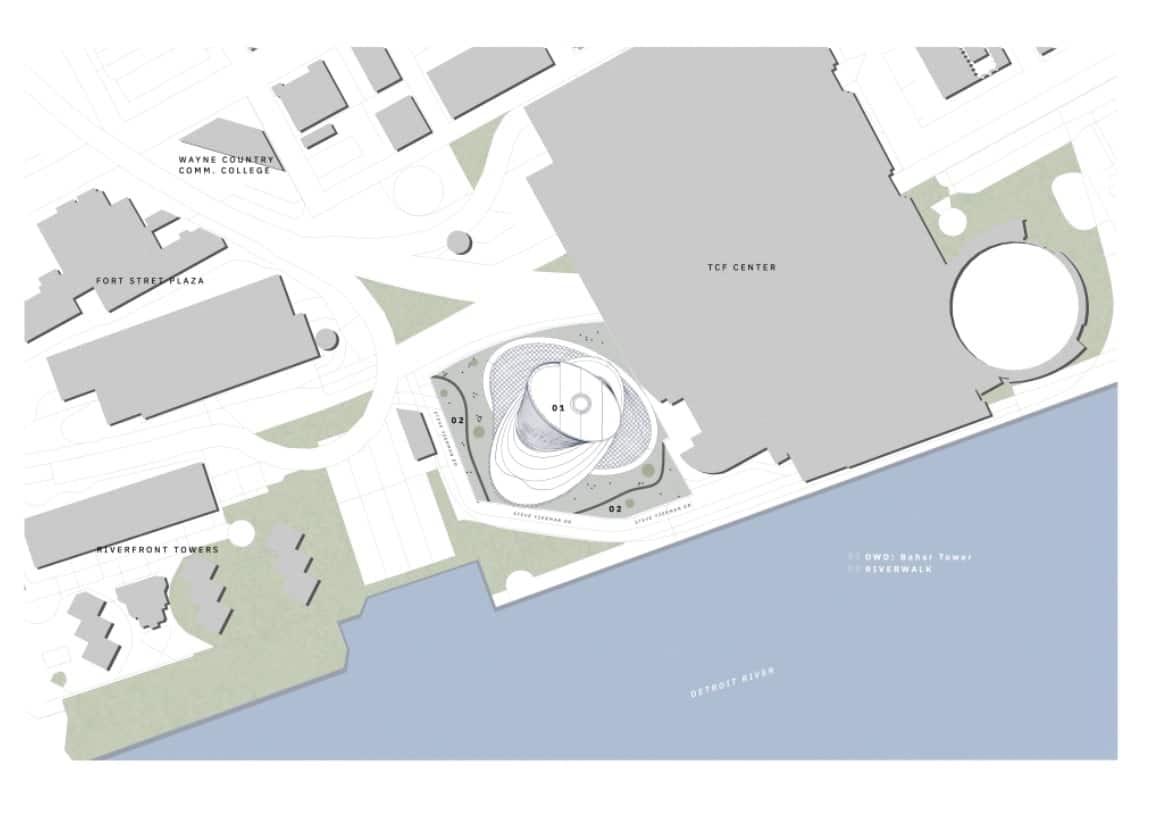
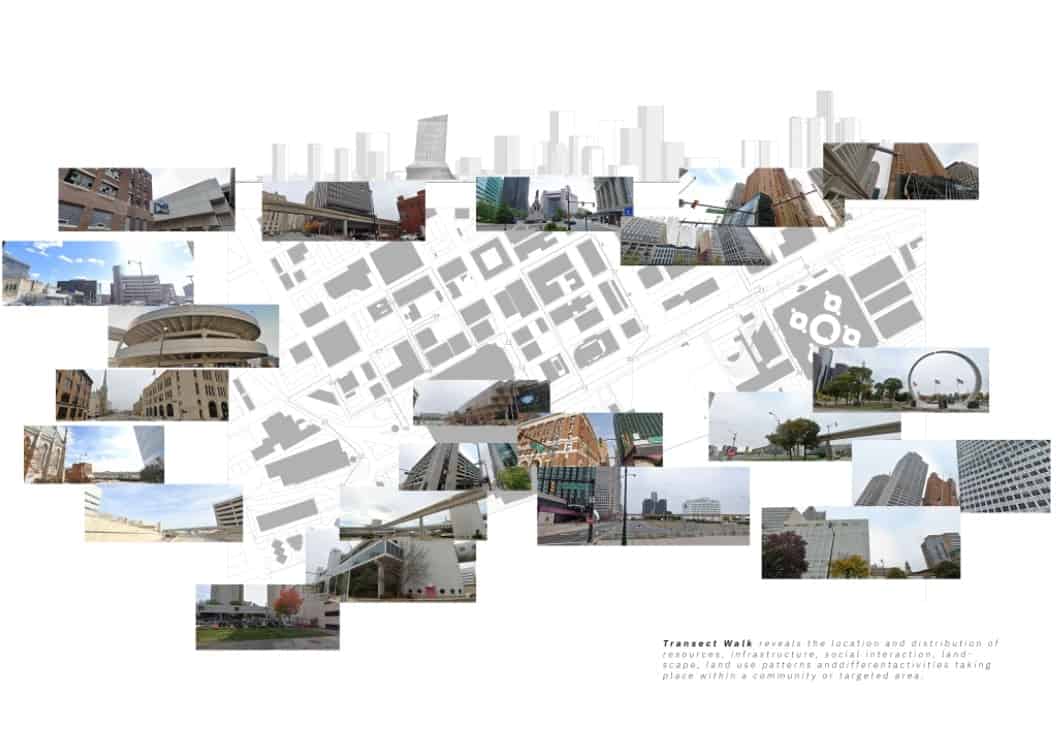
The Detroit Waterfront District carries a specific weight in the American urban imagination. A city once called the Paris of the West for its Beaux-Arts civic architecture, its wide boulevards, its industrial ambition underwent one of the most documented urban contractions in modern history. The DWD competition asked what responsible architectural investment looks like in that context. The proposal did not begin with a form. It began with a dataset: climatic conditions, solar angles, wind patterns, and a panoramic analysis of the views available from the site toward the river and toward the city. The oval plan of Bahar Tower is the physical record of that analysis.
Location          Detroit Waterfront District, USA
Client            DWD
Type              Mixed-Use Residential Tower — Competition Entry
Status            Competition Mention
Year              2021
Principal         Ibrahim Nawaf Joharji
Scope             Parametric Design, Environmental Analysis, Urban Integration
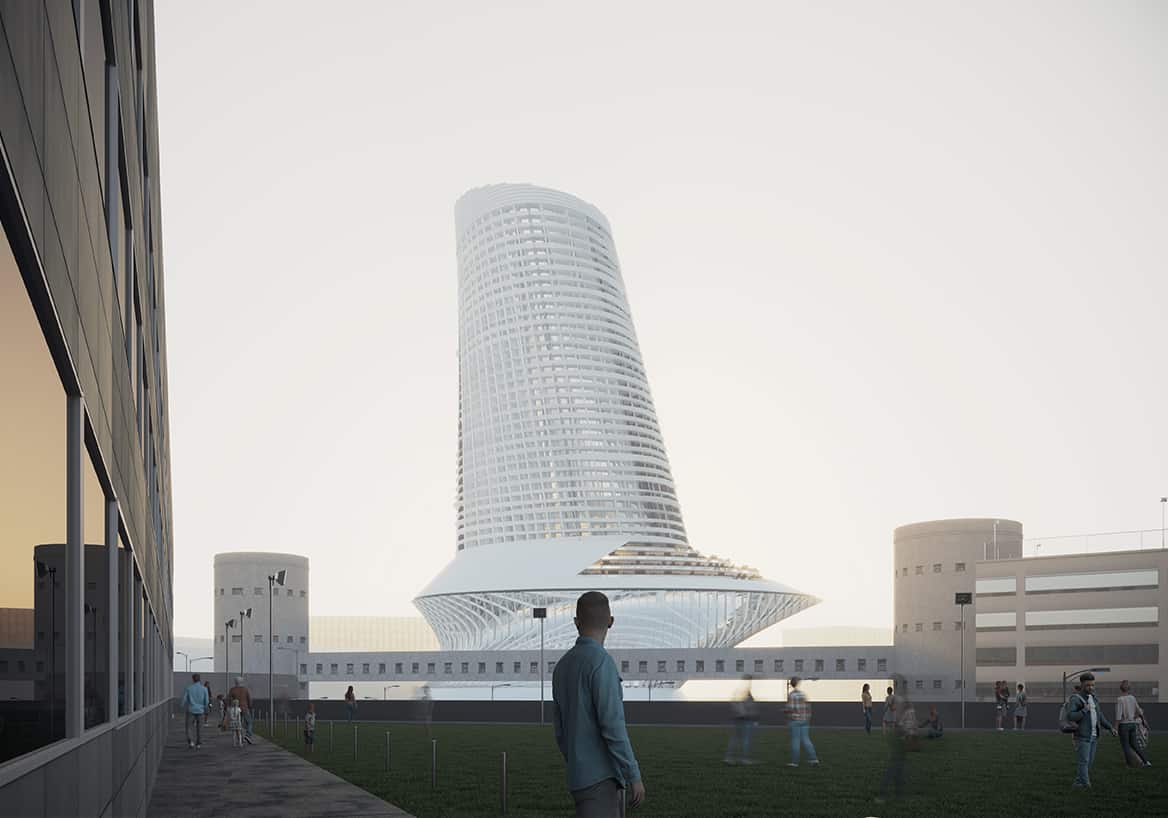
The DWD: Bahar Tower, located in Detroit’s Waterfront District, is a symbol of the city’s resurgence. Named after the word “Bahar,” meaning “prime of life,” “spring,” or “bloom of youth,” this tower is designed to be a powerful international attraction, driving population growth and investment in Detroit. The project, which won a Mention in an international architecture competition, is a blend of parametric design, modern architecture, and cutting-edge sustainability practices.
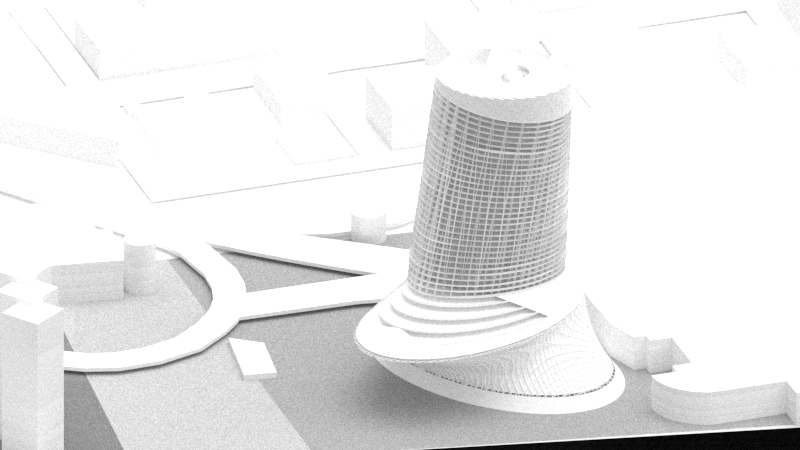
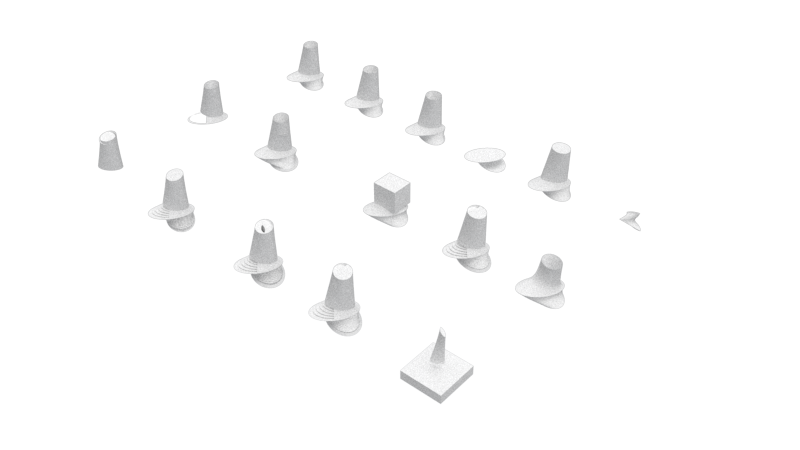
The name Bahar carries three meanings in Arabic: the prime of life, the season of spring, and the bloom of youth. All three were chosen deliberately for a city in the process of reinventing its relationship to its own potential. The tower was conceived as an instrument of urban regeneration not through symbolic gesture but through programmatic and environmental precision. The word also carries the meaning of sea and open water, anchoring the project to its waterfront condition before a single line was drawn.
The generating process worked outward from environmental data. Radiation analysis, thermal comfort modeling, and wind tunnel studies were run against the site conditions before any massing decision was made. The panoramic analysis mapped which directions carried the most significant views — toward the Detroit River, toward the city core, toward the open horizon of the waterfront district and assigned programmatic weight to each orientation. The oval plan emerged from this mapping as an organic resolution: its longer axis orients toward the river panorama, its curved faces turning away from the harshest solar exposure while maximizing the glazed surfaces that face the most valuable views. Every expansion and contraction in the building’s section follows the same logic. Where the panorama opens, the floor plates widen and the facade steps outward. Where the view closes or the solar load increases, the section pulls back. The form is not designed to look organic. It is organic because it is the direct physical consequence of the data that shaped it.
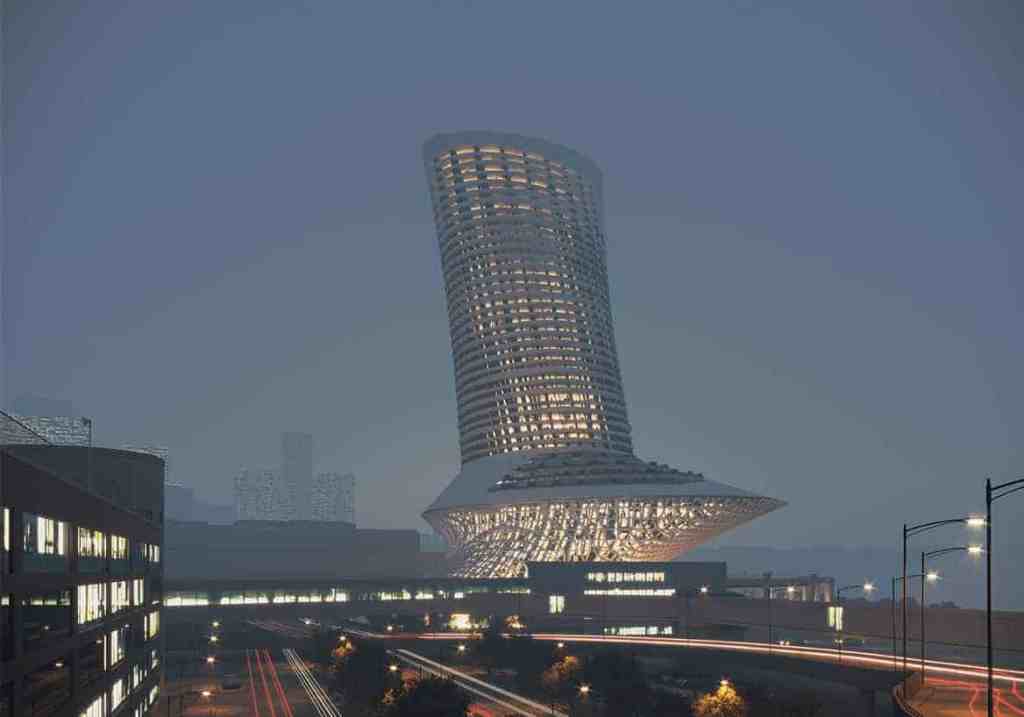
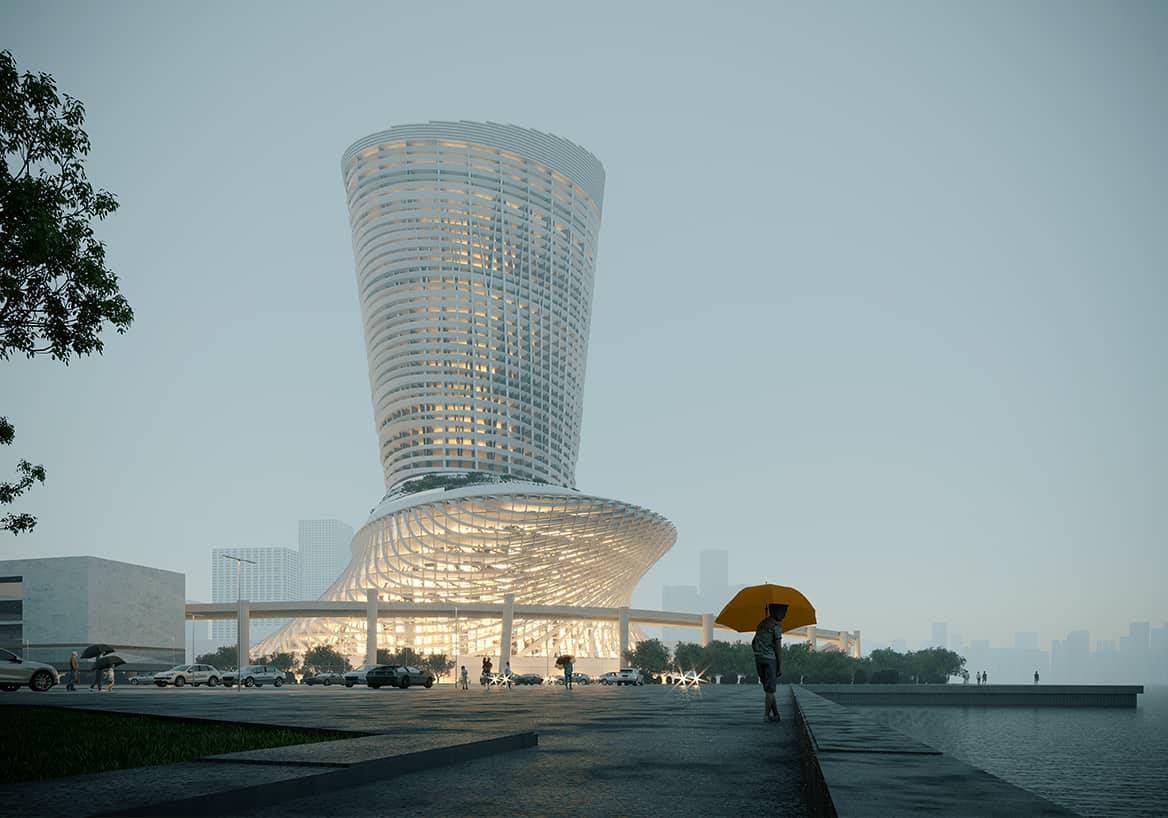
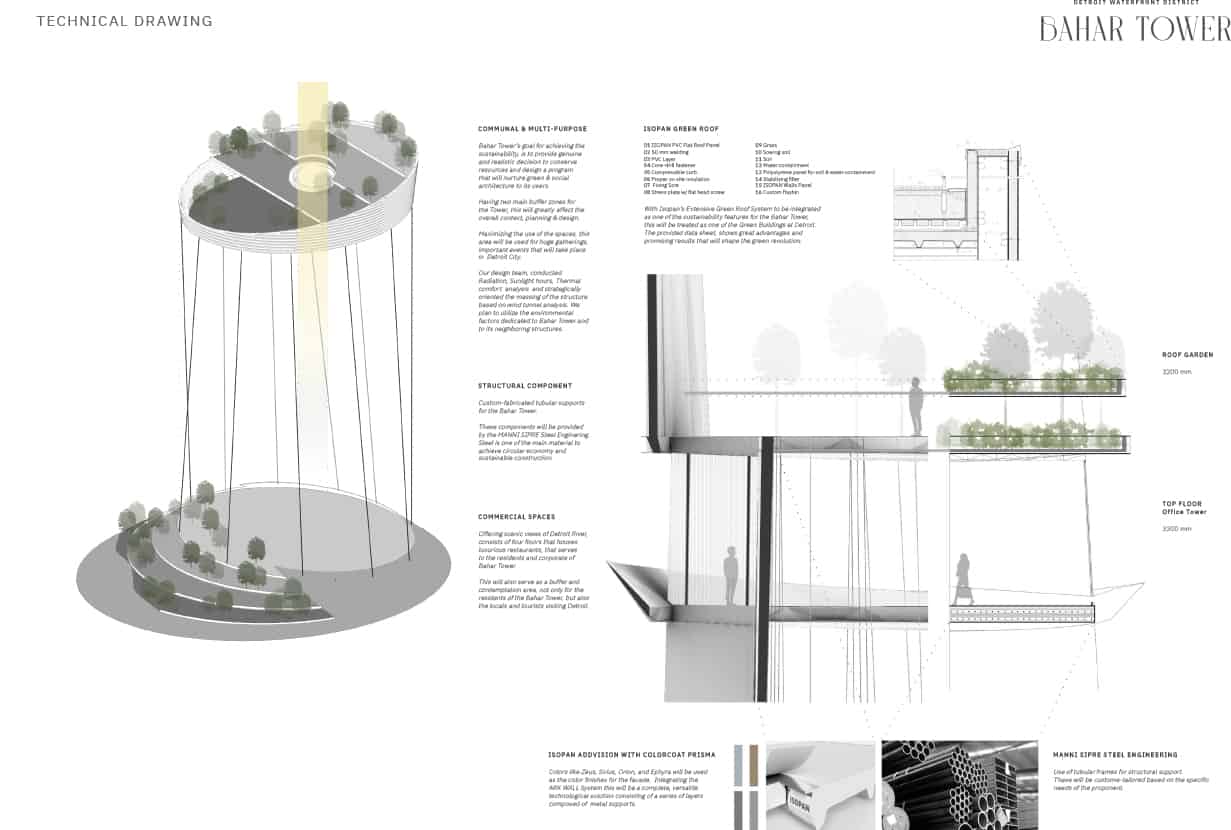
The facade system was developed in parallel with the massing. Isopan ArkWall panels form the exterior gill elements curved, directional fins that respond to the solar envelope the analysis produced. These are not decorative louvers applied to a resolved facade. They are the facade’s structural argument: each gill positioned at the angle dictated by the radiation study for its specific floor level and orientation. The Isopan Addvision color coat provides UV and corrosion resistance suited to the waterfront’s climate, where the combination of lake-effect weather and industrial atmospheric residue creates a demanding material environment. The long-term performance logic of the material selection follows the same discipline as the environmental logic of the form: every decision is a calculation, not a preference.
The structural system uses light steel framing a material choice aligned with circular economy principles, given steel’s capacity for recovery and reuse at end of life. The rooftop carries an Iso Green Roof system, extending the habitable landscape upward and contributing to thermal insulation, rainwater management, and acoustic performance across the upper floors. The green roof is not an environmental credit appended to a conventional building. It is the logical terminus of a design that treated the site’s ecological relationship as a primary brief from the first analysis forward.
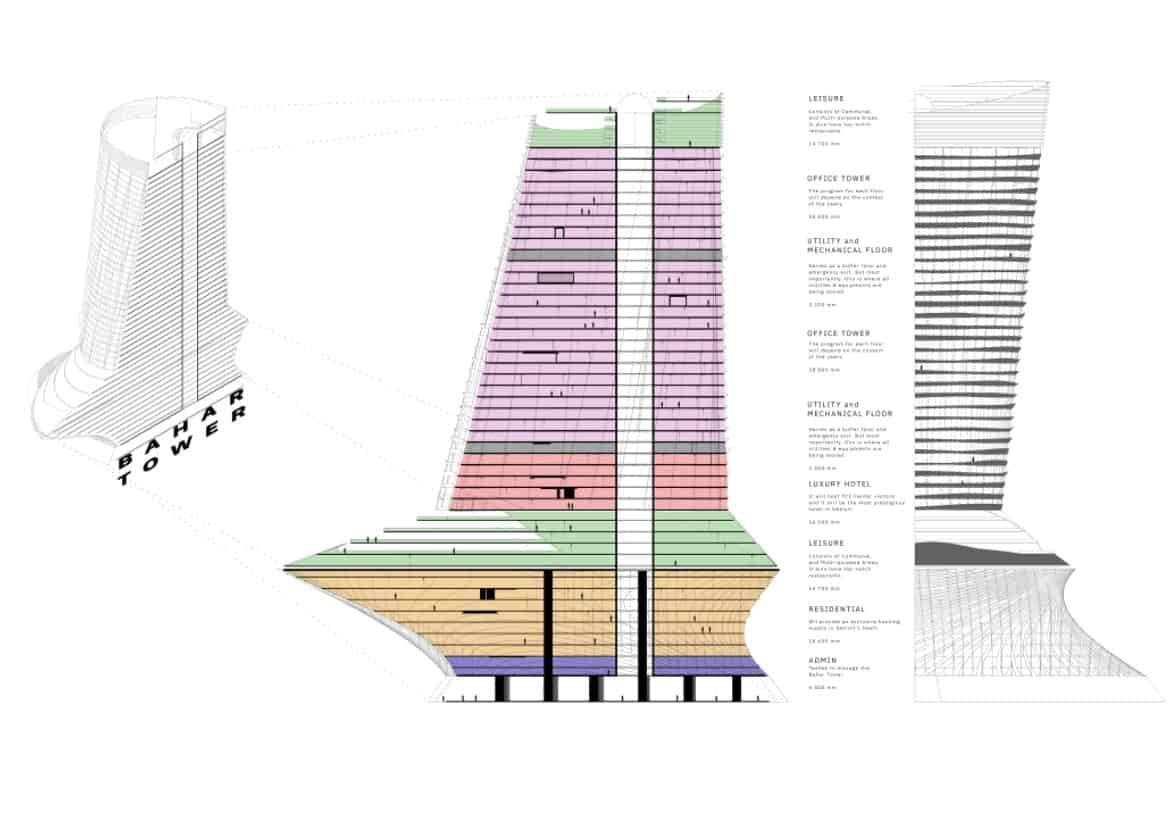
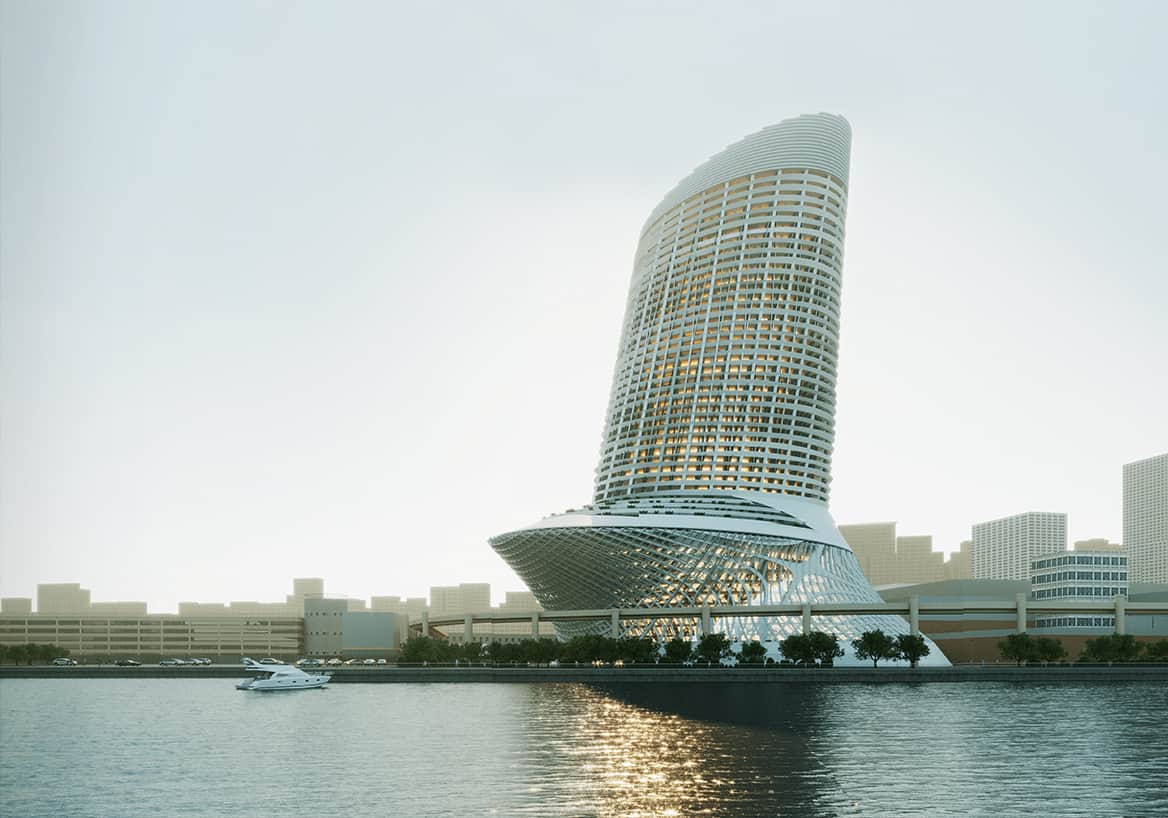
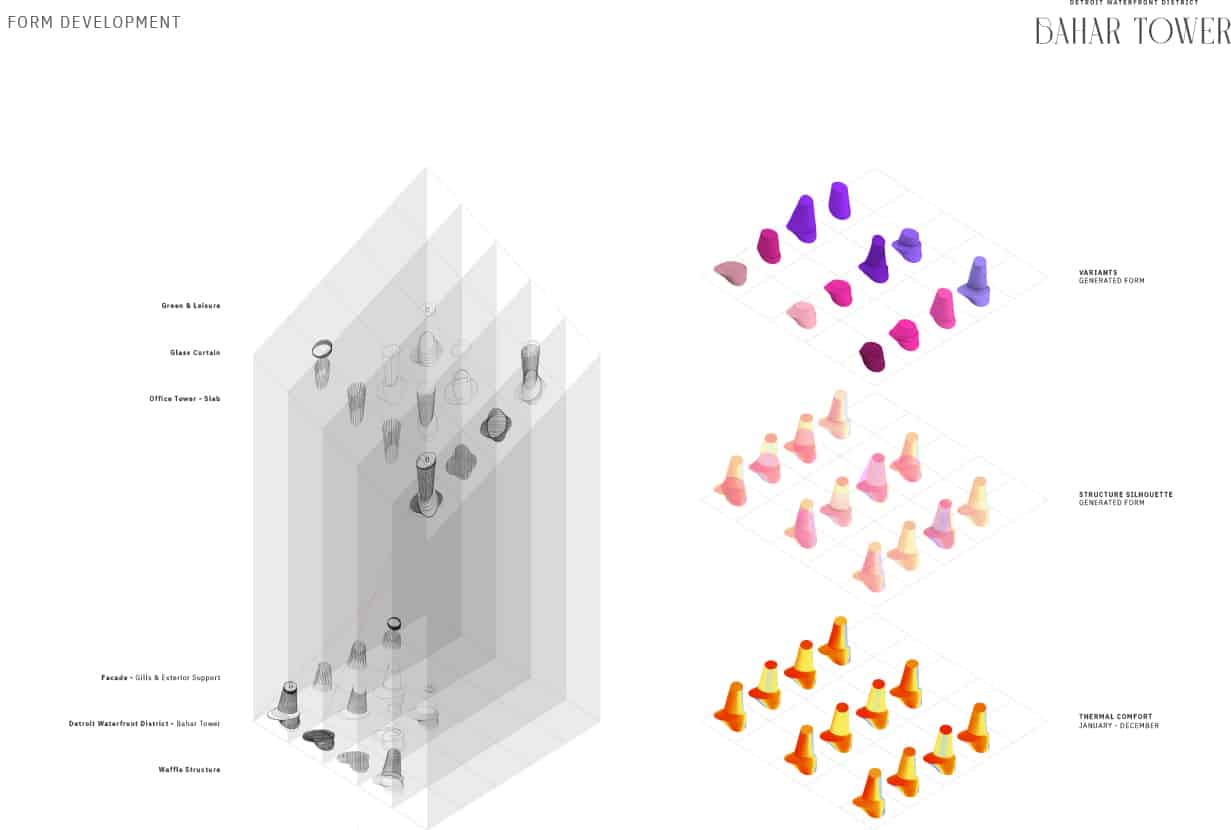
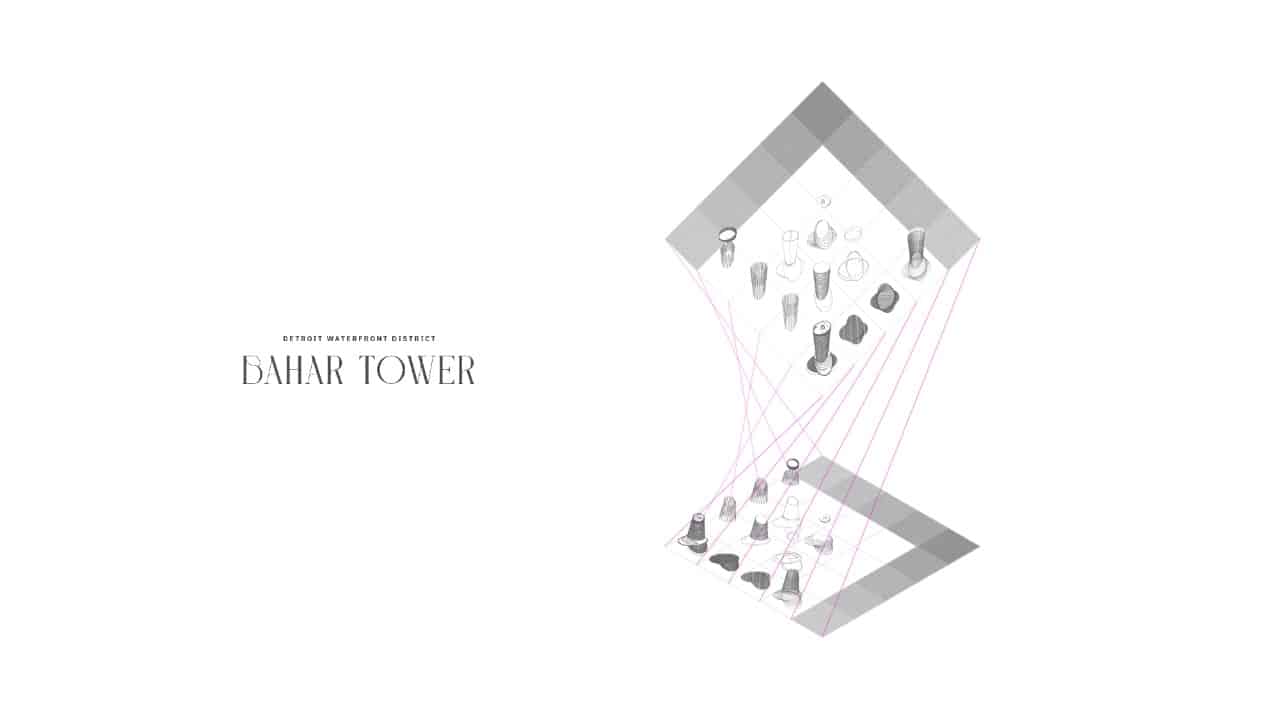
Bahar Tower received a mention in the international DWD competition. The design methodology that produced it beginning with environmental data and allowing form to emerge as analytical consequence rather than aesthetic decision is part of a sustained research approach at INJ Architects detailed in how-we-work. The environmental framework underpinning the tower’s material and structural decisions is outlined further under sustainability. For developers and institutions considering commissions that demand the same depth of environmental and programmatic analysis, the engagement framework is available through bespoke-architecture.