LAVA Restaurant
A dining space should not merely house a culinary experience; it must actively engage the senses that taste cannot reach. The genesis of this project was not a menu or a hospitality brief, but the tectonic violence and chemical geometry of volcanic earth. It operates on the premise that architecture must rival the intensity of the landscape it occupies.
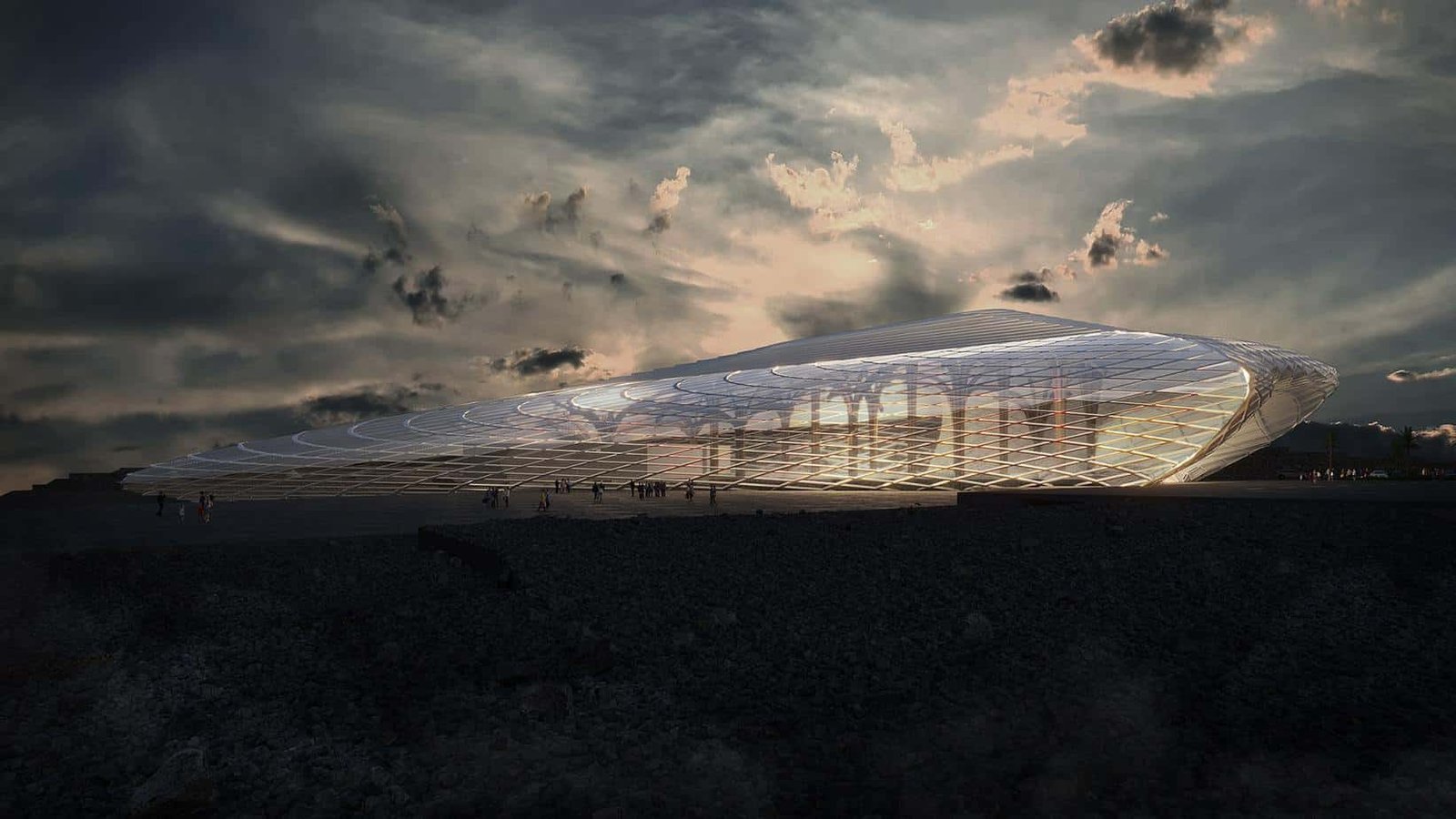
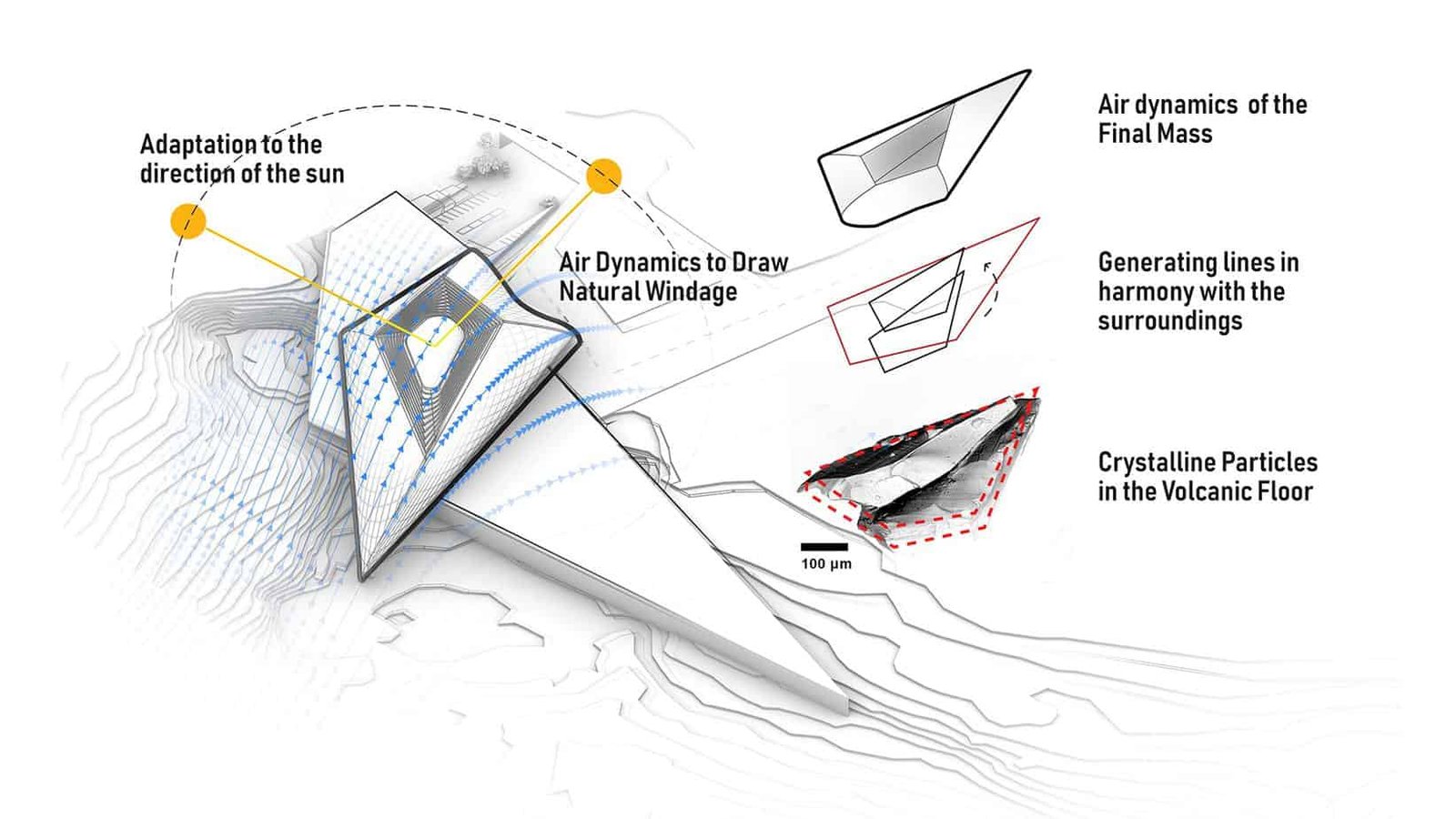
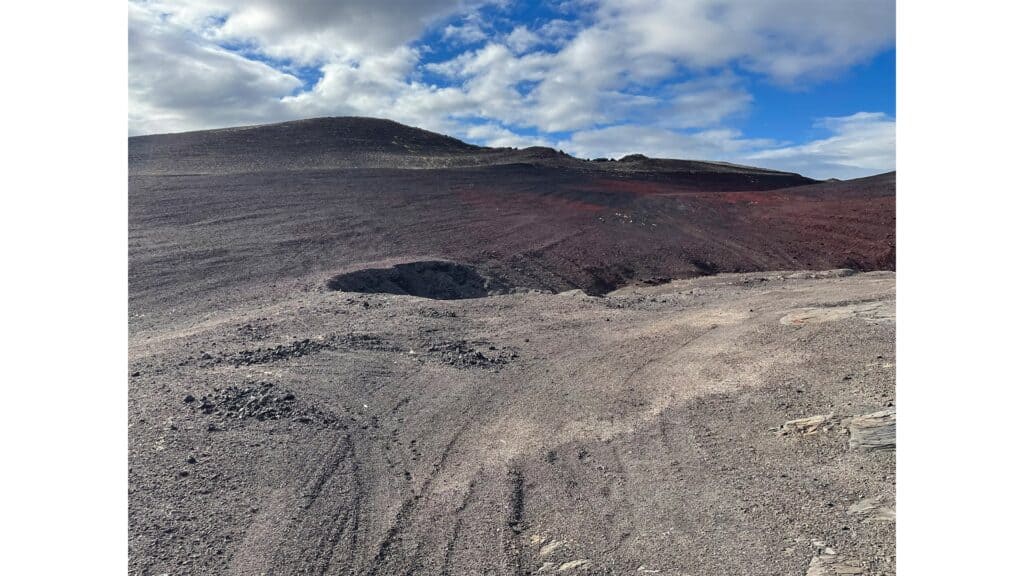
The site demanded a structural shift in the interaction between the built environment and natural topography. Lava forms landmasses but also disrupts them; the design needed to inhabit this tension. Rather than passively blending into the terrain, the massing confronts the slope with an organic, sharp-angled formation that mimics the geologic history of its site. The architecture becomes a physical manifestation of chemical synthesis, translating the crystalline particles of volcanic minerals into a precise geometric framework.
Type              Hospitality & Dining
Capacity          100-seat dining, 55-vehicle infrastructure
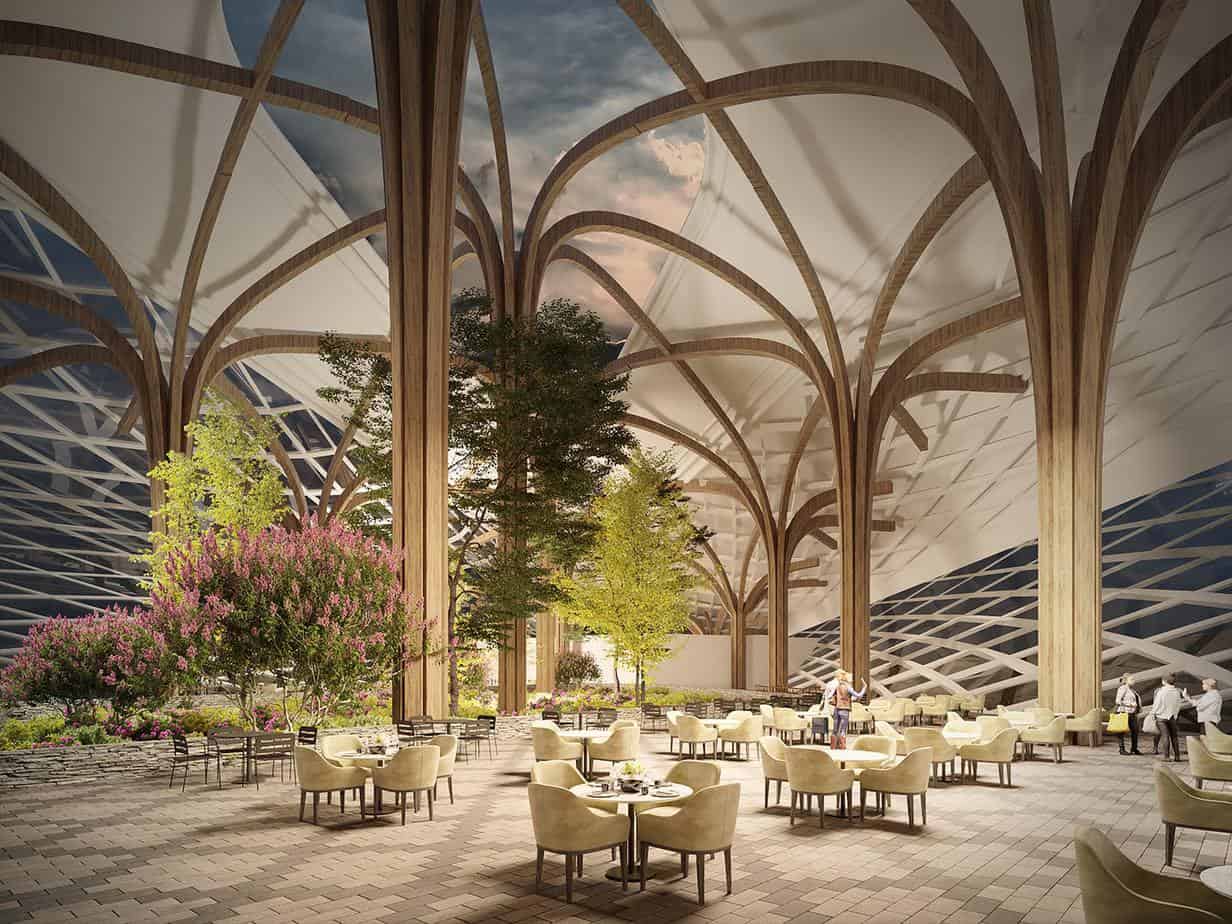
Program           Dining hall, multipurpose space, integrated greenhouse
Principal         Ibrahim Nawaf Joharji
Design Logic      Crystalline volcanic geometry, aerodynamic massing
The thing that represents the power of chemical molecules to synthesize the materials and properties of minerals from the earth.
Environmental pressures directly dictated the exterior form. The aerodynamic envelope is calibrated to manage high-altitude wind currents, directing airflow over the crest of the building to disperse potential carbon emissions. A suspended angular volume projects outward, designed specifically to capture fresh updrafts from the slope. The roof incorporates precision apertures that draw calculated amounts of natural daylight and ventilation, adapting the internal climate to the shifting trajectory of the sun.
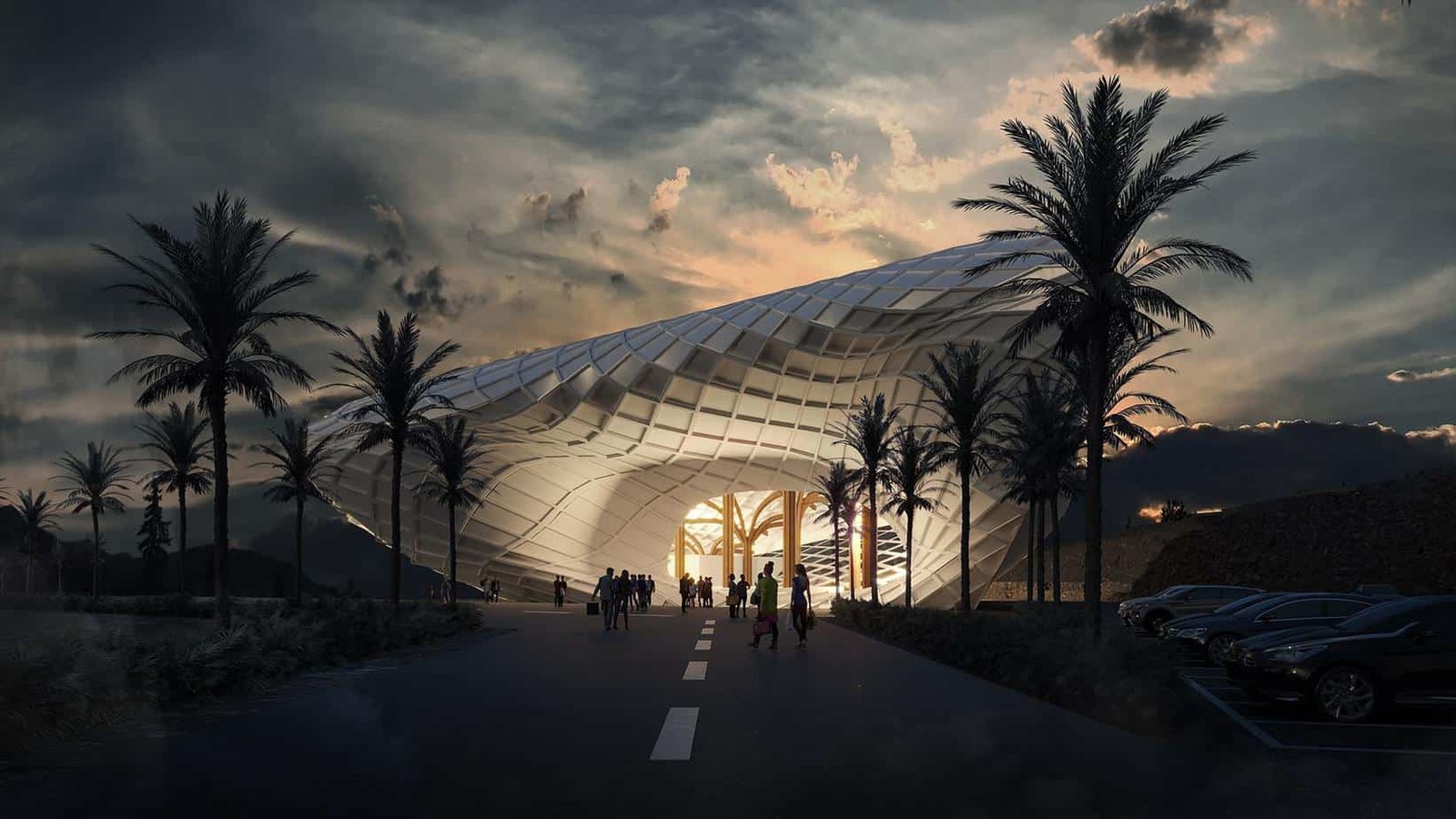
Programmatically, the structure absorbs a 100-seat dining room, a multipurpose hall, a commercial kitchen, and an integrated greenhouse within a single continuous envelope. The spatial sequence is treated as a tactile threshold. While culinary elements target a single human sense, the geometric voids, sharp approaches, and volumetric compression of the architecture are engineered to activate all others. The building forces the visitor to recognize the complex topography of the mountain before ever encountering the primary function of the space.
The Lava Restaurant project argues that hospitality architecture must transcend its role as a neutral container. By forcing the spatial geometry to operate on multiple sensory registers simultaneously, the structure competes with—and elevates—the programmatic experience. The aggressive, crystalline massing functions as both a climatic device and a psychological threshold, proving that organic architecture need not be soft to be contextually responsive.
This method of deriving architectural form from localized geological and aerodynamic conditions is a core component of the office’s spatial strategy, further documented in How We Work. The integration of complex structural geometries to resolve environmental and experiential demands represents a specific approach to specialized environments. For inquiries regarding site-specific interventions in challenging topographies, the engagement protocol is outlined in Start a Project.