
Architecture can be understood not as isolated objects but as dynamic systems of interaction. Every surface, volume, and opening plays a role in mediating forces such as light, air, sound, and human movement. This perspective shifts design from static composition to relational systems, where form, function, and environment continuously influence each other.
Human Behavior and Spatial Networks
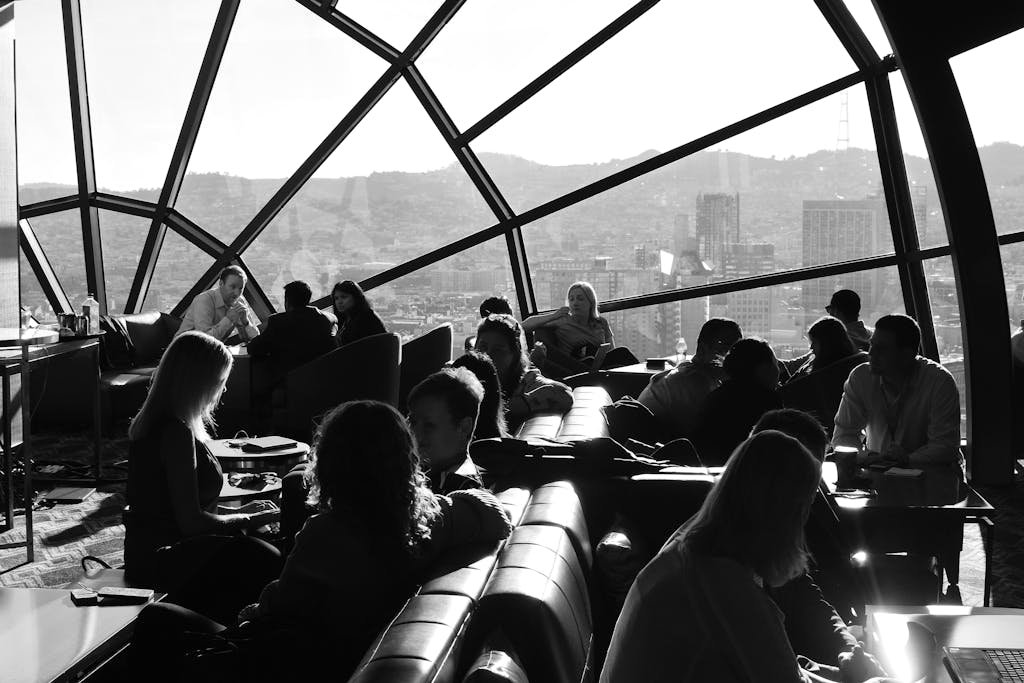
Human movement and perception are central to understanding interactions in architecture. The placement of thresholds, corridors, and openings creates pathways that subtly guide motion. Variations in ceiling height, floor texture, and lighting intensity influence pace, focus, and psychological response. Spaces are not merely traversed; they communicate patterns of interaction.
| Spatial Element | Interaction Function | Behavioral Influence |
|---|---|---|
| Wall surfaces | Modulate sound and guide movement | Encourage pauses or redirect flow |
| Windows | Control daylight, frame views | Influence attention and mood |
| Floors | Channel movement and circulation | Accelerate or decelerate human motion |
| Ceilings | Reflect light and define volume | Affect perception of scale and openness |

Environmental Interactions
Buildings interact with environmental forces in ways that extend beyond simple shelter. Airflow, temperature gradients, and daylight patterns form continuous feedback loops with internal spatial arrangements. Openings, voids, and surface treatments can amplify or mitigate these forces, creating micro-environments that support comfort and energy efficiency.
| Environmental Factor | Architectural Response | Resulting Effect |
|---|---|---|
| Airflow | Placement of vents and voids | Natural ventilation and thermal comfort |
| Light | Orientation of openings and shading | Dynamic interior illumination |
| Acoustics | Surface texture and material choice | Controlled reverberation and privacy |
| Temperature | Thermal mass and ventilation | Spatial microclimates |
Designing Relational Architecture
Designing architecture as a network requires a shift from object-centered thinking to system-based thinking. Each element must be considered for its influence on surrounding components and on the experience of occupants. Minor changes ripple through the network, demonstrating how sensitive architecture is to interdependence. A single wall or window can alter sound, light, and movement across multiple spaces simultaneously.
Implications for Architectural Practice
This approach challenges conventional notions of hierarchy, function, and form. Architecture becomes an active participant in shaping behavior and environmental response. Designers must consider not only materials and structure but the complex relationships between space, movement, perception, and environmental forces. The building becomes a living system rather than a static artifact, emphasizing connectivity, adaptability, and responsiveness.
Summary
This article explores architecture as a dynamic network of interactions rather than isolated objects, emphasizing how surfaces, openings, and volumes mediate human behavior and environmental forces. It highlights how spatial elements like walls, windows, floors, and ceilings guide movement, attention, and perception, while architectural responses to airflow, light, acoustics, and temperature create micro-environments that enhance comfort and energy efficiency. By adopting system-based thinking, designers can see how small changes in one element ripple across a building, making architecture a living, adaptive system that shapes occupant experience and interacts continuously with its environment.