
The Curved Bridge
Every bridge in the history of infrastructure answers the same commission: get the person from one bank to the other. This proposal for a pedestrian crossing over the Nile in Cairo refused that commission as its primary brief. The crossing is available but it is the least interesting thing the bridge offers.
The Nile is not a body of water that infrastructure crosses without consequence. It is the oldest continuous urban presence in human civilization the river of pharaohs, the river of Moses, the water that made Cairo possible and that still moves beneath the city’s full weight of history. A pedestrian bridge placed over it carries an obligation beyond span and clearance. This competition proposal took that obligation seriously by asking: what does it mean to design a crossing that makes the person feel the river, not merely pass over it?

Location          Cairo, Egypt — River Nile
Type              Pedestrian Bridge — Competition Entry
Width             Over 100 m
Clearance         Under 5.5 m (navigable boat passage)
Status            Competition Proposal
Year              2020
Principal         Ibrahim Nawaf Joharji
Scope             Public Infrastructure, Urban Activation, Energy Integration
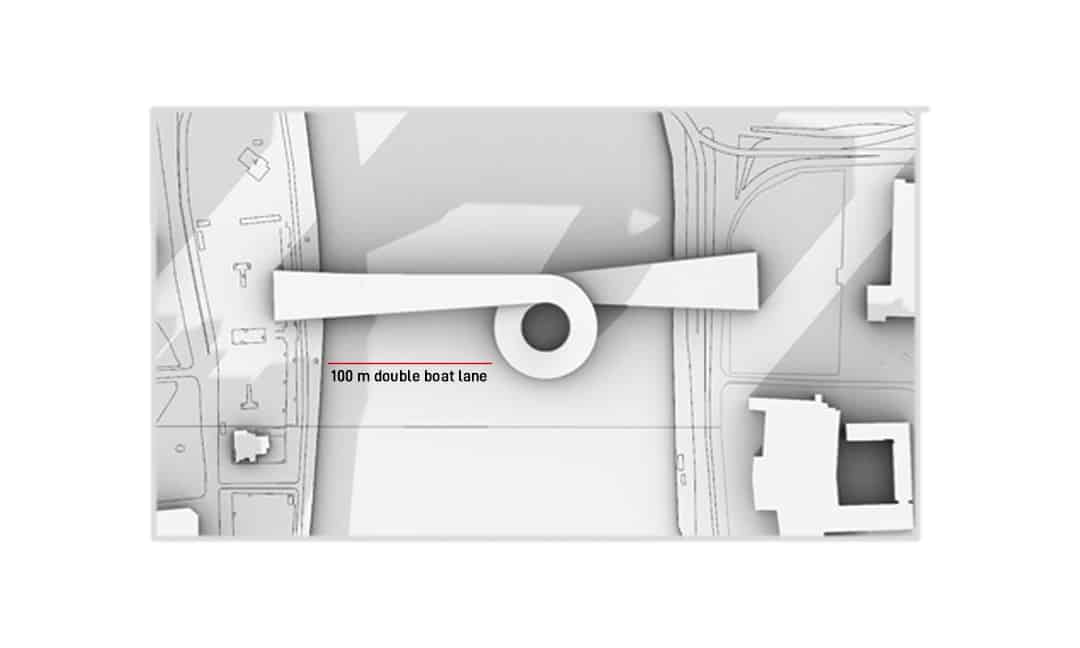
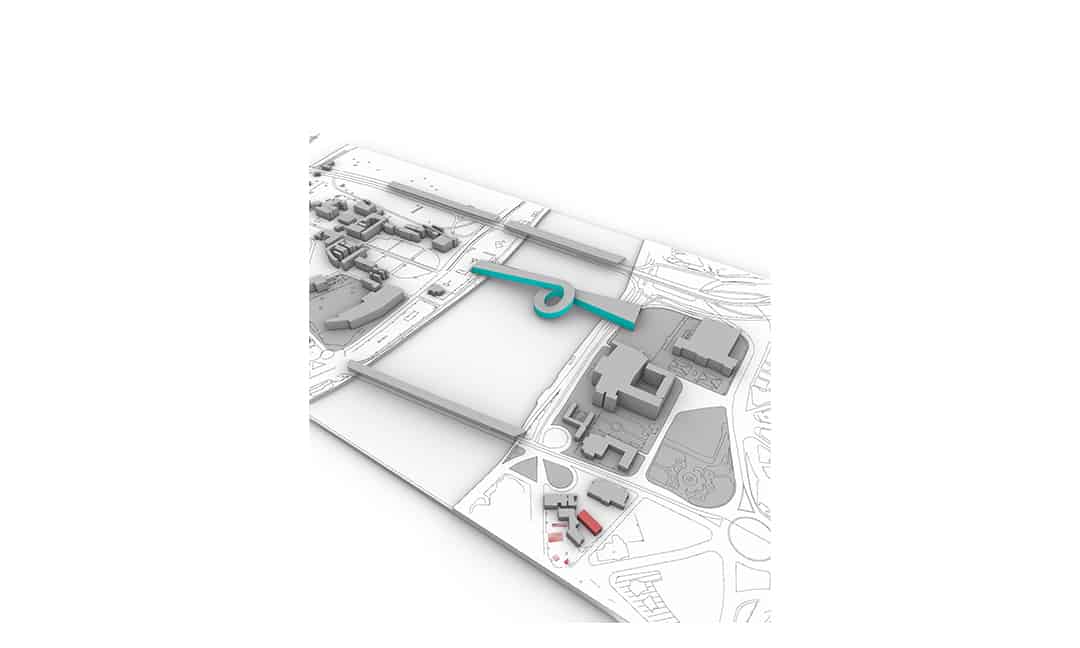
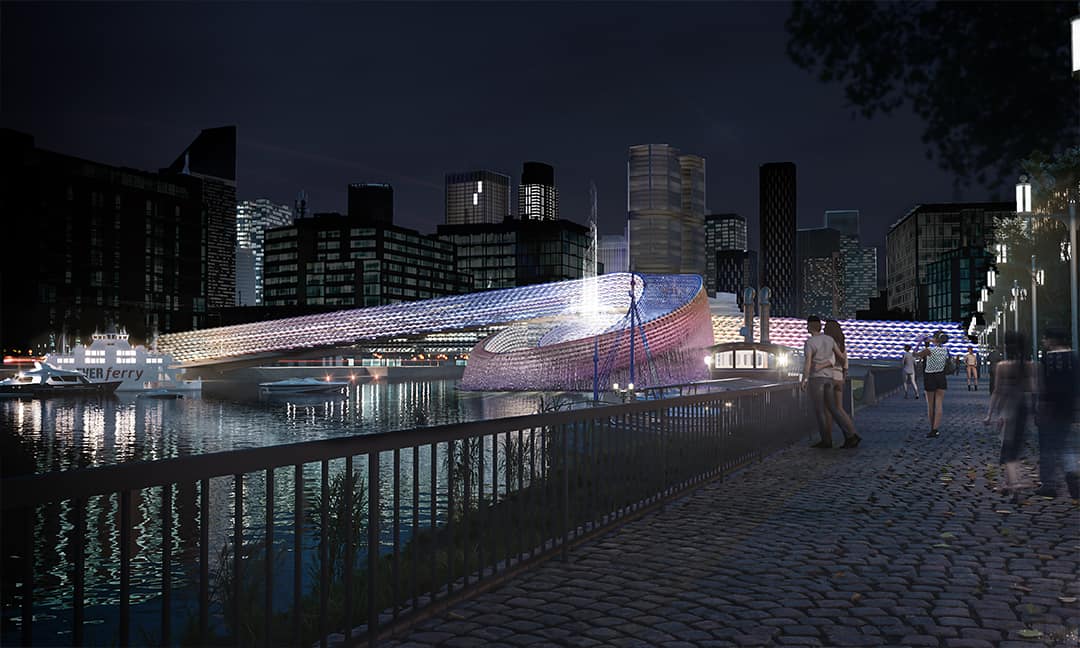
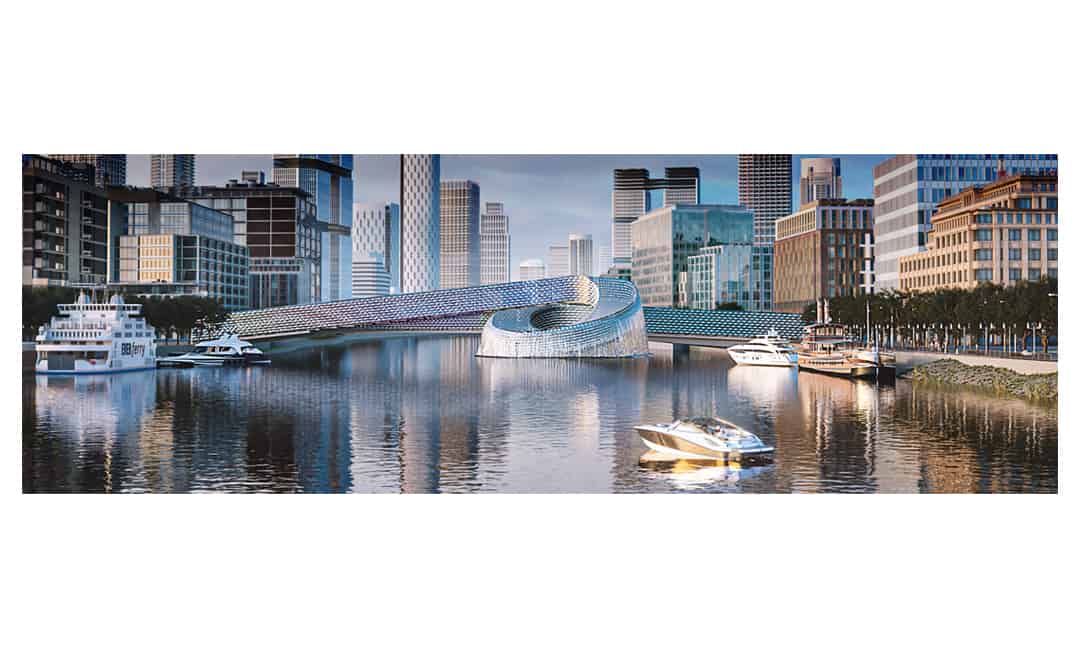
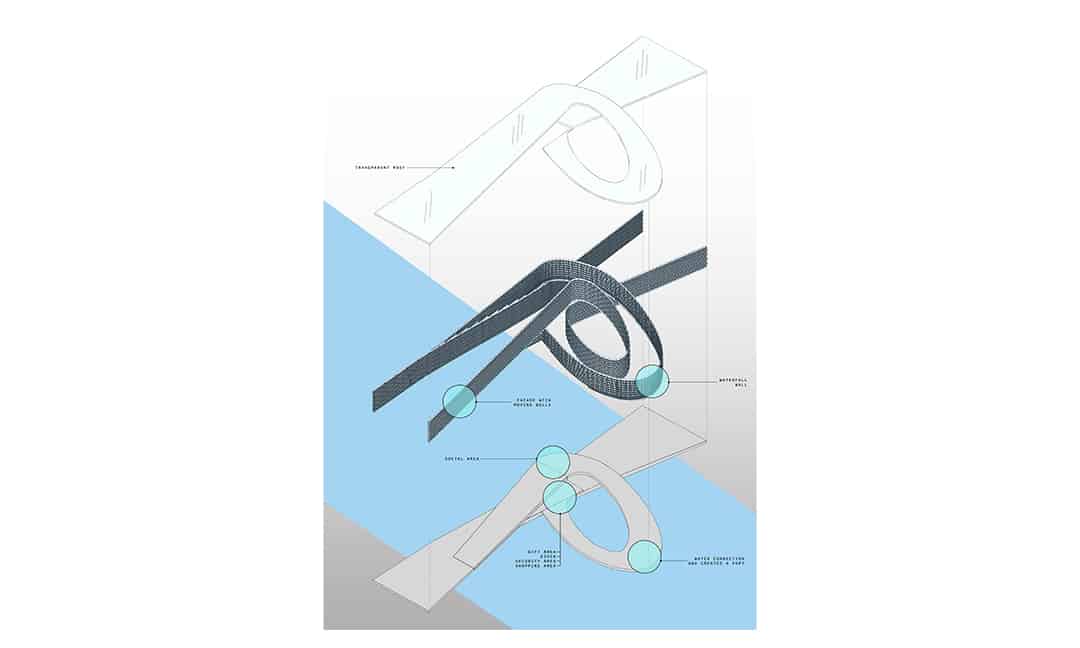
The form is a loop that inverts itself. The bridge rises from its entry point on one bank, curves outward over the river, then reverses its arc and descends — not to the opposite bank but toward the water’s surface itself. It touches the Nile. Then it rises again and completes its crossing. This is the architectural decision that separates the proposal from every pedestrian bridge built before it: the structure does not maintain a safe distance from the river it spans. It reaches down and makes contact. The person walking the full route does not observe the Nile from above they arrive at its level, stand at its edge, and feel the current passing beneath the bridge deck before the structure lifts them back toward the sky and delivers them to the far bank.
The descent to river level is not incidental. It is where the project’s historical weight is carried most directly. The Nile at surface level is a different experience from the Nile seen from a bridge railing at height. The sound changes, the smell changes, the scale of the water against the body changes. The proposal understood that the Moses narrative — the child placed in a basket on this river, the parting of water as an act of passage is a story about the relationship between the human body and the river’s surface. The bridge literalizes that relationship. The crossing becomes a descent toward water and a return from it, a sequence with a structural memory of the oldest story this river carries.
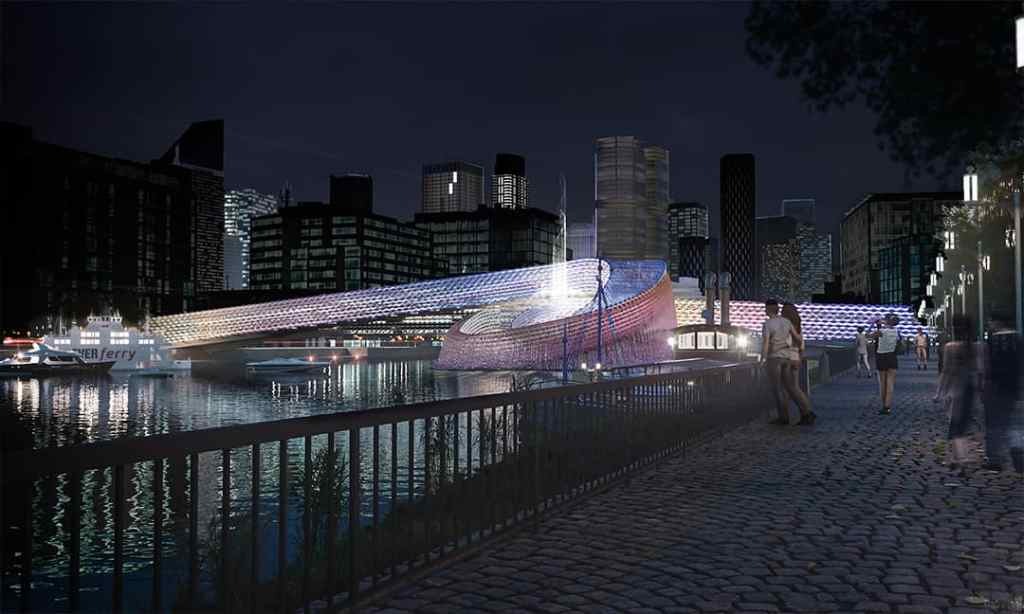
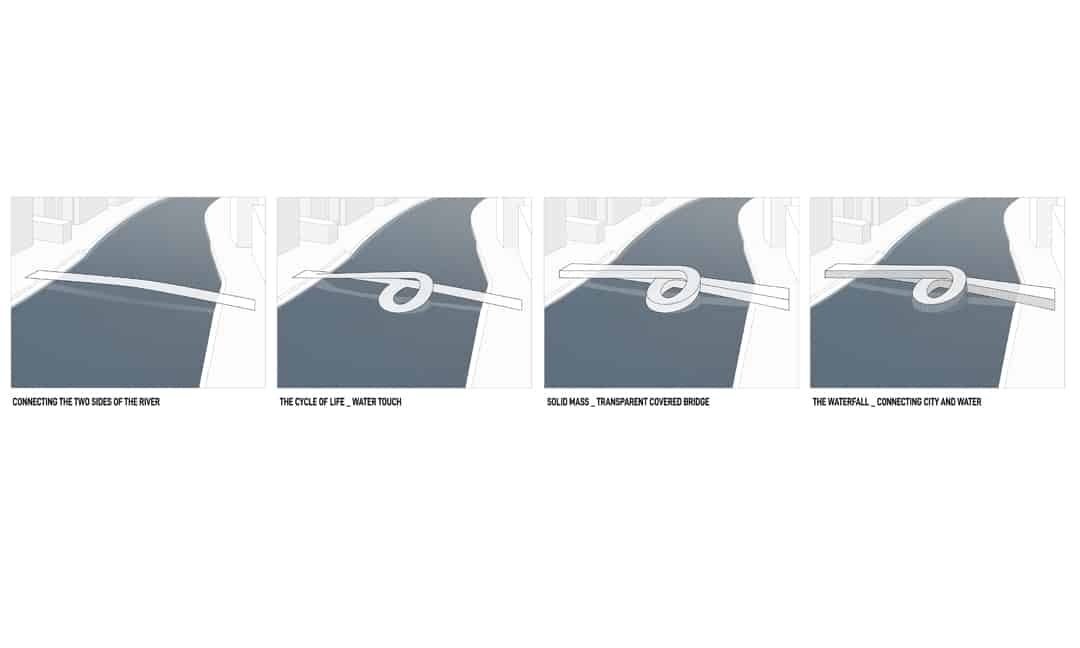
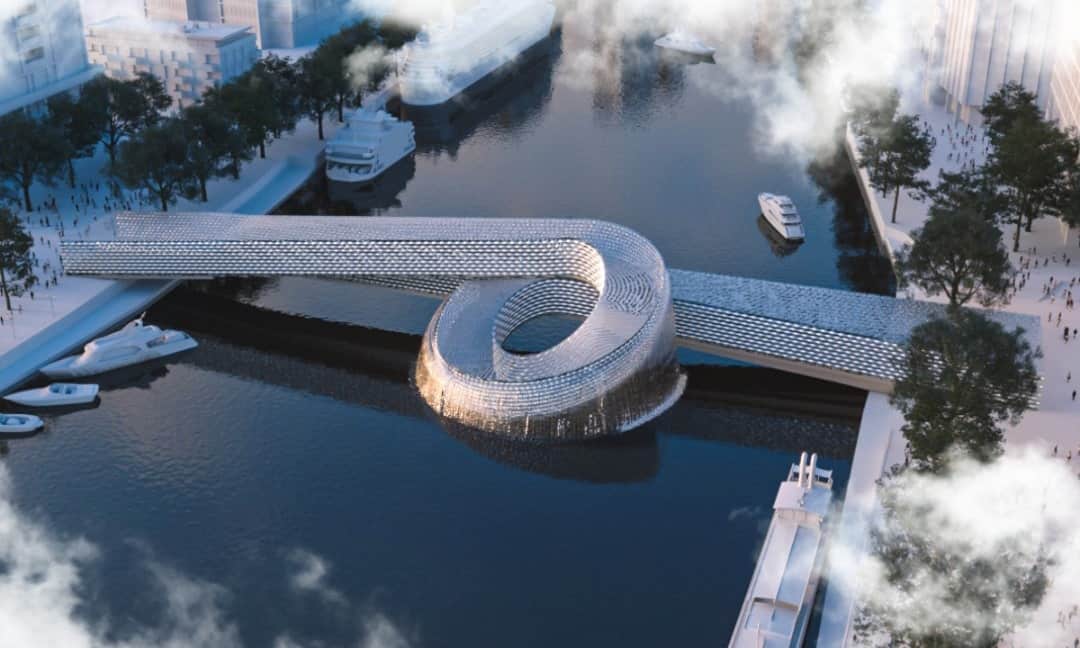
The bridge offers two routes and that binary is an architectural decision as deliberate as the loop form itself. The first route is direct: a clear path from bank to bank for the person who needs to cross and has no time to spend doing it. The second route is the full loop a winding sequence that passes through the port zone, descends to river level, and returns via the outer arc with unobstructed views over the Nile in both directions. The two routes share the same structure and the same roof, but they produce entirely different spatial experiences within a single object. The person who takes the direct route and the person who takes the scenic route are not in the same building in any experiential sense, even though they stand on the same bridge deck.
The kinetic facade integrates a waterfall mechanism moving spheres over which water cascades from the bridge body and falls into the river below. This is not a decorative water feature. The movement of water across the surface and its return to the river drives a generation system embedded in the structure, recovering energy from the Nile’s own flow and from the kinetic mass of water the bridge redirects. The bridge draws from the river’s movement to power itself a closed energy logic in which the structure is sustained by the same force it spans. The transparent polycarbonate roof above admits daylight into the interior corridor without heat accumulation, reducing the cooling load across the full length of the covered walkway. The structure at 5.5 meters clearance remains navigable by river traffic, the Nile’s commercial function uninterrupted beneath a bridge that has become a destination in its own right above.
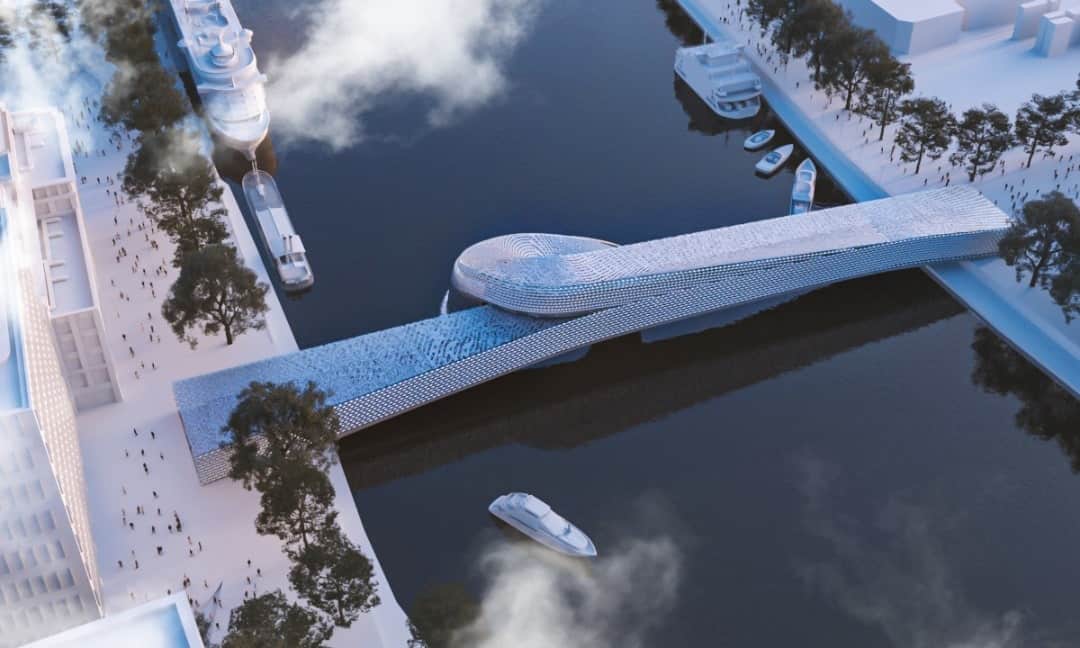
A competition jury evaluates what it can read quickly. A loop that descends to river level, recovers energy from falling water, offers two simultaneous routes through a single structure, and carries the weight of the Nile’s civilizational history in its section this is not a proposal that yields its argument in thirty seconds. The idea was submitted. Its intellectual rights remain with INJ Architects. What the jury read as complexity was the project’s actual depth: a bridge that understood its site not as a body of water to be crossed but as a river that has been crossed, and mourned, and parted, and navigated, for five thousand years. The sustainability framework governing the energy recovery logic is part of the broader environmental approach detailed across INJ Architects’ work. The methodology behind proposals of this civic scale is outlined in how-we-work, and the framework for initiating comparable commissions is available through bespoke-architecture.
The pedestrian bridge serves as an urban mediator, creating a direct connection between the two sides of the river. It fosters numerous activities and interventions that encourage social engagement and community interaction, while also offering areas with programmatic opportunities for economic growth.