
FITT Research and Exhibition Center
FITT has manufactured pipes since 1960. The material logic of that product a hollow body that directs flow, connects two points, and holds pressure between them — became the generative unit of the headquarters that this competition proposal placed on a semi-urban Italian landscape sixty years later.
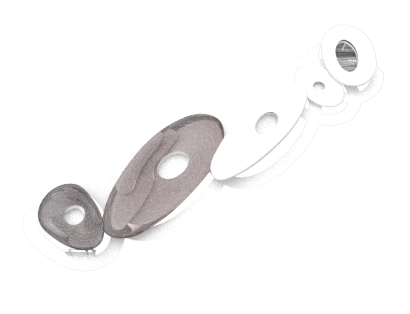
The company was founded during a period of significant labor tension in Italy, built from a coalition of different backgrounds and disciplines held together by a shared industrial purpose. That internal diversity departments that operate independently but remain structurally bound to one another is encoded in the FITT logo: five distinct elements connected into a single legible whole. The competition brief asked for a new headquarters. The proposal read that logo not as a branding asset but as an organizational diagram, and built the architecture from it.
Location          Italy
Client            FITT
Type              Corporate Headquarters — Competition Entry
Status            Award Winning Project
Year              2021
Principal         Ibrahim Nawaf Joharji
Scope             Organic Architecture, Research Campus, Parametric Planning
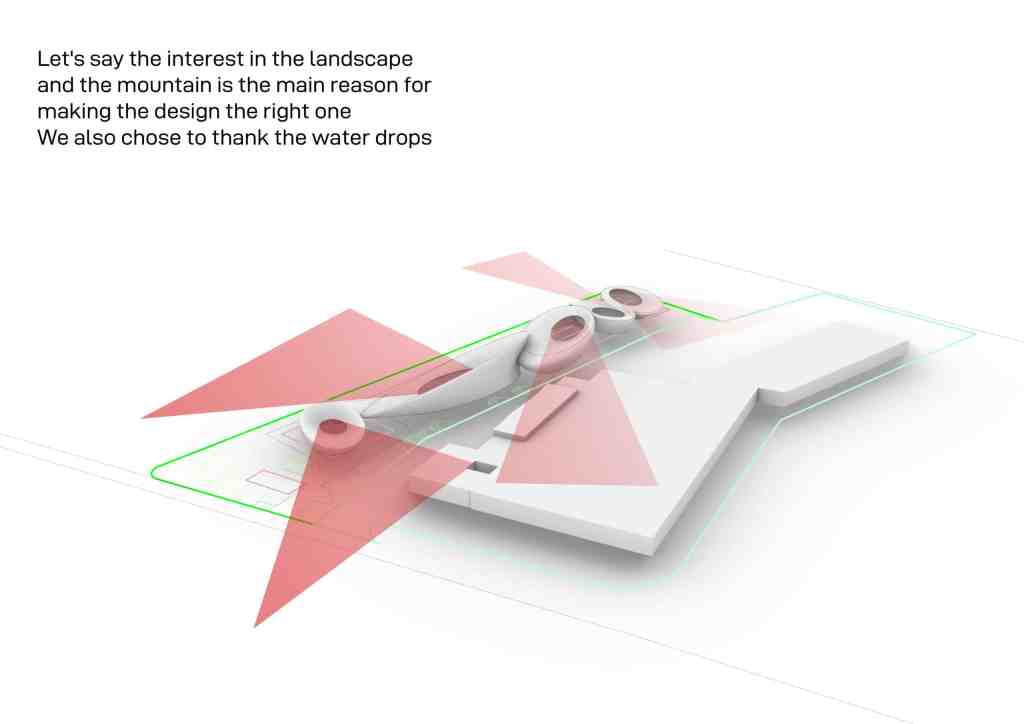
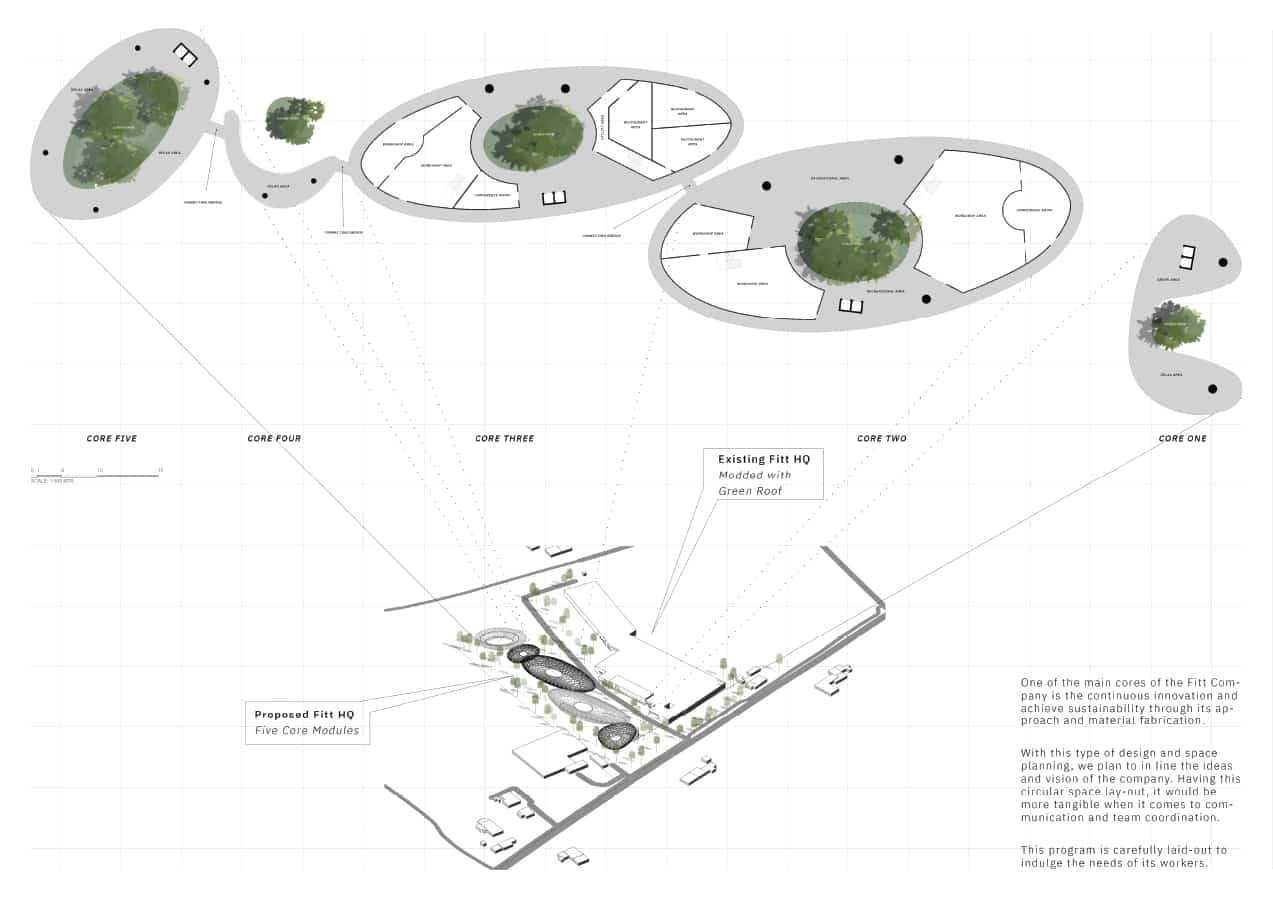
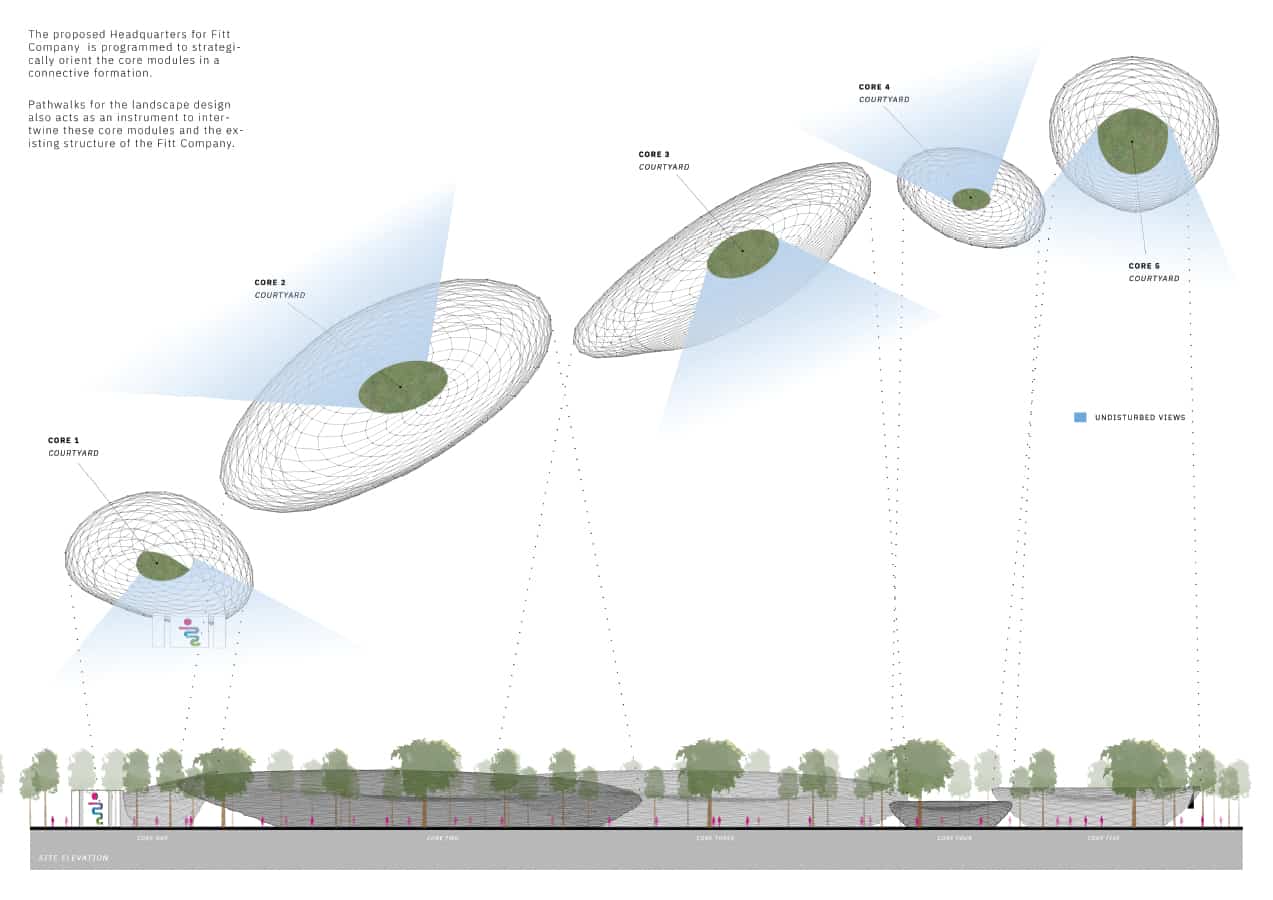
The design process began with the pipe itself. The actual dimensions of FITT’s manufactured product were taken as the generative unit not as a symbolic reference but as a physical measurement that seeded the site. Five points were distributed across the ground plane, each one anchoring a departmental volume. The spacing between these seed points and the orientation of each body were not decided compositionally. They were calculated: each volume directed toward its most productive visual and functional relationship with the others, the angles between them derived from the same logic that governs fluid distribution through a branching pipe network. The result is a campus whose plan reads as organic because it follows a distribution method closer to biology than to urban planning.
The choice of a zigzag and organic inter-departmental organization was not aesthetic. A linear axis between five departments creates hierarchy — the first body and the last body occupy fundamentally different positions relative to the center. An organic distribution eliminates that hierarchy by ensuring that no department is further from any other than the network of bridges and landscaped walkways connecting them requires. Every department is a neighbor to every other department. The circulation between them is never a corridor that privileges one direction over another. Movement through the campus follows the same branching logic as flow through a pipe junction: multiple valid paths, none of them primary.
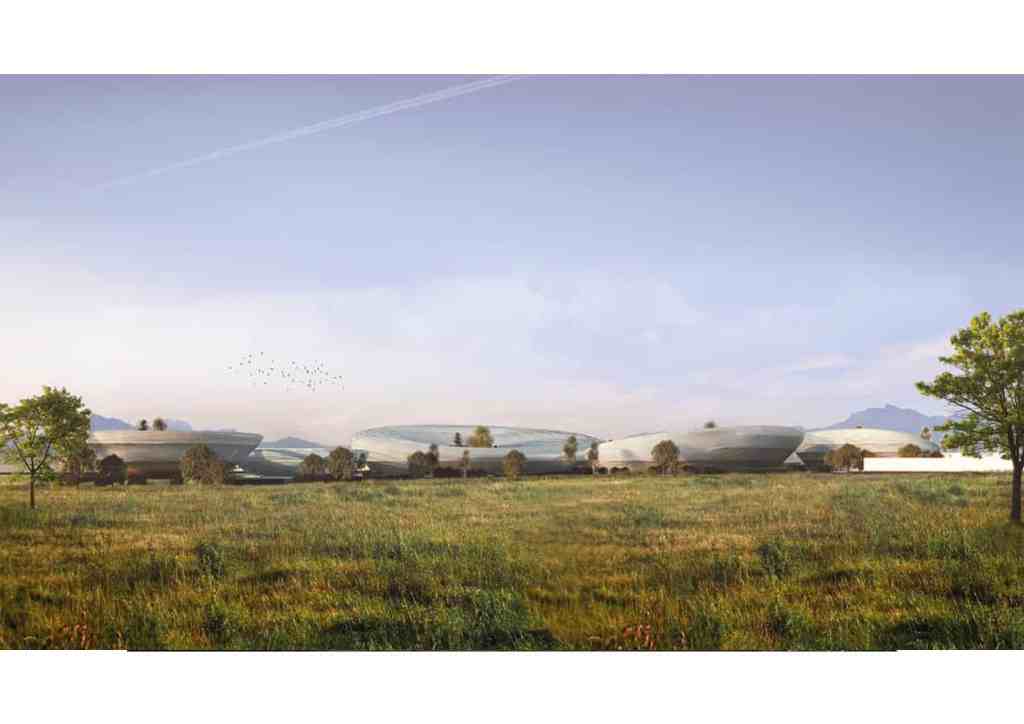
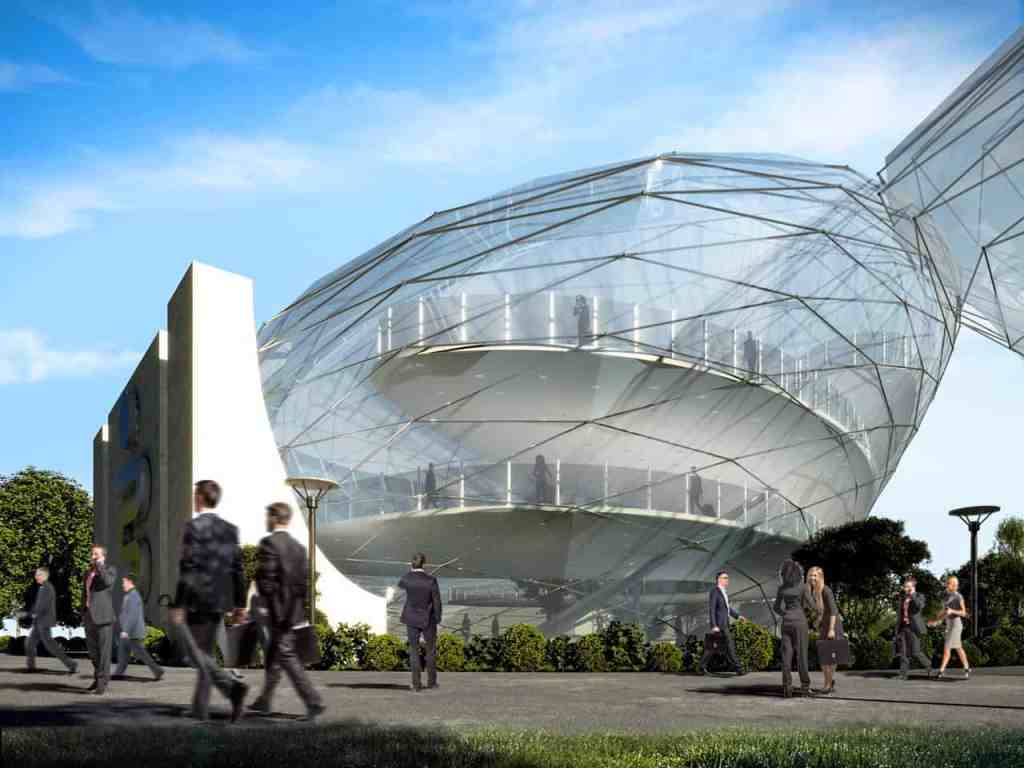
The form of each individual volume follows the fluid particle logic of the product. Where a pipe contains and directs liquid under pressure, each building body contains and directs human movement through its interior the curved walls channeling circulation toward the shared spaces at each volume’s core, the organic skin wrapping the structural frame the way a pipe wall wraps the flow inside it. The FITT logo, when read at building scale, becomes a master plan: five forms, each self-contained, each opening at specific points toward the bridges that connect it to the next. The logo was not applied to the architecture. The architecture was grown from the same organizational logic that produced the logo.
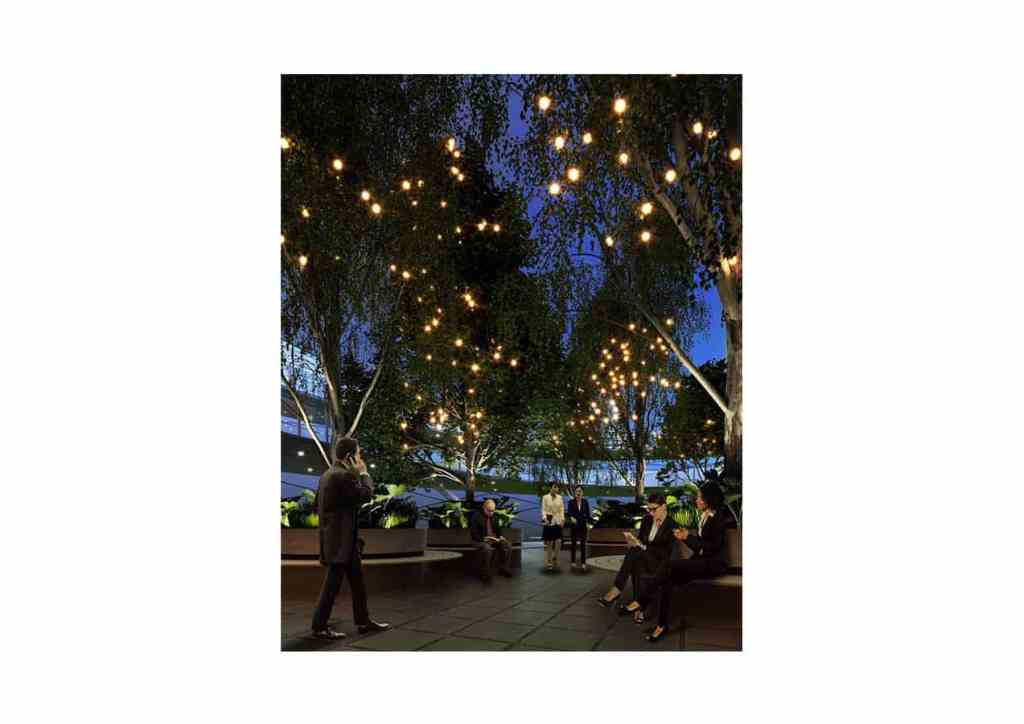
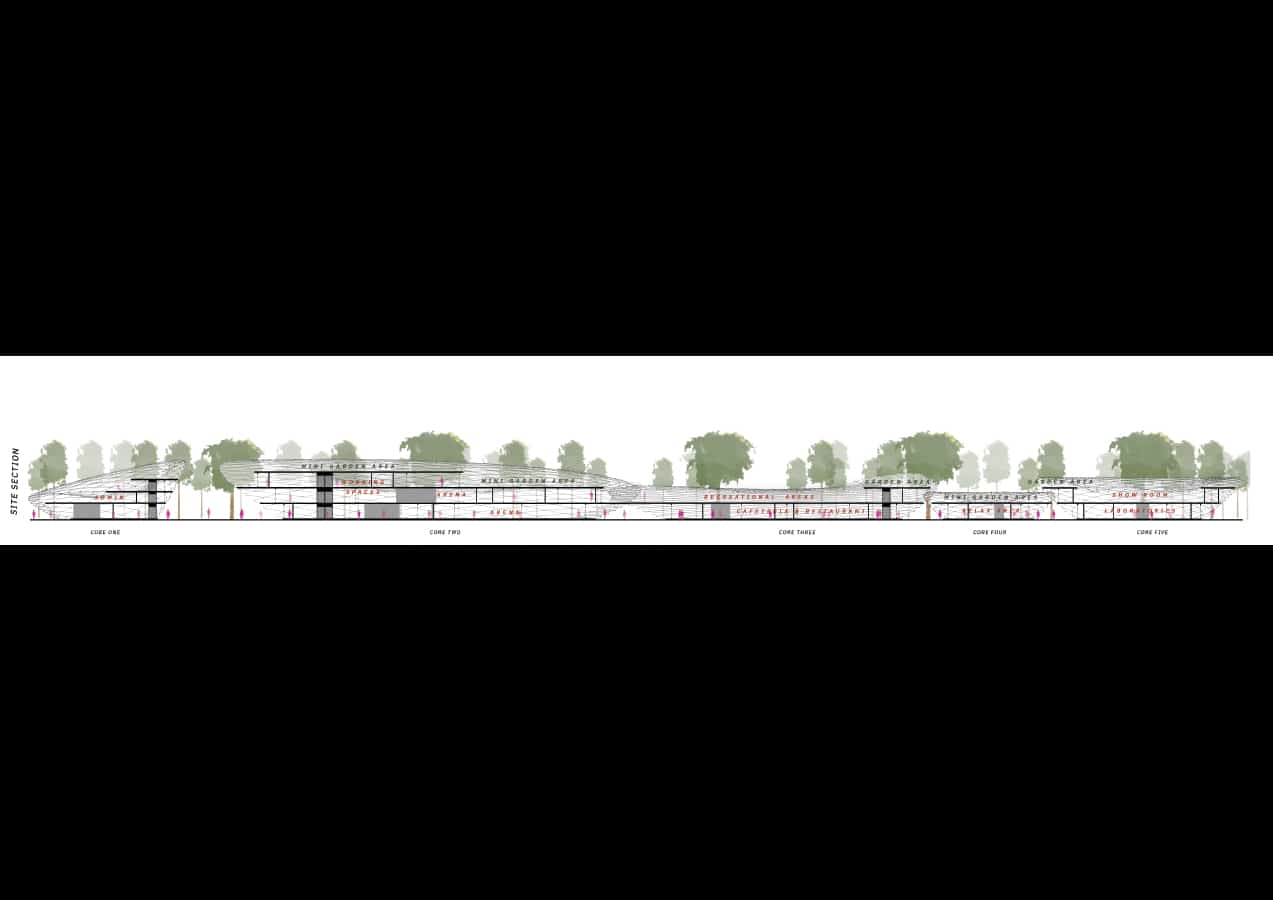
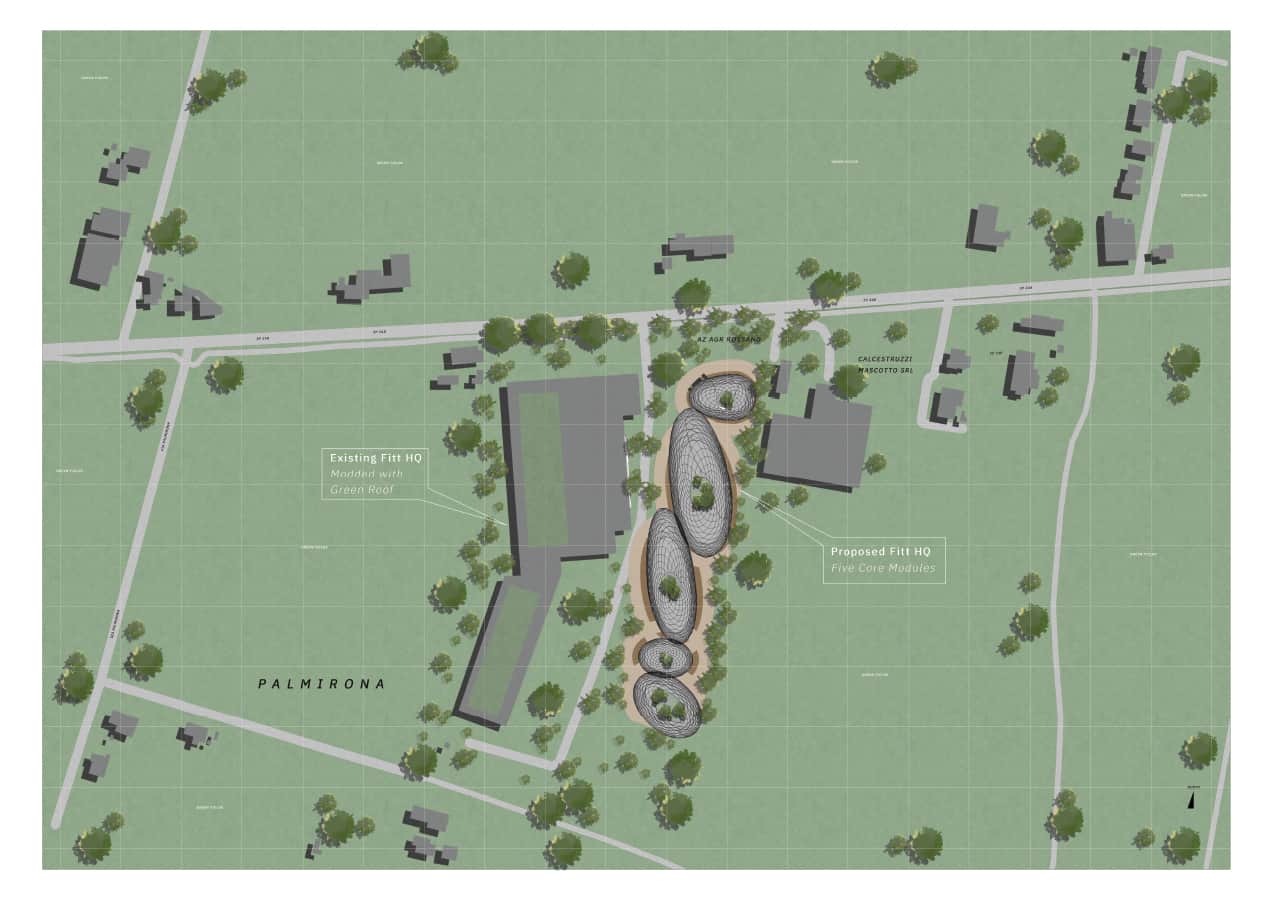
The semi-urban Italian site, set against mountain ranges and removed from the density of the city, supported a low-rise campus rather than a consolidated tower. This horizontal distribution allowed the research program to breathe laboratories, development spaces, and collaborative zones spread across the five volumes rather than stacked vertically, each department occupying its own building body while sharing the landscaped ground plane between them. The bridges that connect the volumes are not service corridors. They are the headquarters’ most important social infrastructure: the spaces where people from different departments meet in transit, where the formal separation of the five bodies is resolved into a single working community.
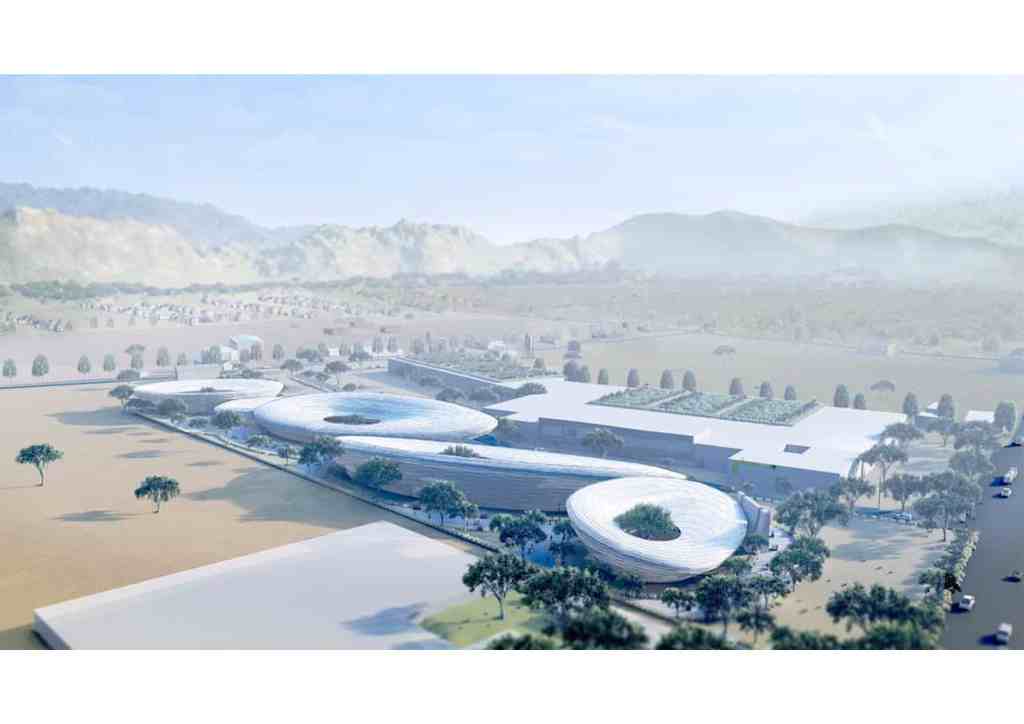
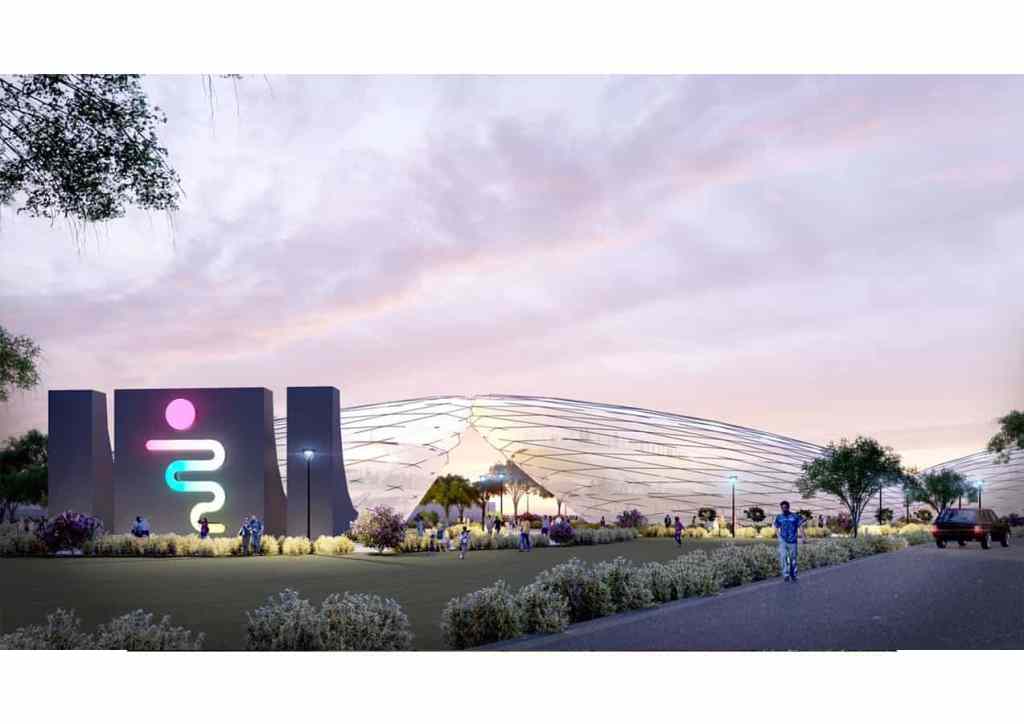
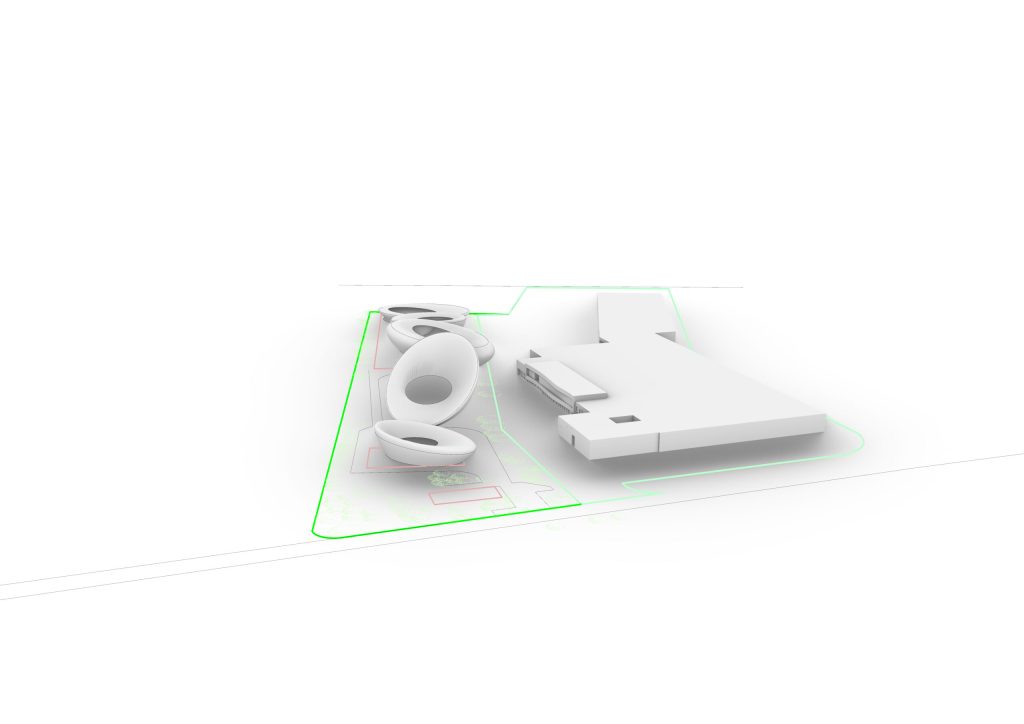
The FITT Headquarters received an award in the Young Architects international competition. It belongs to a body of work at INJ Architects in which the client’s own product, history, or organizational structure becomes the primary generative material for the design a methodology detailed in how-we-work. For corporations and institutions seeking a headquarters whose architecture is derived from their own operational identity rather than applied to it, the engagement framework is outlined in bespoke-architecture.