
Mushroom Whale Port
The Italian port has a specific urban grammar. Its buildings are white, compact, and continuous a fabric that accumulated over centuries without a single authored gesture. Placing a new landmark on one of Italy’s most significant port sites meant accepting that grammar first, then asking what form could extend it without dissolving into it.
The design began with two organisms native to the Italian coastal and terrestrial landscape: the mushroom and the whale. Neither was chosen for its visual appeal. The mushroom grows from a single stem that expands into a canopy above a structural logic that distributes load from a compressed base to a wide protective surface. The whale is the largest body that moves through the Mediterranean, its ribbed interior a vaulted inhabitable space before architecture gave that word its current meaning. A logarithmic equation was used to resolve these two references into a single buildable geometry, their proportional relationships translated into the curves and stems of the port building’s primary massing.
Location          Italy
Type              Port Redevelopment — Competition Entry
Status            Competition Proposal
Year              2021
Principal         Ibrahim Nawaf Joharji
Scope             Organic Architecture, Coastal Infrastructure, Urban Integration
Materials         White metal, environment-friendly Italian local materials
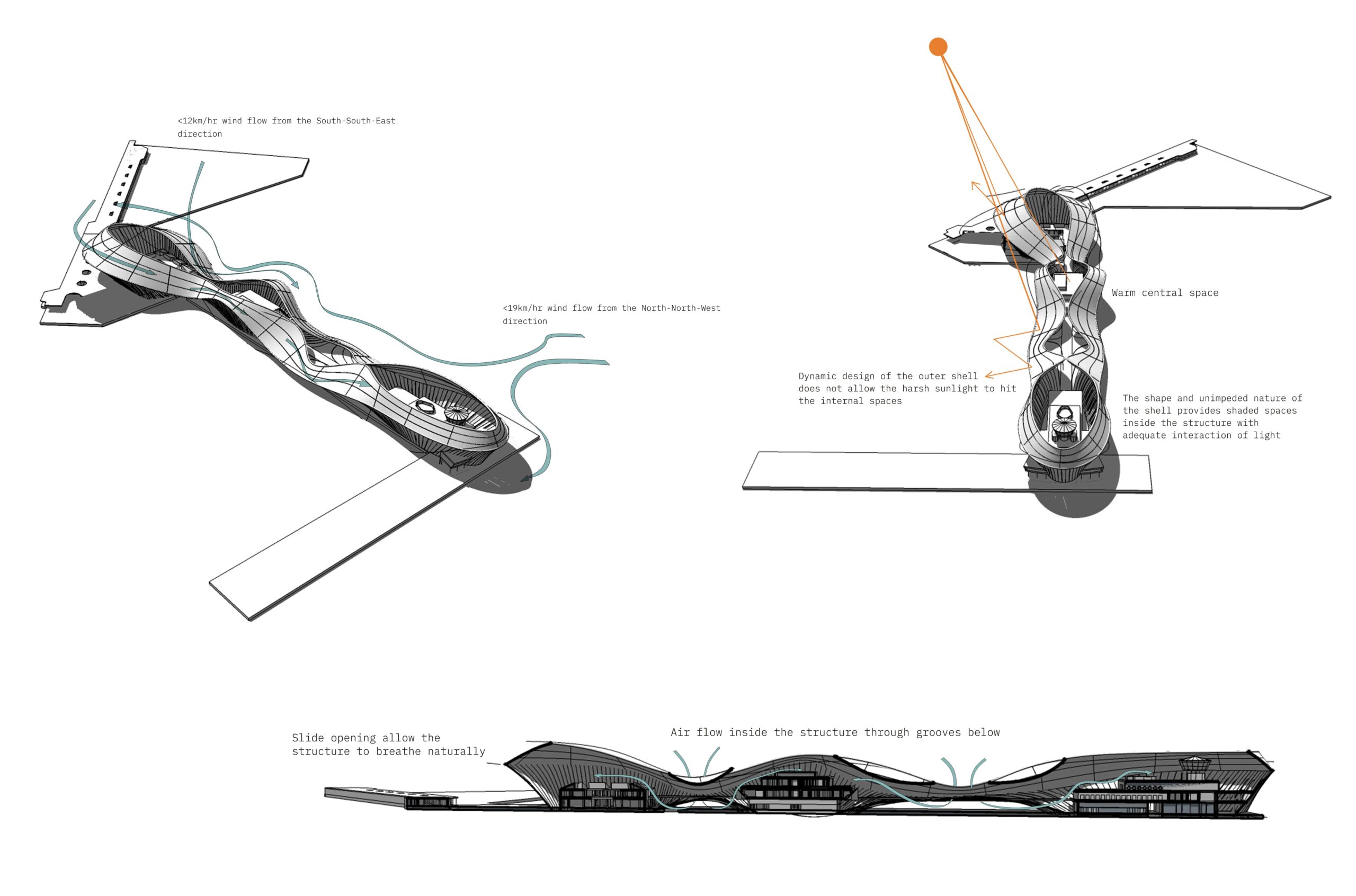
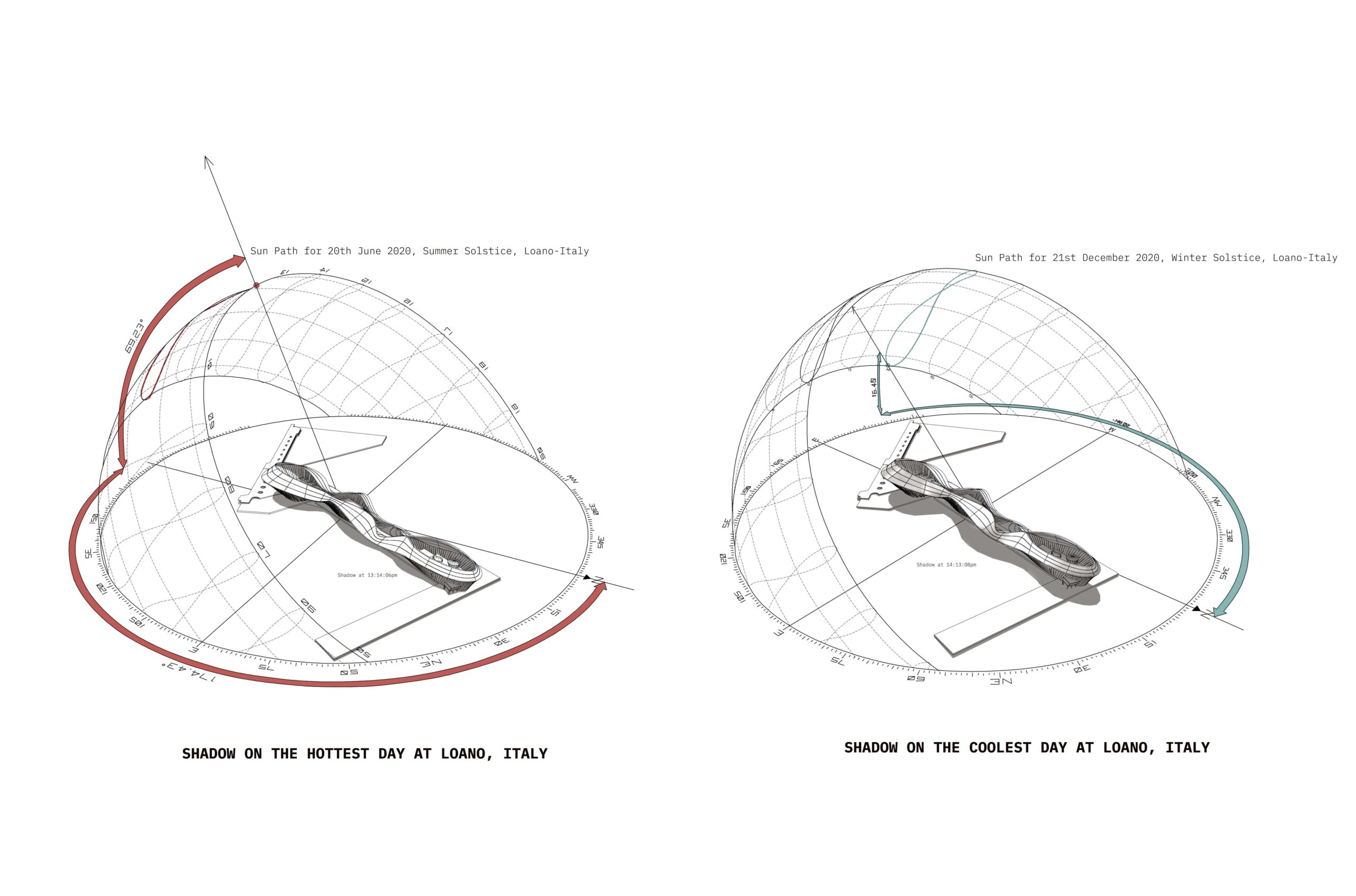
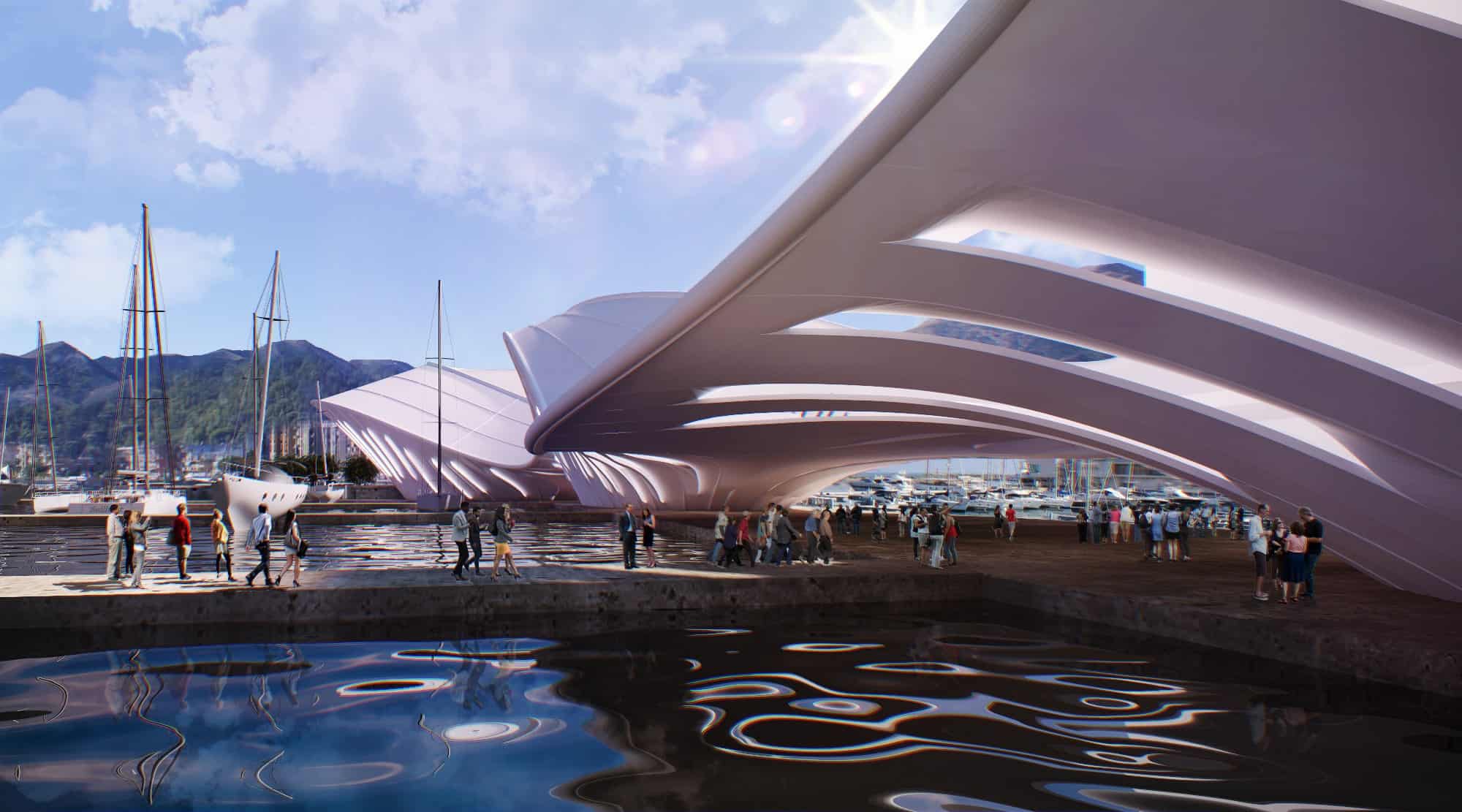
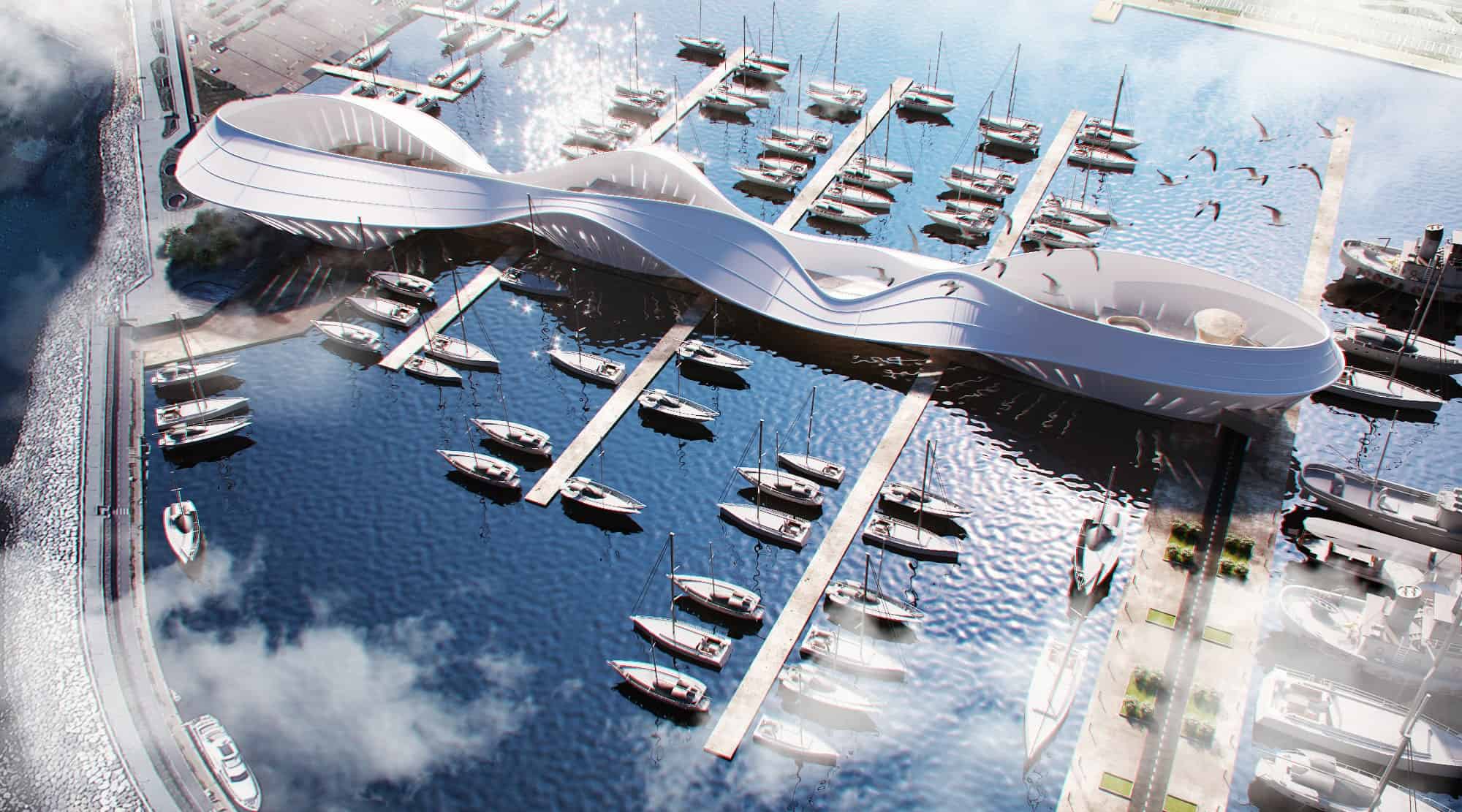
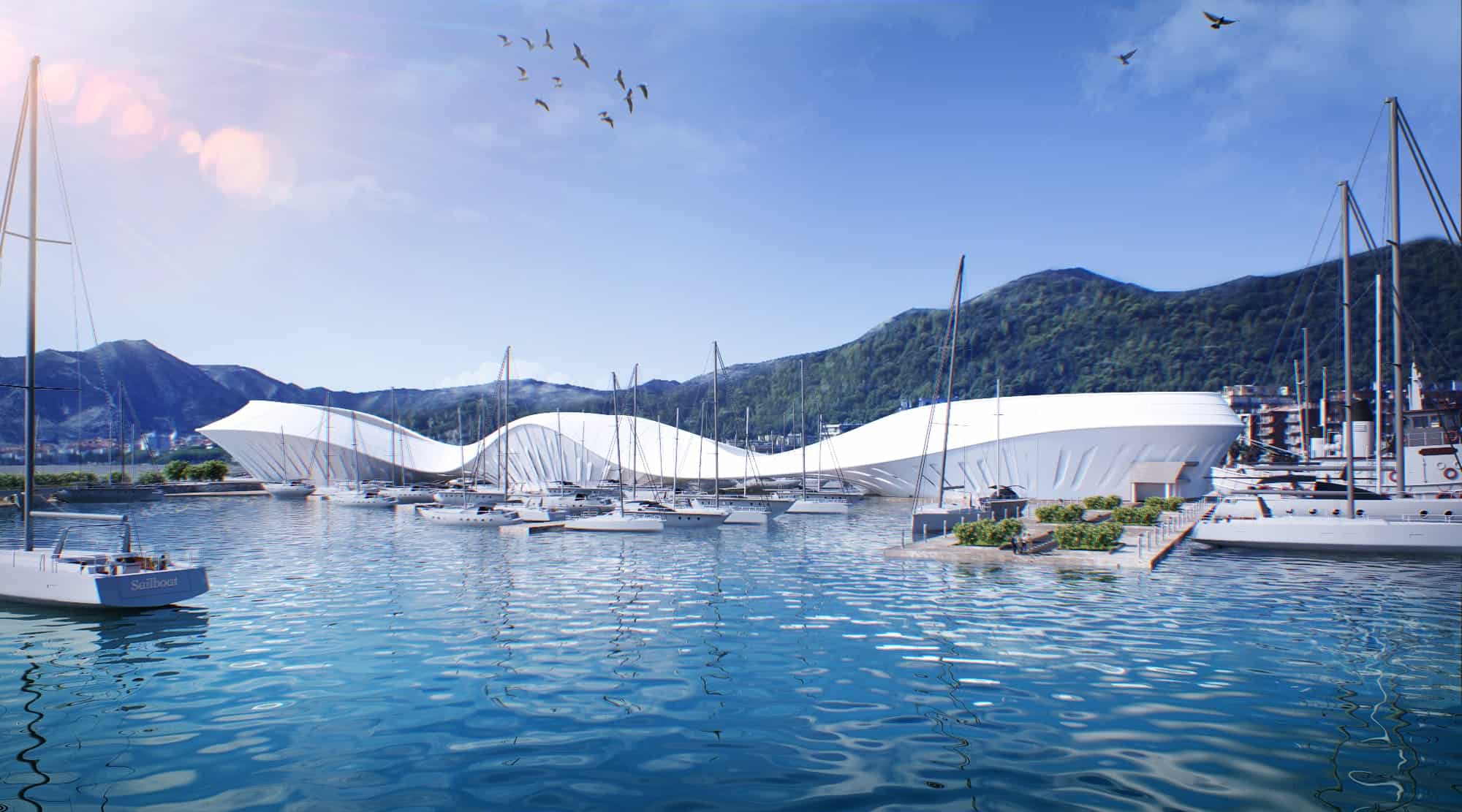
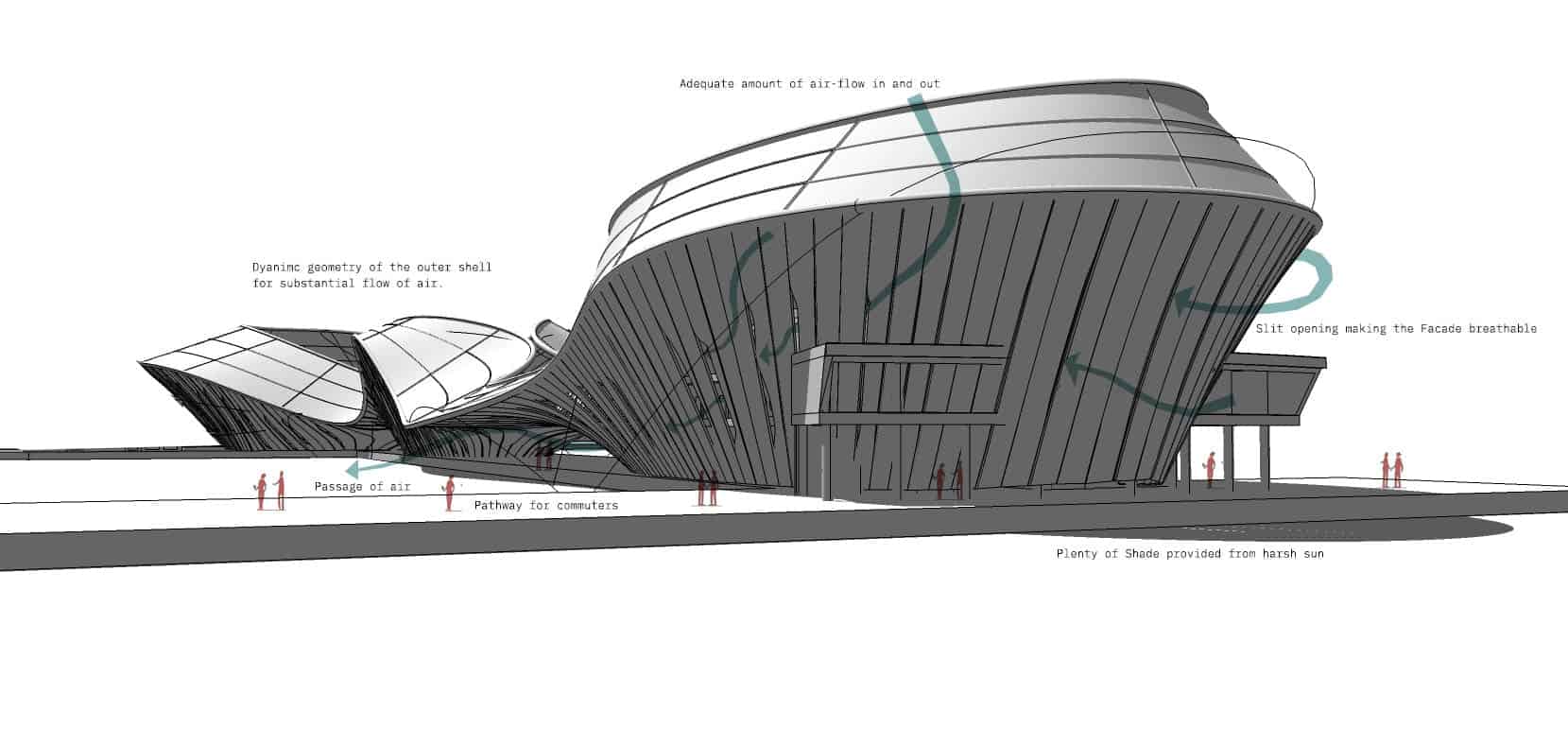
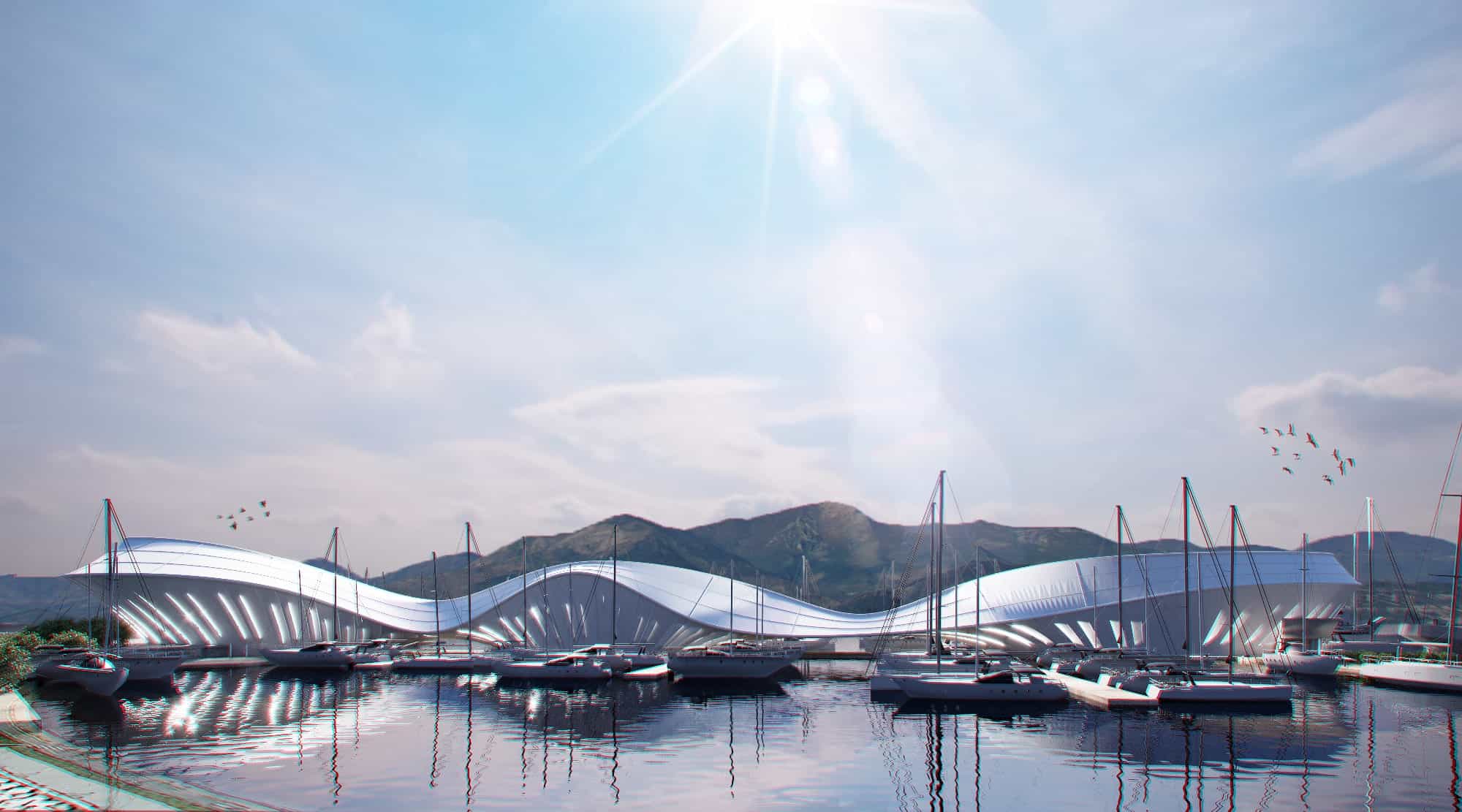
Three stems rise from the port ground plane and expand into the canopy that covers the main building body. From a distance — from the water, from an arriving boat they read as oversized Italian mushrooms rooted in the port’s edge. This is not coincidental. The three-stem arrangement was studied against the prevailing wind direction and the port’s primary approach vectors, each stem positioned to minimize aerodynamic resistance while channeling air upward through the canopy above. The openings at the crown of each stem are ventilation passages, drawing fresh sea air through the inhabited interior the way a traditional Arab courtyard draws air through its vertical shaft. The formal reference to the mushroom and the environmental function of the stem are resolved in the same geometry.
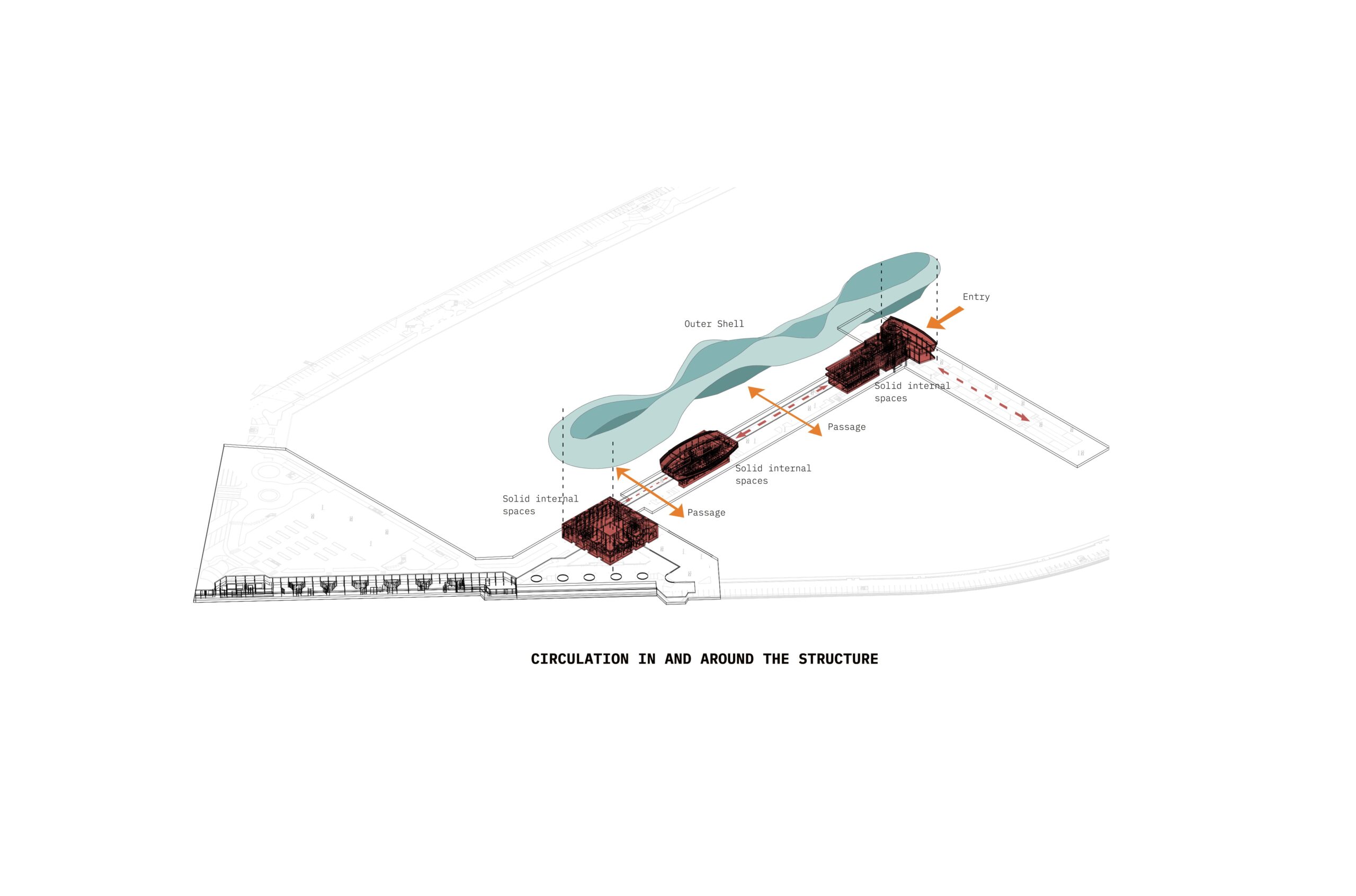
The interior of the main building body produces the second spatial experience. The curved ribs of the structural system, derived from the whale’s skeletal logic, create a vaulted hall whose section rises and falls along the length of the plan. A visitor entering from the port side passes beneath the lowest point of the canopy and moves into a progressively expanding interior the sensation of entering a large body from its narrowest threshold. The white metal cladding selected for the exterior follows the color analysis of the surrounding urban fabric: the port’s existing buildings are uniformly pale, and a contrasting material would have introduced a visual rupture inconsistent with the proposal’s intent to extend the place rather than compete with it. The same material wraps the stems and the canopy in a continuous surface, the building reading as a single organism rather than an assembly of components.
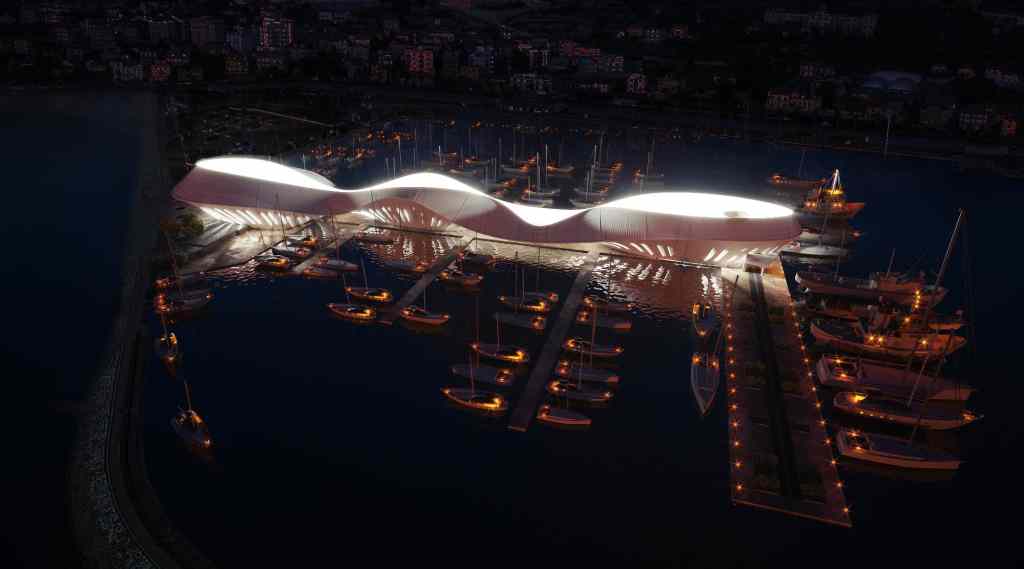
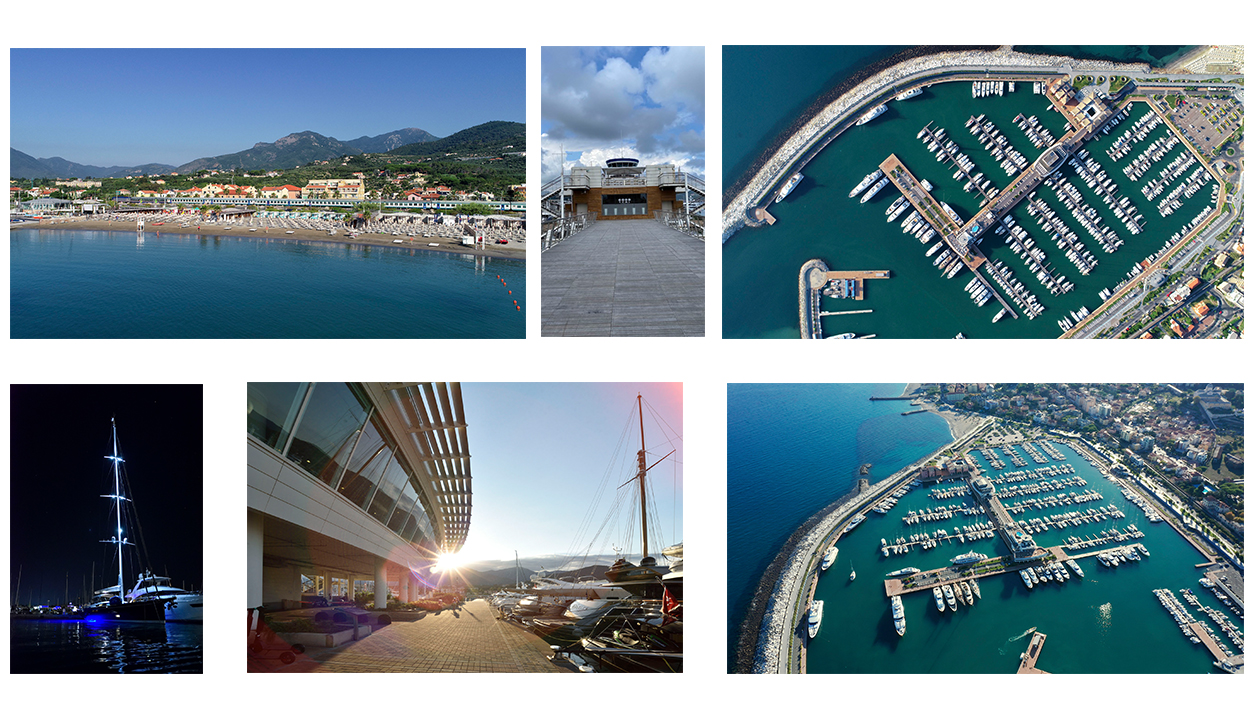

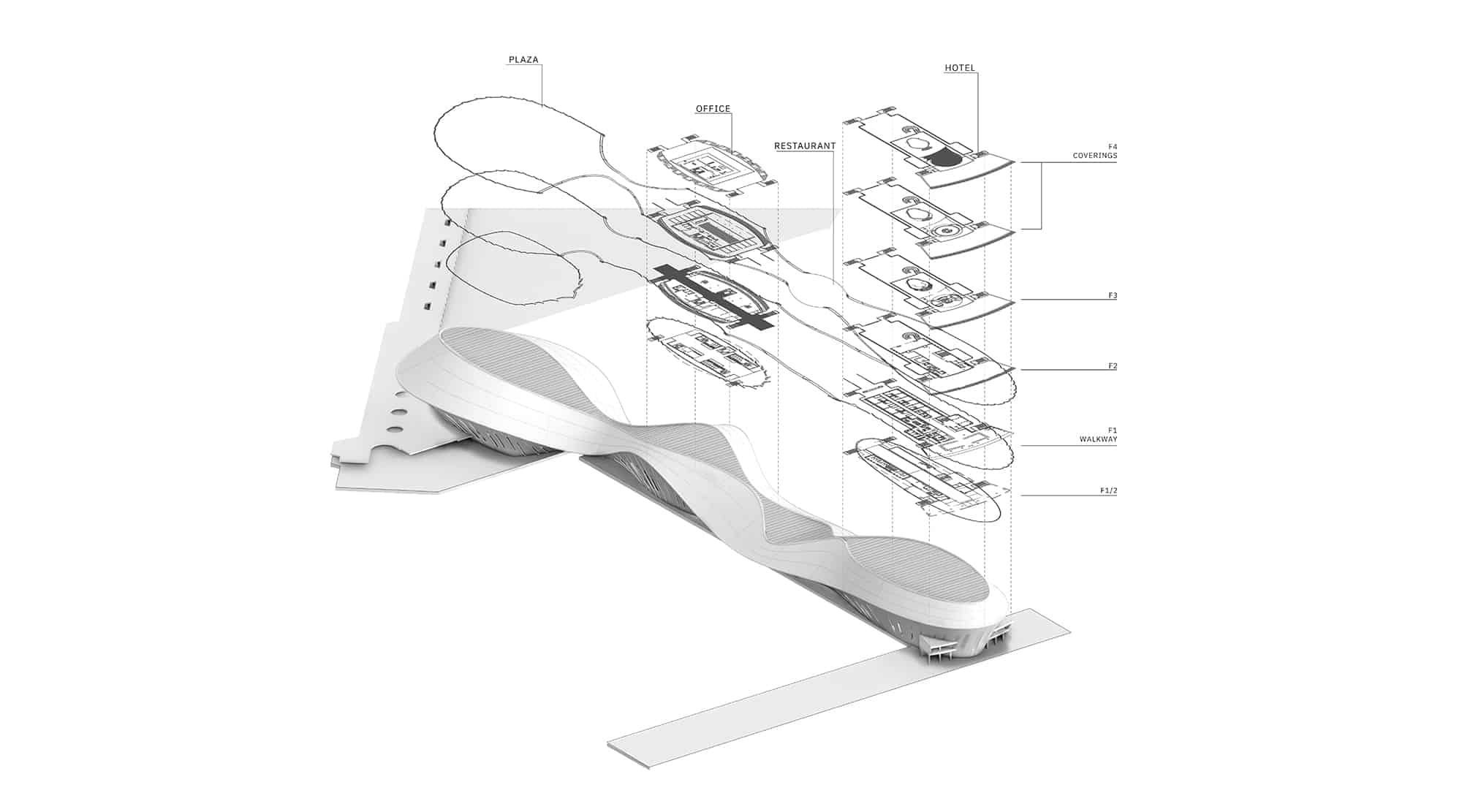
The port redevelopment proposal organized the site into four distinct zones, each with its own programmatic and material logic. Building C was removed from the existing footprint entirely and its area absorbed into the main port axis, consolidating the investment into the primary landmark rather than distributing it across a fragmented site. The beach zone was raised slightly above its natural grade a modest elevation that produces a significantly improved panoramic relationship with the open sea, provides natural ventilation beneath the elevated platform, and separates the beach activity from the port traffic without enclosing either. Restaurants and social spaces occupy the raised level, the sand remaining accessible below. The total increase in cadastral footprint across all proposed interventions was held to 21% of the existing building area, the entire material specification drawn from Italian-sourced and environmentally compatible products.
Building D was reconceived as an open-air market, its design derived from the Italian habit of shopping in public rather than enclosed space. The piazza, the market square, the covered arcade these are the social infrastructures that Italian urban culture developed over centuries as alternatives to the enclosed commercial building. The proposal placed retail within a light structure open to the port air and the sea light, the goods and the people who buy them visible from the water as part of the port’s active face rather than hidden behind a facade.
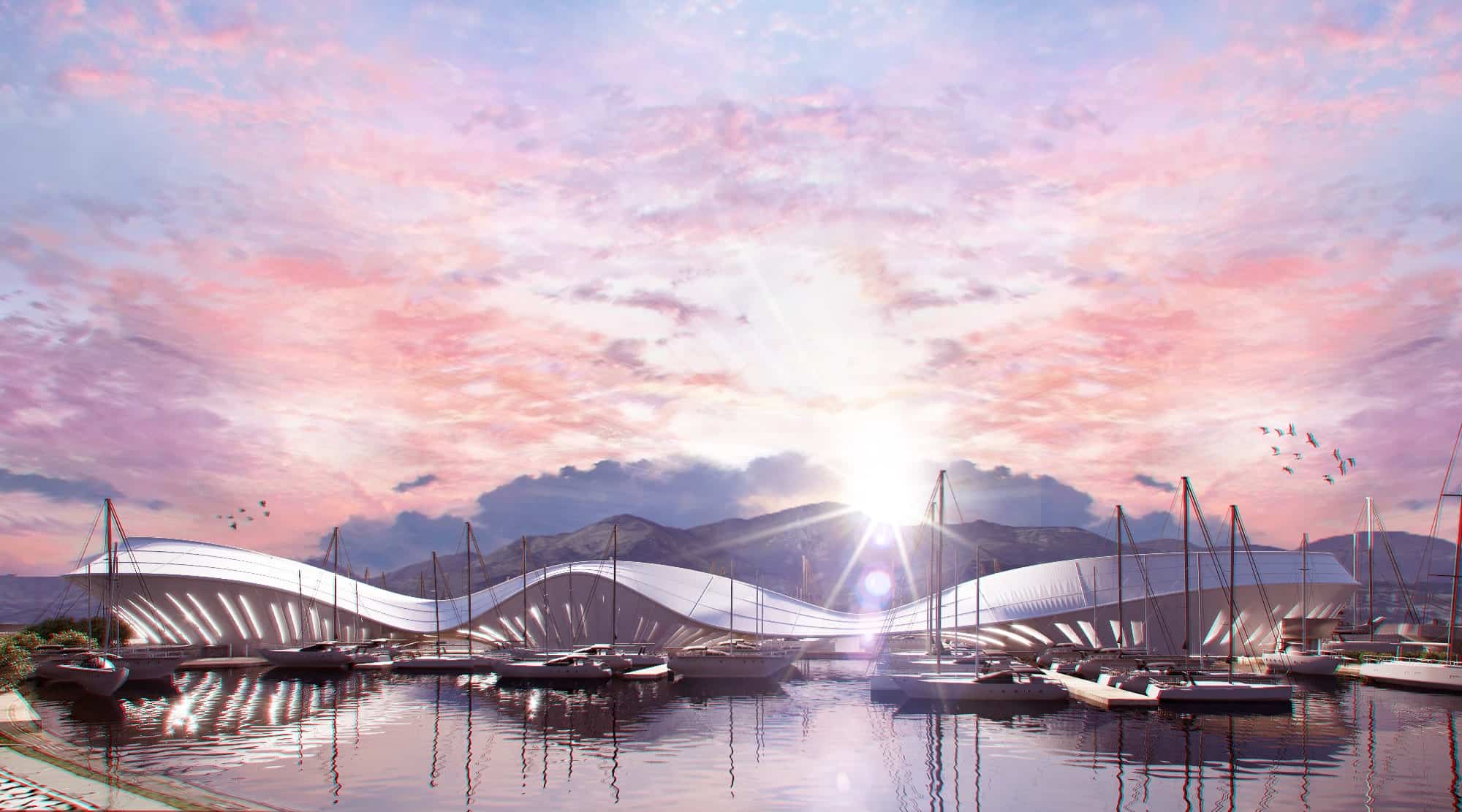
This project belongs to a body of work at INJ Architects in which natural organisms are treated not as formal references but as structural and environmental arguments their proportional logic extracted through mathematical translation and applied at architectural scale. The methodology governing this approach is detailed in how-we-work. For port authorities, municipal bodies, and coastal developers considering proposals of comparable complexity and civic ambition, the engagement framework is outlined in bespoke-architecture.