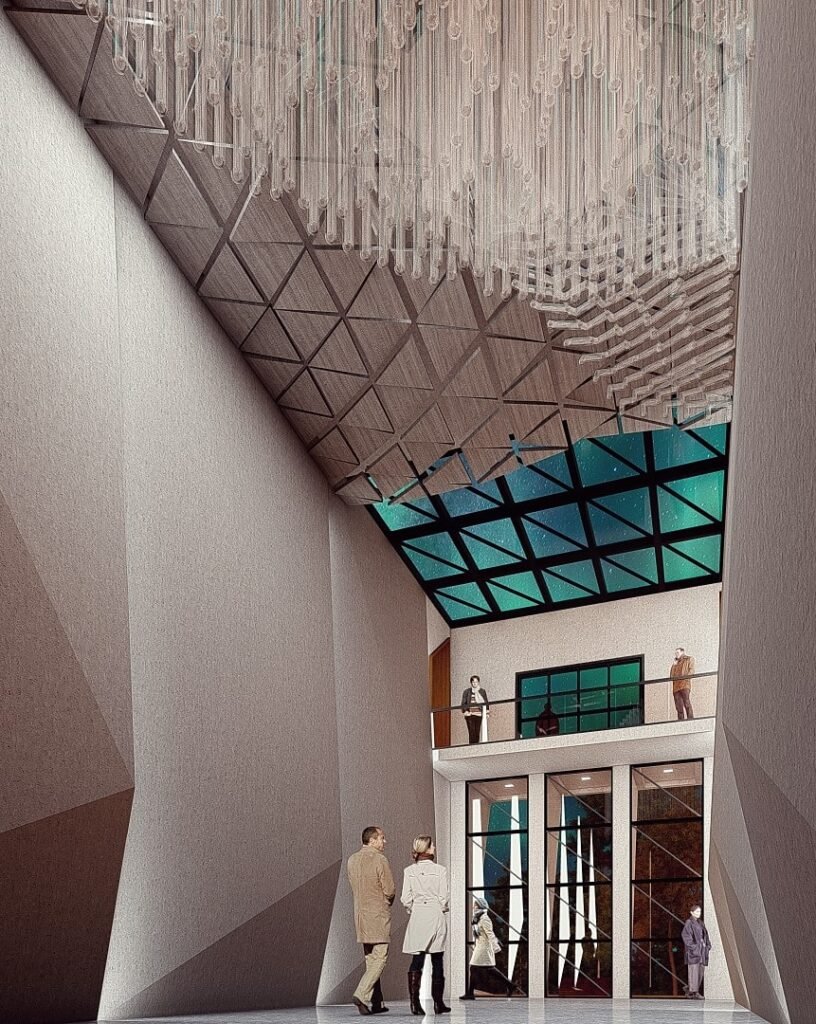
Niebe Arctic Hotel
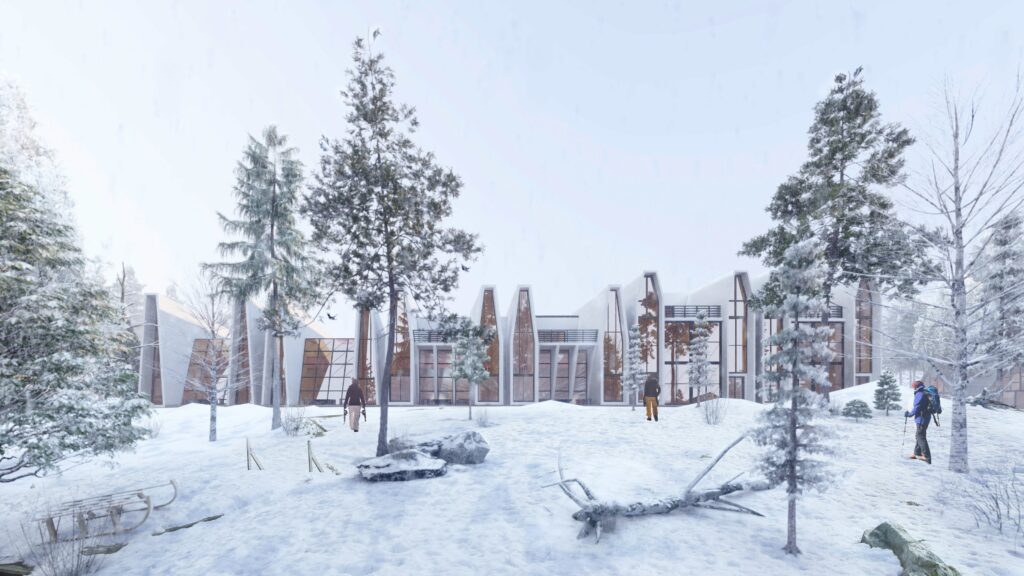
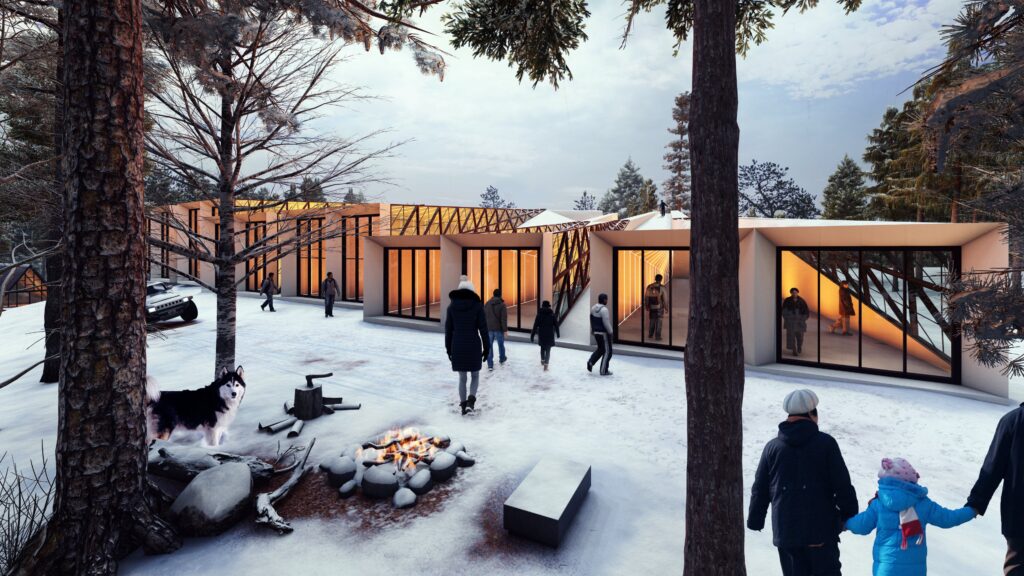
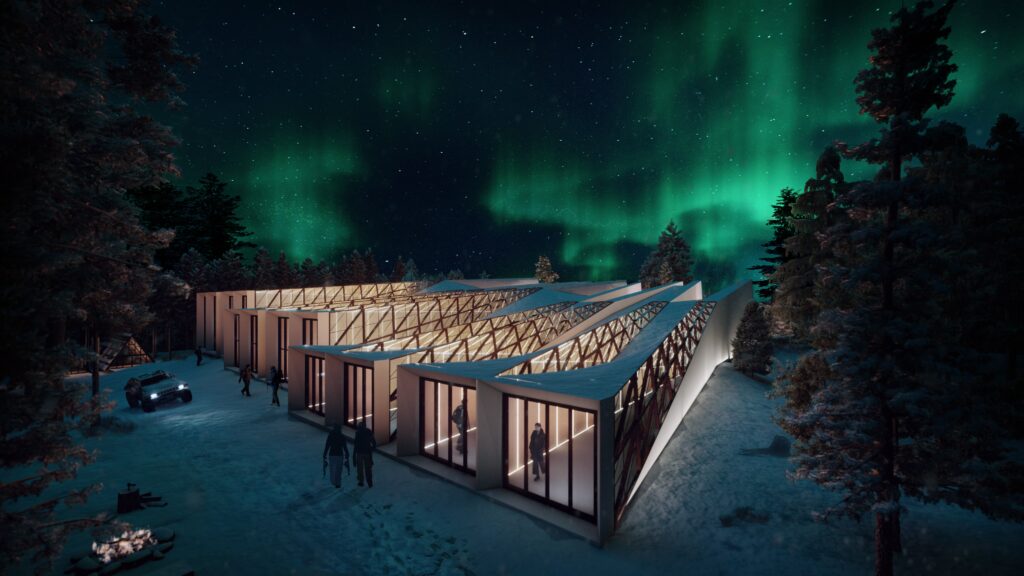
Finland in winter is not a landscape of absence. It is a landscape of two phenomena that architecture has rarely attempted to serve simultaneously: the absolute white of a snow-covered ground plane and the absolute color of an aurora-lit sky. The Niebe Arctic Hotel competition proposal was designed to exist precisely at the threshold between these two conditions — a building that belongs to the snow and opens entirely toward the northern lights above it.
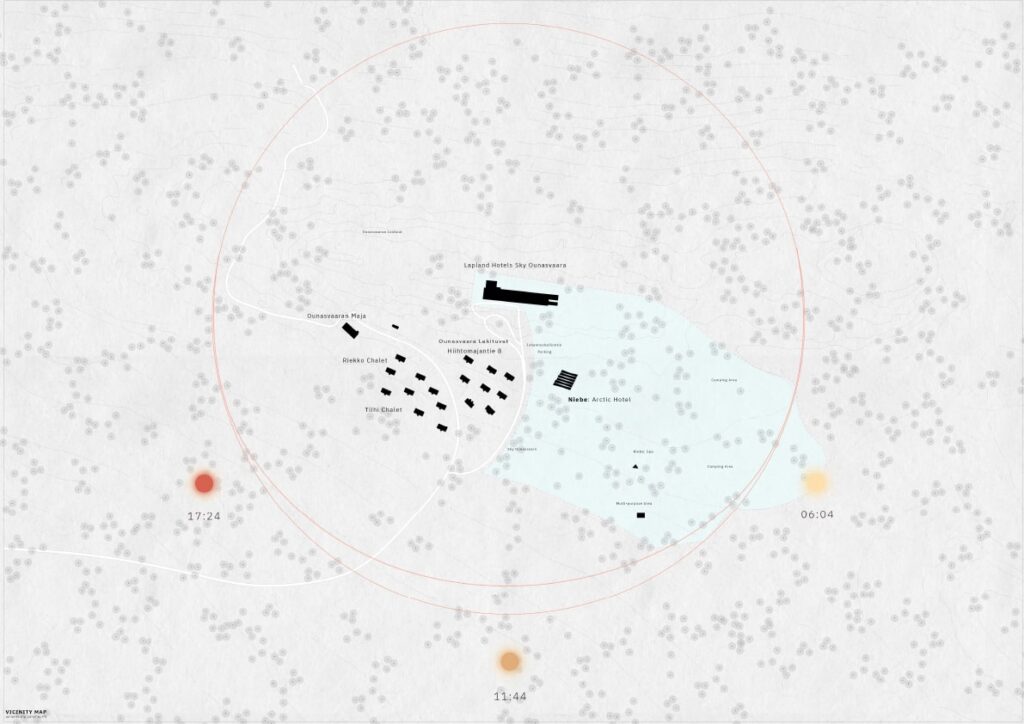
The name Niebe carries the project’s conceptual origin in a single word: snow in another language, carrying the image of a flake that is both structurally precise and momentarily fragile — crystalline in its geometry, gone upon contact with a warm surface. The building takes this paradox as its architectural brief. It is designed with the formal precision of a crystal — the zigzag and curve of its plan responding to computational analysis of Finland’s annual radiation patterns and thermal comfort requirements — and with the material lightness of something that rests on the snow rather than penetrates it. The organic forms that give the hotel its silhouette are not chosen for visual interest. They are shaped by the climatic data of the site: the angle of the sun during Finland’s shortest days, the direction of the prevailing wind across the arctic ground plane, the thermal bridging risks that the extreme temperature differential between interior and exterior imposes on every junction in the building envelope.
Location          Finland
Client            Competition Entry
Type              Arctic Hotel — Competition Proposal
Status            Competition Proposal
Year              2021
Principal         Ibrahim Nawaf Joharji
Scope             Organic Architecture, Climatic Design, Hospitality
The aurora borealis is not a static phenomenon. It moves — its curtains of light shifting across the sky in patterns that are never repeated, its colors changing from green to violet to red as the charged particles interact with different layers of the atmosphere at different altitudes. The hotel’s interior programming responds to this movement by treating the sky as the primary architectural feature of every guest space. The layout plans derive their organizational logic from the aurora’s own spatial patterns — the chandeliers that punctuate the interior volumes echo the cascading curtain forms of the northern lights, the ceiling geometries of the primary public spaces shaped to frame the sky view rather than close it off. A guest lying in a hotel room in Finnish winter should be able to watch the aurora move across the sky above them. The architecture is designed to ensure this is possible from as many positions within the building as the program allows.
The thermal comfort analysis that informed the building’s form was conducted against Finland’s full annual radiation cycle — not only the extreme winter conditions that define the arctic hotel typology but the long summer days that produce the opposite challenge, when the same building that must retain heat for eight months must also manage solar gain during a period of nearly continuous daylight. The zigzag plan geometry produces a building that presents different face angles to the sun at different times of day, distributing the thermal load across the envelope rather than concentrating it on a single south-facing surface. The strong curves in the building’s massing reduce wind load and snow accumulation on the roof surfaces, the form performing the structural work that the climate demands while simultaneously producing the organic silhouette that the competition brief required. The building earns its visual character through its environmental logic rather than despite it.
The visitor experience was treated as an architectural problem of panoramic orientation rather than of interior comfort alone. Finland’s arctic sky is the destination — the reason the hotel exists in this location rather than any other. The building’s sectional organization ensures that the primary guest spaces face outward in all directions, the curved and angular geometry of the plan producing a variety of view angles toward the surrounding landscape and the sky above it. No guest room faces inward. The circulation routes that connect the hotel’s programmatic zones are themselves designed as viewing corridors, the movement through the building producing a sequence of sky encounters before the guest reaches their room and the aurora — on the nights it appears — completes the architectural experience that the building has been preparing them for since arrival.
The design methodology governing this type of climate-driven, computationally developed proposal is detailed in how-we-work. For hospitality developers and tourism operators considering arctic or extreme-climate hotel commissions that demand this depth of environmental and experiential design, the engagement framework is outlined in bespoke-architecture.