
The Artistic Curl
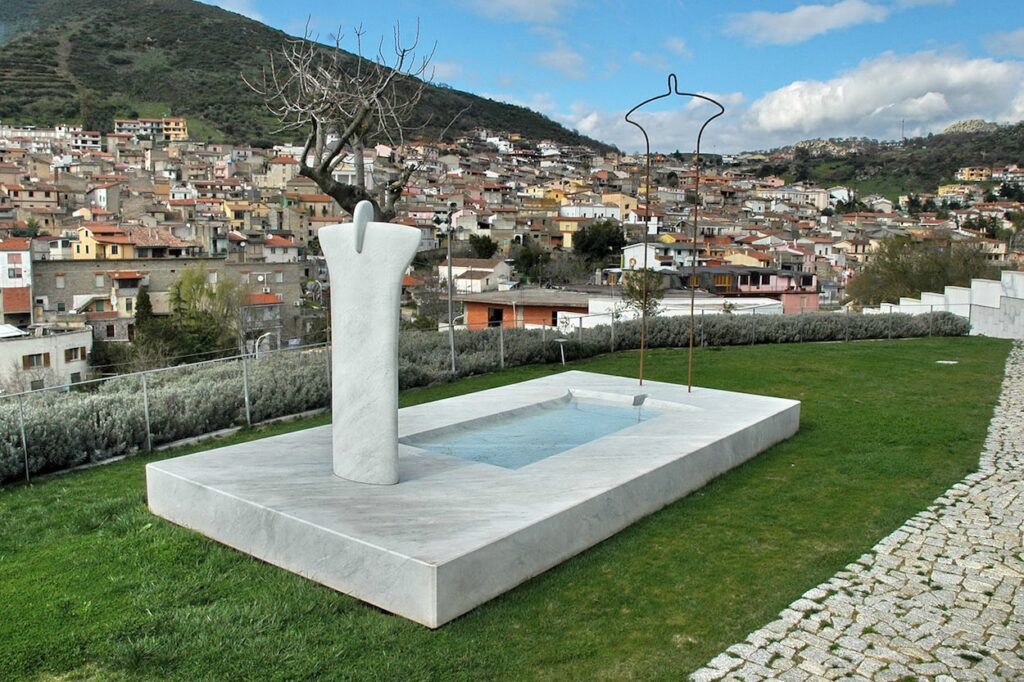
Costantino Nivola left Sardinia and became one of the most significant sculptors of the twentieth century. His work returned to his birthplace of Orani as a museum. The question this competition posed was not how to design a building next to that museum — it was how to design a building that is, itself, a Nivola sculpture from the inside out.
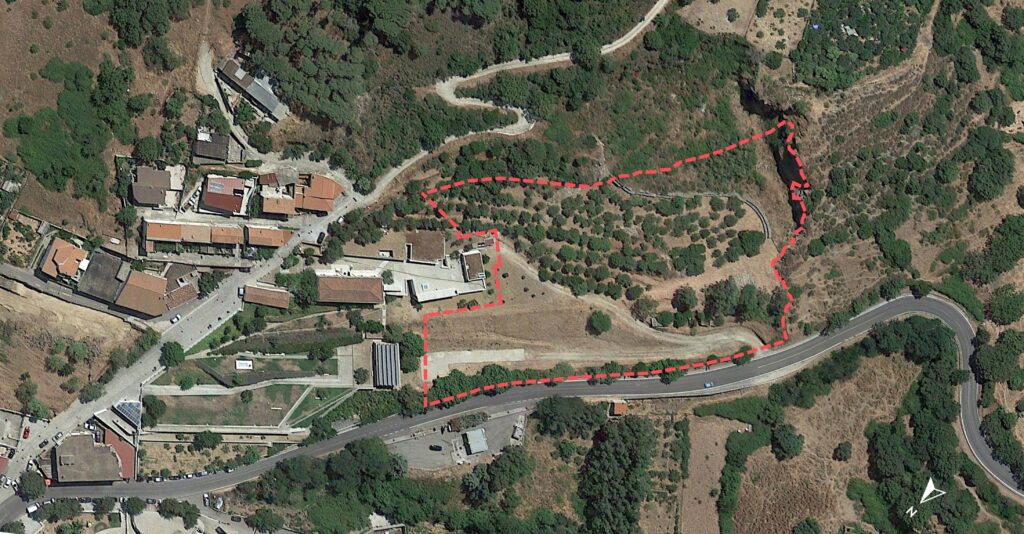
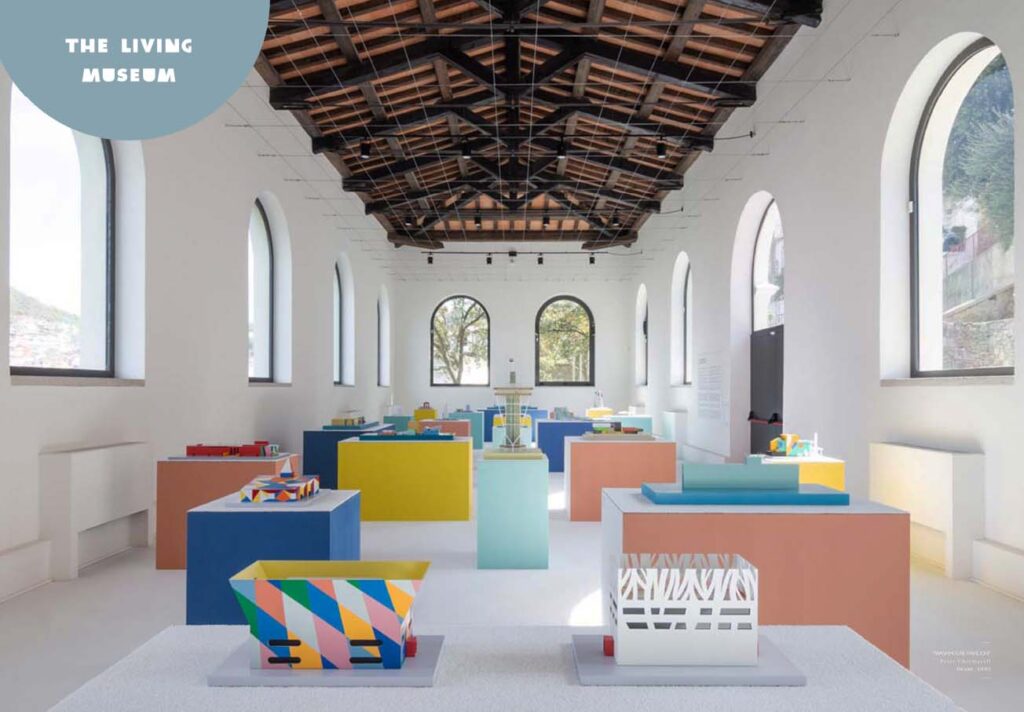
The Living Museum competition brief asked for a residential module within the Nivola Museum grounds in Orani, Sardinia — a dwelling that could exist in proximity to one of Italy’s most important collections of postwar sculpture without reducing that proximity to a view or a proximity. The proposal refused the conventional relationship between art and its visitor. Instead of placing a resident beside the work, it placed them inside the logic that produced the work. The architecture does not frame Nivola’s sculptures. It is built from the same spatial and formal intelligence that generated them.
Location          Orani, Sardinia, Italy
Client            Nivola Museum
Type              Residential Living Module — Competition Entry
Status            Competition Proposal
Year              2021
Principal         Ibrahim Nawaf Joharji
Scope             Organic Architecture, Extreme Engineering, Cultural Residence
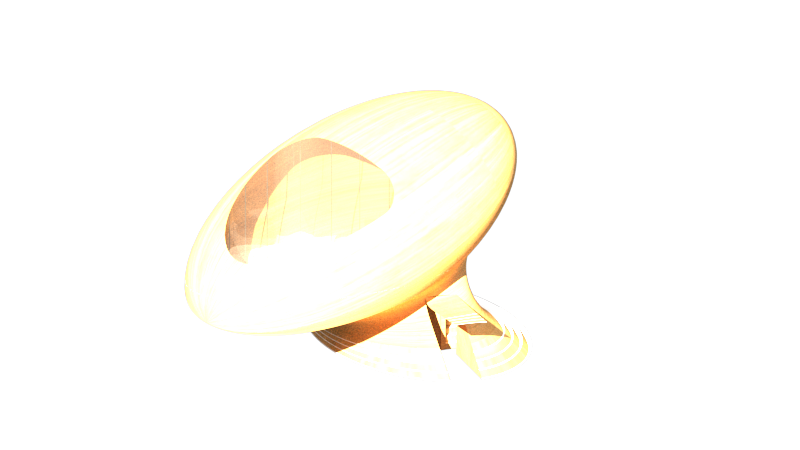
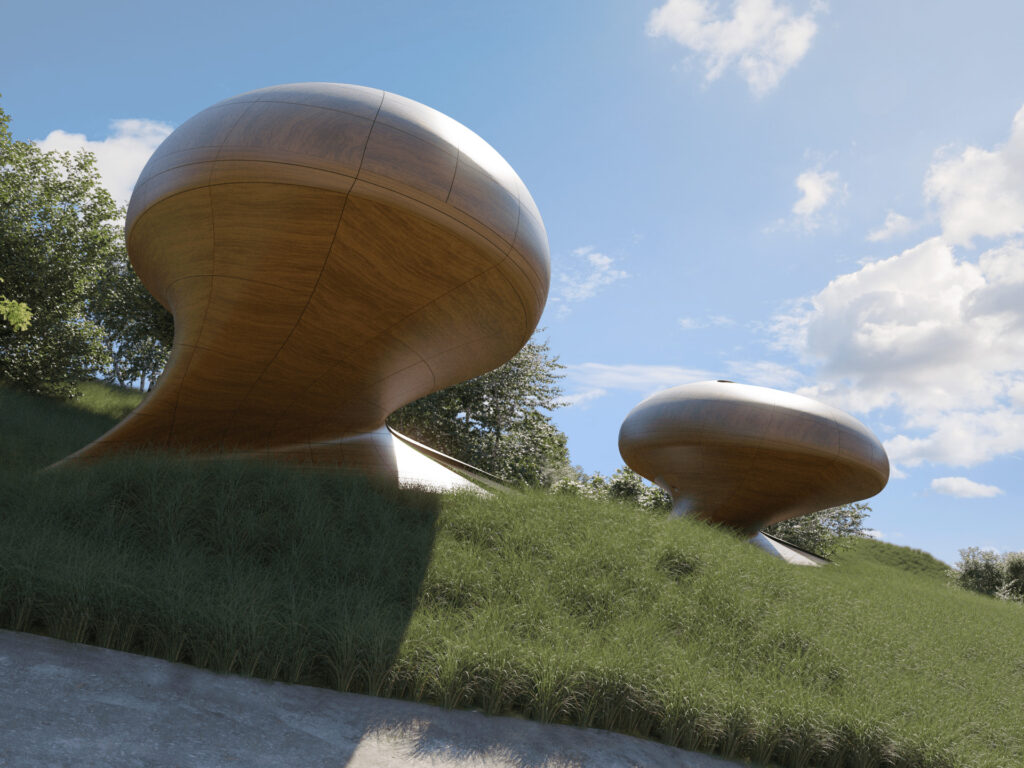
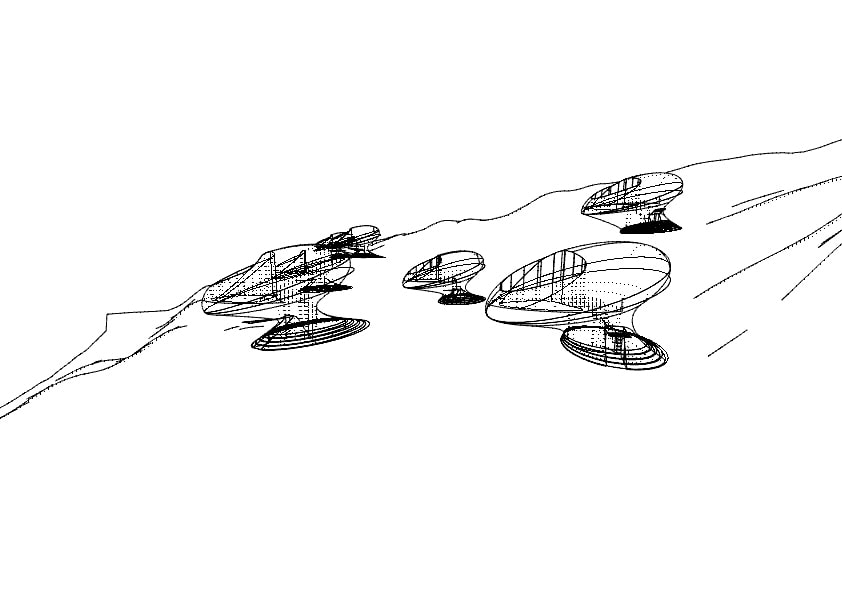
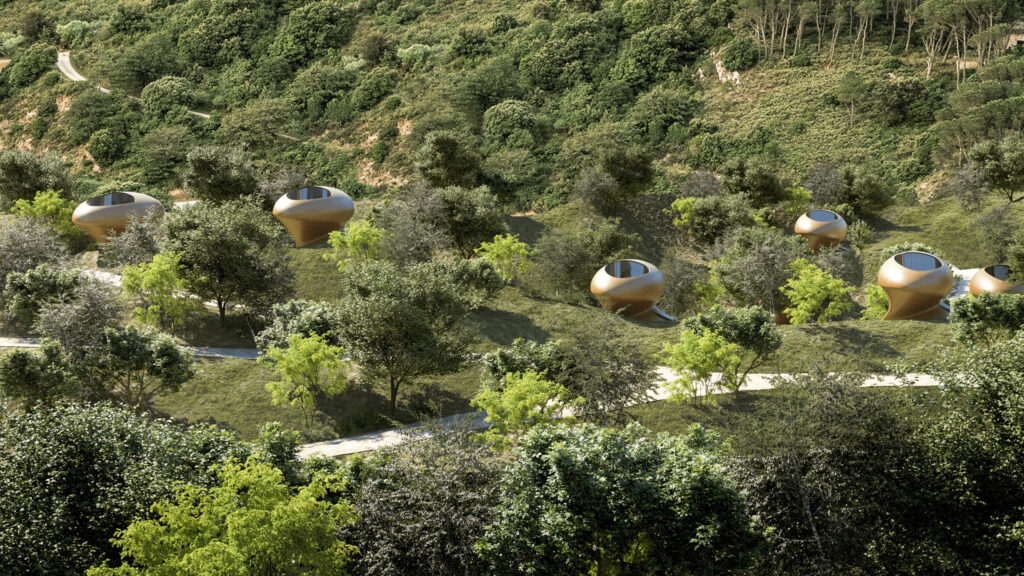
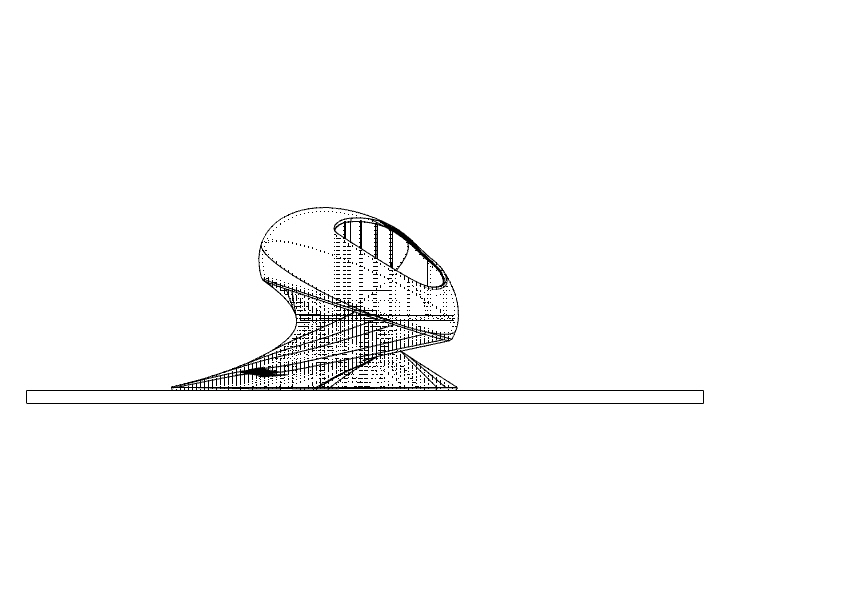
The study began with Nivola’s sculpture known as The Mother — the work that most directly encodes his understanding of mass, tension, and the human body as an architectural event. The sculpture’s form is not symmetrical. It holds weight unevenly, its surfaces pulling in different directions from a single grounded base. The living module extracted this formal logic and scaled it to habitation: a twisting ellipsoid that rises from the Sardinian ground with the same weighted asymmetry as the sculpture, its skin rotating as it ascends so that no elevation presents the same face twice. The form is ephemeral in the precise sense that Nivola’s work is ephemeral — it changes completely depending on where the observer stands relative to it.
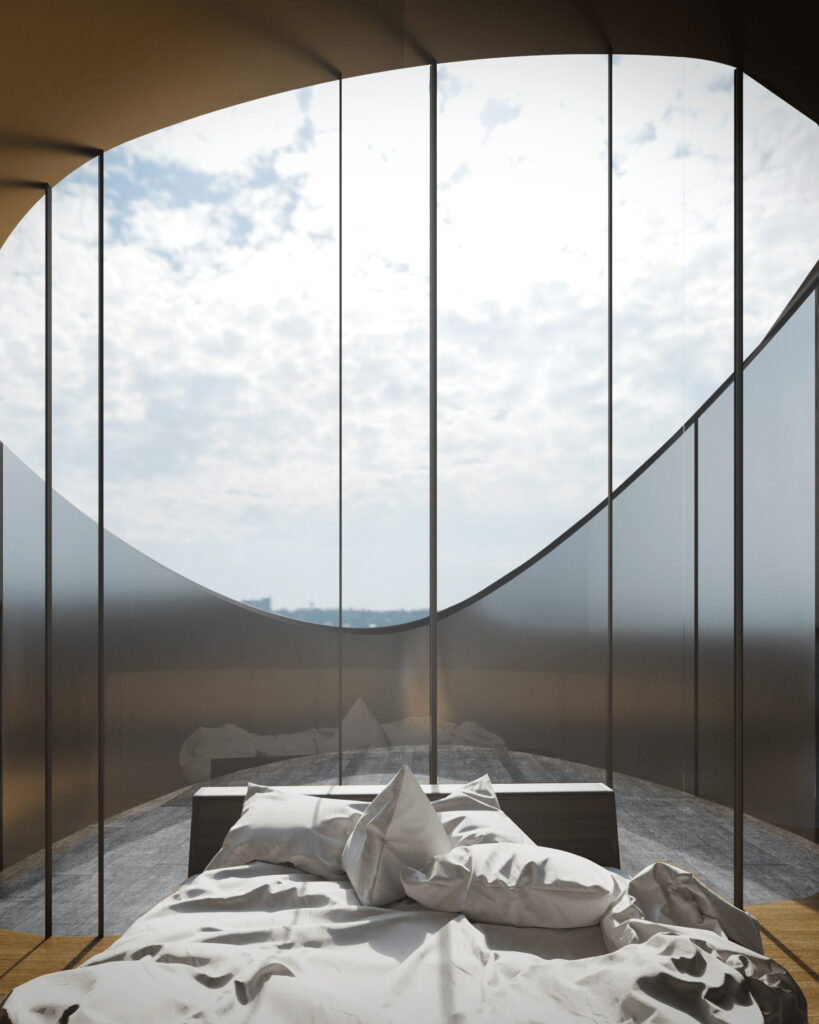
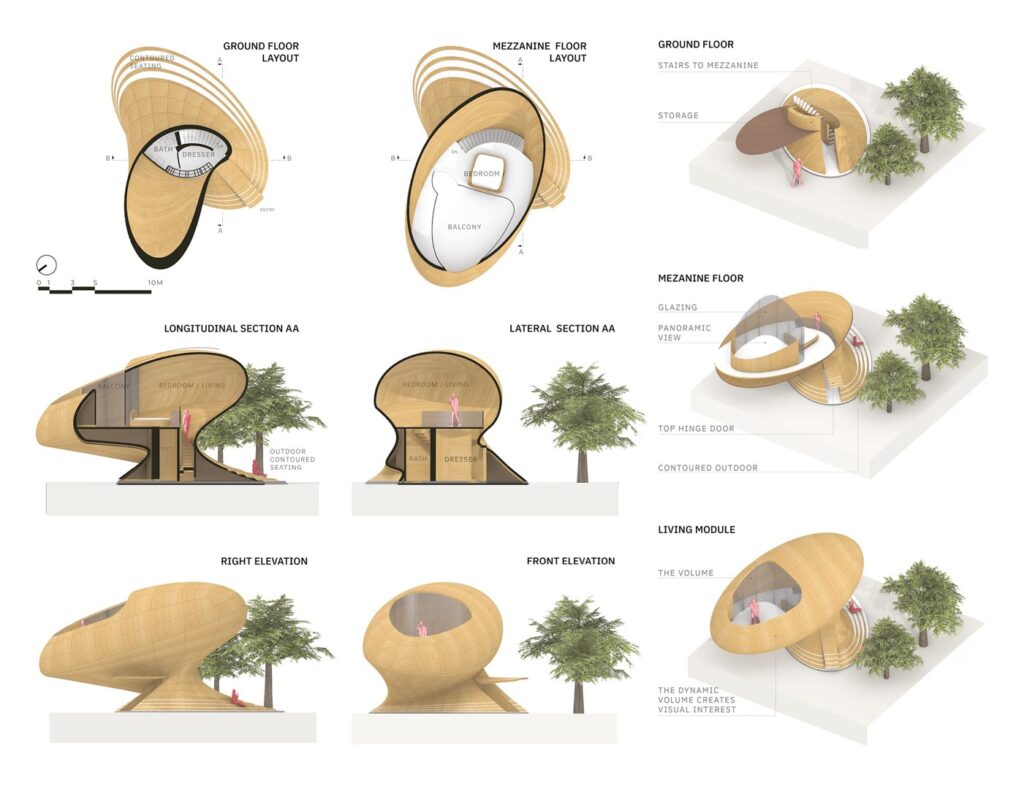
The entry sequence was designed as the project’s most deliberate scenographic act. The approach through the outdoor landscape arrives at a threshold that does not announce itself generously. The entrance takes the visitor in — the verb is intentional — through a compressed passage that then opens onto a narrow rotating staircase. The staircase disorients before it reveals. The compression of that ascent is architectural preparation: the body moving through a tight spiral, unable to read the space ahead, until the staircase releases onto an expansive mezzanine with a panoramic view of the Sardinian nature surrounding the site. The sequence from dark to light, from tight to open, from enclosure to panorama, is the spatial argument of the project stated as a bodily experience rather than a written one.
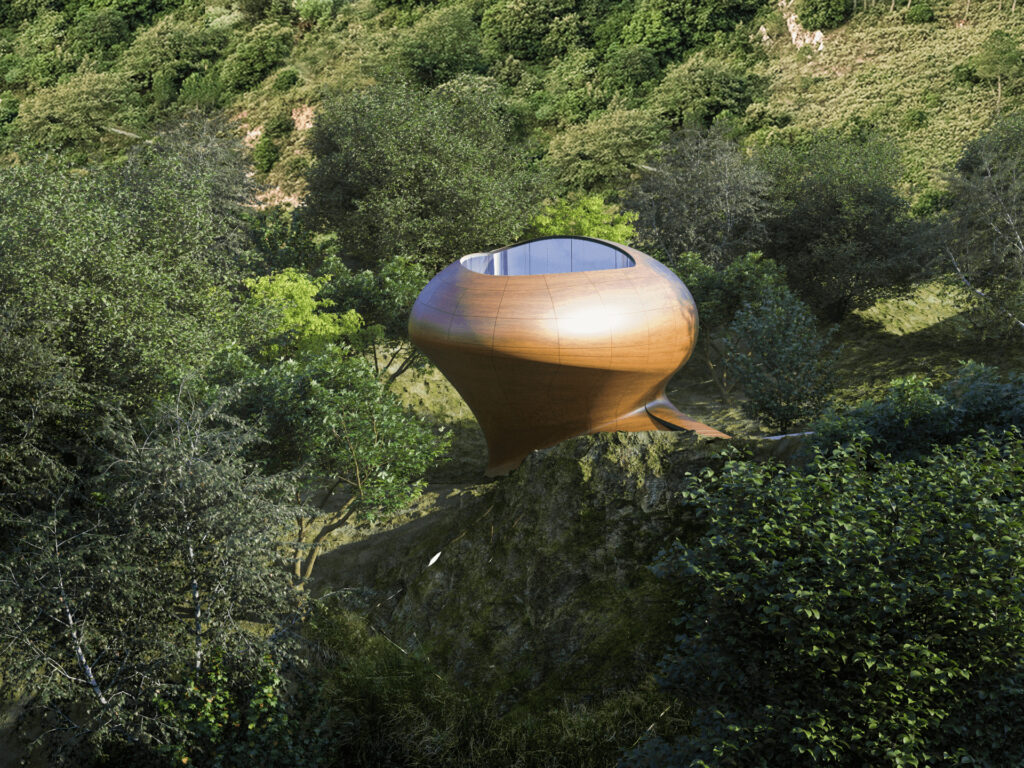

Wood was selected as the primary cladding material for reasons embedded in the site’s own cultural history. Sardinia and Sicily carry deep traditions of wood craft — furniture, sculpture, architectural ornament — accumulated across centuries of material culture. The wood skin of the living module connects the ellipsoid form to this local tradition while simultaneously heightening the contrast between the organic surface and the extreme engineering of the structural system beneath it. From a distance, the module reads as a natural object grown from the Orani hillside. At close range, the precision of its geometry reveals itself as something altogether different — a manufactured body that has chosen to wear the material of its landscape rather than announce its structural ambition.
The outdoor seating carved into the contoured ground around the module is not a terrace. It is a contemplative threshold — a space where the resident sits within the landscape rather than above it, the module’s organic form visible from below as a presence rather than a building. The private external patio opens from the mezzanine level, extending the interior’s panoramic relationship with the Sardinian nature outward to a semi-enclosed platform where the boundary between room and landscape is a question of weather rather than wall. To live in this module is to be continuously uncertain about where the artwork ends and the inhabited space begins. That uncertainty is the project’s central achievement.






The Nivola Living Museum belongs to a sustained inquiry at INJ Architects into what happens when the boundary between art object and inhabitable space is treated not as a design constraint but as the design itself. The methodology governing this approach — where the artwork’s own formal intelligence becomes the building’s generative system — is detailed in how-we-work. For cultural institutions, museums, and private clients seeking residential or pavilion commissions developed from an equivalent depth of artistic and spatial research, the engagement framework is outlined in bespoke-architecture.