
Ergonomics in furniture design influences productivity, physical health, cognitive performance, and long term comfort. Poorly designed furniture contributes to back pain, neck strain, reduced concentration, fatigue, and long term musculoskeletal disorders. Ergonomic furniture supports the body in neutral postures, reduces biomechanical stress, and enables users to maintain focus on tasks rather than discomfort. This article explains ergonomic principles for chairs, desks, and layouts, with comparisons of postures, materials, and long term comfort factors.
Why Ergonomics Matters in Work and Living Spaces
Human bodies are not adapted to prolonged static sitting. Extended sitting increases spinal compression, reduces circulation, and accelerates muscle fatigue. Ergonomic furniture mitigates these effects by aligning the body with its natural biomechanical structure. Improved posture reduces physical strain and supports cognitive efficiency. Ergonomic environments also reduce absenteeism, injury risk, and long term healthcare costs in professional and residential contexts.
Ergonomic Sitting Postures
Neutral posture is the foundation of ergonomic design. It involves a natural spinal curve, relaxed shoulders, elbows near ninety degrees, wrists in neutral alignment, and feet supported on the floor or a footrest. Poor posture includes slouching, forward head tilt, unsupported lumbar spine, and prolonged leg crossing. These positions increase disc pressure, muscle tension, and joint stress.
Dynamic posture is increasingly recommended. Alternating between sitting, standing, and movement reduces static load and improves circulation. Ergonomic furniture should enable multiple postures rather than enforcing a fixed position.
Ergonomic Chairs
Chairs are the most critical ergonomic component in sedentary environments. Key features include adjustable seat height, lumbar support, seat depth adjustment, armrest adjustability, and backrest recline.
Lumbar support preserves the natural lower spine curvature and reduces disc compression. Seat depth should allow a clearance between the seat edge and the back of the knees to avoid restricting blood flow. Armrests should support elbows without elevating shoulders. Backrest recline between ninety and one hundred twenty degrees reduces spinal load and improves comfort.
Materials affect comfort and durability. Mesh improves ventilation and reduces heat accumulation. High density foam distributes pressure and maintains structural support over time. Leather and synthetic coverings influence breathability, maintenance, and tactile perception.
Ergonomic Desks and Work Surfaces
Desk height should align with elbow height in seated and standing postures. Fixed height desks rarely accommodate anthropometric diversity. Adjustable desks enable posture variation and reduce sedentary exposure.
Desk depth should allow monitor placement at an appropriate viewing distance, typically one arm length. Desk width should support task equipment without forcing extended reach.
Surface materials affect tactile comfort and durability. Wood and laminate provide thermal neutrality and low glare. Metal and glass reflect light and can cause glare, requiring careful lighting coordination. Edge profiles should be rounded to reduce contact pressure on forearms.
Layouts and Spatial Ergonomics
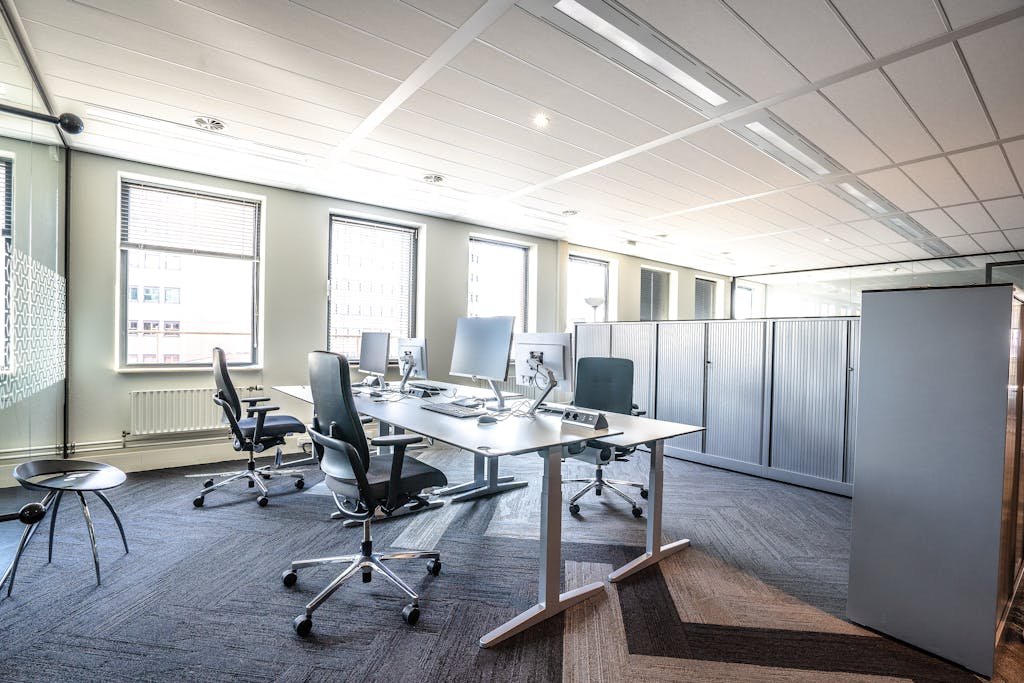
Furniture layout influences posture, movement, and visual comfort. Monitors should be positioned at eye level with the top of the screen at or slightly below eye height. Input devices should allow neutral wrist posture and minimal reach.
Circulation paths should support movement and posture changes. Dense layouts discourage movement and increase static sitting time. Adequate leg clearance under desks allows posture variation.
Lighting and acoustics interact with ergonomic performance. Poor lighting increases eye strain and fatigue. Poor acoustics increase cognitive load and stress.
Materials and Long Term Comfort
Material properties affect thermal comfort, pressure distribution, durability, and maintenance. High density foams maintain structural support longer than low density foams. Breathable fabrics reduce moisture accumulation and thermal discomfort. Rigid frames maintain alignment, while flexible frames allow micro movements that reduce static loading.
Sustainable materials such as engineered wood and recycled polymers can be used if structural and durability requirements are met.
Comparison Table of Ergonomic Furniture Factors
| Furniture Element | Key Ergonomic Feature | Posture Impact | Material Considerations | Long Term Comfort Level | Typical Use Case |
|---|---|---|---|---|---|
| Task chair | Adjustable lumbar and seat height | Maintains neutral spinal posture | Mesh or high density foam | High when adjustable | Office and home workstations |
| Standing desk | Height adjustability | Reduces sedentary time | Metal frame with laminated top | High with posture alternation | Offices and studios |
| Fixed desk | Standard height surface | Neutral for average body sizes only | Wood or laminate | Medium | Residential study areas |
| Armrest system | Adjustable height and width | Reduces shoulder and neck strain | Soft padded surfaces | Medium to high | High use workstations |
| Footrest | Height and angle adjustment | Improves lower limb circulation | Plastic or metal | Medium | Shorter users or elevated desks |
Productivity Impacts of Ergonomic Design
Ergonomic furniture reduces physical fatigue, increases attention span, and lowers error rates. Comfortable postures improve breathing and circulation, which supports cognitive performance. Dynamic furniture encourages movement, which enhances metabolic health and mental alertness.
Common Ergonomic Mistakes
Using non adjustable chairs for long duration work. Positioning monitors too low or too high, causing neck strain. Using desks that are too high, leading to shoulder elevation. Ignoring foot support for shorter users. Selecting overly soft seating that lacks structural support and increases spinal flexion.
Design Recommendations for Architects and Interior Designers
Specify adjustable furniture for shared workspaces. Consider anthropometric diversity when selecting dimensions. Integrate sit stand workstations in long duration task zones. Provide spatial allowances for movement and posture change. Select materials based on durability, thermal comfort, and maintenance. Coordinate furniture layout with lighting and acoustics to reduce cognitive load.
Conclusion
Furniture ergonomics is a systems approach integrating posture science, material performance, and spatial design. Chairs, desks, and layouts must function together to support neutral posture, movement, and cognitive performance. Long term comfort depends on adjustability, material durability, and spatial flexibility. Ergonomic furniture is a functional requirement for productive and healthy environments, not a visual preference.

Summary
Ergonomics in furniture design directly affects physical health, productivity, and long-term comfort by supporting neutral postures, reducing biomechanical stress, and encouraging movement. Ergonomic chairs, desks, and layouts must be adjustable to accommodate diverse body types and enable posture variation, while materials influence thermal comfort, pressure distribution, and durability. Proper spatial layout, monitor positioning, and supportive accessories such as armrests and footrests further reduce strain and cognitive fatigue. Poor ergonomic choices lead to musculoskeletal issues, reduced focus, and long-term health risks, making ergonomic furniture a functional necessity rather than a purely aesthetic design decision.
Pingback: Adjustable Standing Desks vs Fixed Desks: Health, Productivity, and Investment Value
Comments are closed.