
Inside the Manufacturer’s Library: Sourcing Materials for Luxury Architecture
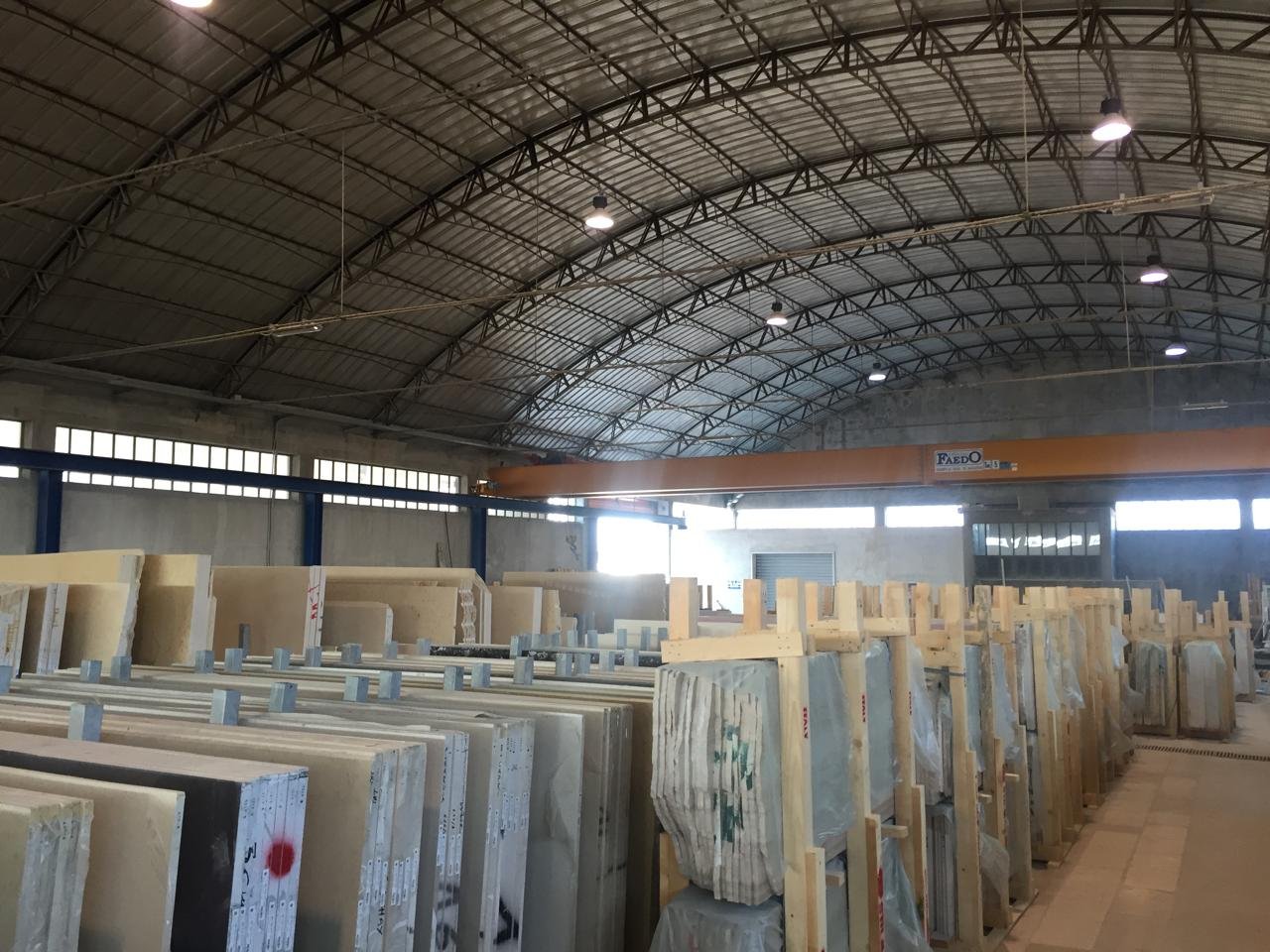
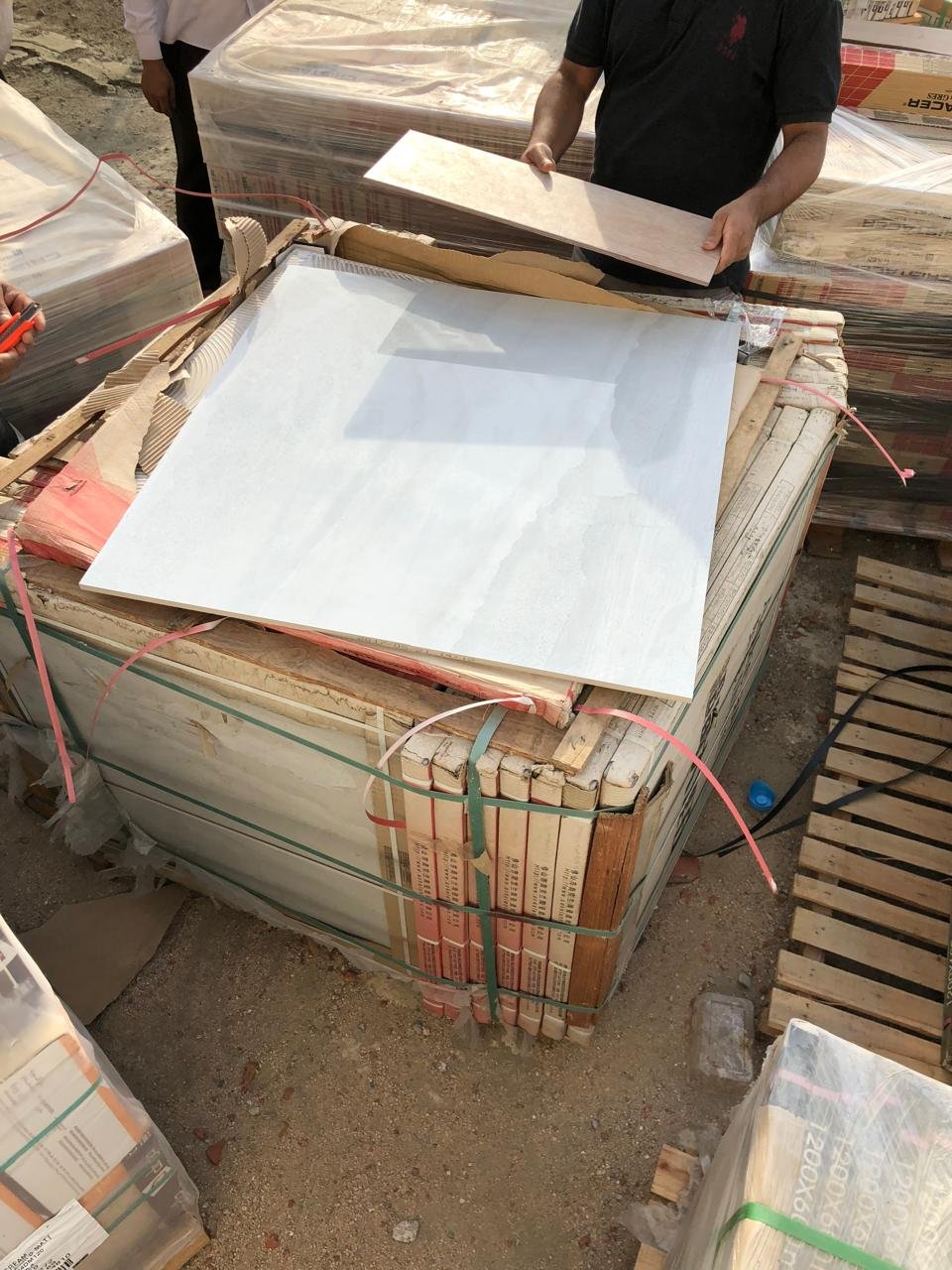
A piece of stone on the meeting table carries only part of the story. A small sample compresses the veining into a square; the full slab shows the direction of the grain and how it might meet the edge of a basin or turn from one wall to another. Some purchasing decisions begin at the slab itself, before a finish enters the schedule.
INJ Architects visits exhibitions, supplier showrooms and fabrication workshops while sourcing materials and fittings for luxury architecture projects. Each brief brings its own questions. One visit may concern a cut-to-size stone piece; another may test how metal sits alongside timber or how light falls across ribbed ceramic. The 36 photographs show what the studio looks for before approving and ordering a product.
From slab to fabricated piece
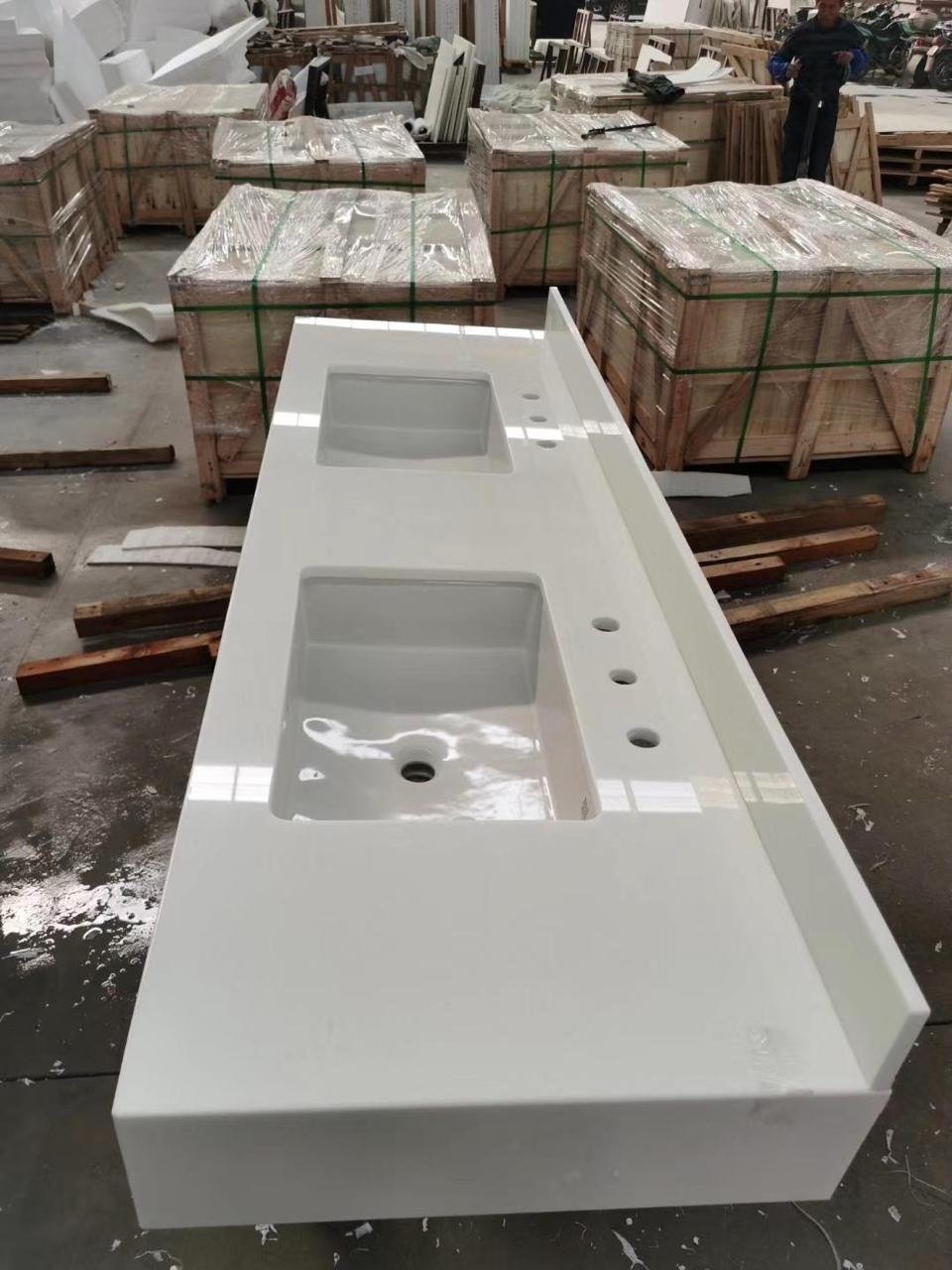
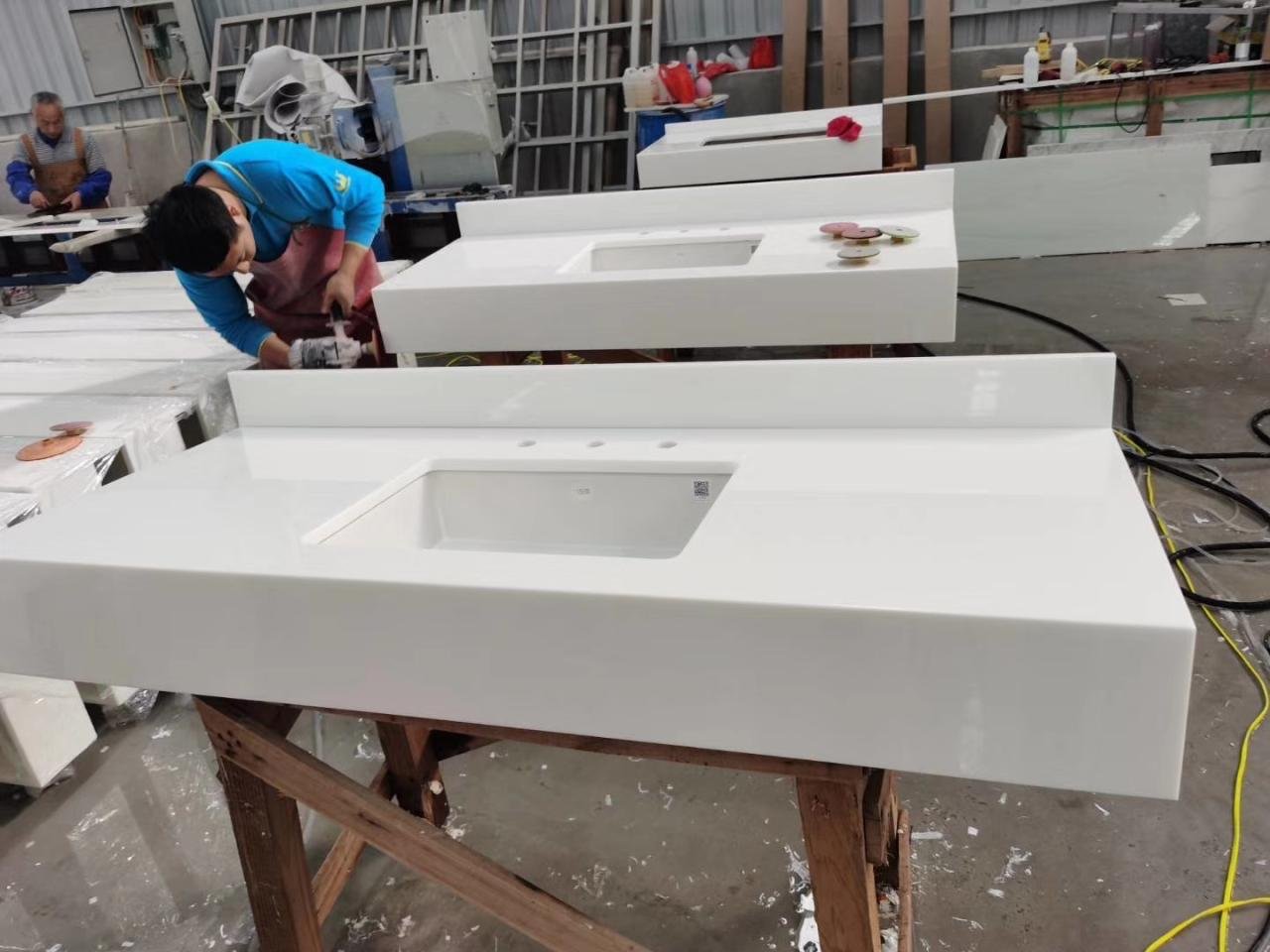
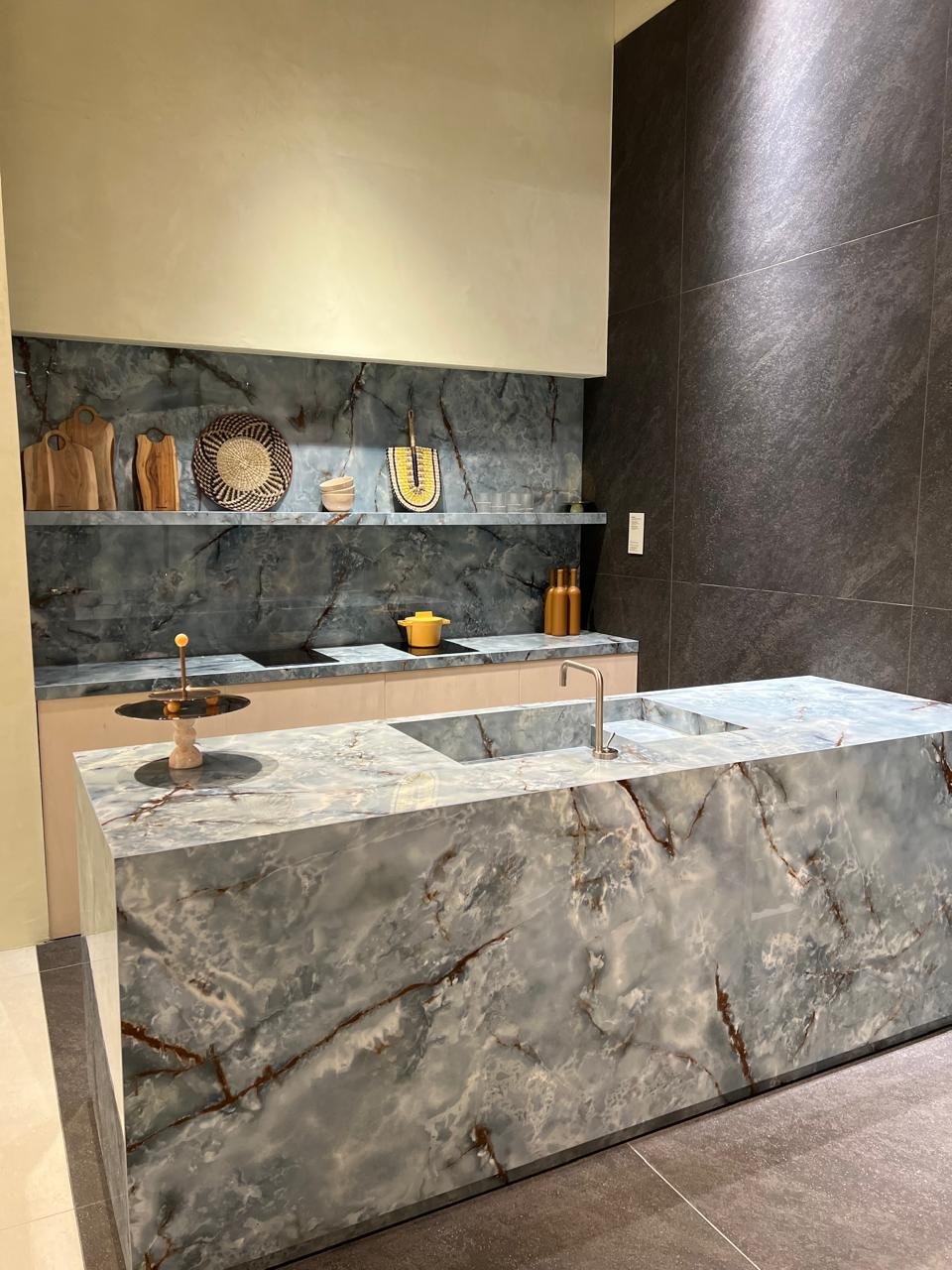
A stone warehouse reveals variation from one slab to the next within a group. Once cutting begins, the questions concern particular positions: where to place the basin edge and which part of the slab will be visible as the horizontal surface turns down. Photographs of bespoke basins make that choice tangible. The fabricator can show where a joint will run and what the edge will look like at close range.

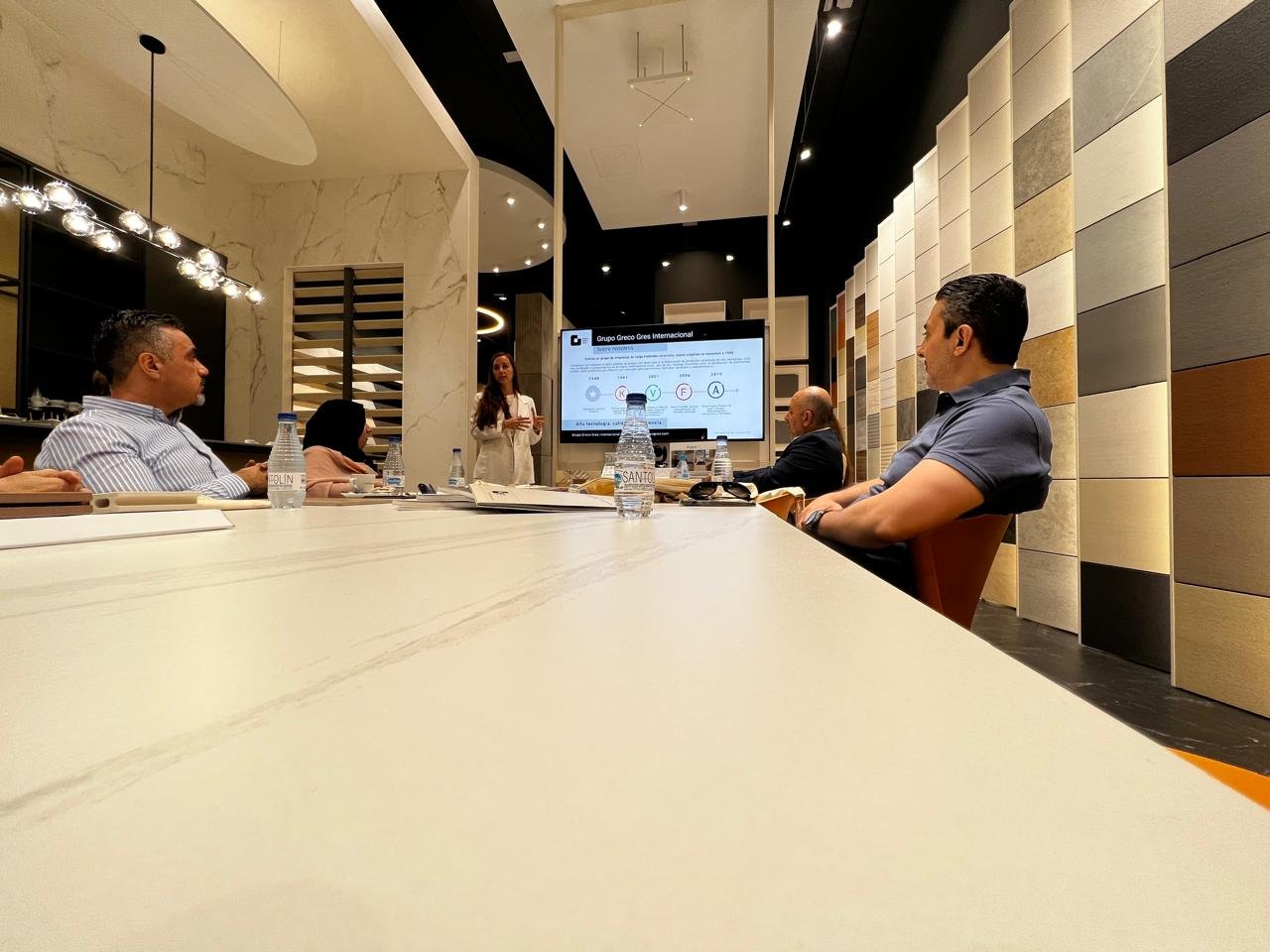
Stone at the scale it is bought
Pivoting racks let the team see the entire slab and compare it with another. A polished surface moves from bright to subdued as the viewer changes position, while the veining remains readable across its length. A large wall calls for a count of suitable slabs and a look at how they meet. A step or edge calls for a sample of the finished profile.


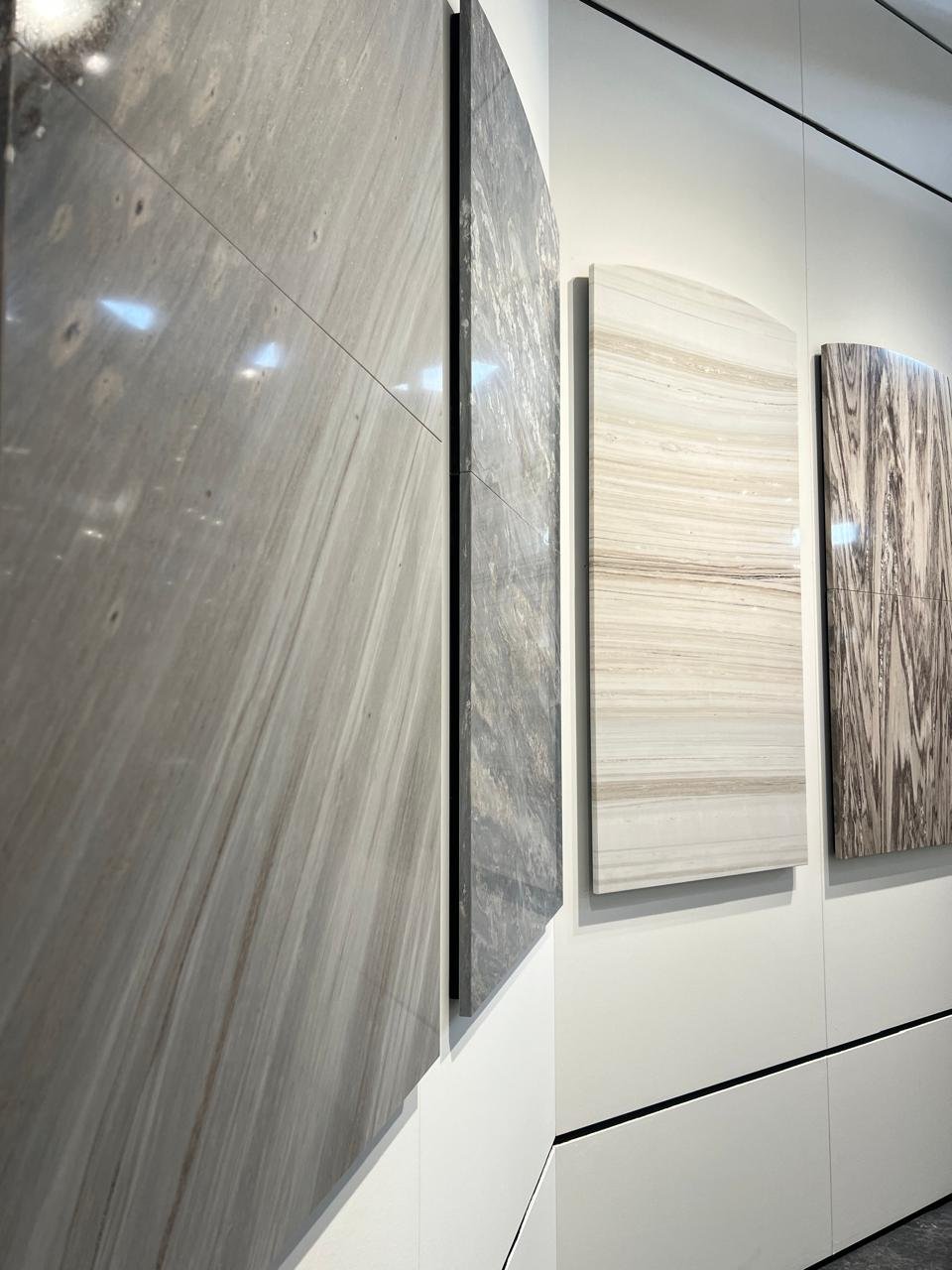

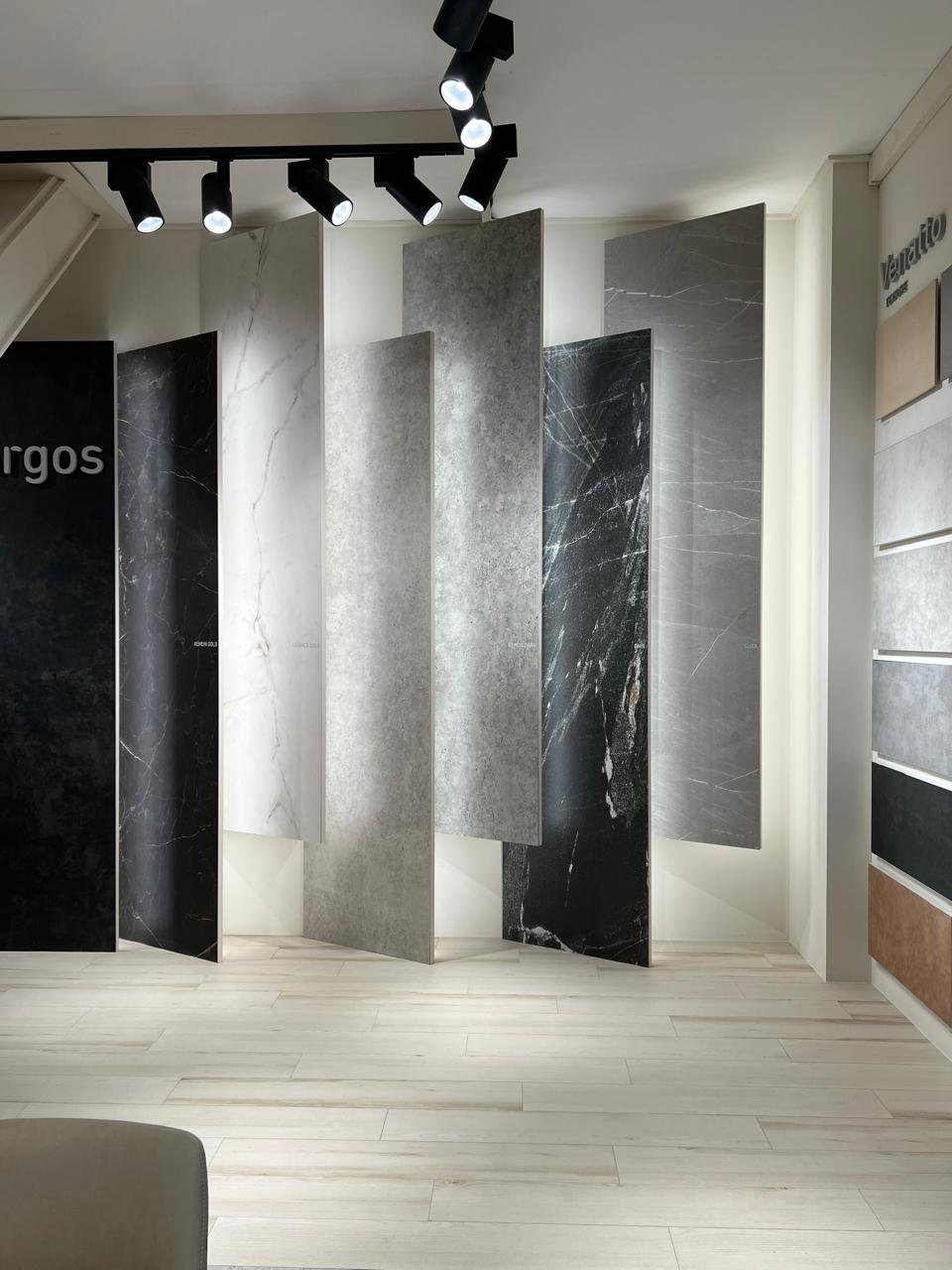

Between a loose sample and an installed panel
Ribbed ceramic samples bring colour, texture and the shadow of a joint into the same field of view. Two adjacent pieces can reveal how a finish will look under light that runs across the wall. An assembled sample gives the architect and supplier a common reference for the direction of the surface and the appearance of the joint.




Glass, metal and light at the same distance
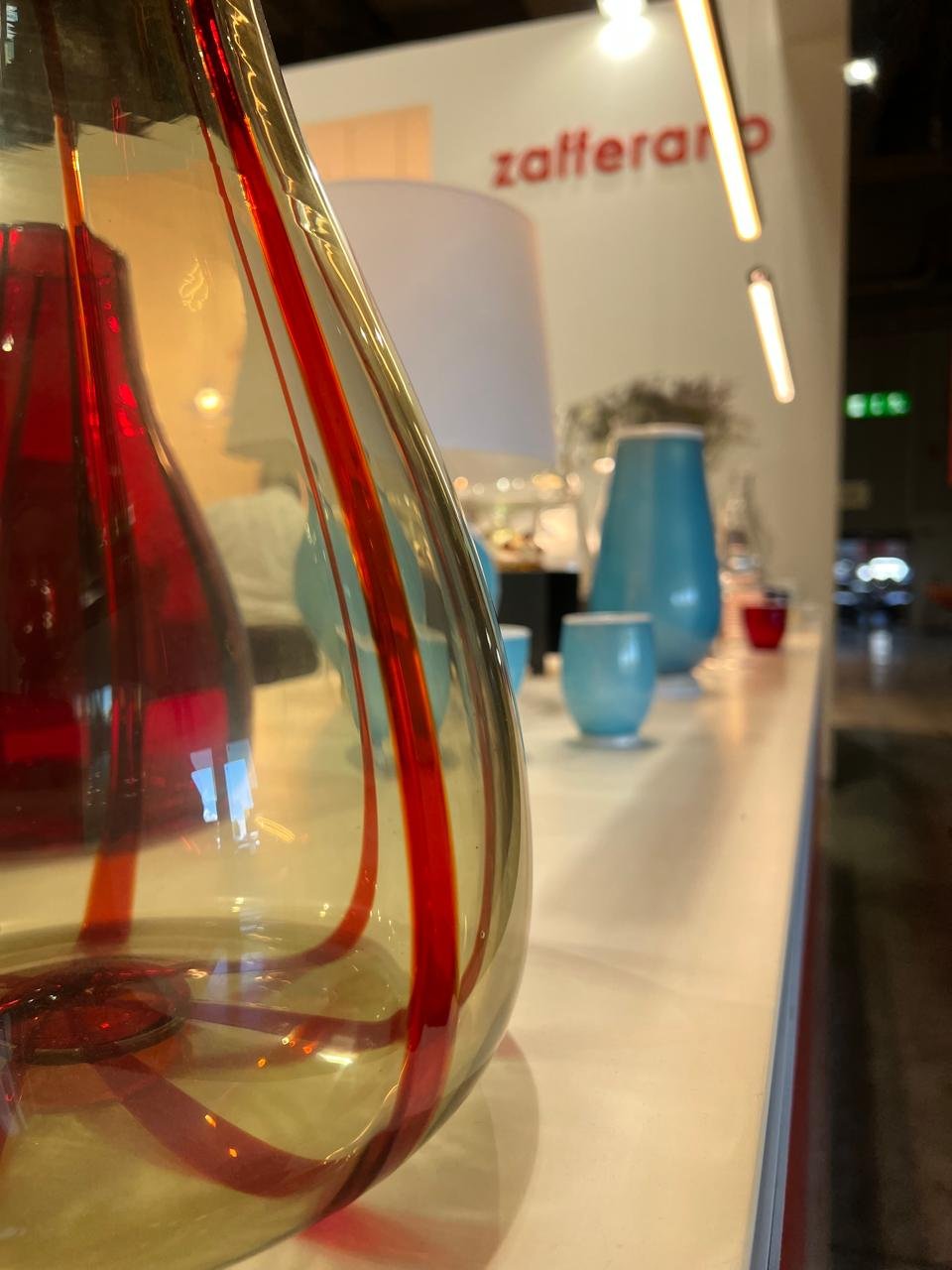
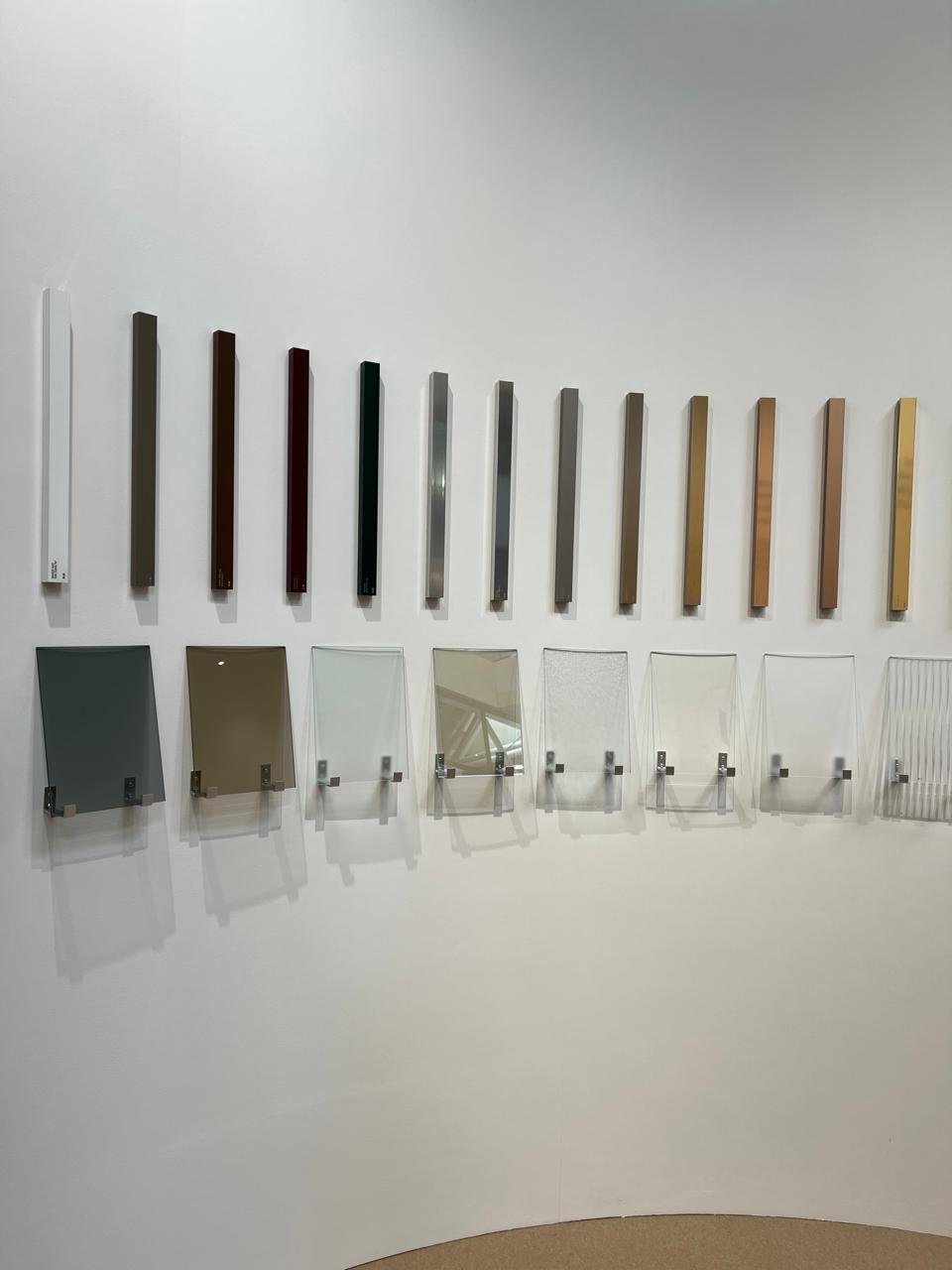
Colour deepens near the edge of some glass and changes again when several layers overlap. Metal samples show how polishing or a textured finish alters a reflection. A recessed lighting display gives a view of glare at eye level. These are useful observations wherever a handle, a glazed panel and a light meet at the same entrance.



Where materials meet in use
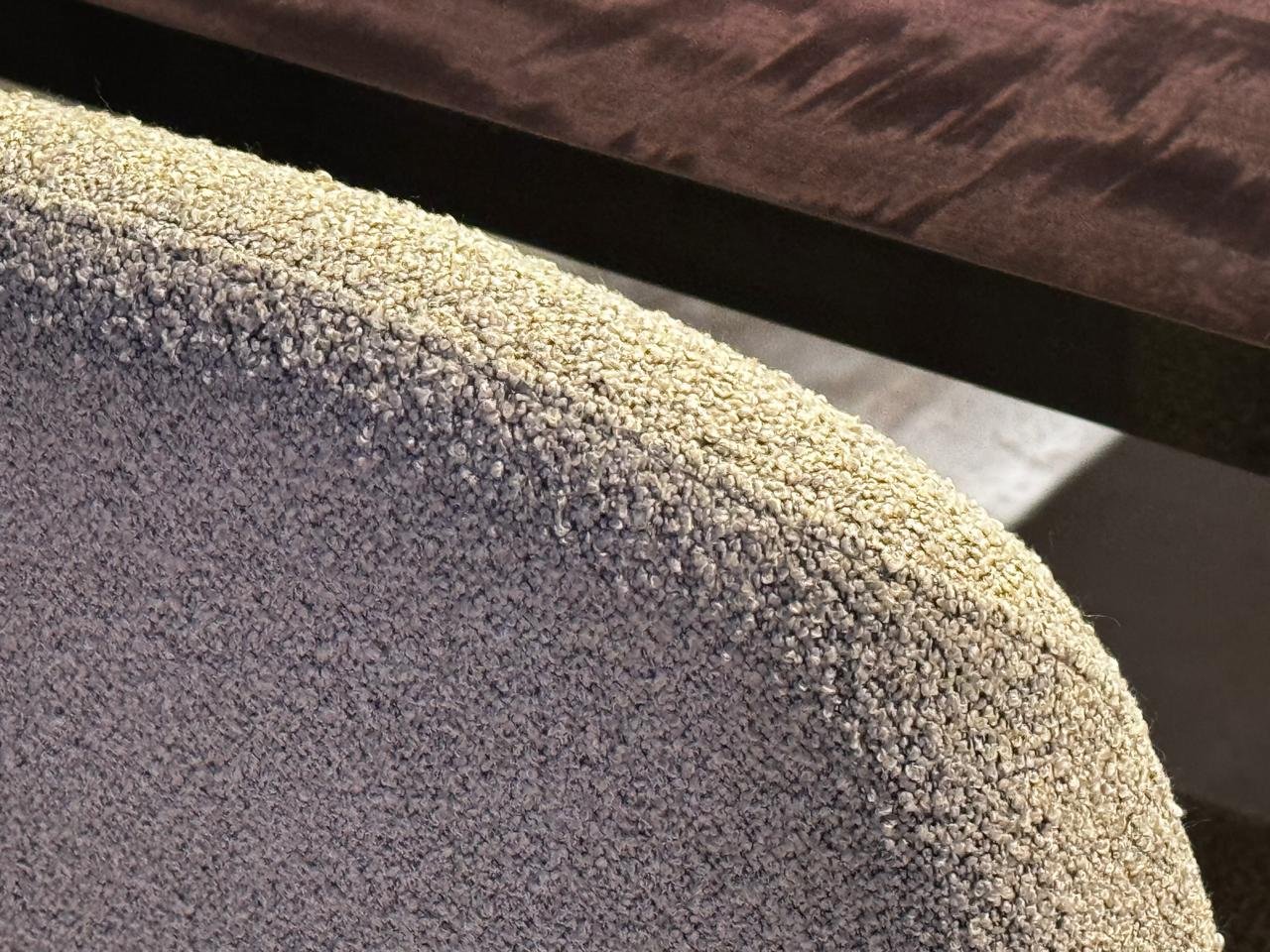
In furniture and fittings, repeated contact draws attention to the edge of the seat, the line of stitching and the meeting of upholstery with glass or metal. With a basin or kitchen island, viewing distance becomes part of the evaluation. A bespoke workshop can show what a change of edge, radius or fabric does to the finished piece.



What the supplier can establish before an order
When reviewing a new product, the team looks for a full-size example, comparable finishes and a clear account of what can be customised. Purchasing then brings questions about sizes, quantity, lead times, the approved reference sample and replacement parts. A recorded sample connects what the team sees with what goes into the specification and what arrives on site.


Each visit narrows the choice for a particular project. The products worth pursuing are the ones the architect, manufacturer and contractor can describe in the same terms, with a clear basis for evaluating the piece when it reaches the site.
See the studio’s EquipHotel field report from Paris and What Construction Reveals for the installation stage.
Manufacturers and suppliers can share new products, samples and bespoke fabrication capabilities with the design and procurement team through the INJ Architects contact page.
Photographs from the INJ Architects visual archive. Open any image to see the original at full size.


