A Building Is Not an Asset Until Its Data Is Complete: Managing Architecture in the Post-Handover Economy
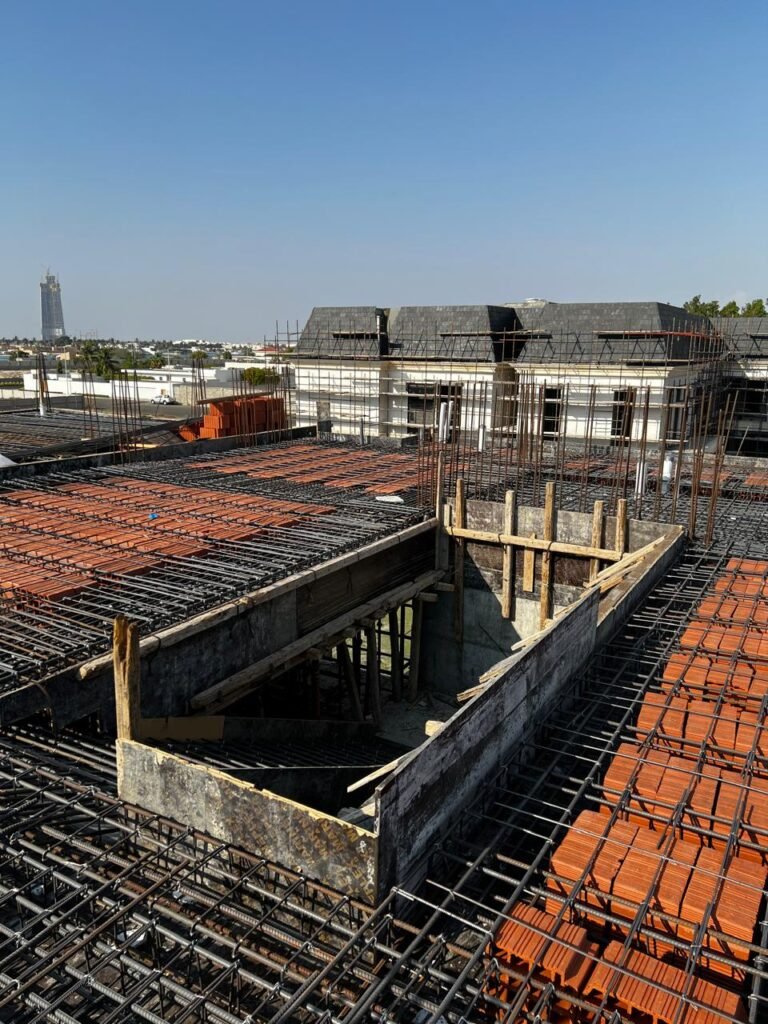
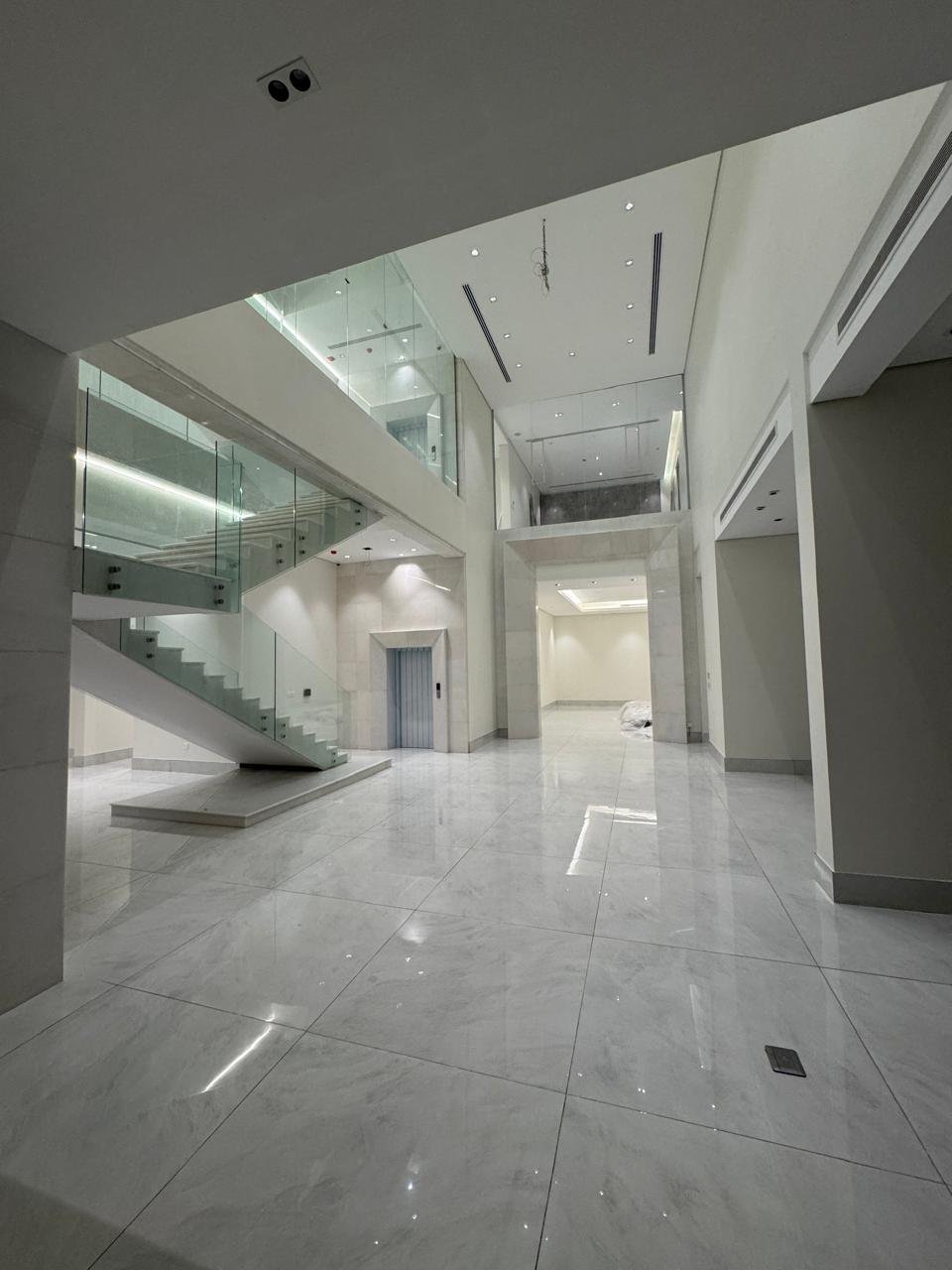
The moment the keys change hands, everyone assumes the work is finished. In truth it has not yet begun. A building that stands with its façades complete, its floors clean and its power connected is not yet an asset; it is a cost that has hardened into mass. It becomes an asset, in the sense an owner, a financier and a valuer understand, not the day its concrete is complete but the day its data is.
Three states the market confuses
In an advisor’s vocabulary there are three states and no fourth, and the market confuses them daily. The completed building is the product of a contract, measured in square metres and percent complete. The operating building is the product of operations, measured in occupancy and the energy bill. The managed asset is the product of knowledge, measured by your ability to answer, in minutes rather than months, the financier’s one question: what exactly do you own, what will it cost to run to the end of its life, and what does it yield?
Most of what is handed over in our markets stops at the first state. The opening is celebrated, the files are forgotten on the contractor’s hard drive, and the knowledge evaporates as the team disperses. A 2004 study by Gallaher and colleagues for the US National Institute of Standards and Technology (NIST) estimated that weak data exchange and poor information management cost the US capital-facilities sector some 15.8 billion dollars a year, and that the largest share of that burden falls on owners and operators during the operational phase rather than on the contractor during construction. Years later, when the building is put up for valuation, refinancing or sale, the owner discovers he holds a property about which he holds no information.
The real asset is an information model, not a concrete mass
Here a standard most owners have never heard of quietly governs the fate of their assets: the ISO 19650 series for managing information across the life cycle of a built asset. Its core idea is that information management is not an engineering luxury but a direct derivative of asset management under ISO 55000. The information produced during design and construction is produced in order to be handed, at the end, to the owner as an Asset Information Model, a structured database holding everything needed to operate the building for the rest of its life. The series devotes an entire part (ISO 19650-3) to the operational phase alone, to what comes after handover rather than before it.
Put plainly: the contractor hands you the building, but the party who hands you the asset is the one who hands you its data complete, structured and machine-readable. Unless that is written into the contract from day one, it never arrives.
Where value is buried: the arithmetic of the post-handover years
The cost of building is only the visible peak of the iceberg. In a 1998 paper for the Royal Academy of Engineering, Evans and colleagues proposed a ratio that spread until it hardened into a rule of thumb: one to five to two hundred (1:5:200), whereby for every unit spent on construction, five are spent on maintenance and operation over the building’s life and two hundred on the costs of those who work inside it. The ratio is, however, the subject of serious academic criticism: Hughes and colleagues at the University of Reading showed in 2004 that it could not be reproduced from data on real buildings and that a figure closer to 1:0.4:12 is more defensible, while Graham Ive demonstrated that once future cash flows are discounted to present value the operating multiple falls to the order of 1:15. Whatever the exact number, the core of the argument survives, and later life-cycle costing studies confirm it: construction cost is only a minority of total cost, and what is paid after handover is the greater part.
A design decision taken in a single week can therefore mortgage an operating bill that runs for forty years. To read a building as a construction project that ends at the opening is short-sighted arithmetically before it is short-sighted architecturally. A building is a long financial commitment, most of which falls after the party lights go out. The advisor who thinks like an asset manager designs with that deferred bill in view, not the opening-day photograph.
The angle the bank sees
The moment we move from the architect’s table to the financier’s, the whole vocabulary changes. A bank does not lend against walls; it lends against a future income it trusts itself to measure. Net operating income (NOI) is the variable around which income-based valuation methods turn: every unit saved in running cost lifts that income, and every lift in it translates directly into a higher value for the asset.
This is where data becomes a financial lever rather than a technical file. A recent study from Politecnico di Milano (2025) found that integrating building information modelling with building management systems in operation delivers annual savings of about 5.81% of asset value, and that these savings, when recurring and measurable, raise net operating income and therefore valuation itself. Studies of mega-facilities go further, recording maintenance-cost reductions of around 25% and energy reductions near 20% when an asset is run on its data rather than on the memory of its technicians.
A documented asset is valued, financed and insured with confidence. A silent asset is priced by others, and discounted by the cost of not knowing it, twice over: once in its operating bill, and once in the risk premium a financier adds when he cannot see what he is buying.
From a construction economy to an operations economy
This shift is neither local nor theoretical; it is a global pattern lived at once by major cities and by institutional asset portfolios. For decades the prevailing logic was a construction logic: build, open, move to the next project. Today, as waves of large projects enter handover and operation one after another, from the Gulf to East Asia, the weight of value moves from the moment of building to the long life of operation. The wider the scope of what we build, the larger the volume of what we commit to operating and maintaining for decades, until the decisive question is no longer how much we spent to build, but how much we will pay to keep the asset alive and productive.
The new institutional owner, a fund, a large developer, or a government body turned investment owner, no longer asks whether the building is complete, but whether the asset is. That difference in the question is the difference between owning a property and owning an income.
What changes at the owner’s table
Once we accept that a building is an asset whose birth is incomplete until its data is, the decisions change from day one rather than at handover. Asset information requirements are written into the design brief itself, not left to the contractor’s mood at the end of the road, and data is treated as a contractual deliverable with a specification, a delivery date and a penalty for delay, exactly as concrete is. Valuation is tied to the completeness of information, and operation enters the design table instead of being deferred beyond it: who will maintain this asset, how, and at what cost are questions asked before the foundation is poured, not twenty years into occupancy. These are not technical details for the engineering department alone; they are capital decisions, and they belong first to the owner and the financier.
The asset that does not speak
The architect who understands his moment no longer asks how the building looks on opening day, but what remains in its owner’s hands forty years on. The answer, in both cases, is data, not walls. We do not build to hand over a mass; we build to hand over an asset that knows itself. We do not design to bequeath walls; we design to bequeath knowledge that can be read, priced and financed. In that sense alone does a building become an asset: not the day the scaffolding comes down, but the day its data is complete.
Sources: ISO 19650 and ISO 55000; Evans et al., Royal Academy of Engineering, 1998, and its academic critique in Hughes et al., University of Reading, 2004, and Graham Ive; Gallaher et al., NIST GCR 04-867, 2004; Politecnico di Milano, Buildings journal, 2025.