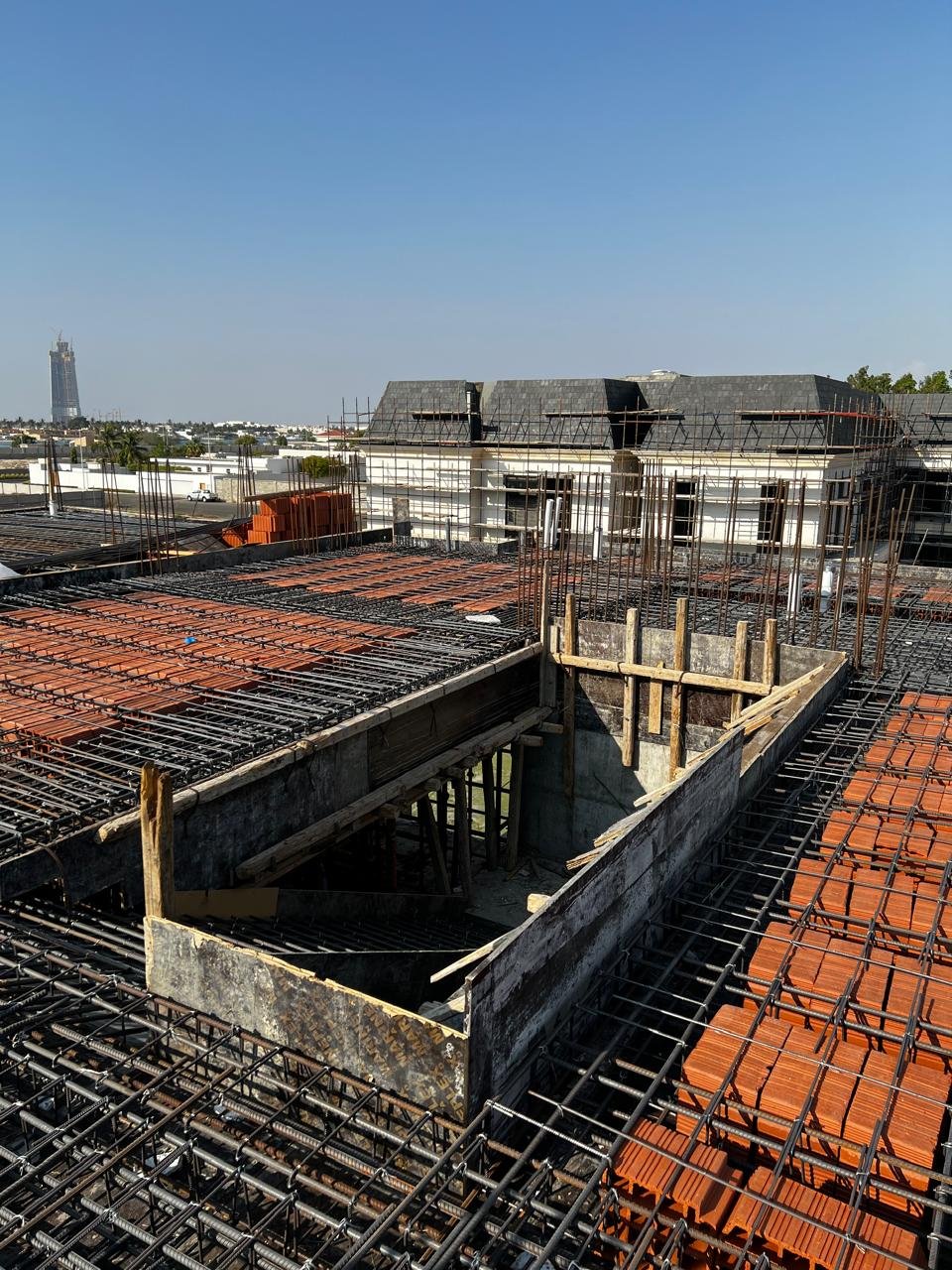
The Cost of a Late Decision: What Happens When Design Changes After Concrete Is Cast?
In major projects, not every decision carries the same cost. Moving an opening, relocating a lift, or reorganising an operational zone may look like a limited adjustment on a drawing. Once the concrete has been cast, however, that same decision can trigger a chain of engineering, contractual and financial consequences extending far beyond the element being changed.
The problem is not that the design changed. Change is a normal part of most projects. The real issue is timing, and whether the project organisation can absorb a decision before it becomes built reality.
Every design decision passes through a period in which it can be reviewed at relatively limited cost. As a project moves through its architectural design phases, procurement and construction, that window narrows. A line that could once be moved on a screen may later represent reinforced concrete, installed services, fabricated materials and active subcontracts.
Concrete Never Changes Alone
When a client requests a change after the structure has been built, the issue rarely ends with removing and recasting concrete. The change may affect loading, circulation, fire strategy, air-conditioning, electrical and plumbing networks, ceiling layouts, façades, procurement schedules and the sequence of several contractors.
Relocating an opening in a slab, for example, may require a new structural review, an investigation of the existing reinforcement, approval of a cutting or strengthening method, and renewed coordination of every service crossing the area. If related components have already entered fabrication, the decision reaches the supplier, specialist subcontractor and master programme.
This is the underlying reality of a project: a building is not a set of independent drawings but a connected network of decisions. The later one decision changes, the wider its circle of impact becomes.
The Visible Cost Is Not the Full Cost
A change is sometimes priced only through demolition and reinstatement. That is the most visible layer of cost, but not necessarily the largest.
Direct costs begin with labour, materials and equipment, followed by redesign, technical reviews and new approvals. Indirect costs may arise from closing an entire work zone, changing the construction sequence, extending site occupation or delaying other contractors who cannot proceed until the issue is resolved.
There is also a cost that rarely appears in the first variation quotation: lost productivity. Once a project departs from its planned sequence, work becomes fragmented. Teams move between areas, visits are repeated, temporary works are rebuilt and site management becomes more demanding. The cumulative effect of these disruptions may exceed the price of the physical alteration.
The correct question is therefore not simply, “How much will this change cost?” It is, “What is the total effect of this decision on scope, time, contracts and quality?”
Why Decisions Arrive Late
Late decisions are not always the result of an indecisive client. A project may enter construction before its operational brief is complete. Architectural drawings may be approved before operator requirements, major equipment or full multidisciplinary coordination have been resolved.
Early procurement may also begin to protect the programme while parts of the design remain open. This can be necessary on fast-track projects, but it transfers risk into later stages. Every item purchased before information is complete becomes a new constraint on the design.
Another cause is internal disagreement between the owner, operator, project management team and end user. The design advances while different parties continue to pursue different objectives: one seeks lower cost, another greater capacity, and a third higher operational or maintenance standards.
The problem is then not drawing competence but the absence of a unified institutional decision. Managing shifting project decisions becomes part of project governance rather than merely a communication skill.
A Design Freeze Does Not Prevent Development
Projects use a design freeze to identify the point after which substantial changes should follow an exceptional and controlled process. Yet a freeze should not be a ceremonial date placed on a programme.
For it to have meaning, it must follow an integrated review covering architecture, structure, building systems, operational requirements, cost and programme. Approval authority must be clear, and decision-makers must understand both what they are approving and what a later reversal would involve.
The purpose is not to suppress good ideas. It is to prevent a project from entering an expensive stage while its fundamental questions remain unanswered.
Complex projects may require several freezes rather than one. Foundations and structure may be fixed first, followed by the envelope, interiors and fit-out. This allows progress, but the boundaries between packages must be explicit. Otherwise, a partial freeze becomes an administrative assumption that ignores the actual interdependence of building systems.
A Late Decision Can Still Be the Right Decision
Preserving completed work is not an absolute value. Construction can reveal a problem that drawings did not expose. An essential operational requirement may change, or a conflict affecting safety and fitness for use may emerge. In such cases, modifying the project may be preferable to delivering a permanent defect, even when the intervention is costly.
Accepting the need for change does not mean proceeding immediately. A professional decision requires clear alternatives: retain the existing condition, introduce a limited modification, or redesign the area fully. Each option should be compared through cost, time, performance and risk rather than visual appeal alone.
The best decision after concrete has been cast is not necessarily the fastest. It is the decision that understands what already exists, everything connected to it, and whether the value of the change justifies its effect on the project as a whole.
Who Has Authority to Change the Project?
Projects become vulnerable when site instructions arrive through several channels. A user representative may request a direct adjustment, a contractor may interpret a meeting discussion as approval, or work may begin before a written instruction has been issued.
The change route should therefore be defined from the outset: who requests, who reviews, who prices, who assesses programme impact and who holds final approval authority?
This process is not unnecessary bureaucracy. It prevents verbal observations from becoming financial commitments and contractual disputes. It also preserves a record of why a decision was taken, which alternatives were considered and who accepted its consequences.
On major projects, approving the idea is not enough. Its full impact must also be approved.
Reducing the Cost of Late Decisions
The response begins before construction. A project needs a clear architectural and operational brief, a decision schedule showing what must be resolved and when, and early participation by disciplines, operators and critical suppliers.
Digital modelling can identify conflicts, but it cannot decide priorities for the project team. A model may show that an air-conditioning duct clashes with a beam; it cannot determine whether ceiling height, service routing or the system itself should change. Technology reveals the question. Governance produces the answer.
Mock-ups, samples and trial areas remain equally valuable before repetition. Constructing a typical room or a section of façade may appear to add cost, but it gives the project a final opportunity to test a decision before multiplying it across hundreds of locations.
The same principle applies on a smaller scale in private residential work, where moving a kitchen or bathroom after service installation can consume a disproportionate sum. In institutional projects, however, the effect multiplies because one decision may be repeated across floors, rooms or an entire group of buildings.
Architecture as a Decision-Making Process
Architecture is often presented as the production of ideas, images and spaces. The built project reveals a less visible dimension: architecture is also the management of consecutive decisions that cannot be postponed indefinitely.
Every project retains some flexibility, but that flexibility diminishes as construction advances. Decisions that are not resolved on time do not disappear. They return as variations, delays, technical compromises and avoidable rework.
The consequences may remain visible through the pre-delivery quality review, when the project begins to reveal which matters were resolved early and which were left for the site.
After concrete has been cast, change is not impossible. It simply stops being a design adjustment and becomes a decision about economics, programme and responsibility. At that moment, the discussion must move beyond “Can we change it?” to the more important question: “What else will change with it?”