Design Debt: Cost Never Disappears. It Moves to Someone Else
In a cost-reduction meeting, numbers appear well behaved. An item is removed, a product substituted, a phase postponed, and the total at the bottom of the sheet falls. Everyone leaves believing that cost has disappeared. It has not. It has merely changed address.
It may move from the construction invoice to the electricity bill, from the price of waterproofing to the repair of damp, from supervision fees to rework, or from a month saved in design to six months of questions on site. The owner may not even be the person who pays it. The bill may reach the resident, the facilities team, the smaller contractor waiting for certification, or the building itself, which ages earlier than it should. These consequences become visible during a building’s life after handover.
A saving that cannot identify where its consequences went is not a saving. It is a transfer of cost to a future with less power to object.
Time is a building material
Projects treat time as empty space between activities, when it is an invisible building material. A fast decision may save a week and create a year of maintenance. Waiting can be waste, but it can also be an investment when it prevents an immature decision from being cast into concrete.
Speed is not an independent virtue, and delay is not wisdom. Value lies in the timing of a decision. One matter must be settled today because ten teams depend on it. Another deserves an extra week because changing it after installation will cost many times more. The analysis of late design changes after concrete is cast explains how this burden spreads across trades and contracts. Good project management does not ask only how much time remains. It asks: at what moment does the absence of a decision become more expensive than the decision itself?
This reveals a cost rarely captured well by a bill of quantities: cascading waiting time. A contractor waits for a drawing, a supplier for a payment, a consultant for a sample, and the answer arrives after the useful purchasing or construction window has closed. Each party may appear idle for only a day, while the project loses weeks because those days are not adjacent. They overlap inside one dependency chain.
Accounting is part of architecture
Architectural culture likes to separate the idea from money, as if the budget arrives later to limit creativity. On site, that separation does not exist. Cash flow draws the building almost as clearly as the plans. A premature payment may send material to site before it can be protected, where it deteriorates. A late certificate may weaken a capable subcontractor until its best workers leave. Uncoordinated procurement may fill a store with items not yet needed while critical work remains unfunded.
Accounting is therefore not a background office function. It is the project’s circulation system. A good payment certificate does more than record money spent. It connects payment to work measured, accepted and ready to unlock the next stage. Good cash flow is not simply the presence of funds. It is their arrival at the correct point, at the moment that preserves the construction sequence.
The drawing determines where walls stand. Cash flow determines whether they stand on time and to the intended quality.
Design debt
Software practice uses the term “technical debt” for a quick solution that makes work easier now while creating a later burden. Architecture needs a parallel concept: design debt. It appears whenever cost or time is reduced without recording the obligation created by that reduction.
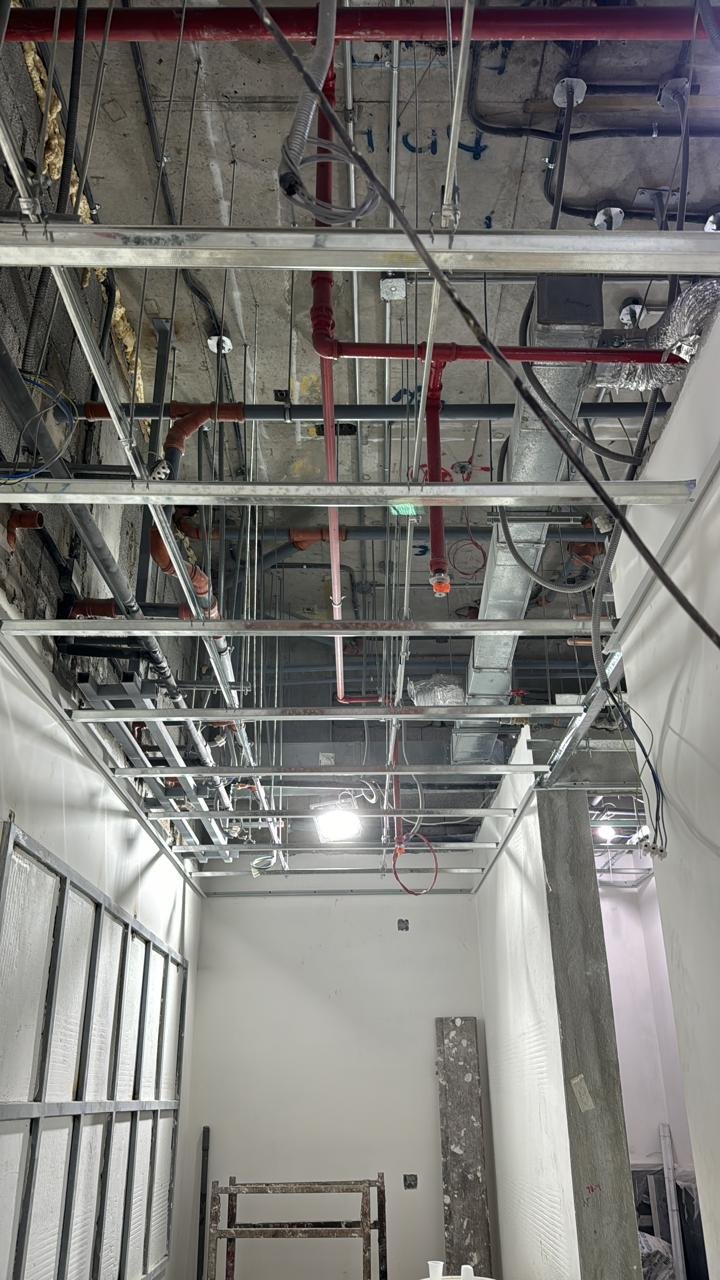
Substitution is not automatically debt. It can be intelligent when equal performance is achieved at lower cost. Removing a protection layer without calculating the system’s life is debt. Compressing service space may be efficient, but becomes debt when every repair requires demolition. Issuing fewer details may accelerate design, but becomes debt when the site is forced to design under construction pressure.
Real value engineering does not ask, “What can we delete?” It asks, “Which function are we paying for, and is there a more precise way to achieve it?” It compares more than purchase prices. It compares life-cycle cost: operation, maintenance, replacement, time and the disruption imposed on the user.
A ledger that records more than money
A project can protect itself with a simple value-decision register. Beside every reduction, record the amount saved now, the time altered, the operational and maintenance effect, the party carrying the risk, and the date on which the result must be reviewed. If those fields cannot be completed, value may not have been created. An invoice may simply have been hidden.
An architect or consultant experienced in construction adds more than drawings. The role connects design to accounts, accounts to programme, programme to certification, and certification to verified work on site. These connections stop money from moving faster than construction or arriving so late that it suffocates progress.
Value is not the lowest number on tender day. It is the least regret across the life of the building. Cost never disappears. We merely decide who will pay it, when, and whether that person will be in the room when the decision is made.