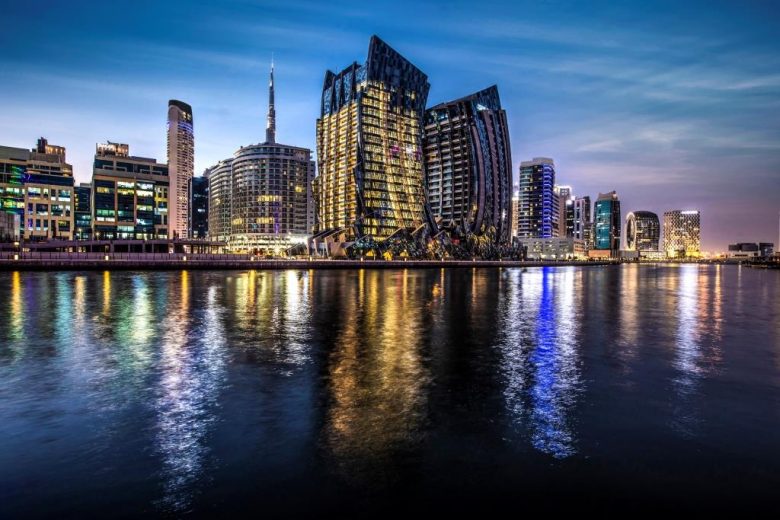
Dynamic architecture as a manifestation of the evolution of architecture
Without imagination there would be no progress, and architecture has a great role to play in the direction of human progress.
They are responsible for determining the many interactions and dialogues between people and their surroundings and the conditions that govern life itself.
They also determine the direction of our future – sometimes through adaptation and evolution, at other times, norm-defying.
We hope it will revolutionize the way we live and experience life, as it is important that we learn architecture constantly.
Reviving and reversing the way we live ensures not only that life is preserved but in its infancy, and without creativity and imagination, this would be impossible.

What is dynamic architecture
The term “dynamic” is a specialty within the mechanics responsible for the movement of objects, with the effect of forces.
Movement of the building is known as Dynamic Architecture and includes a fourth dimension, time.
The beauty of dynamic architecture is that the building’s shape and form is constantly changing; making it flexible, while demonstrating the building’s ability to adapt to change.
Here we will take a look at the Da Vinci Tower in Dubai, a dynamic 80-storey skyscraper designed by David Fisher.

the start
At the age of five, David Fisher’s mother used to take him to watch the sunset over the Mediterranean every evening, as a sweet gift.
To be able to dine with a great view every day, and from a young age,
Fisher was fascinated by the passage of time, the one constant that constantly changes.
And the sunset made him think of life and its movement; And late one afternoon in New York.
David Fisher was visiting a friend who lived on the 51st floor of the Olympic Tower,
and his friend and apartment owner said,
“David, have you noticed that you can see the East River and the Hudson from my apartment, and no one in this building has that view.
I’m the only one with such a look.” David replied, “Why don’t we roll the entire floor so everyone can see.”
David went back and worked on it, and discovered that if he rotated each floor individually at different speeds in different directions,
the building would constantly change shape, and he was stunned by the results.
From then on, Fisher’s designs changed over time, not only in form, but also in functionality.

The Da Vinci Tower is a manifestation of Fisher’s dream
David Fisher named the tower in honor of Leonardo da Vinci, one of the greatest visionaries and inventors.
Fisher created the first rotating tower, the Da Vinci Tower.
Description of the building
The floors of the massive, high-rise building rotate, completing a 360-degree rotation every 90 minutes,
so people can change the pavilion’s view anytime they want.
They are able to see the sunrise and sunset from the same suite in which they live,
and the suites enjoy the four primary directions that cover the building.
Furthermore, sustainable innovation is also evident as the tower is fitted with wind turbines between each floor, within a 2-foot gap.
Which generates electricity for the tenants and supports the energy requirements for circulation,
and penthouse residents are able to park their cars in their apartments.
Not only will the building maintain its energy requirements to itself.
You may like: One of the best shower base flooring options