The Architect Before Agents: Will AI End the Era of the Software Stack?
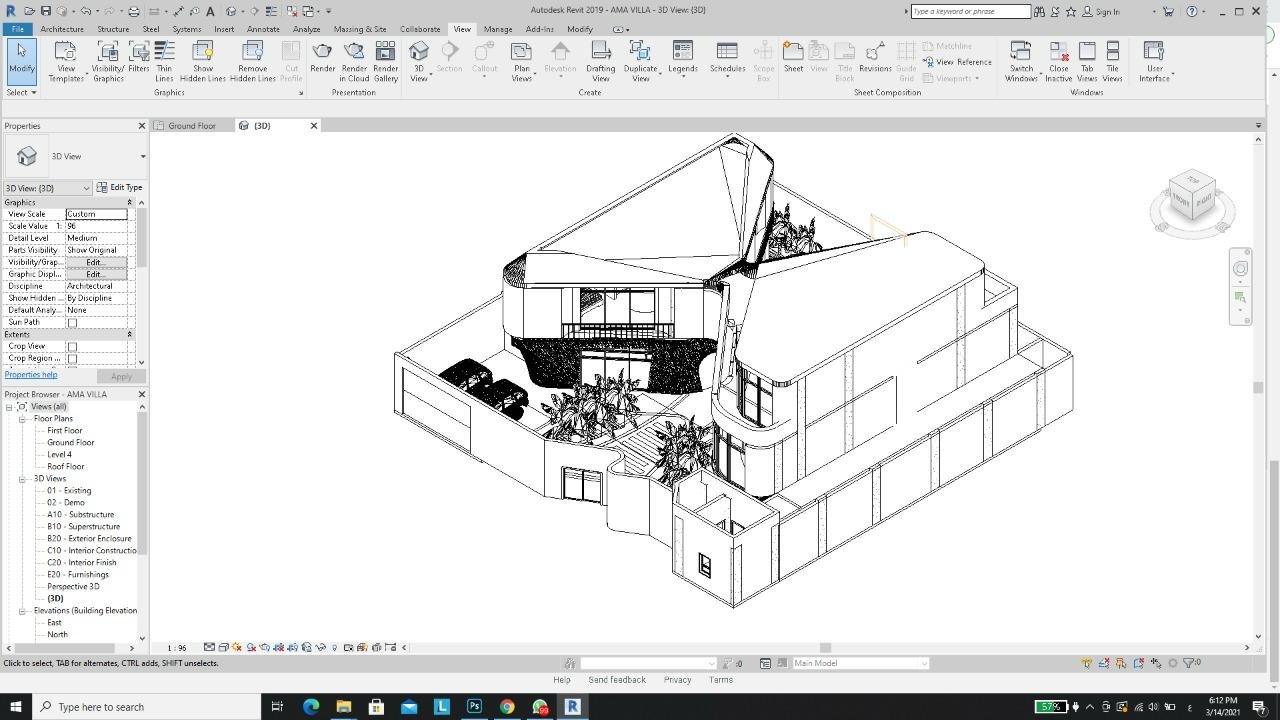
At the end of an ordinary working day, a single building may be scattered across more windows than a desktop can comfortably hold: a plan in a drafting application, a massing model in another, a building information model in a third, a scene waiting to be rendered in a fourth, and an image still requiring correction in a fifth. Then comes another layer of work—spreadsheets, presentations, correspondence, project management, time tracking, contracts, and accounts.
This makes a simple question worth asking: how many professions must cross so many applications to produce one result? Film, product design, engineering, and visual effects all have complex digital pipelines. Architecture is distinctive, however, because its outputs cannot remain digital. They must ultimately agree inside one physical building, on a real site, under a connected set of professional, legal, and financial responsibilities.
The architect is not the biological father of artificial intelligence. But architects were among the first professionals to live according to an agentic logic before it had that name: coordinating specialized tools, moving information between systems, resolving conflicts, and converting incomplete intentions into a sequence of buildable decisions.
One Building, an Entire Software Stack
One application drafts, another models, a third analyzes, a fourth renders, and a fifth composes the final image or sheet. A project may also require climate and energy tools, interdisciplinary coordination platforms, office software, task management, cost tracking, invoicing, and archives. The problem is not simply the number of subscriptions. It is the space between them: duplicated files, data stripped of meaning, confused versions, and professional time spent exporting and importing instead of designing.
That stack has produced an unusually hybrid professional—in the best sense. The architect is simultaneously a designer, information manager, translator between disciplines, and operator of a technical system the client rarely sees. That may be why architecture is especially well positioned to gain from agentic AI: not merely because it can draw an image faster, but because it can work across links that have remained disconnected for decades.
From the Drawing Board to the Database
The generation that began with pencil, ink, and the drawing board was not merely producing lines. Through line weight and sheet order, it learned how a building decision is constructed. Computer-aided drafting turned the line into an editable, repeatable entity while largely preserving the logic of the sheet. Three-dimensional modeling moved work from projection into space. Building information modeling then made the architectural element a carrier of data rather than a visual representation alone.
At every transition, some professionals stopped, others accelerated, and a third group preserved the intelligence of the earlier medium while adopting the next. We now face a different transition: from operating each application separately to delegating a chain of actions to a system that understands context, calls the appropriate tool, and returns the result to the workflow.
An Agent Is Not Another Application
If AI arrives in architecture as one more icon on the desktop, it will not solve the problem; it will add a twenty-first subscription to the existing twenty. Its real value begins when it becomes a coordination layer. An architect could ask for a model check, a comparison of options, an updated schedule, or a formatted report while the agent handles the movement between engines, files, and permissions.
The direction of the software market is already visible. Conversational assistants are being embedded within design environments, design and construction data are being gathered into broader platforms, and the layer connecting tools is becoming more valuable. Major mergers and acquisitions do not simply express a desire to own another drawing application; they suggest that value is shifting toward data, workflow, and the continuous relationship between decision, model, and construction.
Will Every Architect Have a Personal Program?
Most architects are unlikely to build complete replacements for drafting or modeling software. A more plausible future is that each practice develops its own operational layer above existing tools: its standards, libraries, recurring details, naming rules, review checklists, permissions, decision history, and preferred route from concept to delivery.
In that sense, the “office program” will look less like a closed product and more like an operational memory. An agent may learn how the team works without pretending to be the architect. It can assemble alternatives, track omissions, and repeat routine operations. Deciding what deserves to be built—and what fits a particular city, climate, society, and budget—remains an architectural act.
The Older Generation Does Not Lose Its Advantage
The younger generation may appear to be the sole beneficiary because it will enter practice through easier interfaces. Yet it may acquire speed before it acquires judgment. Those who worked by hand, then through CAD, 3D modeling, and BIM hold rare knowledge about how a decision changes as it moves between media. That knowledge matters because the most dangerous AI errors are not obviously poor results; they are persuasive results built on an incorrect assumption.
The real advantage therefore belongs not to an age group, but to anyone who combines professional memory with the ability to delegate. The experienced architect can teach an agent the limits of a practice; the younger architect can recompose the workflow quickly. Together, they can turn technology from a generational divide into a mechanism for transmitting experience.
Fewer Subscriptions—or a New Kind of Bill?
The seductive promise is one window instead of twenty applications and twenty subscriptions. The cost of scattered minor tools may indeed fall, but it is too early to assume the bill will disappear. Spending may move from per-seat licenses to usage, computing, storage, and specialized model fees. Dependence on a single platform may also become more serious if that platform holds the practice’s memory and project data.
Architects must therefore enter this era with a contractual mindset as well as a technical one. Who owns the data? Can it be exported? How are an agent’s actions reviewed? What remains available when a subscription ends? A simple interface does not release a practice from the need for clear policies on archives, permissions, and accountability.
Responsibility Cannot Be Fully Delegated
An agent can propose, coordinate, and update, but it does not stand on site before the consequences of a decision, nor can it carry professional liability alone. An action record will therefore become a basic part of practice: what did the system read, what did it change, and which assumptions shaped its recommendation? The more autonomous the tool becomes, the more essential a clear audit trail and explicit human review points will be.
This is not an argument for postponing adoption; it is a condition for adopting well. Architecture already understands approvals, signatures, and chains of responsibility. The task is to extend that culture into agentic work.
One Interface, Many Engines
The most likely future is not one universal application that swallows everything, but one interface that speaks to many engines. Drafting, analysis, rendering, costing, and management systems will continue to exist. The architect, however, may no longer need to carry the file manually from station to station. A tool’s value will increasingly depend on its ability to understand its place in the chain rather than isolate itself from it.
An old weakness may then become an advantage. The profession that has long suffered from fragmented software knows exactly where the gaps are, what disappears inside them, and what must never be delegated. For two decades, architects have learned the logic of every program. The programs may finally be ready to learn the logic of the architect.