The Museum Is Not a Display Box: When Architecture Becomes Culture
A museum is not a polite warehouse for old things, nor is it a neutral white room that disappears behind whatever it displays. It is one of the city’s most complex buildings: a place of memory, education, and leisure, and at the same time a precise environmental machine expected to protect materials that may be more fragile than the building itself.
A museum’s success therefore begins not with the number of objects it owns, but with the relationship it creates between the visitor, the collection, and space. A child may enter because the building arouses curiosity. A family may arrive for an enjoyable day out. A young visitor may come because a visual experience has circulated through contemporary culture. These motives are not inferior to academic interest. Entertainment is not the opposite of culture; it is often its first door.
When Leisure Becomes Cultural Infrastructure
For a long time, museums were treated as institutions speaking primarily to people who already knew how to read them. Younger generations do not separate learning from experience so easily. They expect a route that can be discovered, a scene that remains in memory, places to pause and participate, and layers of information whose depth they can choose.
This does not mean turning the museum into an amusement park or reducing knowledge to shareable images. It means designing curiosity. The threshold, route length, shifts in light, rhythm between galleries, acoustics, comfort, and the possibility of returning to an earlier point are cultural instruments before they are functional solutions. A good museum does not ask a young visitor to behave like a specialist. It gives that visitor a reason to return as a more informed observer.
Architecture Is the First Exhibit
Before seeing the first object, the visitor has already read the building through the body: rising or descending, moving through compression, arriving at unexpected daylight, or seeing the city through a frame previously unnoticed. Architecture becomes the museum’s first lesson whether the designer intends it or not.
This is where artistic sensibility becomes essential. Museum design cannot be reduced to circulation diagrams, room schedules, or a spectacular façade. It is a composition in time and space, close to directing: what appears first, where the building falls silent, when an artwork leads the scene, and when space becomes part of its meaning. Not every architectural practice is automatically equipped for this work. Technical competence is indispensable, but without sensitivity to composition, light, rhythm, and material, the result may be functionally correct and culturally thin.
What Visitors Cannot See May Determine a Collection’s Fate
Behind the artistic experience is a layer that should remain largely invisible but is no less creative: architectural studies, mechanical and electrical systems, and controls. Paper, textile, timber, metal, and oil paint do not respond in the same way to humidity, temperature, light, or pollutants. There is consequently no single climatic recipe for every museum or every collection.
Incorrect or fluctuating humidity can contribute to expansion, contraction, cracking, corrosion, and mould. Light and ultraviolet exposure can cause cumulative and irreversible damage. Unfiltered air carries dust and pollutants, while poor ventilation may create stagnant zones or condensation on cool surfaces. Even sunlight—which can give a gallery extraordinary life—becomes a hazard when it reaches a sensitive object directly.
Air-conditioning is therefore not a background service, and lighting is not an isolated aesthetic decision. Both are part of the conservation strategy and must work with the envelope, solar orientation, door operation, gallery volume, visitor density, and emergency scenarios. Successful sensory design allows visitors to feel comfort and clarity while a precise protective system works without overwhelming the exhibit.
Between the Louvre and Fondation Louis Vuitton
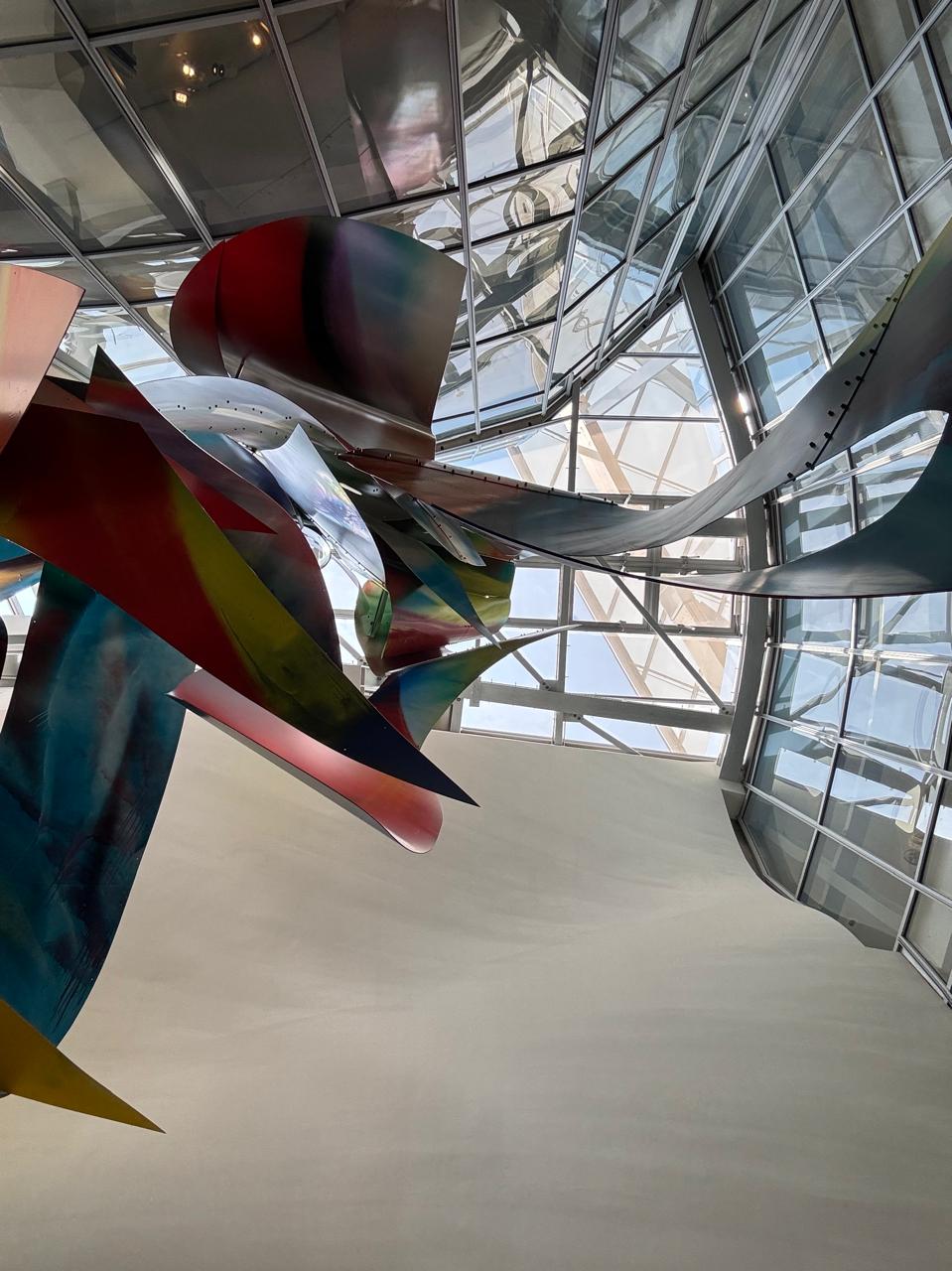
Paris offers two very different relationships between art and architecture. The Louvre contains accumulated time: palace, adaptation, modern intervention, glass pyramid, and subterranean expansion. Fondation Louis Vuitton presents the building as a cultural event in its own right, where glass sails, movement, and reflection become part of the visit and some artistic commissions respond directly to the architecture rather than sitting inside a neutral container.
There is no single correct position between neutrality and presence. The problem begins when a building competes with the collection without awareness, or claims neutrality while imposing a particular route, light, and scale. The more mature question is not whether a museum should be iconic, but when architectural character serves knowledge and when it becomes noise around it.
Ceilography: When Looking Becomes an Archive
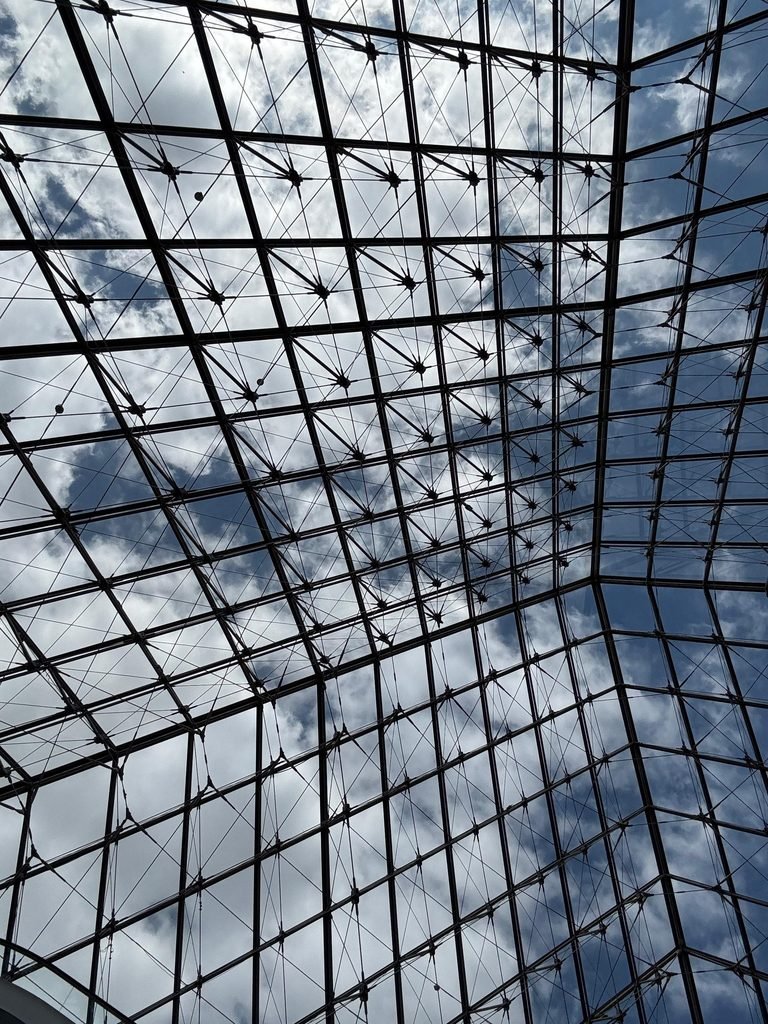
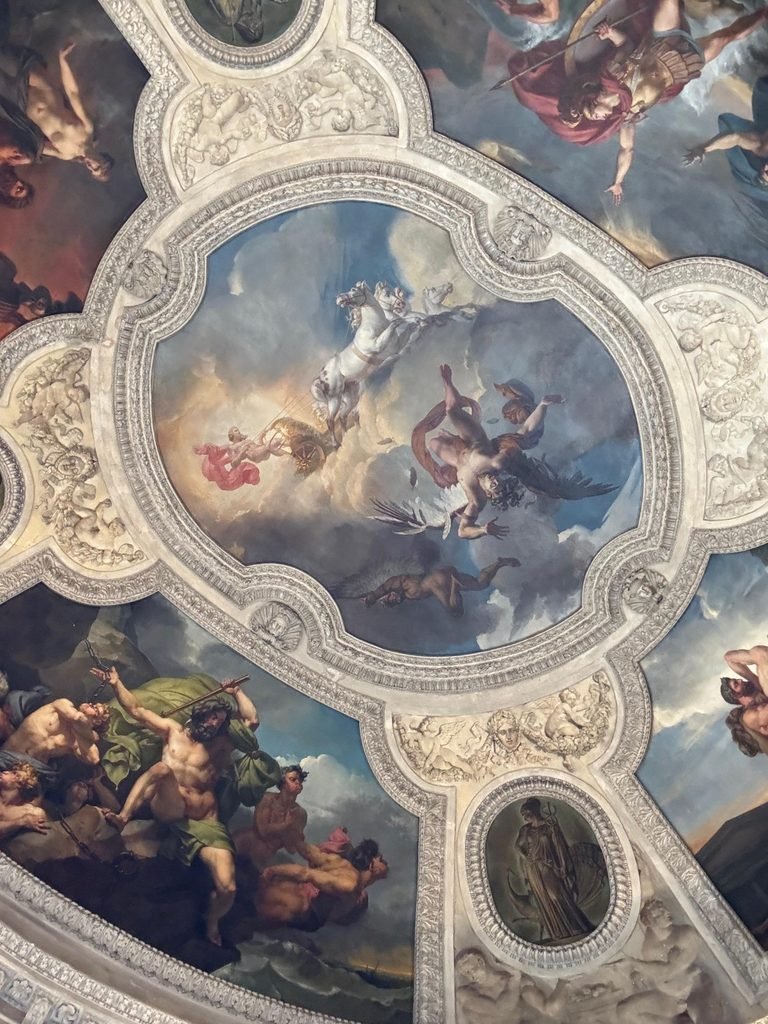
The Ceilography series demonstrates the value of documentation that begins with an apparently personal observation. Looking upward in a museum can record what a conventional route overlooks: how a ceiling distributes light, conceals services or reveals structure, combines painting with sculpture and construction, and alters the visitor’s sense of scale.
In the Louvre images, a historic decorated ceiling sits beside a modern concrete ceiling and the lattice of the glass pyramid. These are not merely stylistic differences. They represent three ideas of what an overhead plane does inside a cultural institution: a surface carrying art, a structure organizing light and services, or an envelope connecting the museum to sky and city. When such observations form an ordered archive, they move from travel photography into comparative research.
Where Can Architectural Practices Exhibit Their Work?
The archives of architectural practices form part of cultural memory: sketches, models, samples, working drawings, rejected alternatives, and construction photographs. Yet permanent display inside an office is no longer a simple decision. As commercial and administrative floor area becomes increasingly expensive, a fixed gallery may become a burden that most practices cannot justify—and one that remains closed to all but a small audience.
The answer is not to abandon exhibition, but to release it from the idea of a permanent private gallery. An office archive can appear through small rotating shows, partnerships with museums and universities, shared temporary spaces, or a high-quality digital archive connected to physical samples and models displayed in rotation. The value lies not in owning an expensive room, but in making the knowledge of practice public, legible, and searchable.
AI as an Assistant Curator, Not a Replacement
Artificial intelligence can read thousands of images and drawings, suggest classifications, connect an early sketch to a completed building, or identify the recurrence of an architectural element across cities and periods. It may also create visitor routes for different ages and interests, or monitor environmental data for changes that precede damage.
The danger is that speed becomes flattening. An algorithm can recognize similarity without understanding why it matters. It may reproduce the bias of the archive itself, making well-documented subjects more visible while pushing historically neglected material farther to the edge. AI should therefore remain an instrument for the curator, architect, and conservator—not an autonomous authority rewriting memory.
A Museum Is an Artwork and an Engineering Responsibility
The best museums do not force a choice between enjoyment and seriousness, building and collection, or preservation and public access. They construct a balance: an experience that draws visitors in, knowledge that rewards their curiosity, and an environment that protects what they came to see.
This is why a museum needs an architect with the artist’s sensitivity, the curator’s discipline, and the engineer’s understanding of invisible systems. It also needs a team that does not treat art as decoration, engineering as an appendix, or younger visitors as an impatient audience. A successful museum does more than preserve the past. It trains society to see—and when a new generation learns how to see, culture begins to build its future.