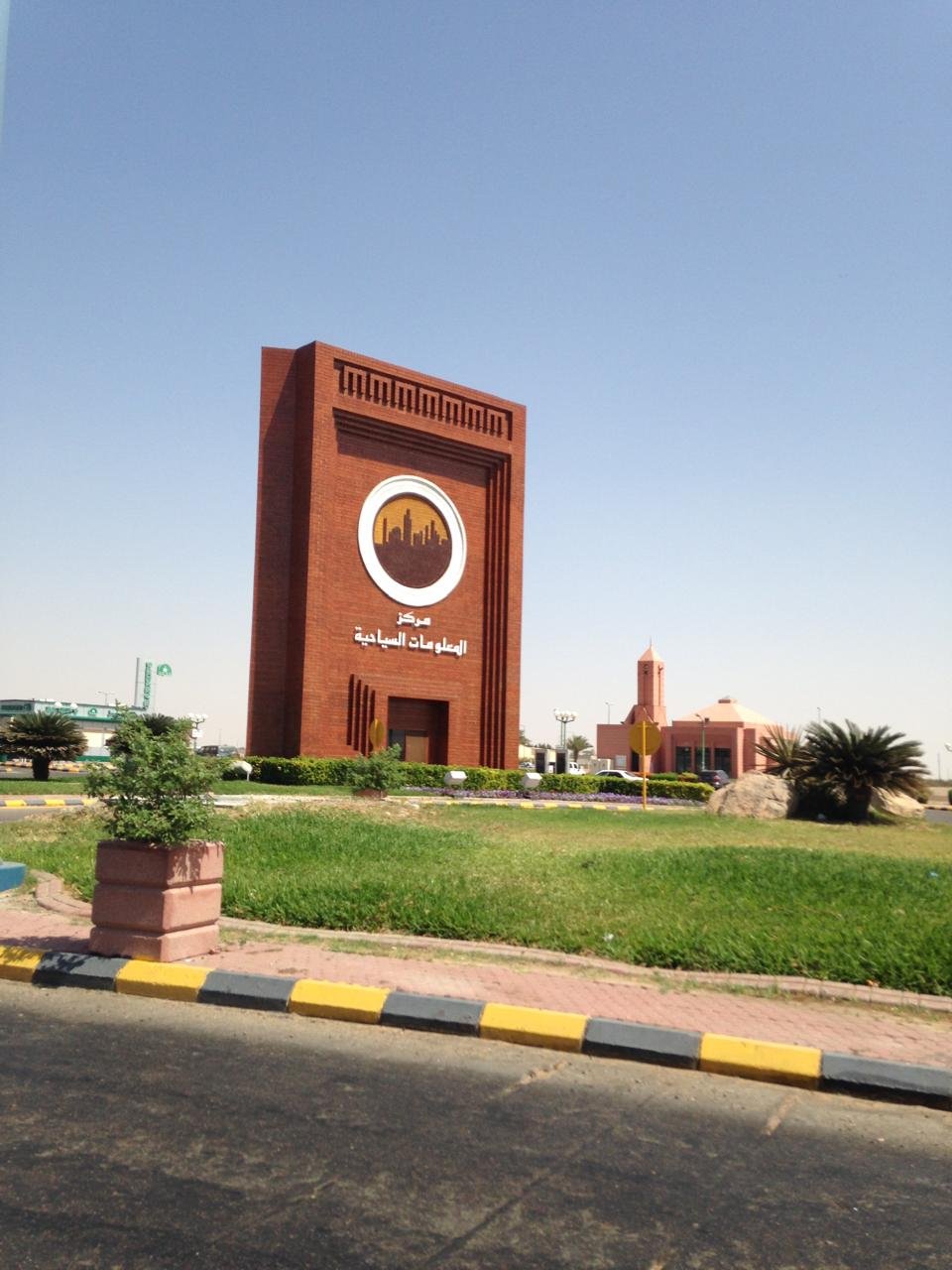
Yanbu al-Bahr, 26 March 2014: An INJ Architects Field Archive
On 26 March 2014, the INJ Architects team visited Yanbu al-Bahr in the context of consultancy assignments associated with Saudi Ministry of Interior work. Alongside the work of the visit, the team photographed the city and its surroundings. More than twelve years later, we return to this archive to examine what the images preserve: the sea beyond a road, everyday shopfronts, building entrances and the spaces where urban life meets service activity.
These are field photographs from a dated visit, rather than a portfolio of buildings designed by the practice in Yanbu. Their value lies in recording what stood before the team’s camera that day, at the scale of the street, where many architectural questions first become visible.
ينبع البحر، 26 مارس 2014: من أرشيف زيارة ميدانية لـ INJ Architects
A coastal identity within a wider industrial setting
Yanbu al-Bahr has a Red Sea setting, a historic urban identity and a relationship with coastal life. Within the wider Yanbu area, Yanbu Industrial City represents another dimension of the region’s development. The historic coastal city and the industrial city should be distinguished: neither label can automatically be applied to every street or building in these photographs.
Yanbu shares with Jeddah a place within the coastal Hijazi environment, while retaining its own character. This collection does not attempt to survey the whole city or its heritage. It records fragments of a professional visit, allowing us to consider roads, buildings and open ground without treating a partial view as evidence about the city as a whole.
The sea beyond the road
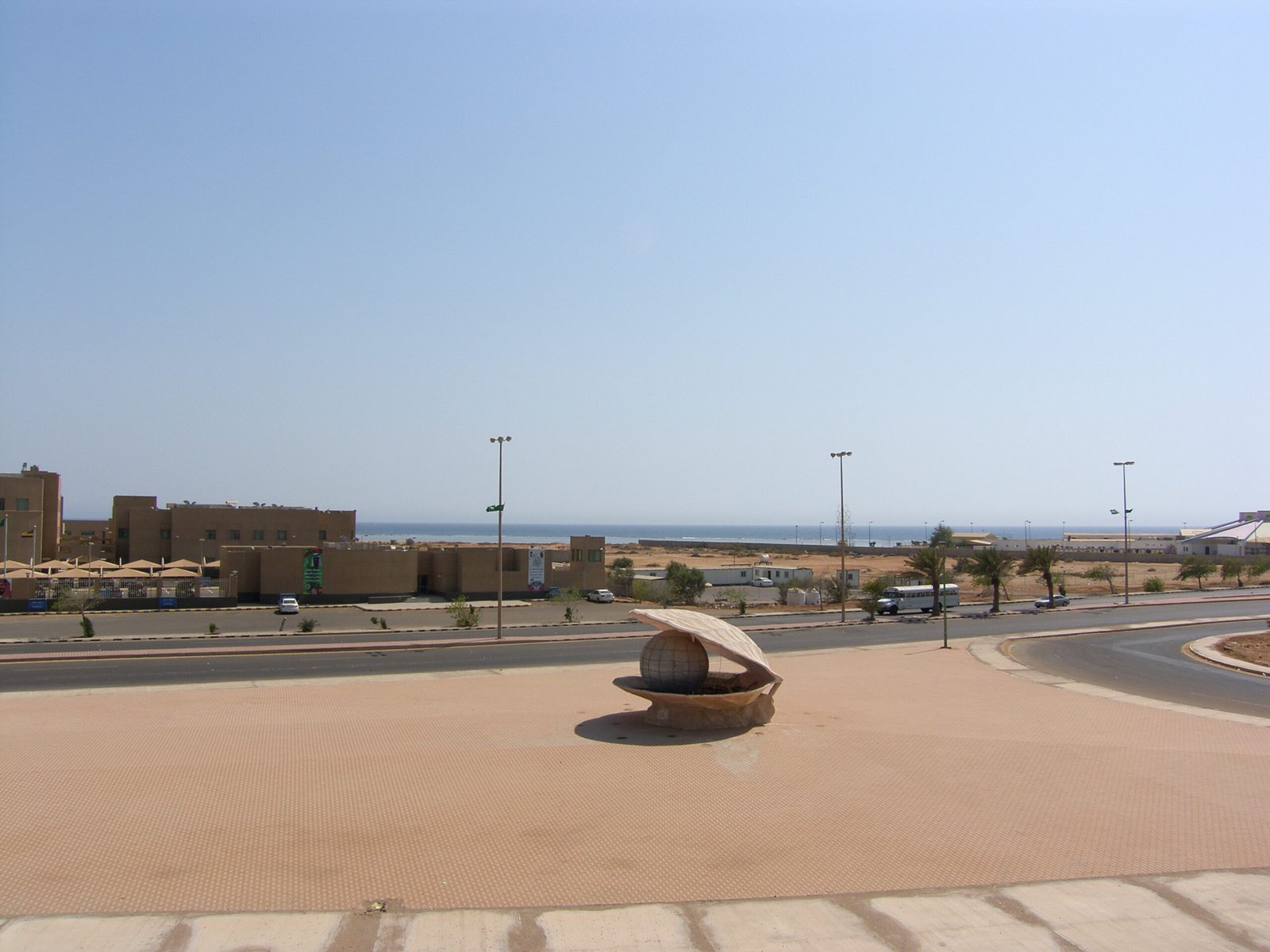
In one photograph, the sea appears beyond a road, lighting columns and palms, with a stone feature in the foreground. The sequence matters: the photographer’s position, the space immediately ahead, the road and the distant water. Seeing the coast raises a different question from simply being close to it: how does a person reach the water, and how does that relationship become part of everyday experience?
A single frame cannot establish pedestrian comfort or accessibility. It can, however, identify questions for field investigation: route continuity, crossings, shade and the relationship between stopping and moving. This is the distinction explored in our discussion of architectural site analysis, between information that can be modelled and conditions that require observation and testing on the ground.
What an ordinary street reveals
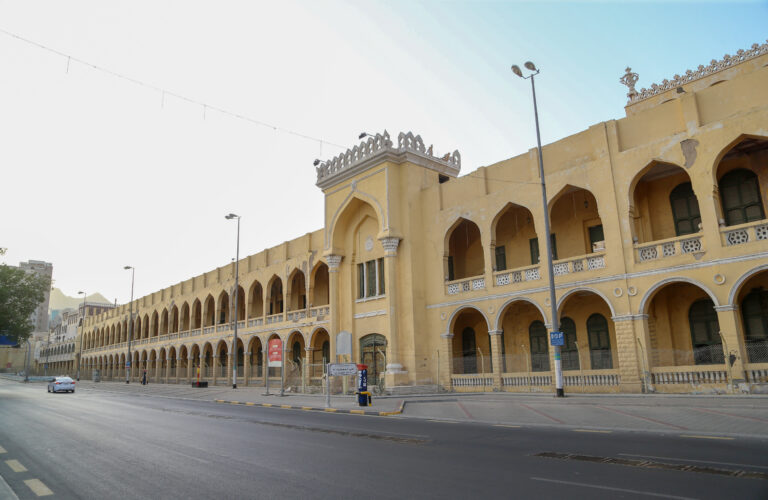
Another photograph shows shopfronts, low-rise buildings, parked vehicles and open roadside space. No spectacular building dominates the image, yet its details matter to a consultant: how a shop is entered, how parking relates to a frontage, what lies between the building and the road, and how different uses sit beside one another.
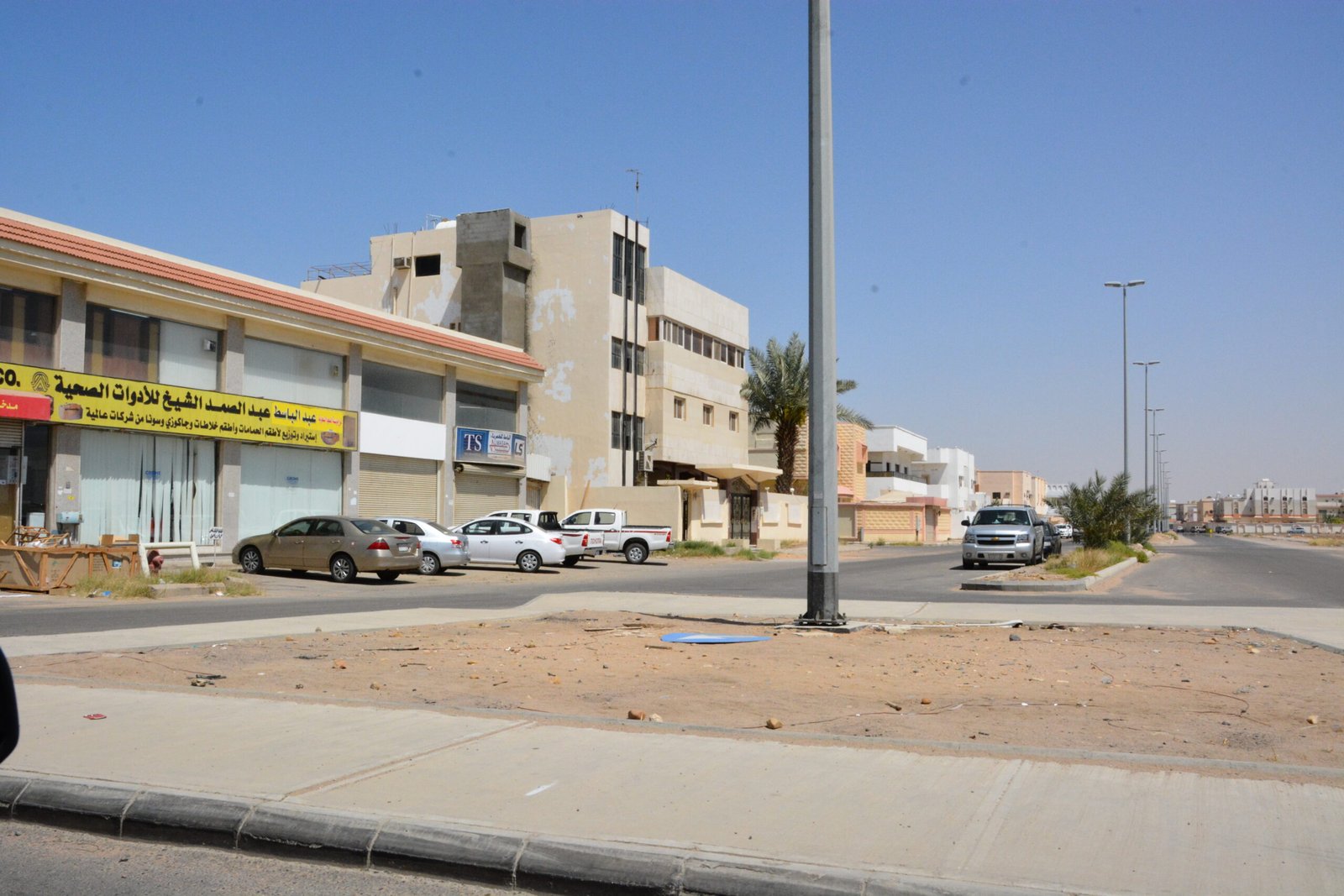
Read together, these elements make photography a tool for inquiry, rather than a substitute for measured surveys. Is there a clear approach to the entrance? Where might deliveries meet visitor movement? What would change at another time of day? These are questions we draw from the archive today, not findings from a comprehensive survey of every property pictured.
Service movement and the threshold of a building
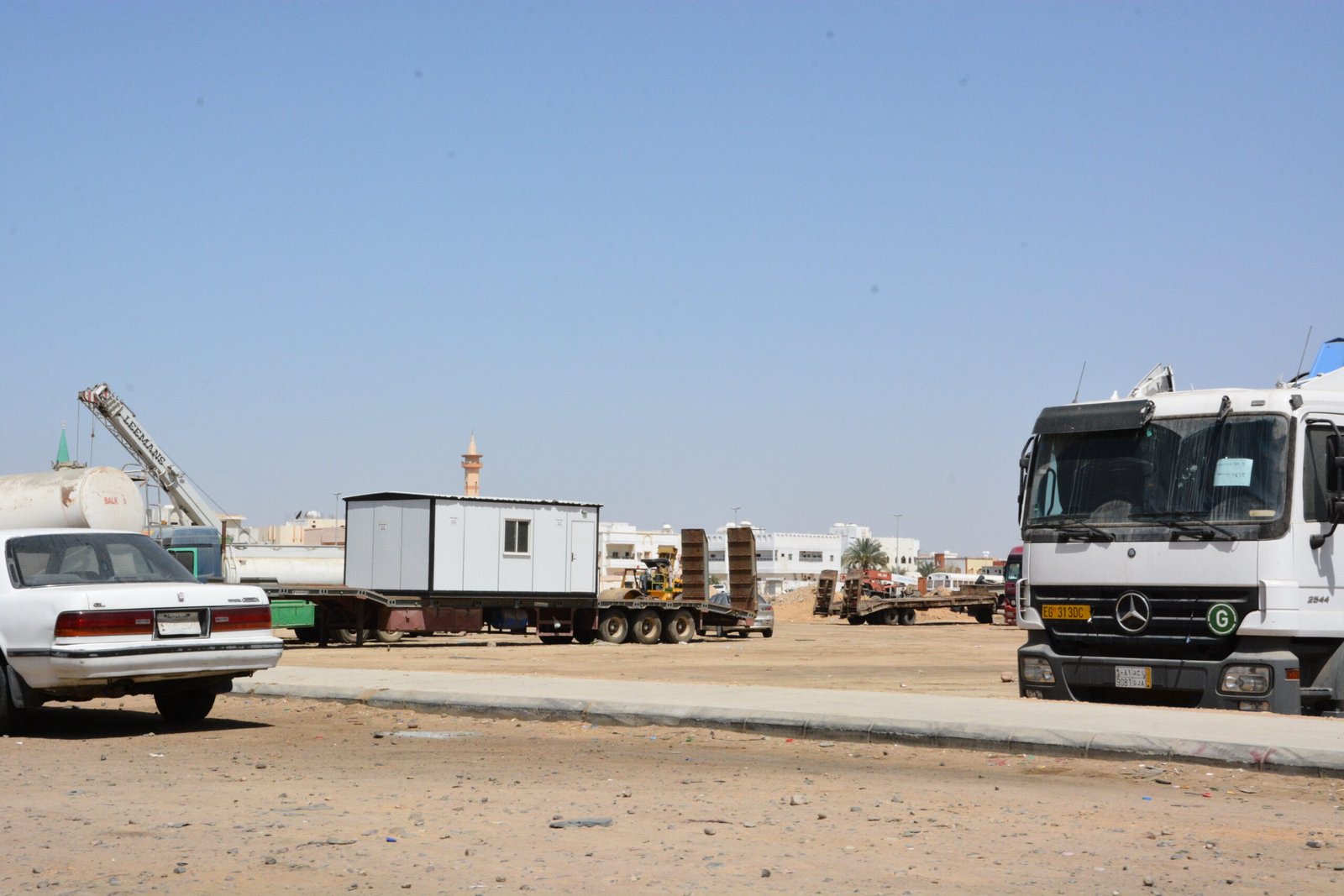
The collection also includes trucks and equipment in an open yard, and a gated entrance to a low-rise building. Such views remind us that understanding a city involves its operational spaces as well as its public landmarks. Vehicle movement, manoeuvring space and access boundaries deserve attention early in any study concerned with how a site functions.
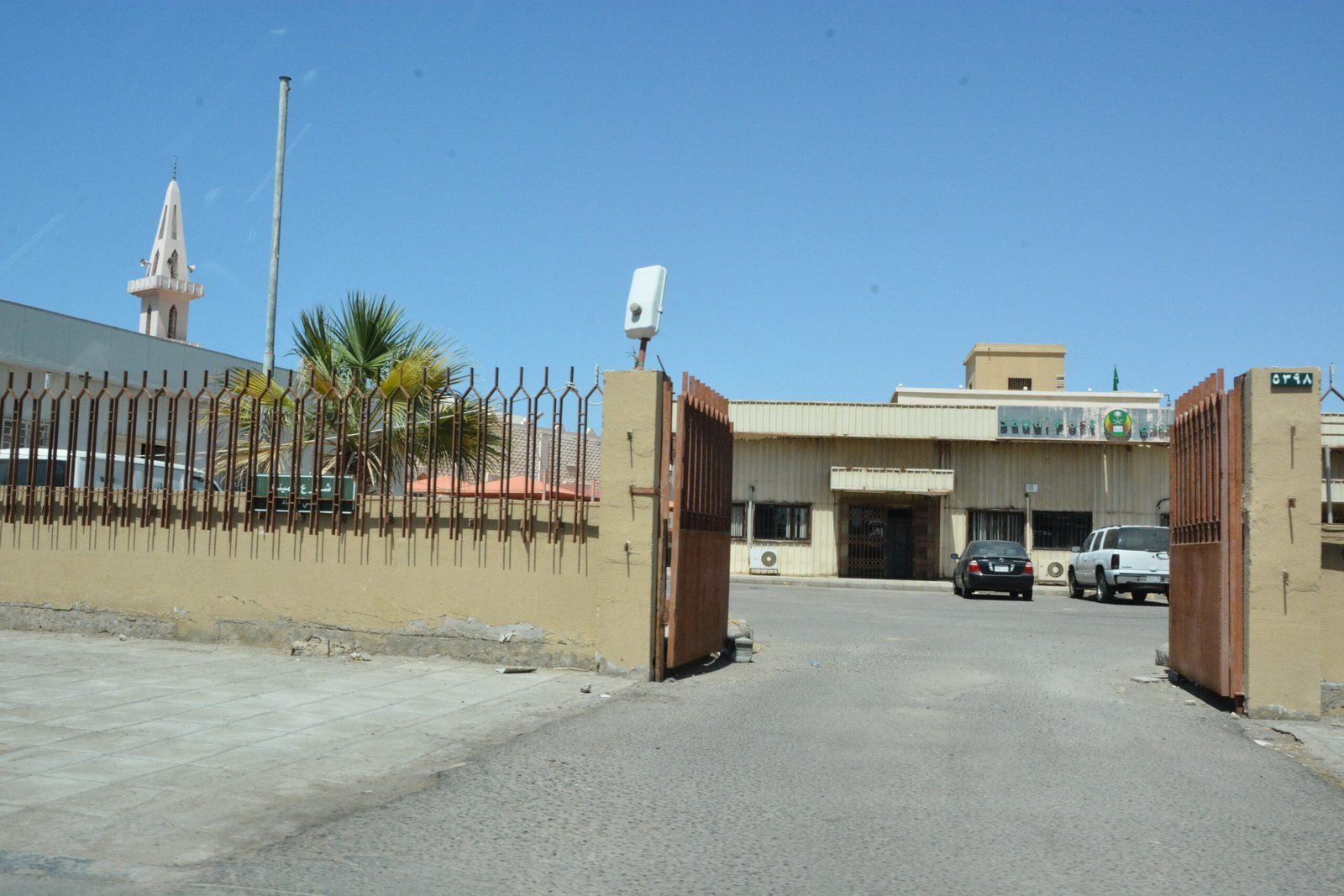
This field archive sits within the practice’s wider institutional experience in the city, including the Yanbu Departments Complex, documented in our published project portfolio. Their relevance here is methodological: the actual surroundings need to be understood before an architectural decision is fixed. This approach forms part of how INJ Architects works, connecting the needs of a project with the conditions of its place before developing alternatives and details.
Keeping the wider view in the archive
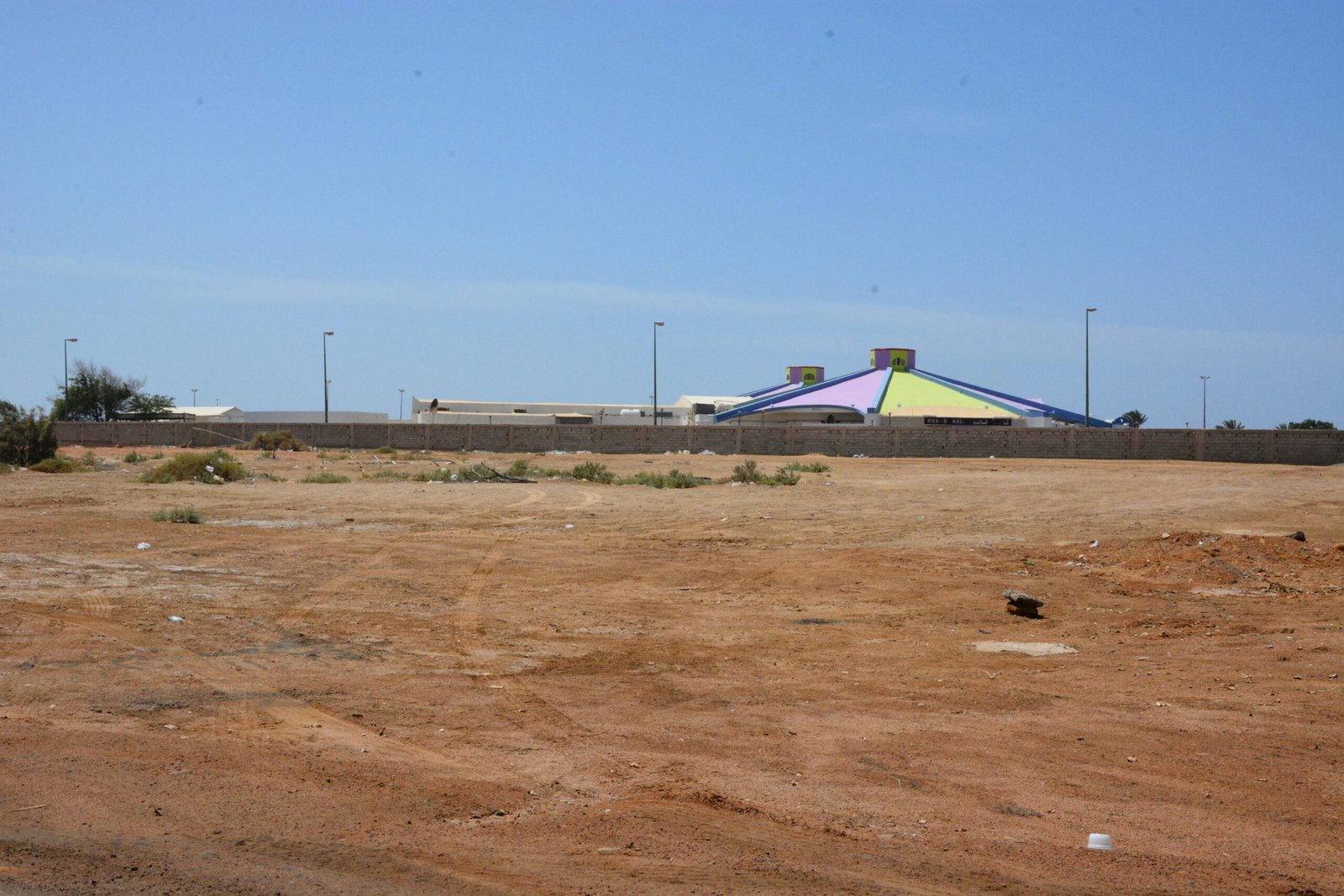
A further image places broad open ground in front of a low landmark in the distance. That interval is part of the experience: what can be seen from the road, what remains far away and how a built form is read before arrival. Photographs of this kind retain a surrounding context that can disappear when documentation concentrates on a single facade.
As with our 2013 field archive from Sharurah, we share this collection as part of the practice’s record of observation. The Yanbu photographs date to 26 March 2014. They do not establish the present condition of the locations or imply that every object pictured has formal heritage status. Their importance rests on a clear date, a known source and the preservation of the original observation.
With time, images taken alongside professional work can acquire a new value. Experience is visible not only in a completed building, but also in the habit of paying attention to a place and keeping a record that allows us to revisit what we saw, and the questions we learned to ask.