Before a Building Fails: Design the Route to Maintenance
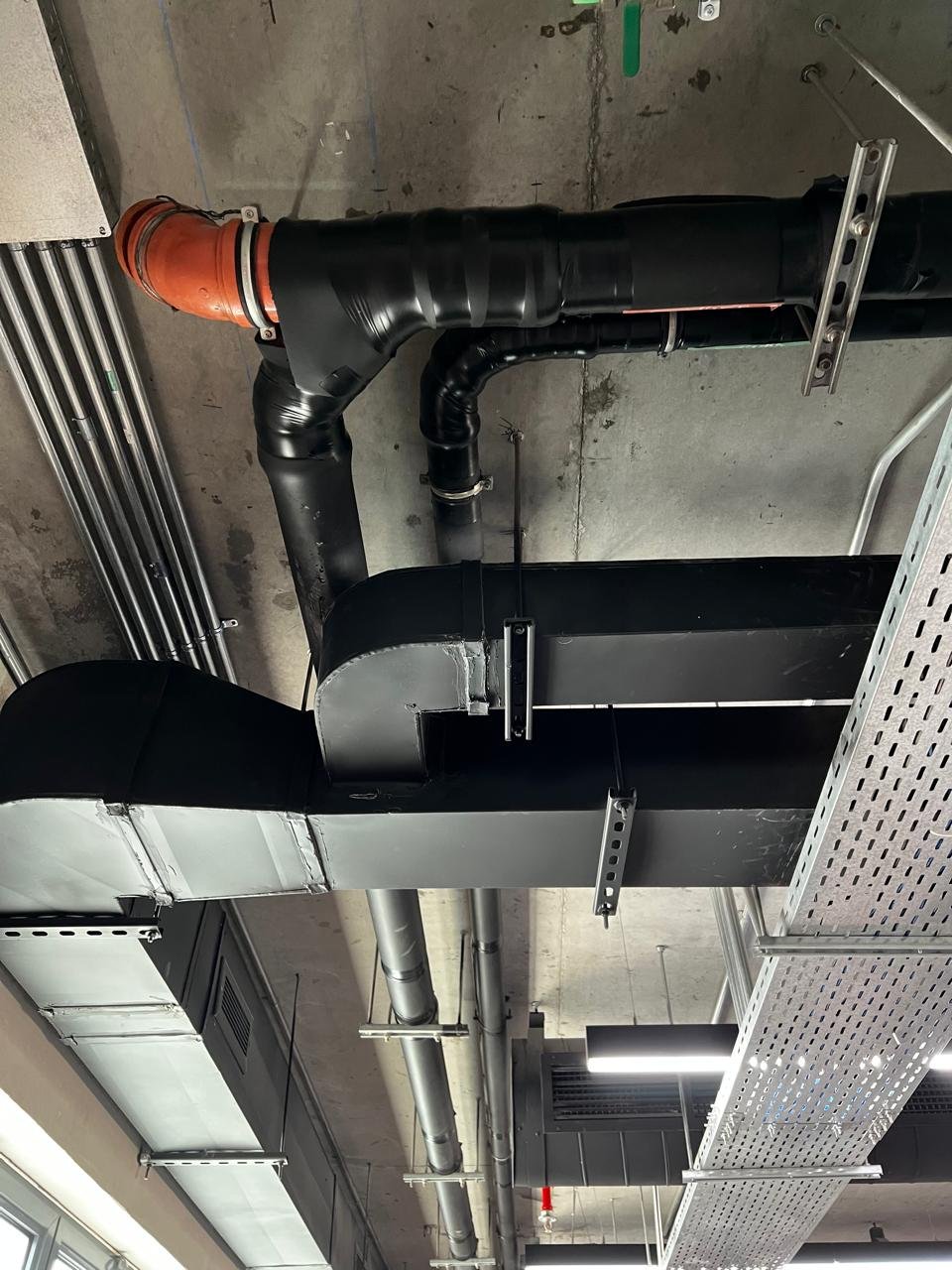
A technician may be able to see equipment without being able to maintain it. They may reach it but lack room to open its casing or remove a component. Replacement may require taking out a door, dismantling a ceiling or interrupting a large part of the building. These are consequences of design decisions, not issues that begin with the fault.
Across homes, offices, hotels and public buildings, maintainability means more than an access panel. It is a sequence from arrival to restoring the system and room to use. It belongs in architectural and engineering coordination before finishes and routes are fixed.
Four questions, rather than one
Can the element be reached safely? Is there room to perform the task? Can it be isolated appropriately without unnecessarily interrupting other functions? How will the old equipment leave and its replacement enter? A drawing may answer only the first.
Not every component needs a separate room. Space and facilities should follow the equipment, task and frequency of intervention. Review actual requirements with those who will operate and maintain the system. Unnecessary space is not inherently better, just as removing essential clearance is not efficiency.
Replacement belongs to the building’s life
Equipment may enter during construction before walls are complete. Its eventual exit can then be forgotten. Test the replacement route with finished doors, corridors and surfaces, including turning points, handling arrangements and structural capacities where relevant. A plantroom fitting stationary equipment does not establish a workable replacement path.
The solution might involve a removable element, a revised arrangement or smaller units assessed with the engineering disciplines. The essential point is to establish the route before it becomes an expensive surprise and record it for future operating teams.
Privacy and continuity of use
In a home, a minor service task may cross private rooms because access was poorly considered. In an office, routine maintenance can disrupt work or meetings. In a hotel, interruption may cost more than the replacement component. Location should therefore consider effects on occupants alongside system performance.
Access from outside a room is not always possible or appropriate, but it deserves examination for frequent tasks. System subdivision and isolation should likewise be reviewed with specialists. Additional complexity is justified by need, consequences and the ability to manage it.
Access after furnishing
A ceiling panel may be clear on one drawing and obstructed by fixed joinery in another. An inspection point can disappear behind finishes that were never designed for removal. Maintainability should be reviewed with furniture, joinery and lighting in the coordinated model.
Repeated tasks deserve particular attention, including filters, lighting control gear and inspection points where applicable. Frequency amplifies a poor detail. A visually quiet removable assembly may protect architectural quality better than a seamless finish that must be damaged at the first intervention.
Usable information
A large handover archive does not guarantee that a team knows where to work. Elements need clear identification, location, access information and appropriate maintenance instructions, updated for construction changes. This supports learning after handover, but begins in design.
Before closure, representative access tasks can be physically checked, including removal methods and working clearances. This complements commissioning rather than replacing it: it tests whether the system can be cared for after it begins operating.
Compare the complete intervention
Consider frequency, access difficulty, interruption, dismantling, reinstatement and spare parts. There is no need to invent a saving to justify the analysis. Repeated demolition for routine repair is a form of deferred design cost.
Design cannot prevent every failure. It can prevent a small fault from becoming an access crisis. A maintainable building recognises that it will outlive some of its parts and gives them a practical route to replacement.