Move Art: When Architectural Photography Becomes a Trace
A photographic study from the INJ Architects archive, tracing an artistic practice that grows out of everyday architectural photography.
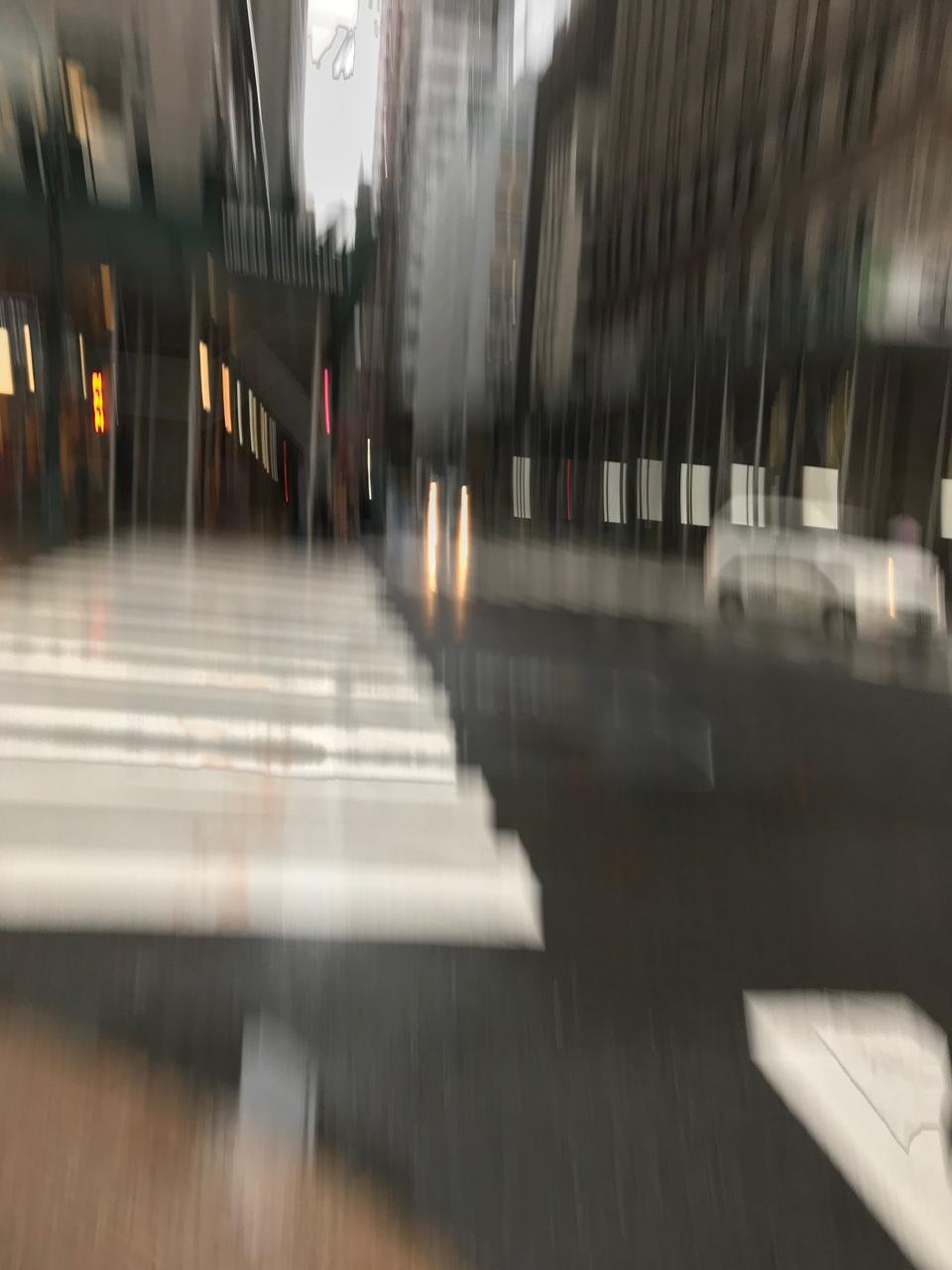
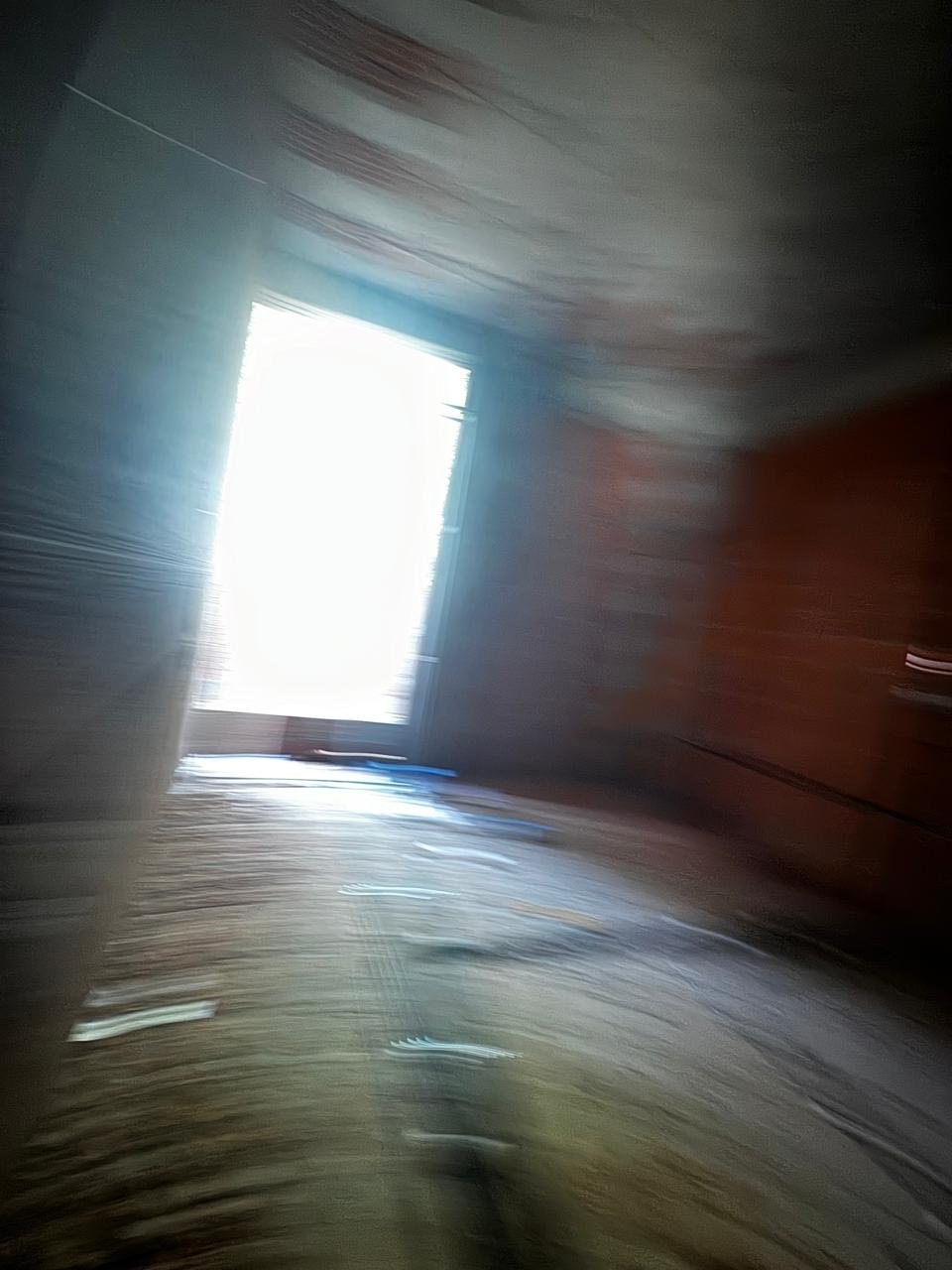
The white stripes of a pedestrian crossing remain readable while the buildings behind them begin to dissolve. In another photograph, a bright doorway holds its position within a room whose walls seem to turn around it. At night, points of light become curves, repeated strokes and narrow bands of colour. Each image retains something of the place where it was made. Each also records the movement through which that place was seen.
Move Art is the working title for this selection of sixteen photographs from the INJ Architects archive. The study has grown organically from the practice of photographing buildings, sites, interiors and the journeys between them. Gathered here, these images reveal a recurring interest in the moment when architectural photography opens into abstraction.
Their significance begins with that continuity. A camera used to document a material, a room or a street can also produce an image that draws attention to rhythm, colour and duration. The same habit of looking supports both kinds of photograph. In this selection, the movement of the image becomes a subject in its own right.
The gesture inside the photograph
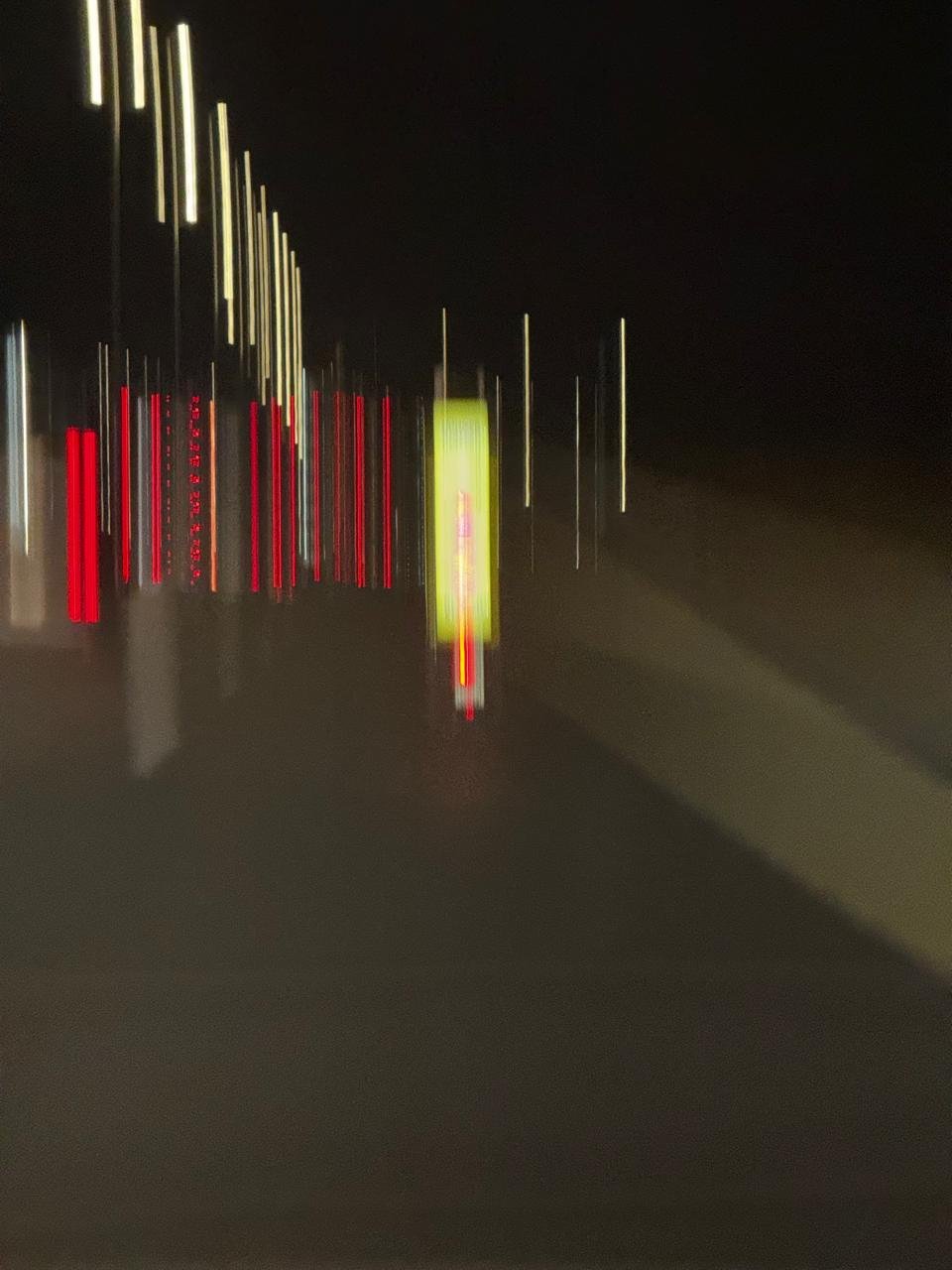
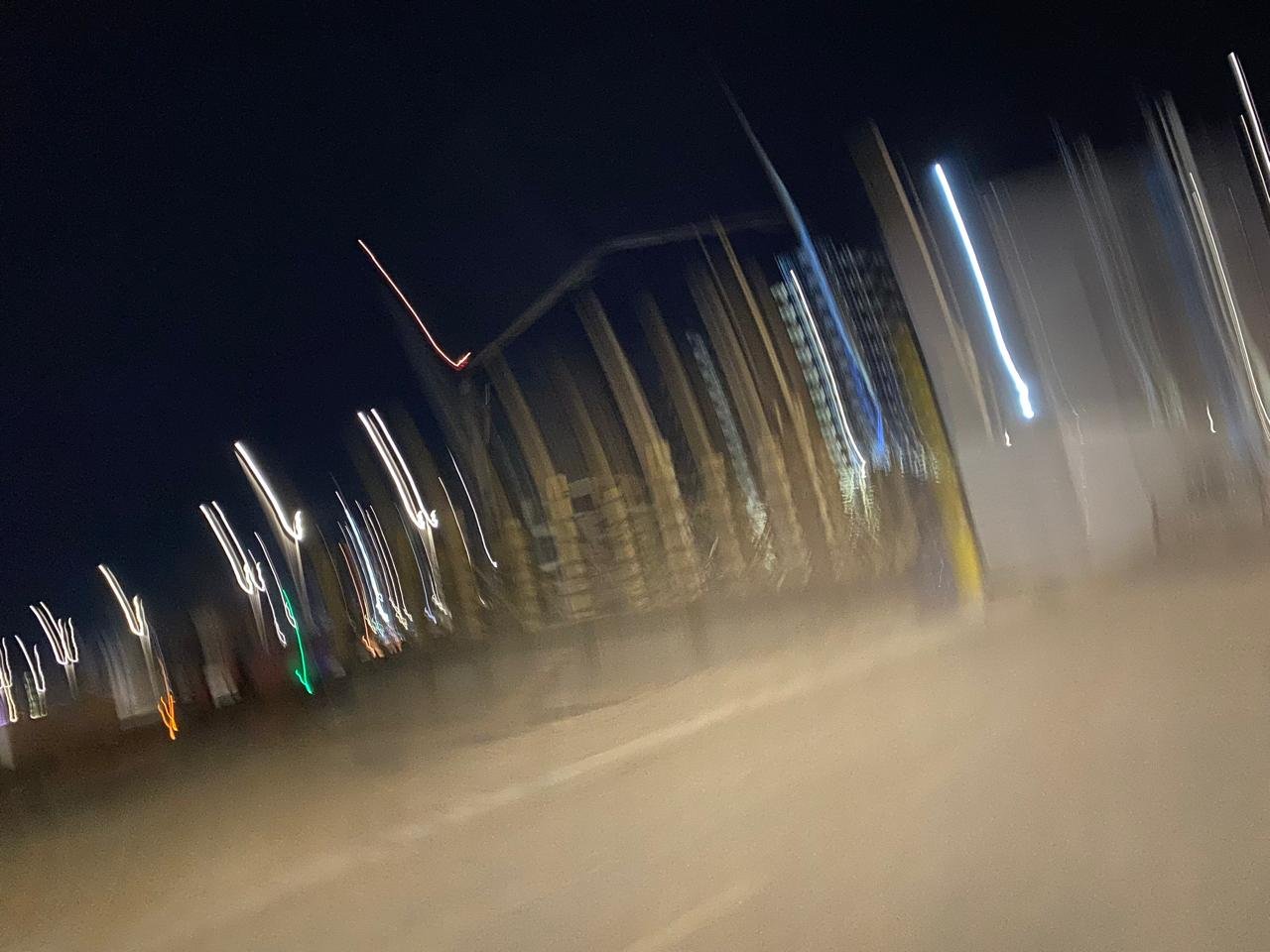
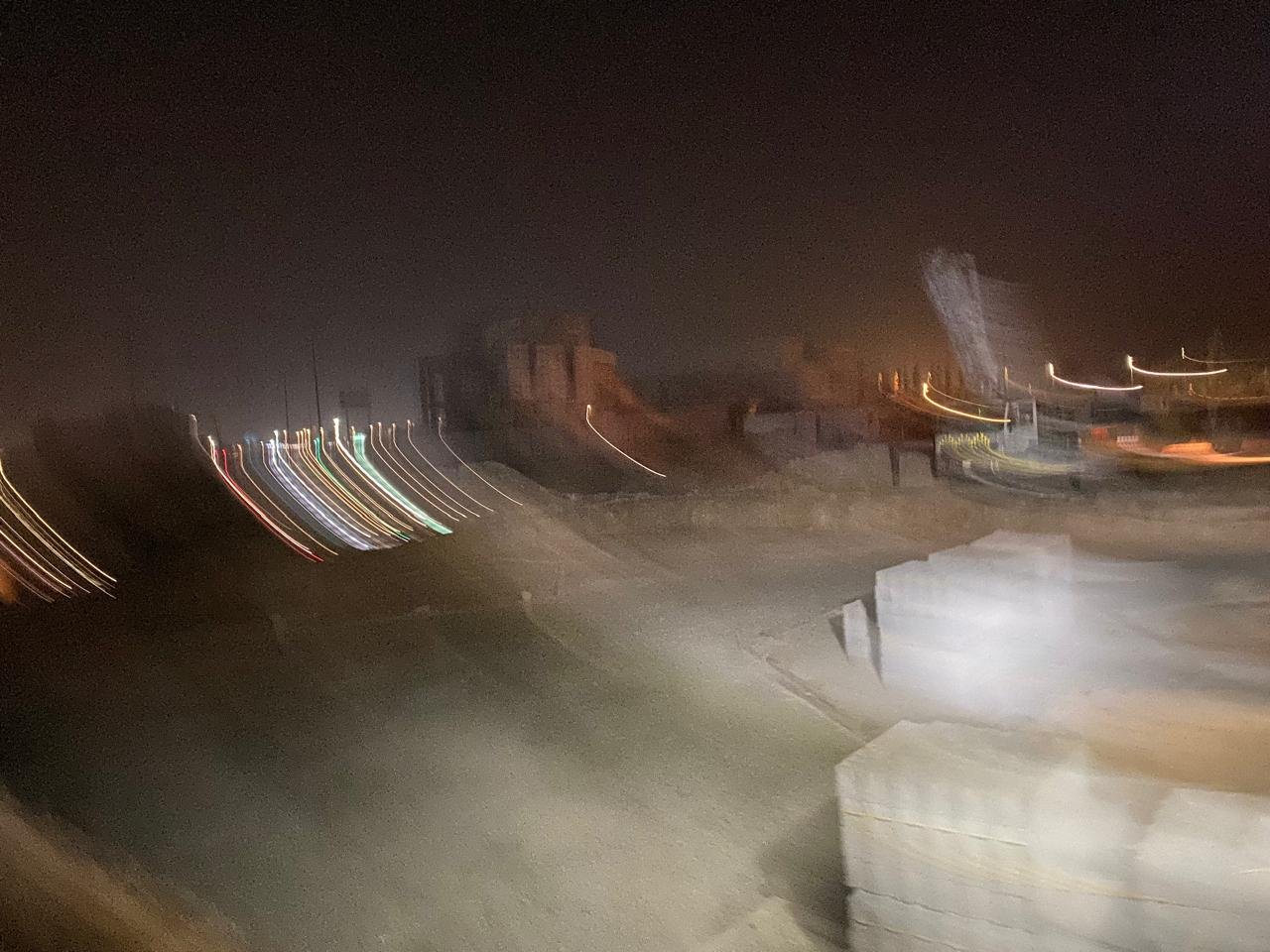
The traces vary considerably. Some sweep sideways. Others rise vertically or bend into arcs. In the magenta image, light and fragments of lettering spread across a dense field of colour. In the horizontal study, bright bands cross the frame with a distinctly different tempo. Reading them together makes direction as important as the objects originally in view.

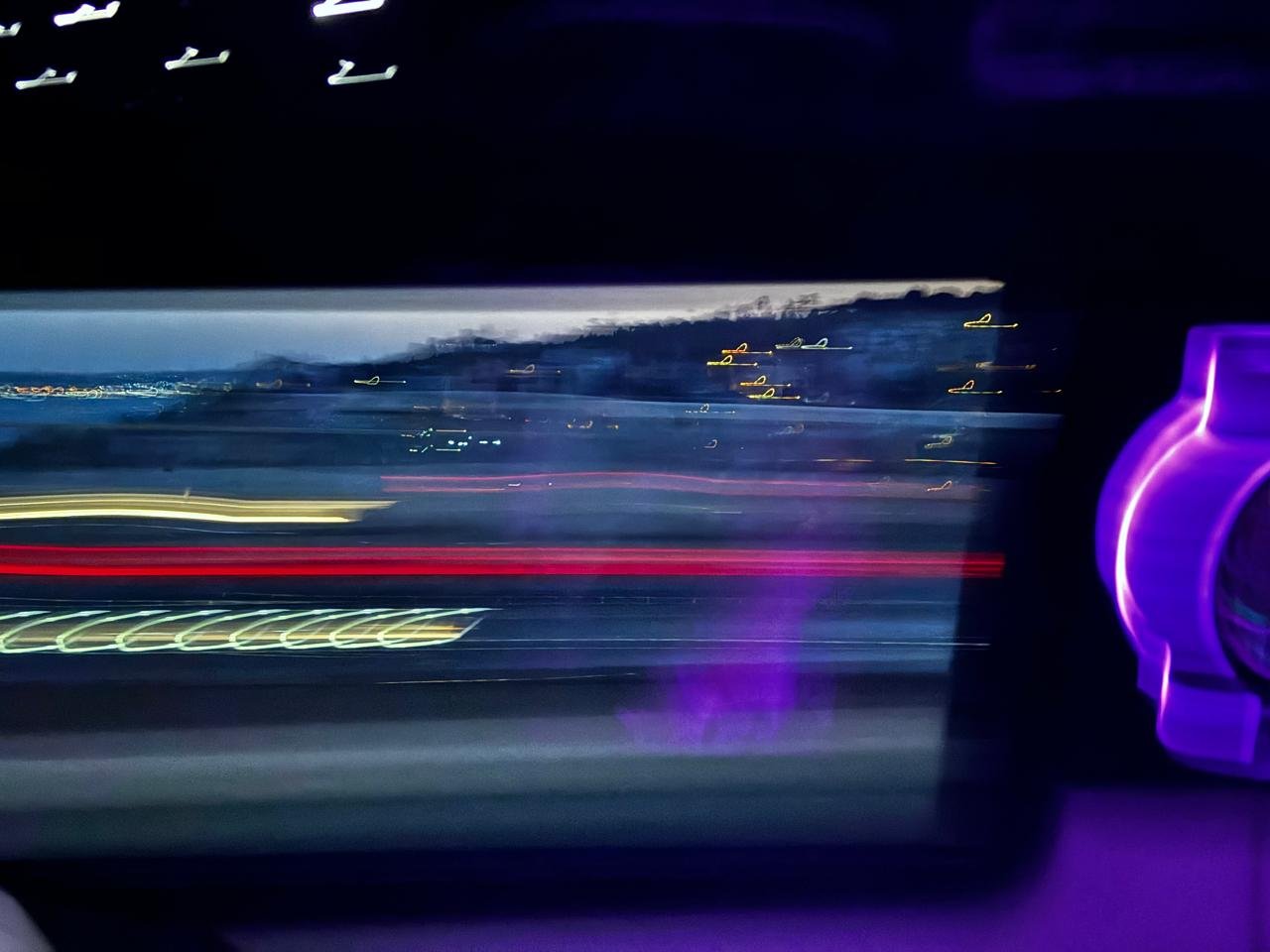
A moving camera can extend a point of light into a line while the exposure is being recorded. The resulting trace depends on the movement, the light and the duration of the exposure. The photographs here invite a visual reading of those relationships. The traces make the act of looking visible within the photograph, leaving room for both deliberate gestures and unexpected results.
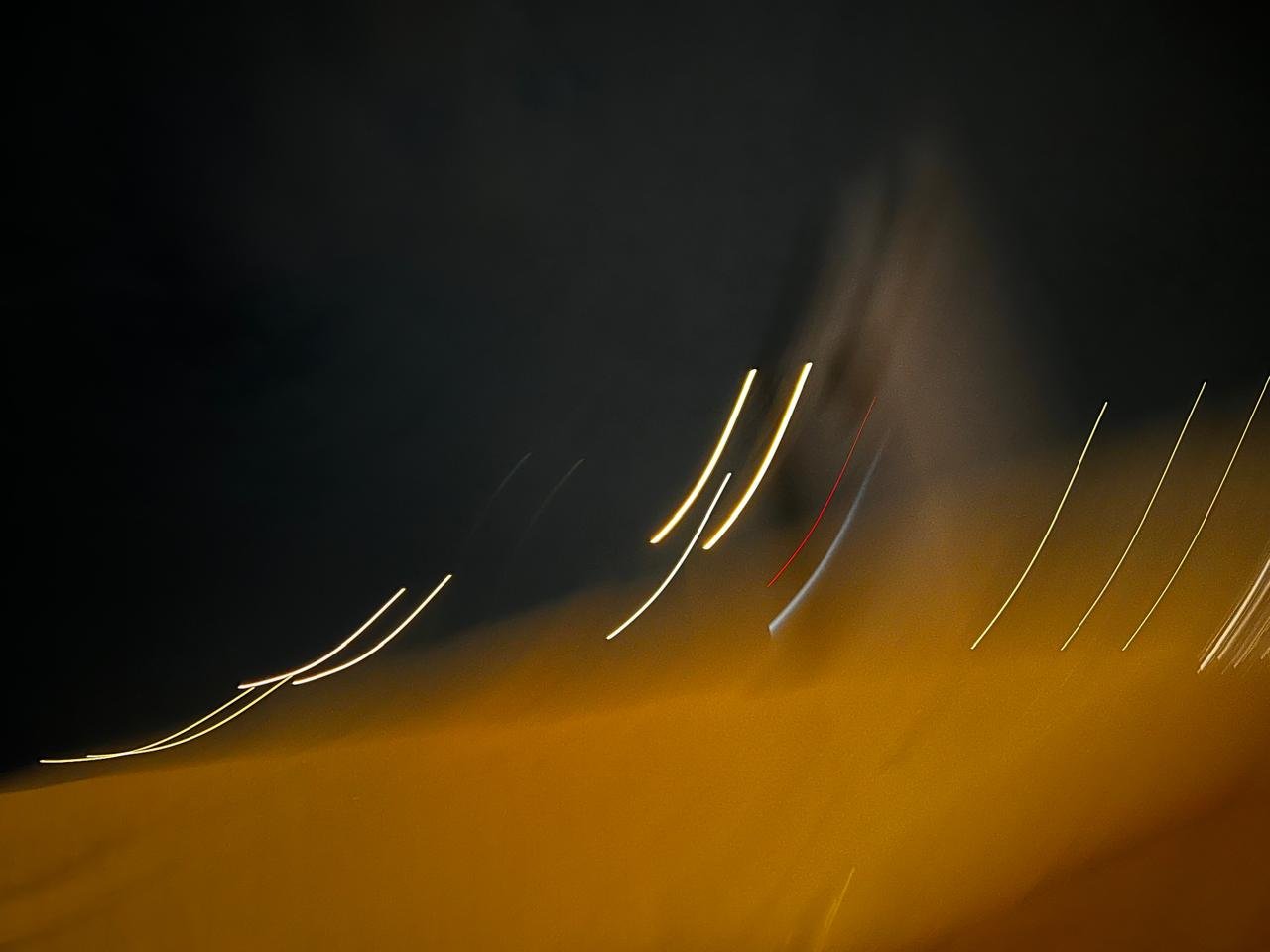

What makes a photograph worth returning to is the organisation that survives within it. An arc may establish a direction. Repeated marks may give a dark surface a rhythm. A broad area of colour can hold the lighter strokes together. Blur becomes useful when it allows these relationships to be seen with greater clarity.
What does architectural photography retain in motion?
The unfinished room offers a particularly direct connection to architectural work. Its bright opening still suggests a route through the space, even as the surrounding surfaces lose definition. The crossing performs a similar role in the street image. In both cases, a small amount of recognisable structure is enough to orient the viewer.
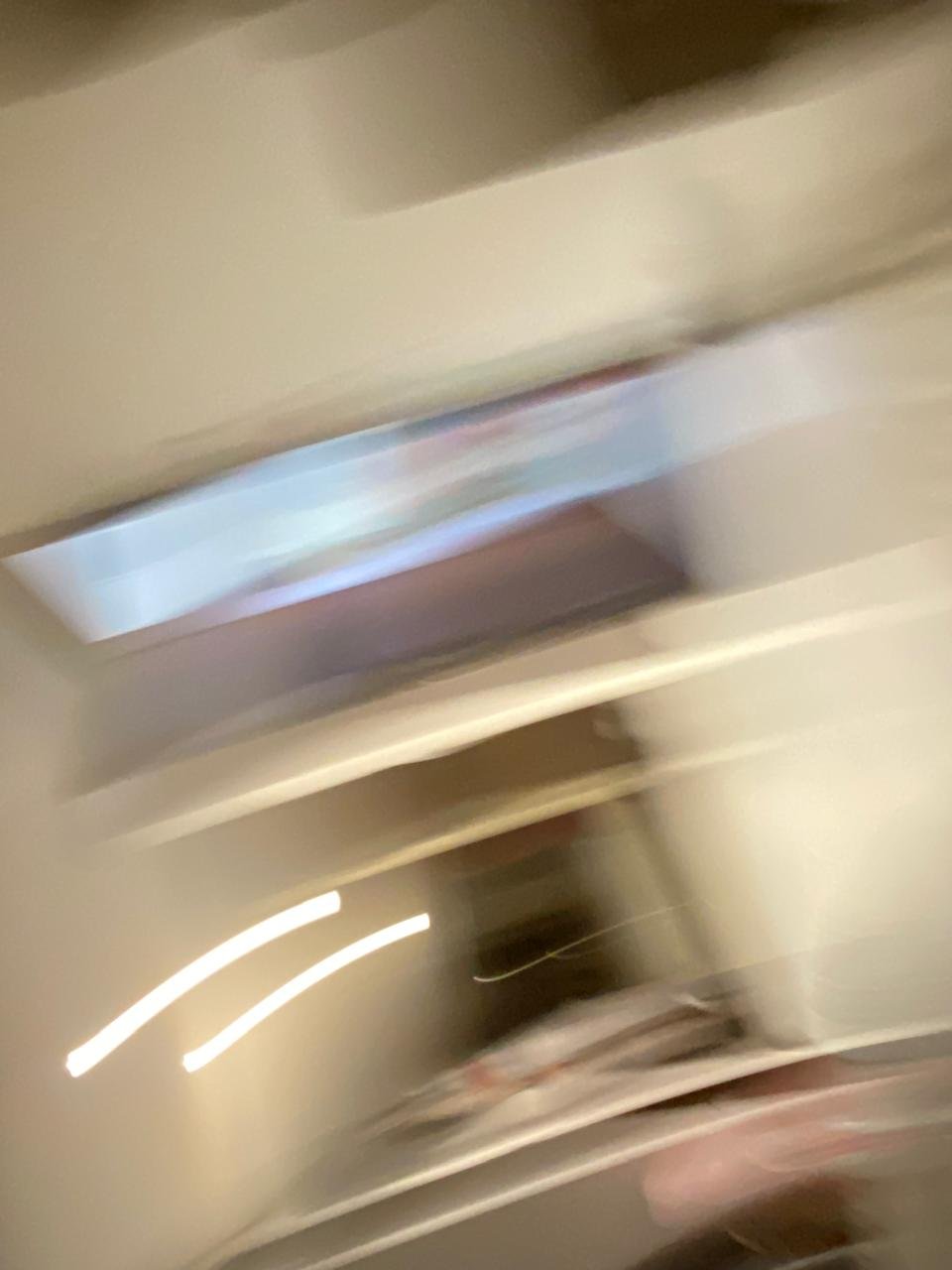
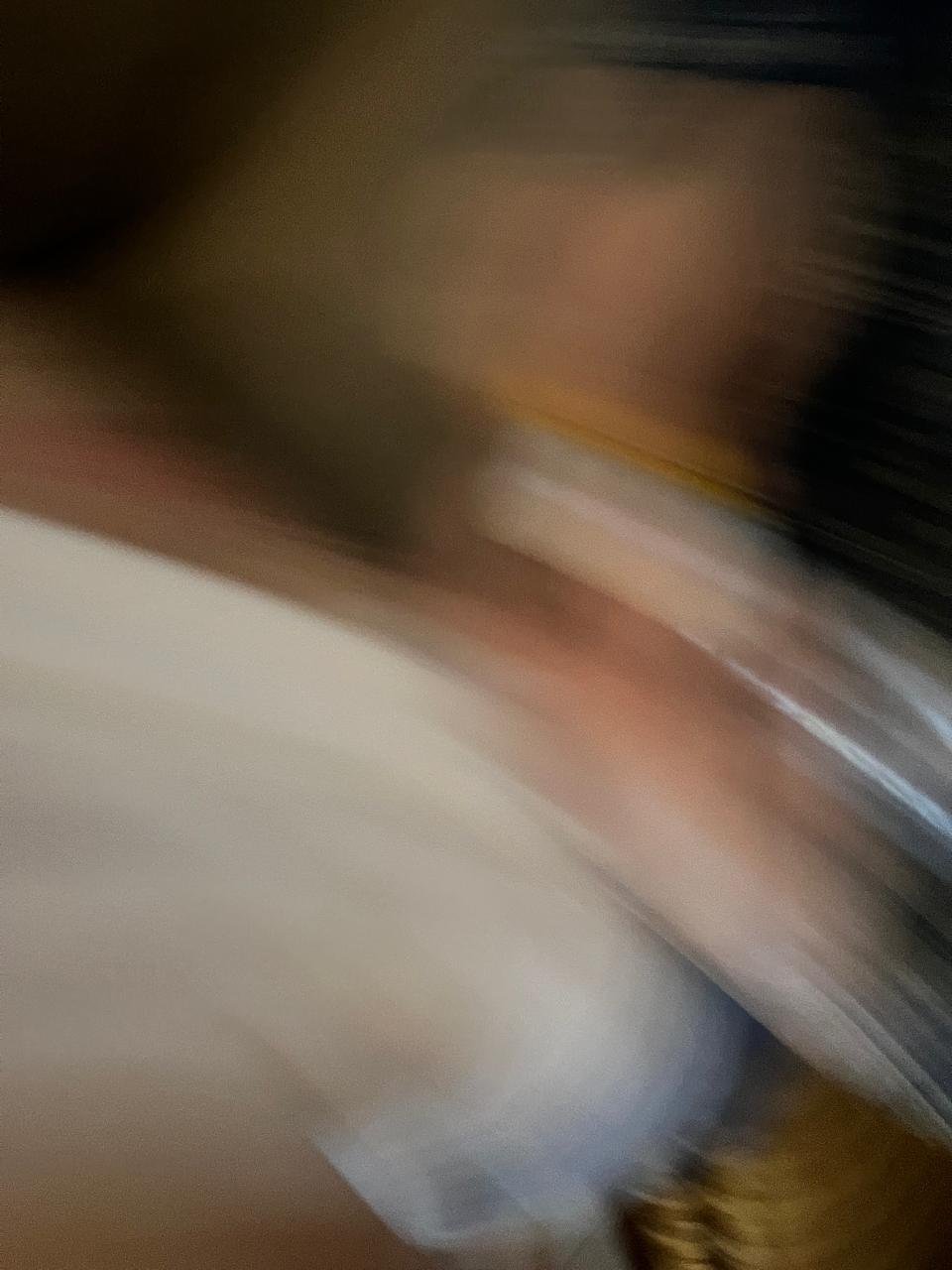
Other photographs move further from a readable setting. Near surfaces become bands of brown and cream. Overhead lines bend across the frame. The eye begins to follow the weight of a dark edge, the interval between bright strokes or the balance between a concentrated patch of colour and an open field.
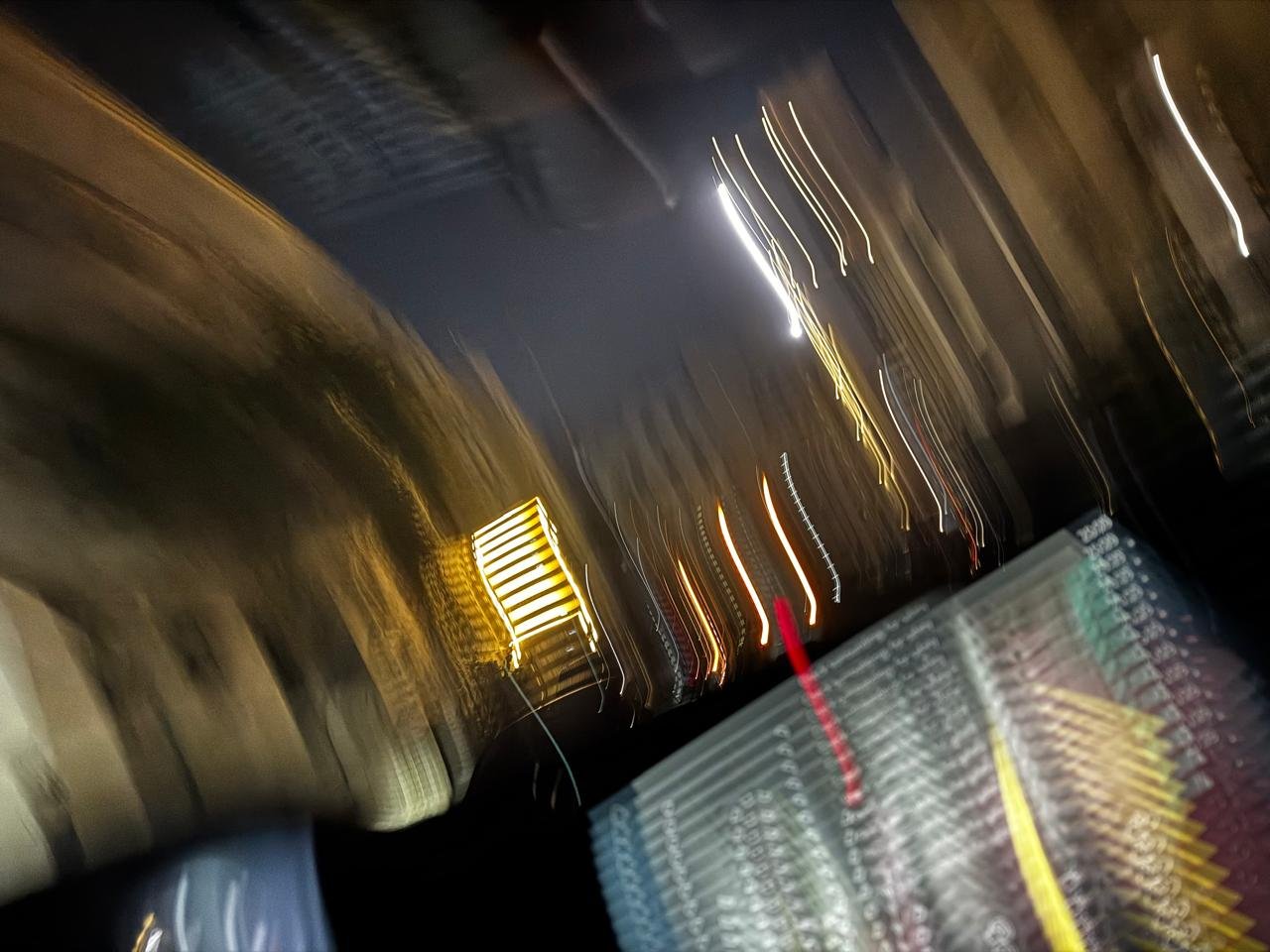

Seen beside the exhibition photograph, where people and signs remain visible, these more abstract images suggest a useful question for anyone who photographs architecture: how little information can an image retain while still conveying a sense of space? The answer changes from one photograph to the next. A threshold may be sufficient in one frame; a pattern of illumination may carry another.
A recurring way of looking
This study belongs alongside the observational interests of INJ Architects and its principal, Ibrahim Nawaf Joharji. A close point of reference is Ceilography, his continuing photographic investigation of ceilings. That project builds an archive by returning to an upward viewing direction across different interiors. Its value develops through repetition and attention.
Move Art explores what happens when the viewpoint itself becomes unstable. The relationship between the two studies lies in the decision to keep looking, to preserve the results and to recognise a question that only becomes apparent across several images. Both allow an ordinary act of architectural documentation to develop into a sustained visual enquiry.

There is also a connection with TopoArtic, where contour information becomes the basis for artistic composition. The procedures are different, but each offers a way to carry material encountered in architectural practice into another form of visual work. In Move Art, the source material is the encounter itself, recorded through the camera.
Towards a photographic series
A close interior view and two night scenes extend the selection beyond its most recent additions. Across these photographs, recurring gestures begin to form a visual vocabulary. Their continuity suggests how an everyday photographic practice can gradually become a body of work.
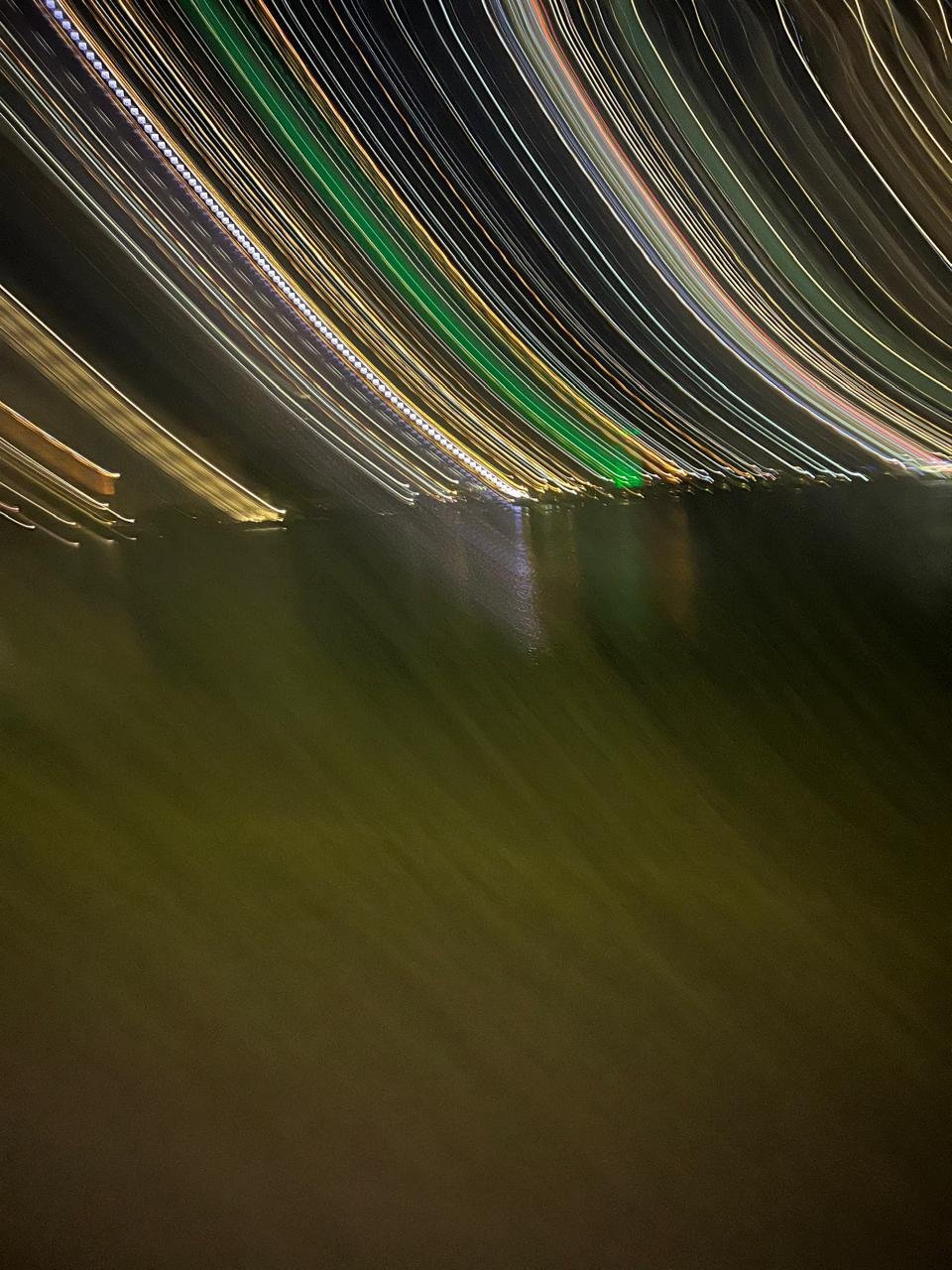
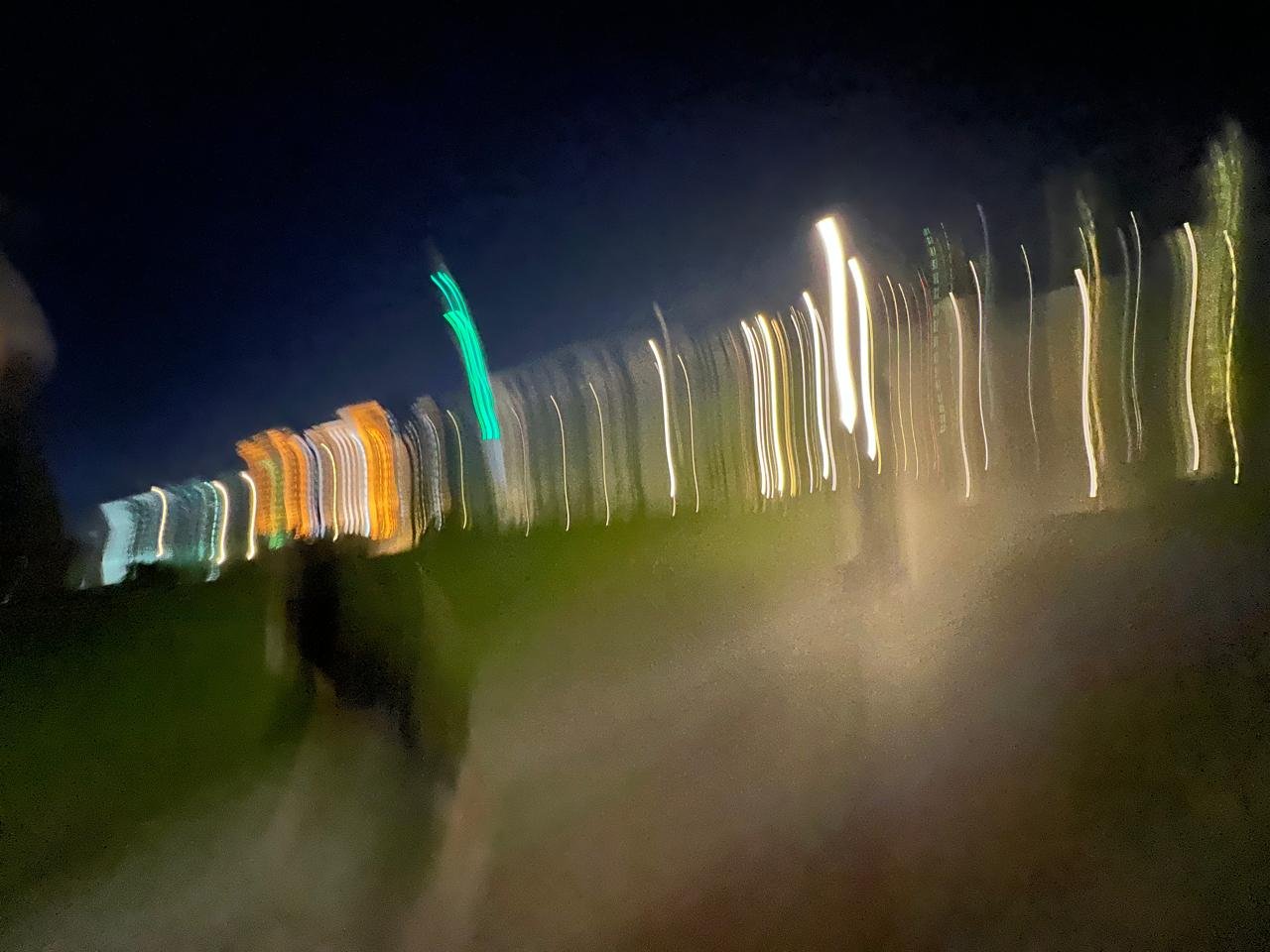
An eventual series could develop through small families of images: vertical traces, curved light, passing interiors and fragments of streets. Placing related photographs beside one another would allow differences in colour, direction and density to become the subject. The sequence could grow as further work enters the archive.
Larger prints would offer another way to test the work. Scale would change the relationship between the viewer and the gesture, allowing a narrow trace to occupy a wall or a small patch of colour to become a field. Any such development would begin with the original files and print trials, so that the texture of the image and the qualities of its blur remain part of the decision.
For now, the photographs hold an open proposition. The familiar task of documenting architecture has produced images that deserve to be considered for their own composition. A street, a room or a passing light remains their point of departure. What carries them forward is a gesture that can be looked at again.