
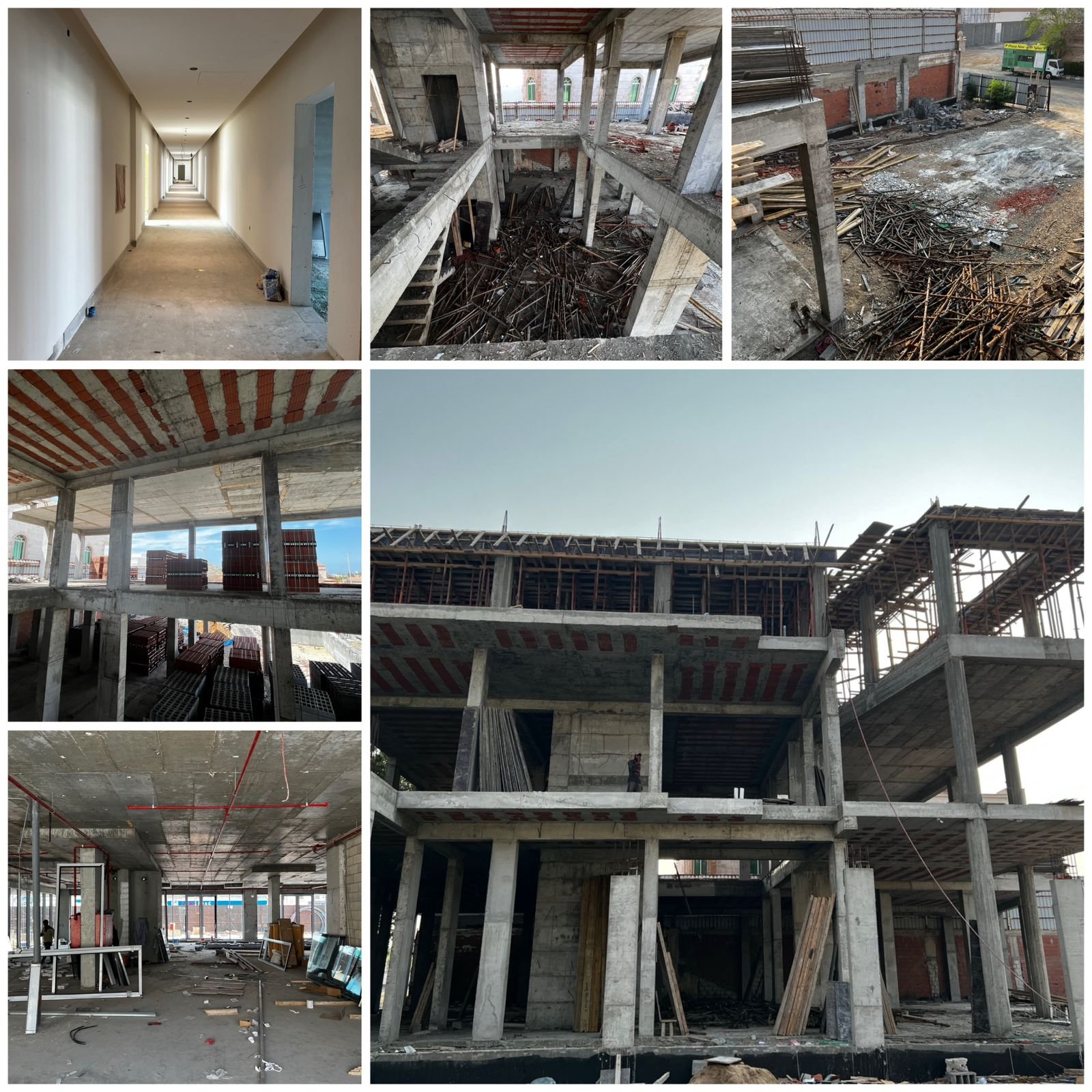
After Handover: A Building Begins When the Architect Loses Control
On handover morning, a building appears to have reached its ending. Minutes are signed, keys exchanged, photographs taken, and the last worker leaves. In reality, the building has not yet begun. Construction has ended; architecture starts when the first occupant enters and the drawings can no longer explain themselves.
The first people to inhabit a new building receive more than new space. Without applying for the role, they become its first full operations team. They discover the water pressure when two bathrooms are used at once, the pump heard at night, the drain odour absent during testing, the current of air between two doors, the real waiting time for the lift, and the stair that becomes dangerous while carrying a child. A checklist item becomes an ordinary day in someone’s life. This is the practical test behind our question of when a house becomes fit for life.
Handover proves that a building is complete on paper. Occupation proves whether it is complete in reality.
The first months are more than defects
The post-handover period is often treated as a closing list: a failed light, a leak, a door requiring adjustment. But the first months are broader than snagging. They are a period of live calibration. Systems tested separately begin operating together under real demand. Water, air, electricity, gas, lifts, insulation and human movement enter a relationship that no isolated test can reproduce completely.
An emerging issue is therefore not automatic proof that the project failed, nor should a contractor treat every report as an accusation. A complex building needs adjustment. The difference between a professional project and a neglected one is not the absolute absence of observations. It is the speed with which they are captured, assigned and closed before they become permanent features of daily life.
A warranty is not one promise
Owners are told that a project is “under warranty”, as though one protective sheet covers the whole building. In practice, a warranty is a map of responsibilities and clocks. The main contractor has one obligation, the waterproofing subcontractor another, the lift supplier its own conditions, the pump manufacturer its instructions, and air-conditioning equipment its periods and exclusions. Some clocks begin at supply, others at installation, acceptance or commissioning.
Trouble begins when this map is not assembled into one record. Project management connects handover documents, responsibilities and reporting routes so that this information remains usable after construction. A fault appears and the owner calls an outside technician because it is faster. The technician changes a connection or setting. Later, the owner discovers that an undocumented intervention weakened the warranty claim or allowed each party to redirect responsibility elsewhere.
A warranty that does not state who may touch what, when, and under which record is not protection. It is a promise designed to evaporate.
This does not mean preventing an owner from maintaining a home or leaving a fault untouched while a slow contractor delays. It means that every intervention during the warranty period should follow a documented route: a dated report and image, identification of the affected system and responsible party, authority to intervene where necessary, and a closure record explaining what changed and who changed it. That small document may prove more valuable than the replacement part.
The return ledger
This essay proposes a simple practice: every project should have a return ledger. The consultant’s role should not end with the handover certificate. The team returns after thirty days, after one year, and after three years. The first visit captures early operational issues. The second reveals the effects of seasons and full occupation. The third separates temporary defects from design decisions whose consequences continue to recur.
The ledger is not an accusation sheet. It is professional memory. The same need to learn from actual use underpins post-occupancy evaluation and the ways users reshape space. Which door remains open although the plan assumed it would close? Which room did residents give a different use? Where did they place furniture to solve a circulation problem? How many times was a technician called to the same system? This evidence is more truthful than photography because it shows where people resisted the design and where they worked with it.
An architect who never returns continues learning from intentions. An architect who returns learns from consequences.
First occupants are not test subjects
It would be sentimental and unfair to say that first occupants “discover” the building as if discomfort were part of the adventure. They are entitled to a safe, tested and intelligible handover. Recognising early operation as a sensitive phase strengthens that protection: system training, clear contact routes, consolidated warranty schedules, as-built documents, and instructions distinguishing what may be adjusted from what must not be touched.
A building’s real age begins after the project team leaves. Handover should therefore be not a farewell but a change in the form of presence: from managing construction to observing life. In the first months, people do not merely test the building. The building reveals how much we understood about people.