On World Architecture Day: A Building Rehearses Before It Is Built
On World Architecture Day, we usually encounter a building after everything has been settled: its façade, material, light, and even the position from which it will be photographed. Architecture does not begin there. It begins earlier, in a quieter moment, when an unfinished model moves across a screen and the architect says: wait, there is a problem here.
A sketch, a physical study or a digital model can begin this rehearsal. In a tool such as SketchUp, a mass rotates, a space opens and a route can be tested from one room to another. The value lies in the questions this process makes possible. The building practises before it is built.
A model is not a smaller copy of a building. It is a future that can be stopped before it becomes a mistake.
What movement reveals that plans cannot
A plan explains dimension and relationship, but asks the reader to imagine time. How does a person enter? Where does the eye travel? When does the courtyard appear? Where does the route tighten? Does a door that seems logical on paper collide with furniture or expose a private room to a guest? When the model moves, time enters the drawing.
A three-dimensional model should therefore not be treated merely as a machine for producing a beautiful image at the end of design. Its real value lies at the beginning, when it is slightly unattractive, incomplete and open to change. At that stage, a team can test movement, mass, proportion and light before they become concrete, contracts and claims. These tests belong within the successive phases of an architectural project, with each review resolving a different level of detail.
Every movement on site is expensive. Moving a wall may mean demolition, relocated services, renewed approvals and perhaps a dispute, as discussed in our analysis of late design changes after concrete is cast. Inside the model, the wall can return in a minute. This is not only technical convenience. It is an ethical opportunity to make the mistake in the cheapest and safest place.
From viewing to deciding
Too many digital models are shown to clients as finished scenes. The camera moves quickly, materials shine, and admiration becomes the expected response. A professional model should permit interruption. At every point, it should allow questions: does the space work? Is the volume convincing at eye level? Do family and service routes collide? Will a distance that appears short on plan remain short for someone carrying bags, accompanying a child or moving slowly?
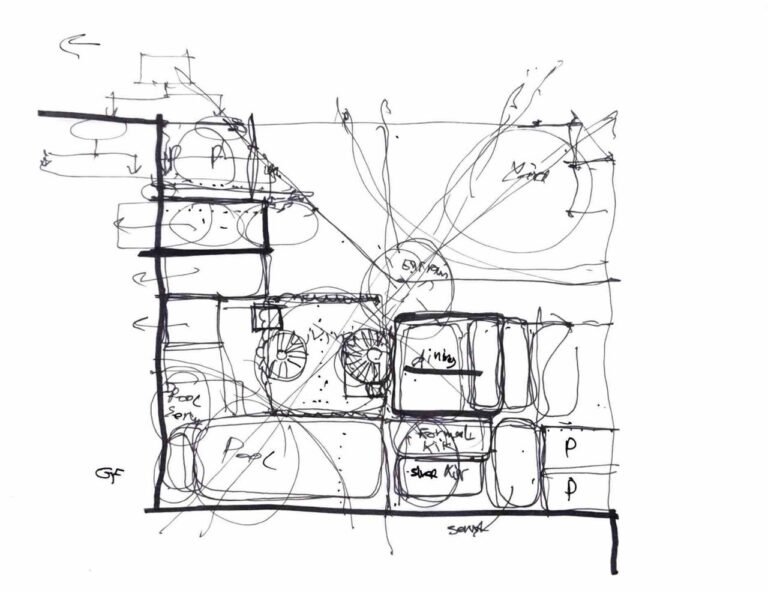
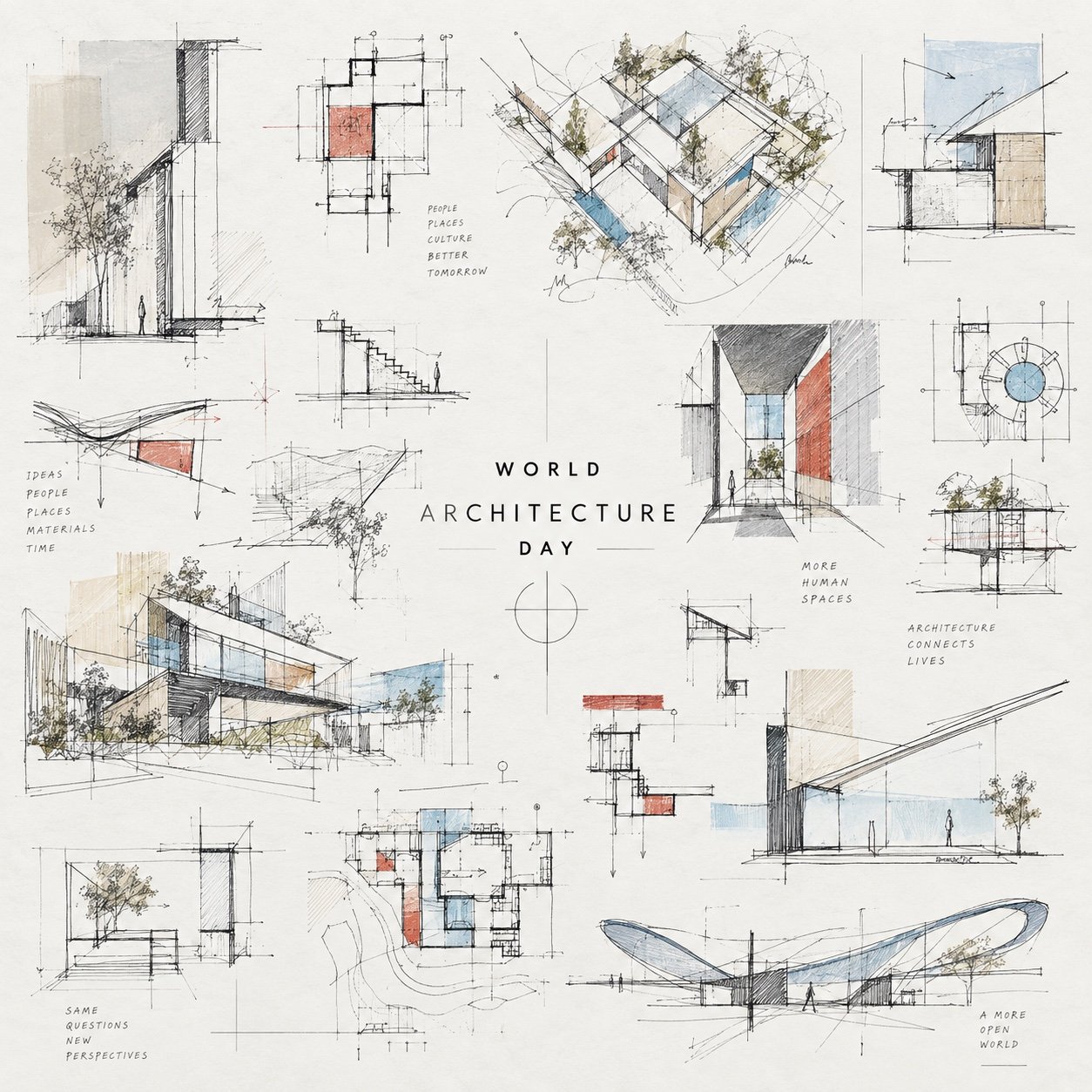
The sketches accompanying this note bring attention back to that unfinished stage. Plans, sections and perspectives offer different tests of the same proposal. This is central to how we work at INJ Architects: making decisions legible while architecture is still open to discussion and revision.
The best model is not the one that makes a project look complete. It is the one that reveals why it is not complete yet.
Celebrating the profession before the photograph
The 2026 World Architecture Day theme places housing at the centre of professional responsibility. Turning that right into a building cannot be achieved by a slogan alone. It depends on thousands of small decisions and on tools that make their consequences visible before residents are asked to pay for them.
A serious celebration of architecture may therefore show the process rather than only the result. It can reveal that a building was not born as a complete image, but passed through doubt, deletion, comparison and return. The architect’s value lies not only in drawing a compelling form, but in constructing a virtual space in which the future can be tested.
A good building lives once on the screen, with all its possible mistakes, so that it can live more intelligently when it becomes real.